How Parenting Styles Affect Personality Development

https://mamadocpediatrics.com/wp-content/uploads/2019/12/Final-Parenting-Styles.jpg

Personality does not develop in isolation. From the earliest moments of life, a child’s emotional world, beliefs, coping patterns, and sense of self are shaped through relationships—especially the relationship with parents or primary caregivers. Parenting styles play a crucial role in how children learn to trust, regulate emotions, relate to others, and view themselves.

This article explores how different parenting styles influence personality development, drawing from developmental psychology, attachment theory, and real-life behavioral patterns. As a mental health professional, you may notice these patterns daily—in children, adolescents, and even adults reflecting their early family experiences.

Understanding Parenting Styles: A Psychological Framework

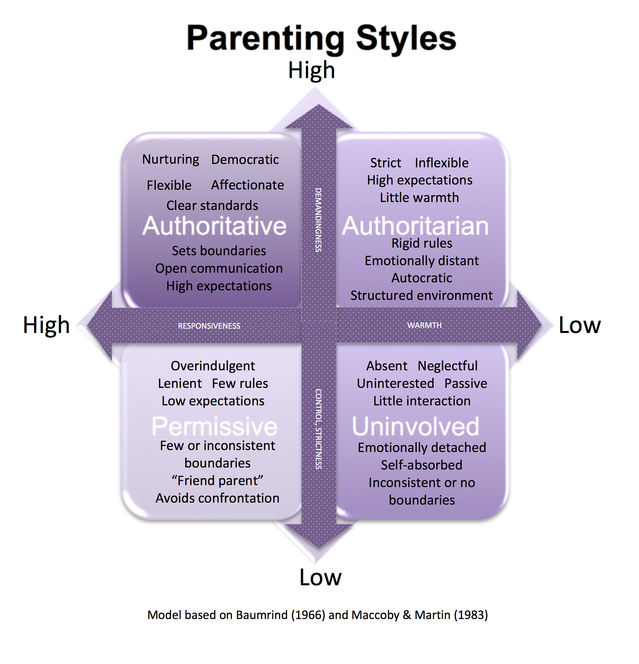
The concept of parenting styles was systematically introduced by Diana Baumrind, who identified consistent patterns in how parents interact with their children. Later researchers expanded her work, but the core idea remains: parenting style reflects emotional climate, discipline methods, communication patterns, and expectations.

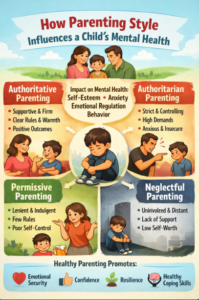
Parenting styles are generally classified into four main types:

  1. Authoritative

  2. Authoritarian

  3. Permissive

  4. Neglectful (Uninvolved)

Each style affects personality traits such as self-esteem, emotional regulation, independence, resilience, empathy, and interpersonal functioning.

Why Personality Development Is Sensitive to Parenting

Personality development is especially sensitive to parenting because the child’s brain, emotions, and sense of self are still under construction. In early life, children do not yet have the neurological capacity or psychological independence to regulate emotions, interpret experiences, or assign meaning on their own. Parents and primary caregivers therefore become the first emotional regulators, mirrors, and interpreters of the world.

Personality development involves several core psychological domains:

1. Emotional Regulation

Children are not born knowing how to calm themselves, manage anger, or tolerate frustration. They learn emotional regulation through co-regulation—when caregivers respond consistently to their emotional needs.

  • When parents soothe distress, label emotions, and model calm responses, children gradually internalize these skills.

  • When emotions are ignored, punished, or mocked, children may suppress feelings or become emotionally reactive.

Over time, these early experiences shape whether a person grows up emotionally resilient or emotionally dysregulated.

2. Self-Concept and Self-Worth

A child’s sense of “Who am I?” develops largely through parental responses.

  • When caregivers show acceptance, interest, and validation, children develop healthy self-worth.

  • When love feels conditional—based on obedience, achievement, or silence—children may internalize beliefs such as “I am not enough” or “I must earn love.”

These early self-beliefs often persist into adulthood, influencing confidence, perfectionism, people-pleasing, or self-criticism.

3. Social Competence

Parents are a child’s first social world. Through everyday interactions—play, conflict, affection, discipline—children learn:

  • How to communicate needs

  • How to handle disagreements

  • Whether relationships feel safe or threatening

Supportive parenting helps children develop empathy, cooperation, and assertiveness. In contrast, harsh or inconsistent parenting may lead to aggression, withdrawal, or fear of social judgment.

4. Coping Mechanisms

How parents respond to stress teaches children how to cope with challenges.

  • Emotionally available parents model problem-solving, flexibility, and help-seeking.

  • Emotionally unavailable or critical parents may unintentionally teach avoidance, emotional shutdown, aggression, or over-control.

These coping styles later show up in how adults handle failure, rejection, pressure, and loss.

5. Moral Reasoning

Children initially understand right and wrong not as abstract concepts, but through relationships.

  • When parents explain rules with empathy and reasoning, children develop internal moral values.

  • When discipline is based solely on fear or punishment, morality remains external—driven by avoidance rather than understanding.

This influences whether adults act from personal values or from fear of consequences and authority.

6. Attachment Patterns

Perhaps the most powerful influence of parenting is on attachment. According to John Bowlby, repeated interactions with caregivers form internal working models—deep mental and emotional templates about:

  • Whether others are trustworthy

  • Whether emotions will be met with care or rejection

  • Whether closeness is safe or risky

These internal working models guide how individuals later relate to:

  • Authority figures

  • Romantic partners

  • Conflict and criticism

  • Emotional intimacy and stress

Because these models develop before conscious memory, they often feel like “just the way I am”, even though they are learned patterns.

Why Early Parenting Has Long-Term Impact

Children are neurologically and emotionally dependent on caregivers. Their brains are highly plastic, meaning repeated emotional experiences literally shape neural pathways. What is experienced repeatedly becomes familiar, automatic, and internalized.

This is why:

  • Consistent emotional safety fosters secure, adaptable personalities

  • Chronic emotional neglect or fear can lead to anxiety, avoidance, or emotional numbness

Personality, then, is not simply a trait—it is the emotional memory of early relationships.

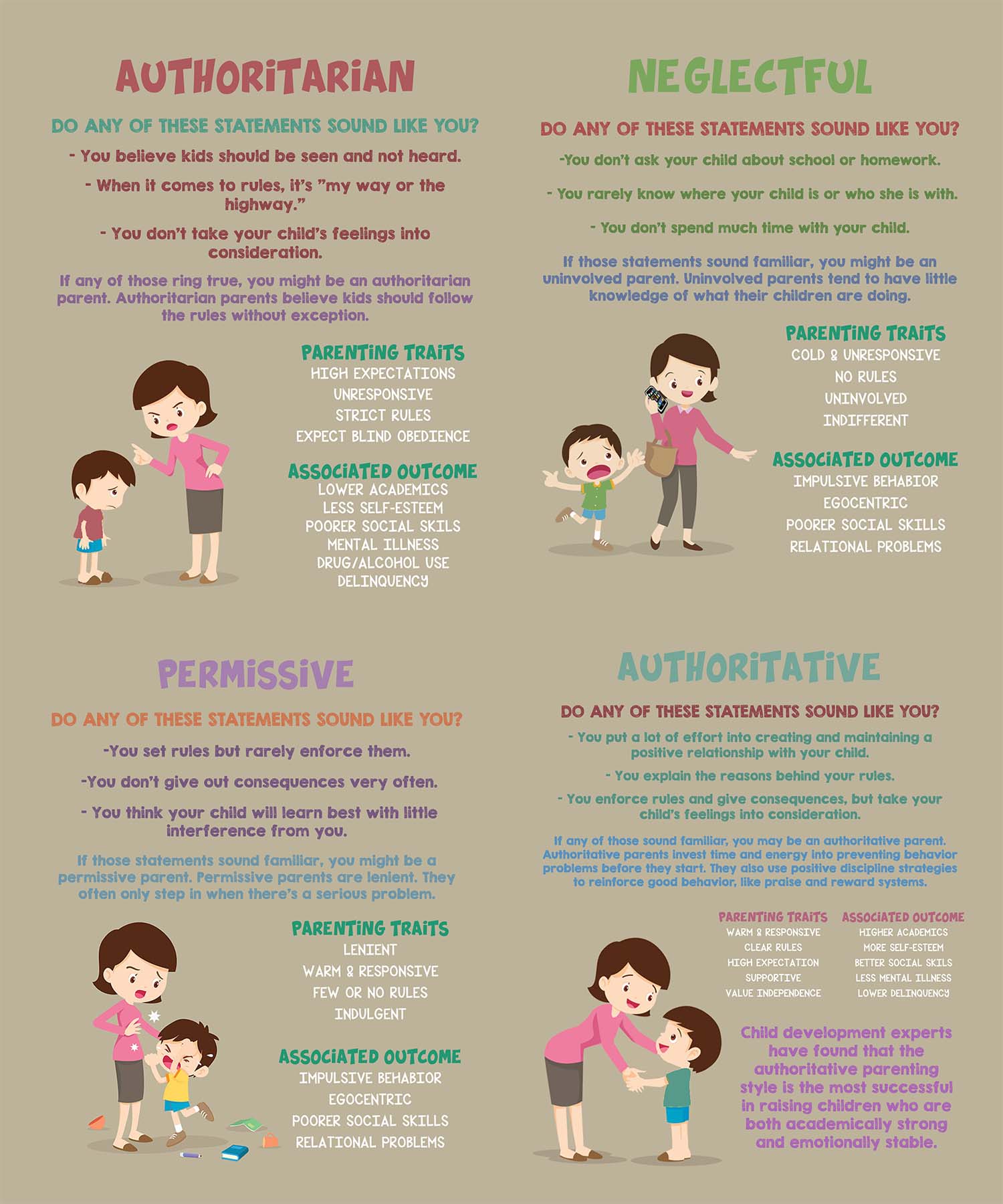
1. Authoritative Parenting: The Foundation of Psychological Health

Core Characteristics

  • High warmth and responsiveness

  • Clear rules and consistent boundaries

  • Open communication

  • Encouragement of independence

  • Discipline through reasoning, not fear

Impact on Personality Development

Children raised with authoritative parenting tend to develop:

  • Secure self-esteem – They feel valued and competent

  • Emotional intelligence – Emotions are acknowledged, not dismissed

  • Self-discipline – Internal regulation rather than fear-based compliance

  • Social confidence – Comfort in relationships and teamwork

  • Resilience – Ability to cope with failure and stress

Psychologically, this style supports secure attachment, allowing children to explore the world while knowing emotional support is available.

Adult Personality Outcomes

  • Balanced confidence

  • Healthy boundaries

  • Emotional expressiveness

  • Adaptive coping strategies

  • Stable relationships

Authoritative parenting is consistently associated with the most positive personality outcomes across cultures.


2. Authoritarian Parenting: Obedience Over Emotional Growth

https://static.toiimg.com/photo/121516512.cms

Core Characteristics

  • High control, low warmth

  • Strict rules with little explanation

  • Emphasis on obedience and authority

  • Punitive discipline

  • Limited emotional expression

Impact on Personality Development

Children raised in authoritarian environments often develop:

  • Low self-esteem – Love feels conditional

  • Fear-based compliance – Behavior driven by punishment avoidance

  • Poor emotional expression – Feelings are suppressed

  • High anxiety or anger – Emotional needs remain unmet

  • External locus of control – Reliance on authority for validation

Emotionally, children may learn that mistakes equal rejection, leading to perfectionism or rebellion.

Adult Personality Outcomes

  • Difficulty expressing emotions

  • Fear of authority or excessive submission

  • Rigid thinking patterns

  • High stress sensitivity

  • Relationship difficulties

While such children may appear “disciplined,” internally they often struggle with emotional insecurity.

3. Permissive Parenting: Freedom Without Structure

https://cdn.psychologytoday.com/sites/default/files/styles/image-article_inline_full_caption/public/field_blog_entry_images/2019-11/parenting_styles_bredehoft_www.overindulgence.org__1.jpg?itok=auCGvyiw

Core Characteristics

  • High warmth, low control

  • Few rules or inconsistent boundaries

  • Avoidance of conflict

  • Overindulgence

  • Child-led decision-making

Impact on Personality Development

Children raised under permissive parenting may develop:

  • Poor impulse control – Difficulty delaying gratification

  • Entitlement – Expectation that needs come first

  • Low frustration tolerance – Struggle with limits

  • Insecurity – Lack of structure creates emotional instability

  • Weak self-discipline – External regulation is missing

Though emotionally expressive, these children often feel unsafe due to unclear expectations.

Adult Personality Outcomes

  • Difficulty with responsibility

  • Struggles with authority and rules

  • Emotional impulsivity

  • Relationship instability

  • Poor stress tolerance

Warmth alone, without boundaries, does not foster emotional maturity.


4. Neglectful (Uninvolved) Parenting: Emotional Absence

https://osteopathygoldcoast.b-cdn.net/wp-content/uploads/2024/05/Understanding-Childhood-Emotional-Neglect.webp

Core Characteristics

  • Low warmth, low control

  • Emotional unavailability

  • Minimal involvement

  • Basic needs met, emotional needs ignored

  • Parent preoccupied with personal issues

Impact on Personality Development

This style has the most damaging psychological effects. Children often develop:

  • Low self-worth – Feeling unimportant or invisible

  • Emotional numbness or dysregulation

  • Attachment difficulties – Fear of closeness or abandonment

  • Poor social skills

  • High risk of depression and anxiety

Without emotional mirroring, children struggle to understand themselves.

Adult Personality Outcomes

  • Chronic emptiness

  • Avoidant or anxious attachment

  • Difficulty trusting others

  • Emotional detachment

  • Vulnerability to addiction or maladaptive coping

Emotional neglect is often invisible—but its psychological impact is profound.

Parenting Styles and Attachment Patterns

Parenting styles strongly influence attachment styles, which shape personality across the lifespan:

Parenting Style Common Attachment Pattern
Authoritative Secure
Authoritarian Anxious or Fearful
Permissive Anxious
Neglectful Avoidant or Disorganized

Attachment patterns later affect:

  • Romantic relationships

  • Conflict resolution

  • Emotional intimacy

  • Self-regulation

Cultural Context: Parenting in Indian Families

In many Indian households:

  • Authoritarian parenting is normalized as “discipline”

  • Emotional expression is often discouraged

  • Obedience is prioritized over autonomy

While cultural values matter, psychological research shows that emotional responsiveness combined with structure leads to healthier personality development, regardless of culture.

Modern Indian parenting is slowly shifting toward authoritative approaches—balancing respect, boundaries, and emotional attunement.

Can Personality Be Changed in Adulthood?

Yes—personality can change in adulthood. While early parenting experiences leave deep psychological imprints, they do not permanently lock a person into one way of thinking, feeling, or relating. Personality is shaped by experience, and the brain retains the ability to reorganize itself throughout life. This capacity for change is what makes healing possible.

What often feels like a “fixed personality” is actually a set of learned emotional patterns—ways of coping, relating, and protecting oneself that once made sense in childhood.

Why Change Is Possible

Early experiences shape personality because they are repeated and emotionally powerful—not because they are unchangeable. In adulthood:

  • The brain still shows neuroplasticity (the ability to form new neural pathways)

  • Adults can reflect, choose, and practice new responses

  • Emotional experiences can be reprocessed and updated

With the right conditions, old patterns can be replaced with healthier ones.

1. Therapy: Rewriting Emotional Templates

Psychotherapy provides a safe, consistent relationship where old patterns can be understood and transformed.

  • Therapy helps identify unconscious beliefs such as “I am unsafe,” “I don’t matter,” or “Closeness leads to pain.”

  • Through emotional processing, reflection, and corrective experiences, these beliefs gradually soften.

  • Over time, new ways of regulating emotions, setting boundaries, and relating to others develop.

Therapy is not about changing who you are—it is about freeing who you were meant to be.

2. Secure Adult Relationships

Healing does not happen only in therapy. Safe, emotionally responsive adult relationships also reshape personality.

  • Being heard, respected, and emotionally supported challenges old attachment wounds

  • Consistent care helps the nervous system learn that connection is not dangerous

  • Healthy conflict and repair build emotional flexibility

Over time, relationships can become corrective emotional experiences, replacing fear-based patterns with trust.

3. Self-Awareness: Making the Unconscious Conscious

Change begins with awareness.

  • Recognizing emotional triggers

  • Understanding recurring relationship patterns

  • Noticing automatic reactions rooted in the past

When patterns are seen clearly, they lose some of their power. Self-awareness creates a pause between old conditioning and new choice.

This is the moment where growth begins.

4. Emotional Re-Parenting

Emotional re-parenting involves learning to give yourself what was missing earlier:

  • Validation instead of criticism

  • Comfort instead of dismissal

  • Structure instead of chaos

  • Compassion instead of shame

Through practices such as self-soothing, emotional labeling, boundary-setting, and inner child work, individuals slowly internalize a supportive inner voice.

This process does not erase the past—but it reduces its control over the present.

From Survival to Choice

Many adult personality traits—people-pleasing, emotional withdrawal, perfectionism, anger, or numbness—were once survival strategies. In adulthood, they may no longer be necessary.

With insight and support:

  • Reactive patterns become responsive choices

  • Fear-driven behaviors become values-driven actions

  • Identity shifts from “This is who I am” to “This is what I learned—and I can learn differently.”

Key Takeaways

  • Parenting styles profoundly shape emotional and personality development

  • Authoritative parenting supports the healthiest outcomes

  • Emotional neglect can be as harmful as overt abuse

  • Personality reflects learned emotional patterns—not personal failure

  • Healing is possible at any stage of life

Final Reflection

Children do not need perfect parents—they need emotionally present adults who offer safety, guidance, and understanding. Small mistakes do not harm a child’s development; emotional absence and inconsistency do. When caregivers are responsive and willing to repair after missteps, children feel secure and valued.

Emotional presence helps children feel seen and accepted. Safety—both emotional and physical—allows them to trust their feelings and regulate stress. Guidance through clear, consistent boundaries teaches responsibility without fear, while understanding nurtures healthy self-worth.

Personality grows where connection meets consistency.
Connection provides emotional security; consistency builds trust. Together, they create a foundation for resilience, confidence, and healthy relationships.

Frequently Asked Questions (FAQ)

1. Do parents need to be perfect for healthy personality development?

No. Children do not need perfect parents. They need caregivers who are emotionally present, responsive, and consistent. Occasional mistakes are normal and do not harm development when followed by repair and reassurance.


2. What does “emotionally present parenting” mean?

Emotionally present parenting means being attentive to a child’s emotional needs—listening, validating feelings, and responding with empathy rather than dismissal, fear, or control.


3. How does consistency influence a child’s personality?

Consistency creates emotional safety. Predictable responses and boundaries help children develop trust, self-regulation, and confidence. Inconsistent caregiving can lead to anxiety, insecurity, or confusion.


4. Can emotional neglect affect personality even without abuse?

Yes. Emotional neglect—when a child’s feelings are repeatedly ignored—can strongly impact self-worth, attachment patterns, and emotional regulation, even if basic physical needs are met.


5. Is authoritative parenting really the healthiest style?

Research consistently shows that authoritative parenting—high warmth with clear boundaries—supports the most balanced outcomes in emotional regulation, self-esteem, and social competence.


6. If parenting was inconsistent or harmful, can personality still change later?

Yes. Through therapy, self-awareness, and secure adult relationships, individuals can unlearn maladaptive patterns and develop healthier personality traits over time.

Written by Baishakhi Das

Counselor | Mental Health Practitioner
B.Sc, M.Sc, PG Diploma in Counseling

Reference 


Screen Time & ADHD-Like Symptoms in Children: What Parents Need to Know

Introduction

In today’s digital age, screens are woven into nearly every aspect of childhood. Smartphones, tablets, televisions, online classes, gaming consoles, and social media have become common companions for children of all ages. While technology offers educational benefits and entertainment, increasing research and clinical observation suggest a concerning trend: excessive screen time may mimic or worsen ADHD-like symptoms in children.

Parents often report concerns such as:

  • “My child can’t focus on homework.”

  • “They’re restless all the time.”

  • “They get bored instantly unless a screen is involved.”

  • “Teachers say my child behaves like they have ADHD.”

This raises an important question:

Is screen time causing ADHD—or is it creating ADHD-like behaviors?

The answer is nuanced. Screen exposure does not directly cause ADHD (which is a neurodevelopmental condition), but excessive, unregulated, or developmentally inappropriate screen use can produce symptoms that closely resemble ADHD, especially in young and school-age children.

This article explores the relationship between screen time and ADHD-like symptoms, explains the neuroscience behind attention and self-regulation, identifies warning signs, and offers practical, evidence-based guidance for parents and caregivers.

Understanding ADHD vs ADHD-Like Symptoms

What Is ADHD?

Attention-Deficit/Hyperactivity Disorder (ADHD) is a neurodevelopmental condition characterized by persistent patterns of:

  • Inattention

  • Hyperactivity

  • Impulsivity

These symptoms:

  • Begin in early childhood

  • Are present across multiple settings (home, school, social)

  • Interfere significantly with functioning

  • Are not explained solely by environmental factors

ADHD has strong genetic and neurological foundations.

What Are ADHD-Like Symptoms?

ADHD-like symptoms refer to behaviors that resemble ADHD but are situational, reversible, or environmentally driven.

Examples include:

  • Short attention span

  • Difficulty sitting still

  • Impulsive reactions

  • Emotional dysregulation

  • Poor frustration tolerance

When these symptoms are primarily linked to lifestyle factors—such as excessive screen exposure, poor sleep, lack of physical activity, or overstimulation—they may not indicate true ADHD.

This distinction is crucial to avoid misdiagnosis and unnecessary medication.

How Much Screen Time Are Children Getting Today?

Studies consistently show that children are exposed to screens far beyond recommended limits.

Average Screen Time (Approximate)

  • Toddlers (2–5 years): 3–5 hours/day

  • School-age children: 6–8 hours/day

  • Adolescents: 7–10+ hours/day

This includes:

  • Educational screens

  • Entertainment (YouTube, cartoons, gaming)

  • Passive scrolling

  • Background TV

The developing brain did not evolve for this level of constant stimulation.

How Screen Time Affects the Developing Brain

Children’s brains are highly plastic—meaning they are shaped by repeated experiences. Screens influence brain development in several key ways.

The Attention System: Why Screens Are So Powerful

Screens are designed to capture and hold attention using:

  • Rapid scene changes

  • Bright colors

  • Instant rewards

  • Novel stimuli

  • Dopamine-driven feedback loops

This trains the brain to expect:

  • Constant novelty

  • Immediate gratification

  • High levels of stimulation

Real-world tasks—reading, listening, problem-solving—become comparatively boring and effortful.

Dopamine, Screens, and Attention Regulation

Dopamine is a neurotransmitter involved in:

  • Motivation

  • Reward

  • Focus

  • Learning

Fast-paced digital content produces frequent dopamine spikes, especially in games and short-form videos.

Over time:

  • The brain becomes less sensitive to dopamine

  • Higher stimulation is required to feel engaged

  • Low-stimulation tasks feel intolerable

This mirrors patterns seen in ADHD, where dopamine regulation differs.

ADHD-Like Symptoms Linked to Excessive Screen Time

1. Reduced Attention Span

Children exposed to high screen stimulation may:

  • Struggle to sustain focus

  • Jump quickly between tasks

  • Abandon activities easily

  • Require constant prompts

This is not always due to neurological ADHD—but due to attention conditioning.

2. Hyperactivity and Restlessness

Paradoxically, excessive screen time can increase physical restlessness.

Children may:

  • Fidget constantly

  • Pace or squirm

  • Seek constant movement

  • Have difficulty sitting through meals or classes

This occurs because screens overstimulate the nervous system while depriving the body of physical regulation through movement.

3. Impulsivity and Poor Self-Control

Screen exposure is linked to:

  • Reduced impulse control

  • Difficulty waiting

  • Emotional outbursts when screens are removed

  • Immediate reaction without thinking

This resembles ADHD impulsivity but is often environmentally induced.

4. Emotional Dysregulation

Children with heavy screen use may show:

  • Irritability

  • Low frustration tolerance

  • Anger when interrupted

  • Emotional meltdowns

Screens can act as emotional pacifiers, preventing children from learning healthy coping skills.

5. Difficulty with Executive Functions

Executive functions include:

  • Planning

  • Organizing

  • Task initiation

  • Working memory

Excessive screen time may impair these skills by:

  • Reducing practice with effortful tasks

  • Limiting problem-solving opportunities

  • Encouraging passive consumption

Age-Wise Impact of Screen Time on ADHD-Like Symptoms

Toddlers (0–3 Years)

The brain areas responsible for attention and regulation are still forming.

Excessive screen exposure at this age is associated with:

  • Delayed language development

  • Poor self-regulation

  • Reduced joint attention

  • Increased irritability

Early screen exposure may set the foundation for later attention difficulties.

Preschoolers (3–5 Years)

Children may show:

  • Difficulty following instructions

  • High distractibility

  • Poor impulse control

  • Reduced imaginative play

These behaviors often improve significantly when screen time is reduced.

School-Age Children (6–12 Years)

This is where ADHD-like symptoms become most noticeable.

Common issues include:

  • Difficulty focusing in class

  • Homework avoidance

  • Restlessness

  • Teacher complaints

  • Poor academic performance

Screens may amplify existing vulnerabilities.

Adolescents (13–18 Years)

Excessive screen use may contribute to:

  • Attention fatigue

  • Sleep deprivation

  • Emotional dysregulation

  • Increased anxiety

  • Reduced academic engagement

Multitasking with screens further impairs sustained attention.

Screen Time and Sleep: A Critical Link

Sleep deprivation alone can produce ADHD-like symptoms.

Screens interfere with sleep by:

  • Delaying bedtime

  • Blue light suppressing melatonin

  • Overstimulating the brain

  • Disrupting circadian rhythm

Children who don’t sleep enough often show:

  • Poor attention

  • Hyperactivity

  • Emotional volatility

  • Impulsivity

Many “ADHD-like” cases improve with better sleep hygiene.

Can Screen Time Cause ADHD?

Current research suggests:

  • Screen time does not directly cause ADHD

  • ADHD has strong genetic and neurological roots

  • However, excessive screen exposure can:

    • Worsen ADHD symptoms

    • Mask underlying ADHD

    • Lead to misdiagnosis

In some children, screen-induced symptoms disappear when screen habits change.

ADHD vs Screen-Induced Attention Problems: Key Differences

ADHD Screen-Induced Symptoms
Present across all settings Mostly screen-heavy contexts
Persistent since early childhood Develop after increased screen use
Genetic component Lifestyle-driven
Does not resolve easily Often improves with screen reduction
Requires clinical assessment Responds to behavioral changes

A thorough evaluation is essential before labeling a child.

Warning Signs Parents Should Watch For

  • Child can focus on screens for hours but not on other tasks

  • Extreme irritability when screens are removed

  • Boredom intolerance

  • Reduced interest in non-screen activities

  • Declining academic performance

  • Sleep problems

  • Emotional meltdowns after screen use

Healthy Screen Time Guidelines (General)

While exact limits vary, general recommendations include:

Under 2 Years

  • Avoid screens (except video calls)

Ages 2–5

  • Max 1 hour/day

  • High-quality, supervised content

Ages 6–12

  • 1–2 hours/day recreational screen time

  • Balanced with physical activity

Adolescents

  • Consistent boundaries

  • Screen-free times (meals, bedtime)

Quality matters as much as quantity.

How Parents Can Reduce ADHD-Like Symptoms Linked to Screens

1. Create Screen-Free Routines

  • Morning and bedtime screen-free

  • No screens during meals

  • Screen-free homework time

2. Encourage Physical Movement

  • Outdoor play

  • Sports

  • Free movement

Movement helps regulate attention and emotions.

3. Build Boredom Tolerance

  • Allow unstructured time

  • Resist immediate screen replacement

  • Encourage creativity

Boredom is essential for attention development.

4. Support Emotional Regulation

  • Name emotions

  • Teach coping strategies

  • Model calm responses

Screens should not be the primary calming tool.

5. Improve Sleep Hygiene

  • Screens off at least 1 hour before bed

  • Consistent sleep schedule

  • Screen-free bedrooms

When to Seek Professional Help

Consult a child psychologist if:

  • Symptoms persist despite screen reduction

  • Difficulties exist across multiple settings

  • Academic and social functioning is impaired

  • There is a family history of ADHD

A professional can differentiate ADHD from environmental effects.

Conclusion

Screen time is not inherently harmful—but excessive, unregulated screen exposure can significantly affect attention, behavior, and emotional regulation in children, often producing ADHD-like symptoms.

Understanding this distinction empowers parents to:

  • Avoid premature labeling

  • Make informed lifestyle changes

  • Support healthy brain development

By creating balanced digital habits, prioritizing sleep and movement, and fostering emotional connection, many children show remarkable improvement in attention and behavior.

Sometimes, the brain doesn’t need medication—it needs regulation, rest, and real-world connection.

Reference

  1. CDC – Child Development & Media Use
    👉 https://www.cdc.gov/childdevelopment
    Anchor: child development and screen time

  2. American Academy of Pediatrics – Media Guidelines
    👉 https://www.healthychildren.org
    Anchor: AAP screen time guidelines

  3. Harvard Center on the Developing Child
    👉 https://developingchild.harvard.edu
    Anchor: brain development and attention

  4. NIMH – ADHD in Children
    👉 https://www.nimh.nih.gov/health/topics/attention-deficit-hyperactivity-disorder-adhd
    Anchor: ADHD in children

  5. How to Improve Parent–Child Communication

  6. Contact Us

Impact of Toxic Parenting on a Child’s Brain Development

Introduction

A child’s brain is not only shaped by genetics but profoundly molded by early relationships, especially the relationship with primary caregivers. Parenting provides the emotional, neurological, and psychological environment in which a child’s brain develops. When caregiving is nurturing, consistent, and emotionally responsive, the child’s brain wires itself for safety, regulation, learning, and healthy relationships. However, when parenting is toxic, neglectful, or emotionally harmful, it can alter brain development in ways that affect the child for a lifetime.

Toxic parenting does not necessarily mean intentional abuse. Many parents repeat harmful patterns unconsciously, influenced by their own unresolved trauma, stress, or lack of emotional awareness. Yet, regardless of intention, the child’s developing brain responds to chronic stress, fear, unpredictability, and emotional invalidation as threats.

This article explores how toxic parenting impacts a child’s brain development, the neurological mechanisms involved, long-term psychological consequences, and how healing is possible through awareness and intervention.

What Is Toxic Parenting?

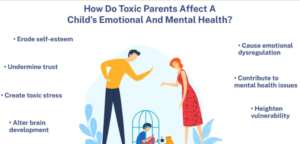
Toxic parenting refers to consistent patterns of behavior that emotionally, psychologically, or sometimes physically harm a child’s sense of safety, self-worth, and emotional regulation.

Common Forms of Toxic Parenting

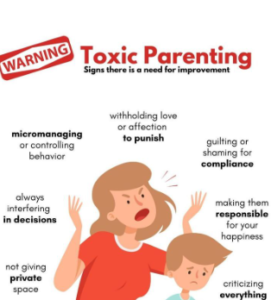
  • Emotional neglect (lack of warmth, validation, or attention)

  • Verbal abuse (shaming, yelling, humiliation)

  • Emotional manipulation (guilt-tripping, gaslighting)

  • Excessive control or over-criticism

  • Inconsistent parenting (unpredictable rules and reactions)

  • Conditional love (“I love you only if you succeed”)

  • Parentification (expecting the child to meet adult emotional needs)

  • Chronic invalidation of emotions

Toxic parenting creates an environment where the child feels:

  • Unsafe

  • Unseen

  • Unheard

  • Unworthy

  • Constantly on edge

For a developing brain, this environment activates survival mode, not growth mode.

Understanding Brain Development in Childhood

A child’s brain grows rapidly from birth through adolescence. By age 5, nearly 90% of the brain’s structure is formed, though refinement continues into the mid-20s.

Key Features of Brain Development

  • Brain development is experience-dependent

  • Neural connections strengthen with repeated experiences

  • Stress hormones influence brain architecture

  • Emotional safety supports higher cognitive functioning

The brain develops from bottom to top:

  1. Brainstem (survival)

  2. Limbic system (emotions)

  3. Prefrontal cortex (thinking, regulation, decision-making)

When a child grows up in a toxic environment, the brain prioritizes survival over learning, affecting all three levels.

How Toxic Parenting Affects the Brain: The Stress Response System

Chronic Activation of the Stress Response

Children exposed to toxic parenting often live in a state of chronic stress. Their brains repeatedly activate the HPA axis (Hypothalamic-Pituitary-Adrenal axis), releasing stress hormones like cortisol.

Short-term stress can be adaptive. Chronic stress, however, becomes neurotoxic.

Effects of Prolonged Cortisol Exposure

  • Shrinks areas involved in memory and learning

  • Over-sensitizes fear circuits

  • Weakens emotional regulation pathways

  • Impairs immune and metabolic systems

Instead of learning curiosity and exploration, the brain learns:

“Stay alert. Stay small. Stay safe.”

Impact on Key Brain Regions

1. Amygdala: The Fear Center

The amygdala detects danger and triggers emotional responses like fear and anger.

Effects of Toxic Parenting on the Amygdala

  • Becomes hyperactive

  • Heightened fear responses

  • Increased anxiety and emotional reactivity

  • Difficulty distinguishing real threats from perceived ones

Children may appear:

  • Overly sensitive

  • Easily startled

  • Emotionally explosive

  • Hyper-vigilant

This wiring often continues into adulthood, leading to chronic anxiety and emotional overwhelm.

2. Hippocampus: Memory and Learning

The hippocampus helps regulate memory, learning, and emotional processing.

Impact of Toxic Parenting

  • Reduced hippocampal volume due to cortisol exposure

  • Difficulty forming coherent memories

  • Problems with learning and concentration

  • Increased vulnerability to depression

Children may struggle academically—not due to lack of intelligence, but due to stress-impaired memory processing.

3. Prefrontal Cortex: Emotional Regulation and Decision-Making

The prefrontal cortex (PFC) is responsible for:

  • Impulse control

  • Emotional regulation

  • Planning

  • Self-reflection

  • Empathy

How Toxic Parenting Affects the PFC

  • Delayed maturation

  • Poor impulse control

  • Difficulty managing emotions

  • Problems with decision-making

  • Low frustration tolerance

Because the PFC develops last, chronic stress in childhood significantly disrupts its growth.

4. Corpus Callosum: Brain Integration

The corpus callosum connects the left and right hemispheres of the brain.

Impact of Toxic Environments

  • Reduced integration between emotion and logic

  • Difficulty expressing feelings in words

  • Emotional flooding or emotional shutdown

This explains why many adults from toxic homes say:

“I feel things intensely but can’t explain them.”

Attachment, Parenting, and Brain Wiring

Attachment experiences directly shape neural pathways related to trust, safety, and relationships.

Secure Attachment

  • Predictable caregiving

  • Emotional validation

  • Safe emotional expression

This wires the brain for:

  • Emotional regulation

  • Healthy relationships

  • Self-soothing

Insecure or Disorganized Attachment (Common in Toxic Parenting)

  • Fear mixed with love

  • Inconsistent responses

  • Emotional unpredictability

This wires the brain for:

  • Hyper-independence or clinginess

  • Fear of abandonment

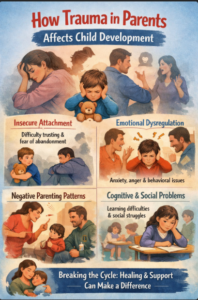
  • Difficulty trusting others

  • Confusion between love and pain

Toxic Parenting and Emotional Regulation Development

Children learn emotional regulation through co-regulation—caregivers helping them calm down.

In toxic environments:

  • Emotions are dismissed or punished

  • Children are told to “stop crying” or “be strong”

  • Emotional expression is unsafe

The brain learns:

  • Suppress emotions (leading to numbness)

  • Explode emotionally (no regulation skills)

  • Disconnect from internal signals

These patterns become deeply ingrained neural habits.

Cognitive and Learning Consequences

Chronic stress impacts a child’s ability to:

  • Focus

  • Process information

  • Retain memory

  • Think creatively

This can result in:

  • Academic underachievement

  • Misdiagnosis as “lazy” or “unmotivated”

  • Attention difficulties

  • Reduced executive functioning

Often, the issue is not intelligence—but a brain stuck in survival mode.

Behavioral and Emotional Outcomes Linked to Brain Changes

Children raised with toxic parenting may show:

In Childhood

  • Aggression or extreme compliance

  • Anxiety and fearfulness

  • Emotional outbursts

  • Withdrawal or shutdown

  • Difficulty with peers

In Adolescence

  • Risk-taking behaviors

  • Substance use

  • Self-harm

  • Emotional numbness

  • Identity confusion

In Adulthood

  • Chronic anxiety or depression

  • Relationship difficulties

  • Low self-esteem

  • People-pleasing or avoidance

  • Trauma responses (fight, flight, freeze, fawn)

Epigenetics: How Toxic Parenting Can Alter Gene Expression

Toxic stress does not change DNA—but it can change how genes are expressed.

Through epigenetic mechanisms:

  • Stress-related genes become overactive

  • Emotional regulation genes may be under-expressed

  • Vulnerability to mental health disorders increases

This means early experiences can biologically embed trauma responses—yet healing experiences can also reverse these effects.

Is the Damage Permanent?

No. The brain is plastic, meaning it can rewire throughout life.

While early trauma leaves an imprint, healing relationships, therapy, and self-awareness can create new neural pathways.

Factors That Promote Healing

  • Safe, supportive relationships

  • Trauma-informed therapy

  • Emotional awareness and regulation skills

  • Mindfulness and body-based practices

  • Corrective emotional experiences

Healing the Brain After Toxic Parenting

1. Therapy and Counseling

  • Trauma-focused CBT

  • Attachment-based therapy

  • EMDR

  • Somatic therapies

These approaches help regulate the nervous system and rewire stress responses.

2. Developing Emotional Literacy

  • Naming emotions

  • Understanding triggers

  • Validating inner experiences

This strengthens the prefrontal cortex and emotional integration.

3. Re-Parenting and Self-Compassion

  • Learning to provide safety internally

  • Setting healthy boundaries

  • Meeting unmet childhood needs consciously

4. Mind-Body Regulation

  • Breathwork

  • Yoga

  • Grounding exercises

  • Mindfulness

These calm the amygdala and regulate cortisol levels.

Breaking the Cycle: Healing for Future Generations

Many adults raised by toxic parents fear repeating the same patterns. Awareness is the first step to change.

Conscious parenting includes:

  • Reflecting on one’s triggers

  • Repairing ruptures with children

  • Validating emotions

  • Prioritizing connection over control

Healing yourself helps protect your child’s developing brain.

When to Seek Professional Help

Seek support if you or your child experience:

  • Persistent anxiety or depression

  • Emotional dysregulation

  • Trauma symptoms

  • Relationship difficulties

  • Parenting overwhelm rooted in past trauma

Early intervention creates long-term neurological and emotional benefits.

Conclusion

Toxic parenting does not just hurt feelings—it reshapes the developing brain. Chronic emotional stress alters fear circuits, impairs emotional regulation, and wires children for survival rather than safety. These changes can echo into adulthood, influencing mental health, relationships, and self-worth.

Yet, the story does not end with damage. The brain’s ability to heal means that awareness, support, and compassionate intervention can rewrite neural pathways. By understanding the impact of toxic parenting, we empower individuals and families to break cycles, heal wounds, and create emotionally safe environments where children’s brains—and lives—can truly thrive.

Healing the brain begins with safety, compassion, and connection.

Reference

  1. Emotional Neglect in Childhood
    👉 https://www.selfbloomcounsellinghub.com/emotional-neglect-in-children
    Anchor: emotional neglect

  2. Attachment Styles and Childhood Experiences
    👉 https://www.selfbloomcounsellinghub.com/attachment-styles-childhood
    Anchor: attachment patterns

  3. How Stress Affects the Brain
    👉 https://www.selfbloomcounsellinghub.com/stress-and-brain-development

  4. Signs of Behavioral Issues in Children (Age-Wise)
    👉 https://www.selfbloomcounsellinghub.com/behavioral-issues-in-children

  5. Healing the Inner Child
    👉 https://www.selfbloomcounsellinghub.com/inner-child-healing

  6. When to See a Child Psychologist
    👉 https://www.selfbloomcounsellinghub.com/child-psychologist-consultation

  7. Inner Child Healing: What It Is & Why It Matters

  8. How to Improve Parent–Child Communication