Attachment Styles in Children: Types, Signs, and How They Shape Emotional Development

Understanding How Early Bonds Shape Emotional Development

A child’s first relationship—usually with a parent or primary caregiver—plays a powerful role in shaping how they understand love, trust, safety, and emotional connection. From the moment a baby is born, they begin forming impressions about the world: Is it safe? Will someone respond when I cry? Do my needs matter?

This early emotional bond is known as attachment, and it is one of the most important foundations of a child’s development. Attachment is not just a feeling—it’s a biological and psychological process that influences how the brain grows, how emotions are regulated, and how relationships are formed throughout life.

When caregivers are responsive, comforting, and emotionally attuned, children learn that the world is a secure place. But when caregiving is inconsistent, distant, or frightening, children adapt in different ways—sometimes by becoming overly clingy, sometimes by shutting down their emotions, and sometimes by showing confused or disorganized responses.

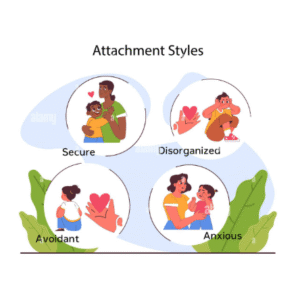
Because of these varied adaptations, psychologists generally categorize childhood attachment into four main styles:

1. Secure Attachment

2. Avoidant Attachment

3. Ambivalent (Resistant) Attachment

4. Disorganized Attachment

Each attachment style develops based on the child’s everyday experiences—how often they are comforted when distressed, how their emotions are responded to, and how predictable or unpredictable their caregivers are. These patterns shape the child’s sense of self, their ability to connect with others, and their emotional resilience well into adulthood.

In essence, attachment is the first lesson a child learns about relationships—

“Can I rely on others, and am I worthy of care?”

Understanding these attachment styles helps parents, teachers, and mental health professionals support healthier emotional development and repair insecure patterns early.

1. Secure Attachment: The Foundation of Emotional Well-being

Children with secure attachment grow up feeling safe, protected, valued, and emotionally understood. This style forms when a child consistently experiences warmth, comfort, and predictable care. As a result, they begin to trust that their emotional needs will be met, which becomes the cornerstone of healthy emotional development.

Why Secure Attachment Develops

Secure attachment is not about being a “perfect parent”—it’s about being consistently responsive and emotionally present. It develops when:

  • Caregivers respond consistently
    The child learns that their signals—crying, reaching out, seeking closeness—will be acknowledged rather than ignored.
  • Emotional needs are met
    When the child feels scared, overwhelmed, or uncomfortable, the caregiver responds with empathy and support.
  • Comfort is provided during distress
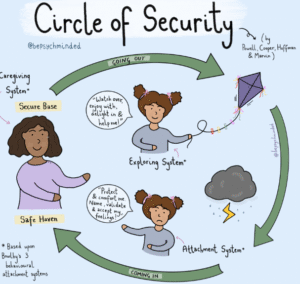
    The caregiver becomes a “safe base” where the child receives soothing, reassurance, and physical closeness when needed.
  • Caregiver is warm, predictable, and available
    Daily interactions such as smiling, talking, playing, and maintaining eye contact help the child feel emotionally connected and secure.

Through these repeated experiences, the child’s brain wires itself to expect safety, trust, and connection in relationships.

How a Securely Attached Child Behaves

Securely attached children show a healthy balance between independence and connection:

  • Explores the environment confidently
    They are curious and adventurous because they know they can return to their caregiver if they feel unsure.
  • Seeks comfort from caregiver when upset
    They don’t hesitate to ask for help, which shows trust in the caregiver.
  • Easily soothed
    After receiving comfort, they calm down quickly and return to play or exploration.
  • Shows a strong preference for the caregiver but is not clingy
    They enjoy closeness but also feel confident enough to separate and explore.
  • Builds healthy peer relationships
    Because they feel secure in themselves, they interact better with other children—sharing, taking turns, and forming friendships.

Long-Term Impact of Secure Attachment

Secure attachment supports long-lasting emotional, social, and cognitive development. Children who grow up with secure attachment often show:

  • Good self-esteem
    They feel worthy of love and believe their feelings matter.
  • Strong emotional regulation
    They can identify, express, and manage feelings more effectively.
  • Healthy relationships
    They form trusting bonds with peers, partners, teachers, and later in life, colleagues and romantic partners.
  • Better academic and social skills
    Their emotional stability helps them concentrate, participate in class, and communicate more effectively.

2. Avoidant Attachment: Independence with Hidden Anxiety

Avoidant attachment develops when a child repeatedly learns that expressing emotions is not safe, welcome, or effective. On the surface, these children may appear unusually independent or “low-maintenance,” but internally, they have learned to suppress their emotional needs to avoid rejection or disappointment.

Why Avoidant Attachment Develops

Avoidant attachment typically emerges when the caregiver is physically present but emotionally unavailable. This can happen when:

  • The caregiver is distant, dismissive, or emotionally unavailable
    They may care for the child’s physical needs but rarely respond to emotional cues such as crying, fear, or sadness.
  • The child’s feelings are minimized or dismissed
    Statements like “Stop crying”, “You’re fine”, or “Don’t make a fuss” teach the child that emotions are unacceptable or inconvenient.
  • Comfort is not consistently offered
    The child gradually learns that seeking closeness or reassurance does not lead to comfort, so they stop trying.

Over time, the child adapts by turning inward and relying on themselves—not because they don’t need connection, but because they assume it is unavailable.

How the Child Behaves

Children with avoidant attachment often display a surprising level of independence for their age:

  • Appears very independent
    They may prefer playing alone and managing situations without seeking help.
  • Avoids closeness or physical contact
    Hugs, cuddles, or affectionate gestures may make them uncomfortable.
  • Doesn’t seek comfort when distressed
    Even when hurt or scared, they suppress the instinct to reach out.
  • Shows little reaction when the caregiver leaves or returns
    This does not mean they don’t care—it means they learned to hide their distress.

These behaviors are coping mechanisms, not signs of emotional strength.

What’s Happening Internally

Even though they appear calm or detached, internally the child may be experiencing confusion, frustration, or anxiety.

The internal message becomes:

“My feelings won’t be understood or supported—
so it’s safer to handle things alone.”

Instead of learning emotional expression, they learn emotional avoidance.

Long-Term Impact

If avoidant attachment continues into later childhood or adulthood, it may shape emotional and relational patterns such as:

  • Difficulty expressing emotions
    They struggle to identify or share their feelings, often appearing emotionally “flat.”
  • Preference for emotional distance
    Close relationships can feel overwhelming or uncomfortable.
  • Discomfort with dependency or vulnerability
    They resist relying on others and may pull away when relationships feel too intimate.

Although these children may seem self-sufficient, they often carry unmet emotional needs beneath the surface.

3. Ambivalent (Resistant) Attachment: Clinginess & Uncertainty

Ambivalent attachment develops when a child experiences inconsistent caregiving—moments of warmth followed by moments of emotional unavailability. Because the child never knows whether their needs will be met, they become anxious, overly alert, and dependent on the caregiver for reassurance.

Why Ambivalent Attachment Develops

This attachment style forms when the caregiver’s attention and emotional availability are unpredictable. The child may receive love and comfort at times, but at other times, the caregiver may be distracted, overwhelmed, or unresponsive.

  • The caregiver is sometimes loving, sometimes unavailable
    The child cannot rely on consistent comfort or presence.
  • The child cannot predict when they will receive attention
    This unpredictability creates emotional confusion and insecurity.
  • Emotional needs are met inconsistently
    Sometimes the caregiver responds quickly; other times the child’s distress is ignored or misread.

Because of this inconsistency, the child becomes hyper-focused on the caregiver’s availability, trying harder and harder to get their attention.

How the Child Behaves

Children with ambivalent attachment often appear needy, clingy, or emotionally intense, but these behaviors are rooted in fear and confusion:

  • Very clingy or “hyper-attached”
    They stay close to the caregiver, fearing separation or rejection.
  • Becomes extremely distressed when the caregiver leaves
    Even short separations trigger strong emotional reactions.
  • Hard to soothe even when the caregiver returns
    They may cling but also resist comfort—crying, pushing away, or showing anger.
  • Appears anxious, insecure, or demanding
    They express big emotions and rely heavily on the caregiver for reassurance.

This pattern reflects their internal struggle to feel safe in a relationship that feels unpredictable.

What’s Happening Internally

Because they cannot rely on consistent caregiving, these children develop intense anxiety around separation and connection.

Their internal belief becomes:

“I don’t know when you’ll be there for me…
so I must cling tightly to make sure you don’t leave.”

This creates emotional hypervigilance—constantly checking for signs of love, attention, or abandonment.

Long-Term Impact

If ambivalent attachment continues without support or intervention, children may carry these emotional patterns into later life:

  • Heightened emotional sensitivity
    They feel emotions intensely and may struggle to self-soothe.
  • Fear of abandonment
    They may worry excessively about losing relationships or being left alone.
  • Difficulty with boundaries in relationships
    They may become overly dependent, controlling, or anxious in close relationships.

Although their behaviors may seem dramatic, these children are simply trying to feel secure in a relationship that feels uncertain.
4. Disorganized Attachment: Fear Without Solution

Disorganized attachment is considered the most complex and concerning attachment style because it develops when a child’s primary source of safety is also a source of fear. In this situation, the child’s attachment system becomes overwhelmed and confused, leading to chaotic or contradictory behaviors.

This style is often associated with significant stress, trauma, or disrupted caregiving patterns.

Why Disorganized Attachment Develops

Disorganized attachment forms when the caregiver—who should be a protector—becomes unpredictable, frightening, or emotionally unsafe. This leaves the child without a clear strategy for seeking comfort or security.

It often develops when:

  • The caregiver is frightening, unpredictable, or abusive
    The child may see threatening facial expressions, sudden anger, or aggression.
  • The child experiences trauma, neglect, or chronic stress
    Their nervous system becomes overwhelmed, making emotional regulation difficult.
  • The caregiver is both a source of comfort and fear
    The child becomes confused: they want closeness, but they also want to escape.
  • There is household chaos or violence
    Exposure to conflict, substance abuse, or instability disrupts the child’s sense of safety.

These mixed signals leave the child with no consistent way to seek help or feel protected.

How the Child Behaves

Children with disorganized attachment often display confusing, unpredictable, or contradictory behaviors. These behaviors reflect inner turmoil rather than intentional defiance.

Common behaviors include:

  • Confusing or contradictory actions
    Such as freezing, running away from the caregiver, rocking back and forth, or approaching and then suddenly withdrawing.
  • Fearful of the caregiver
    The child may show fear, flinching, or avoidance when the caregiver approaches.
  • Appears disoriented or overwhelmed
    They may stare blankly, seem “shut down,” or appear disconnected from their surroundings.
  • Sudden mood shifts
    Rapid changes from clinginess to withdrawal, or from calm to distressed, are common.

These behaviors are survival strategies in an environment that feels emotionally unsafe or unpredictable.

What’s Happening Internally

Inside, the child faces a painful and confusing paradox:

“The person who should protect me is the one I fear.”

The child’s attachment system becomes disorganized because they have no safe, predictable way to regulate emotions or seek comfort. Their brain shifts into survival mode—fight, flight, freeze, or dissociate.

Long-Term Impact

Without intervention or supportive caregiving, disorganized attachment may contribute to more serious emotional and behavioral challenges later in life:

  • Higher risk for emotional dysregulation
    Difficulty managing stress, fear, anger, and sadness.
  • Behavioral difficulties
    Aggression, oppositional behavior, withdrawal, or impulsivity.
  • Dissociation or trauma-related symptoms
    Spacing out, feeling disconnected from the body, nightmares, or trauma responses.
  • Difficulty forming stable relationships
    Trouble trusting others, controlling behaviors, fear of intimacy, or chaotic relationship patterns.

Despite these risks, healing is absolutely possible with consistent caregiving, therapy, and trauma-informed support.

How Parents & Caregivers Can Build Secure Attachment

No parent is perfect—and attachment has never been about perfection. It is about the everyday consistency, emotional presence, and genuine responsiveness that help a child feel seen and supported. Children don’t need flawless parenting; they need caregivers who try, who show up, and who repair when things go wrong.

What Helps Build Secure Attachment

Simple, repeated acts of care can strengthen a child’s sense of safety and trust:

  • Responding to emotional needs promptly: Helps the child feel that their feelings matter and will be taken seriously.
  • Offering comfort without judgment: Accepting emotions—rather than criticizing or dismissing them—teaches children emotional safety.
  • Creating predictable routines: Daily structure gives children a sense of stability and reduces anxiety.
  • Showing warmth through touch, voice, and presence: A gentle tone, a warm hug, or engaged eye contact reassures the child that they are loved.
  • Encouraging independence with support: Letting children explore freely while being available when needed builds confidence.
  • Repairing conflicts (apologizing, reconnecting): When misunderstandings or conflicts happen, reconnecting teaches the child that relationships can heal.

The Hopeful Truth: Attachment Can Change

Even if a child currently shows insecure attachment patterns, these are not permanent labels. With consistent, nurturing caregiving and, when needed, professional therapeutic support, children can develop more secure attachment over time. The brain is adaptable, relationships can be repaired, and emotional patterns can heal.

Every warm interaction, every moment of attunement, and every effort to understand a child’s feelings contributes to shaping a more secure, resilient future.
screenshot 2025 11 20 001009

Final Thoughts

Understanding attachment styles empowers parents, teachers, and mental health professionals to create safe, nurturing emotional environments for children. When caregivers recognize the patterns behind children’s behaviors—whether clinginess, withdrawal, fear, or confusion—they can respond with greater patience, empathy, and insight.

Early attachment experiences lay the foundation for how children learn to trust others, connect meaningfully, regulate their emotions, and build stable relationships throughout life. These first bonds shape not only emotional well-being, but also social development, self-esteem, and resilience.

The hopeful truth is that attachment is not fixed. With awareness, consistency, and psychological guidance, caregivers can strengthen or repair attachment patterns at any age. Through warmth, presence, and responsive caregiving, it is always possible to nurture healthier bonds and support a child’s journey toward emotional security and lifelong resilience.

Frequently Asked Questions (FAQs)

1. What are attachment styles in children?

Attachment styles are patterns of emotional bonding between a child and caregiver.

2. What are the four attachment styles?

Secure, avoidant, ambivalent (resistant), and disorganized attachment.

3. Which attachment style is the healthiest?

Secure attachment is considered the healthiest and most stable.

4. How does attachment affect emotional development?

It shapes how children regulate emotions, trust others, and build relationships.

5. Can attachment styles change over time?

Yes, with consistent caregiving and therapy, attachment patterns can improve.

6. What causes avoidant attachment?

Emotional unavailability or dismissive caregiving.

7. Why do some children become clingy?

Inconsistent caregiving can lead to ambivalent attachment.

8. What is disorganized attachment?

It occurs when the caregiver is both a source of comfort and fear.

9. How can parents build secure attachment?

By being responsive, emotionally available, and consistent.

10. Does attachment affect adult relationships?

Yes, early attachment patterns often influence adult emotional and relationship behaviors.

References

  1. American Psychological Association
    👉 https://www.apa.org/monitor/2019/05/ce-corner-attachment
  2. Harvard Center on the Developing Child
    👉 https://developingchild.harvard.edu/science/key-concepts/serve-and-return/
  3. National Child Traumatic Stress Network
    👉 https://www.nctsn.org
  4. About Us – Monoprova Counselling
    👉 https://monoprovacounselling.in/about-us/
  5. Contact / Book Appointment – Monoprova Counselling
    👉 https://monoprovacounselling.in/contact/

How to Handle Tantrums Without Yelling: Psychology-Based Techniques That Actually Work

Understanding the science behind big emotions and how to respond effectively

Tantrums are a normal and expected part of childhood. They happen when a child’s developing emotional system becomes overwhelmed by feelings they cannot yet understand or express. Whether it’s frustration, disappointment, sensory overload, or a sudden change in routine, young children often lack the language, impulse control, and emotional regulation skills needed to stay calm. As a result, their emotions spill out physically—through crying, screaming, throwing things, or refusing to cooperate.

While tantrums are common, the adult’s response plays a powerful role in shaping how the child learns to handle big emotions. A calm, supportive response can help the child regain control and feel secure, turning the moment into a learning opportunity. On the other hand, reacting with anger, threats, or punishment can intensify the child’s emotional distress, prolonging the meltdown and reinforcing fear or frustration.

This is where psychology-based techniques become invaluable. By understanding how the child’s brain works during a tantrum and responding with empathy, structure, and consistency, parents and caregivers can:

  • Reduce the frequency and intensity of tantrums
  • Teach children to self-regulate
  • Build emotional vocabulary
  • Strengthen the parent-child relationship
  • Create a calmer and more predictable environment

With the right strategies, every tantrum becomes not just a challenge—but a chance to help the child develop lifelong emotional coping skills and resilience.

Why Do Tantrums Happen? (The Psychology Behind Meltdowns)

Tantrums usually occur when a child’s “upstairs brain”—the part responsible for thinking, problem-solving, and self-control—is overwhelmed by the “downstairs brain,” which manages emotions, impulses, and survival reactions. Because children’s brains are still developing, especially the areas that regulate emotions, their emotional brain often takes charge much faster than their thinking brain can respond.

Common Triggers Behind Tantrums

Several everyday situations can overload a child’s emotional system, such as:

  • Frustration: When something doesn’t go as expected—like a toy not working or a game ending—they feel stuck and powerless.
  • Overstimulation: Too much noise, activity, or sensory input can overwhelm the nervous system, especially in sensitive children.
  • Sudden changes: Unexpected transitions (leaving the park, turning off the TV) can create emotional shock because children rely heavily on predictability.
  • Fatigue or hunger: A tired or hungry brain has less capacity to manage emotions, making meltdowns more likely.
  • Feeling unheard: When children believe their needs or feelings are being ignored, their emotions escalate quickly.
  • Lack of emotional vocabulary: Children who cannot express what they feel (angry, scared, disappointed, confused) often resort to crying, yelling, or physical behaviors.

What Happens in the Brain During a Tantrum

In the middle of a tantrum, the amygdala—the brain’s emotional alarm system—takes over. The child’s body releases stress hormones, their heart rate increases, and their ability to think logically shuts down. In this state, reasoning and discipline are ineffective, because the child is not capable of processing instructions.

This temporary loss of emotional control is not intentional misbehavior. It’s a sign that the child needs support to calm their nervous system before they can learn, listen, or problem-solve.

Psychology-Based Techniques to Handle Tantrums

1. Stay Calm and Regulated (Emotional Co-Regulation)

Children naturally absorb the emotional energy around them. When a parent becomes irritated, raises their voice, or looks frustrated, the child’s distress increases because they sense danger or rejection. Tantrums escalate when adults lose calm.

What to do:

  • Speak slowly and softly
  • Keep your shoulders relaxed
  • Take deep breaths
  • Maintain a neutral or gentle expression
  • Move slowly instead of rushing toward the child

Why it works:

Your calm presence co-regulates the child. Their emotional brain perceives safety, allowing the thinking brain to begin functioning again. When you stay regulated, the child learns to regulate too.

2. Validate the Emotion (Not the Behavior)

Emotional validation is one of the most powerful tools in calming a meltdown. When children feel understood, their brains stop fighting for connection.

Examples of validation:

  • “I can see you’re really upset.”
  • “It’s okay to feel angry. Everyone feels angry sometimes.”
  • “You’re sad because you wanted more playtime.”
  • “I understand this is hard for you.”

Why it works:

Validation reduces emotional intensity, prevents shame, and builds trust. It lets the child know their feelings are real and important—even if their behavior is not acceptable.

3. Use the “Connect Before Correct” Approach

Discipline or reasoning during a tantrum does not work because the child is in an emotional state, not a thinking state.

Connect first, then correct:

  • Connect: “That was frustrating, wasn’t it?”
  • Correct: “Next time, let’s try asking for help instead of shouting.”

Connect with empathy, then guide behavior once the child is calm.

Why it works:

Emotional connection activates the child’s social brain (prefrontal cortex). Once the child feels safe and understood, they are ready to learn and cooperate.

4. Offer Limited Choices (A Sense of Control)

Many tantrums arise from feeling powerless. Offering choices creates a sense of autonomy.

Examples:

  • “Do you want to wear the red t-shirt or the green one?”
  • “Should we clean up the toys together or one by one?”
  • “Do you want milk in the blue cup or yellow cup?”
  • “Shall we leave in 2 minutes or 5 minutes?”

Why it works:

Choices reduce defiance. When children feel in control of small decisions, they become more cooperative in bigger situations.

5. Use Distraction Strategically (For Younger Children)

Toddlers have short attention spans. Redirecting their focus can prevent escalation.

Examples:

  • “Let’s see what’s outside the window!”
  • “Can you help me find the red block?”
  • “Look at this funny picture!”
  • “Let’s play a quick game!”

Why it works:

Distraction interrupts the emotional buildup and gives the child something new to focus on. It works best for children under 4.

6. Teach Calm-Down Techniques (After the Tantrum)

During a tantrum, learning is impossible. But afterward, when the child is calm, you can teach emotional skills.

Helpful techniques:

  • Deep breathing: “Smell the flower, blow the candle.”
  • Counting slowly: 1 to 10 or backward.
  • Stress ball squeezing: releases physical tension.
  • Butterfly hug: crossing arms and tapping shoulders gently.
  • Calm corner: a safe, cozy space for relaxation.

Why it works:

These techniques train the nervous system to calm down and build emotional resilience for future challenges.

7. Maintain Predictable Routines

Children feel safer when their day is predictable. Many tantrums occur due to sudden transitions or surprises.

Helpful strategies:

  • Keep consistent meal, play, and sleep times
  • Use visual routine charts
  • Give reminders before transitions (“In 2 minutes, we will stop playing”)
  • Prepare them for changes in advance

Why it works:

Predictability lowers anxiety and helps children feel stable and in control, reducing emotional overwhelm.

8. Use Positive Reinforcement

Praise and encouragement strengthen healthy behavior far more effectively than punishment.

Examples of positive reinforcement:

  • “You calmed down so quickly, I’m proud of you!”
  • “Great job using your words instead of crying.”
  • “You asked for help—that was very responsible.”
  • “Thank you for listening right away!”

Why it works:

Positive reinforcement teaches children what to do instead of what not to do. It motivates them to use good coping skills.

9. Set Boundaries with Empathy

Some behaviors, such as hitting, kicking, and throwing, must have clear limits.

Firm but gentle boundary-setting:

  • “I won’t let you hit. That hurts.”
  • “Throwing is not safe. Let’s keep everyone safe.”
  • “You can be angry, but you cannot break things.”

Why it works:

Empathy + boundaries = emotional safety.
Children feel protected when adults are kind but firm.

10. Address Triggers and Build Emotional Vocabulary

Children have fewer tantrums when they know how to express feelings.

Use simple emotion words:

  • Angry
  • Sad
  • Scared
  • Frustrated
  • Excited
  • Confused

Activities to build emotional vocabulary:

  • Emotion flashcards
  • Storybooks that discuss feelings
  • Drawing faces showing different emotions
  • Role-play (e.g., “What does frustrated look like?”)
  • Feelings chart or thermometer

Why it works:

Naming emotions reduces their intensity and helps children communicate instead of acting out. When kids understand their feelings, they gain control over them.

When to Seek Professional Help

While tantrums are normal in early childhood, certain patterns may signal deeper emotional or developmental concerns that require the support of a child psychologist. Parents should consider professional help if tantrums are:

  • Extremely Frequent: If a child experiences tantrums multiple times a day or far more often than peers their age, it may indicate difficulties with emotional regulation, sensory processing, or anxiety.
  • Lasting Beyond Age 6–7: Most children outgrow intense tantrums by early school years. If meltdowns continue beyond this age, it can point to underlying issues such as ADHD, anxiety disorders, or developmental challenges.
  • Involving Aggression or Self-Harm: Tantrums that include hitting, kicking, biting, head-banging, scratching, or self-injury are red flags that require immediate evaluation. These behaviors suggest the child is overwhelmed beyond their coping abilities.
  • Interfering with School or Social Life: If tantrums disrupt classroom activities, prevent the child from forming friendships, or lead to isolation or behavioral complaints from teachers, psychological guidance can help address the root cause.
  • Difficult to Manage at Home: When parents feel exhausted, helpless, or unable to calm their child despite trying different strategies, a professional can provide personalized tools, behavior plans, and emotional support for the whole family.

Why Early Intervention Matters

Seeking help early does not mean something is “wrong” with the child—it means giving them the tools they need to thrive. Early intervention:

  • Builds emotional and behavioral skills
  • Reduces the long-term impact of stress and frustration
  • Helps children understand and express their feelings
  • Supports healthy brain development
  • Strengthens the parent-child relationship

With timely support, children learn to manage emotions effectively, reducing the likelihood of future behavioral or mental health challenges. Early help sets the foundation for lifelong emotional resilience.

Final Thoughts

Tantrums are not a sign of bad behavior—they are a sign of big emotions in a small body. Children express with intensity what they cannot yet express with words. When adults view tantrums through a lens of understanding rather than judgment, they create a safe emotional world where children feel seen, heard, and supported.

With empathy, consistency, and psychology-based strategies, parents can gradually teach children how to regulate their emotions, communicate their needs, and handle frustration in healthier ways. These early lessons shape a child’s long-term emotional intelligence and resilience.

Remember, during a tantrum, your calm presence is more powerful than any lecture. Your tone, your body language, and your willingness to stay connected send the message:
“You’re not alone. I’m here. We will get through this together.”

In the end, what truly helps a child grow into a confident, emotionally aware individual is not perfection from the parent—but patience, compassion, and the steady reassurance that their feelings matter.

Frequently Asked Questions (FAQs)

1. Why do children have tantrums?

Tantrums occur when children feel overwhelmed and cannot express or regulate their emotions.

2. Is it okay to ignore tantrums?

You should ignore the behavior but not the child—stay present and supportive.

3. What should I do during a tantrum?

Stay calm, validate feelings, and avoid arguing or punishing.

4. Why does yelling make tantrums worse?

Yelling increases fear and emotional distress, making it harder for the child to calm down.

5. How can I prevent tantrums?

By maintaining routines, giving choices, and preparing children for transitions.

6. What is co-regulation in parenting?

It is when a parent’s calm behavior helps a child regulate emotions.

7. At what age do tantrums stop?

Most children improve by age 4–6 with proper guidance.

8. What are signs of serious tantrum issues?

Frequent, aggressive, or long-lasting tantrums may need professional help.

9. Can tantrums be a sign of ADHD or anxiety?

Yes, persistent emotional dysregulation may be linked to underlying conditions.

10. When should I seek help for tantrums?

If tantrums affect daily life, school, or involve aggression or self-harm.

Written by Baishakhi Das

Counselor | Mental Health Practitioner
B.Sc, M.Sc, PG Diploma in Counseling

References

    1. Child Mind Institute
      👉 https://childmind.org
    2. American Academy of Pediatrics
      👉 https://www.aap.org
    3. Centers for Disease Control and Prevention
      👉 https://www.cdc.gov/ncbddd/childdevelopment
    4. About Us – Monoprova Counselling
      👉 https://monoprovacounselling.in/about-us/
    5. Contact / Book Appointment – Monoprova Counselling
      👉 https://monoprovacounselling.in/contact/

This article is written for knowledge purposes, aiming to help readers understand the topic better and gain useful insights for learning and awareness.

Emotional Dysregulation in Children: Signs, Causes, and How Parents Can Help

How to recognize when a child is struggling to manage their emotions

Children experience big emotions every single day—excitement when they see something new, anger when a rule feels unfair, fear in unfamiliar situations, frustration when things don’t go as expected, and joy when they feel loved or successful. These emotions are a natural part of their growth. However, when these emotions become too intense, too frequent, or difficult to manage, it may signal emotional dysregulation.

Emotional dysregulation does not mean a child is “bad” or “disobedient.” Instead, it simply means the child’s emotional system is still developing, and they are struggling to understand their feelings, express them appropriately, or calm themselves down when overwhelmed. Their brains—especially the areas responsible for emotional control—are still growing, so they often need gentle guidance, not punishment.

Recognizing early signs of emotional dysregulation is extremely important. When parents, teachers, and caregivers notice the patterns early, they can provide the right support at the right time. This early understanding helps prevent long-term challenges such as:

  • Behavioral difficulties
  • Academic struggles
  • Low self-esteem
  • Social withdrawal or conflict with peers
  • Anxiety or mood-related issues later in life

By noticing these signals early and responding with empathy, structure, and skill-building, adults can help children develop healthy emotional habits, stronger self-control, and better emotional resilience. Early support creates a foundation for lifelong mental well-being.

1. Frequent and Intense Tantrums

Tantrums are normal for younger children, especially toddlers. But when a child experiences intense, prolonged, or unusually frequent tantrums, it may be a sign of emotional dysregulation. These tantrums often:

  • Last longer than 10–15 minutes
  • Occur several times a day or more often than developmental norms
  • Happen in response to very small triggers like “the cup is the wrong color”
  • Include screaming, collapsing on the floor, or aggression

A key indicator is that the child finds it extremely difficult to regain control. Even when adults offer soothing, distraction, or comfort, the child struggles to settle down. This suggests their emotional system is overwhelmed.

2. Difficulty Identifying Emotions

Children struggling with emotional regulation often cannot accurately understand or name their feelings. They may:

  • Cry without knowing why
  • Feel angry, scared, or restless without a clear reason
  • Mix emotions (“I feel bad,” “My heart feels funny”)

This difficulty in emotional awareness—known as poor emotional literacy—makes it harder to cope. Without the ability to label emotions, children cannot communicate their needs, leading to frustration and outbursts.

3. Overreacting to Minor Issues

Children may respond strongly to very small problems that adults view as insignificant. Examples include:

  • Spilling a few drops of water
  • Not getting a preferred seat
  • A toy not working perfectly
  • Someone speaking too loudly
  • A slight change in their usual routine

These minor incidents trigger disproportionate emotional reactions like intense crying, shouting, or physical restlessness. Their nervous system treats small stressors as big threats—often due to sensory sensitivities, anxiety, or developmental delays.

4. Impulsive or Aggressive Behavior

When overwhelmed, some children express emotions through actions rather than words. This may include:

  • Hitting, biting, or kicking peers
  • Throwing objects during frustration
  • Running away suddenly when upset
  • Destroying toys
  • Using harsh or hurtful language

These behaviors are not signs of “bad behavior.” Instead, they are indicators that a child lacks the internal skills to communicate their emotions. Their “fight or flight” system becomes easily activated.

5. Difficulty Calming Down (Poor Self-Soothing Skills)

Once emotionally activated, a child with dysregulation may stay upset for a prolonged period, sometimes 30 minutes or more. They may:

  • Cry nonstop
  • Remain physically tense (tight fists, stiff posture)
  • Need constant reassurance
  • Become clingy or overwhelmed
  • Breathe rapidly or show panic-like signs

This happens because their brain—especially the prefrontal cortex responsible for emotional control—is still developing. They rely heavily on adults to help them regulate.

6. Sudden Mood Swings

These mood changes can occur within minutes or even seconds. For example:

  • A child laughing during play suddenly becomes angry if another child takes a toy
  • Small disappointment causes a shift from excited to distressed
  • A calm child suddenly withdraws without explanation

These emotional fluctuations often reflect difficulty processing internal and external stimuli, making it hard to maintain stable emotional states.

7. Physical Signs of Stress

Children often show emotional distress through their bodies rather than words. Common physical symptoms include:

  • Frequent stomachaches during school or stressful tasks
  • Headaches without medical causes
  • Sweaty palms or a racing heartbeat
  • Fidgeting, nail-biting, hair twirling
  • Shallow breathing or sighing frequently

These physical signs indicate their body is in a heightened emotional state, often because they cannot express or process emotions verbally.

8. Avoidance or Withdrawal

Some children shut down emotionally rather than express their distress outwardly. They may:

  • Avoid social interactions
  • Refuse school tasks they find overwhelming
  • Prefer solitary play
  • Become quiet, clingy, or distant
  • Avoid eye contact

This form of emotional dysregulation is often misunderstood as “shyness” or “disinterest,” but it frequently reflects overwhelm, anxiety, or fear of failure.

9. Perfectionism or Fear of Mistakes

For some children, emotional dysregulation appears as extreme self-pressure. They may:

  • Erase work repeatedly until it looks “perfect”
  • Cry over small academic errors
  • Avoid tasks they fear they cannot do perfectly
  • Become upset when things don’t go exactly their way
  • Have a meltdown if someone criticizes them

This behavior often stems from anxiety, fear of judgment, or hyper-sensitivity to failure. They feel emotionally unsafe when mistakes happen.

10. Trouble Following Routines and Rules

Children with emotional dysregulation often have difficulty adapting to structure. They may:

  • Resist morning and bedtime routines
  • React strongly to transitions (e.g., from playtime to homework)
  • Become argumentative or oppositional when asked to follow rules
  • Need repeated reminders
  • Show frustration when routines change unexpectedly

This is usually not intentional defiance. Instead, these children find it emotionally challenging to switch tasks or manage expectations.

Why Early Identification Matters

Emotional dysregulation is not just about “bad behavior” or “big feelings.” If left unaddressed, it can impact many important areas of a child’s life. Understanding its effects helps caregivers recognize why early support is essential.

1. Social Relationships

Children who struggle to manage emotions may find it difficult to interact smoothly with peers. They might:

  • Get into frequent conflicts
  • Misinterpret others’ intentions
  • Have trouble sharing or taking turns
  • Withdraw from social interactions due to overwhelm

Over time, this can lead to loneliness, rejection, or difficulty making friends, which further affects emotional growth.

2. Academic Performance

A child’s ability to learn is closely tied to their emotional state. Emotional dysregulation can cause:

  • Difficulty focusing in class
  • Avoidance of challenging tasks
  • Frequent disruptions or incomplete work
  • Trouble managing classroom expectations
  • Anxiety about performance

When emotions overpower concentration, learning naturally becomes harder.

3. Self-Confidence

Children who frequently feel “out of control” may begin to think something is wrong with them. This can lead to:

  • Low self-esteem
  • Negative self-talk
  • Feeling incompetent or “not good enough”
  • Hesitation to try new things

Over time, this impacts their motivation, independence, and belief in their abilities.

4. Behavior

Unmanaged emotions can show up as challenging behaviors such as:

  • Aggression
  • Defiance
  • Avoidance
  • Impulsivity
  • Meltdowns

These behaviors are often misunderstood, leading to punishment instead of support. Proper guidance helps the child learn healthier behavioral responses.

5. Overall Mental Health

Chronic emotional dysregulation can increase vulnerability to:

  • Anxiety disorders
  • Depression
  • Behavioral disorders
  • Sleep disturbances
  • Stress-related physical symptoms

Supporting children early reduces these long-term risks.

The Importance of Early Support

When children receive understanding, emotional coaching, and structured guidance early in life, they learn:

  • How to label and understand their emotions
  • To calm themselves during distress
  • How to communicate their needs
  • To solve problems without acting out

This builds emotional resilience, strengthens their relationships, and sets the foundation for lifelong well-being. Early support transforms emotional difficulties into opportunities for growth.

How Parents and Caregivers Can Help

Supporting a child with emotional dysregulation requires patience, understanding, and consistent guidance. Parents and caregivers play a powerful role in teaching children how to understand and manage their emotions. Here are effective, evidence-based strategies:

1. Model Calm Behavior

Children learn emotional responses by watching adults. When parents remain calm during stressful moments, children absorb that emotional stability.

  • Speak slowly and softly during conflicts
  • Take a pause before reacting
  • Show how you handle frustration (“Let me take a deep breath before I talk”)

Your calmness becomes their emotional anchor.

2. Use Emotion Vocabulary Regularly

Help children build emotional awareness by naming feelings in everyday situations.
Examples:

  • “You look disappointed because the game ended.”
  • “Are you feeling frustrated with the puzzle?”
  • “It’s okay to feel scared. Everyone feels that sometimes.”

The more emotions are named and normalized, the easier it becomes for children to express them.

3. Offer Predictable Routines

Routines help children feel safe and reduce emotional overwhelm. Predictability gives them a sense of control.
Create consistent routines for:

  • Morning activities
  • Mealtimes
  • Play and study time
  • Bedtime

Even small visual schedules can help children transition smoothly between activities.

4. Practice Deep Breathing or Grounding Techniques

Teach calming tools that children can use when overwhelmed.
Simple techniques include:

  • Balloon breathing: Inhale slowly, pretend to blow up a balloon
  • Sensory grounding: “Name 5 things you can see, 4 you can touch…”
  • Teddy bear breathing: Place a soft toy on their stomach and watch it rise and fall

Practicing these daily builds emotional resilience and self-soothing skills.

5. Validate Their Feelings

Validation helps children feel understood and safe. Instead of dismissing emotions (“Don’t cry,” “Stop being silly”), acknowledge them.
Use supportive phrases like:

  • “I see you’re upset, and that’s okay.”
  • “It’s normal to feel angry when things don’t go your way.”
  • “I’m here with you. Let’s figure this out together.”

Validation does not mean agreeing—it simply means acknowledging their emotional world.

6. Seek Support from a Child Psychologist if Symptoms Persist

If emotional challenges continue for months, interfere with daily functioning, or escalate, it may be time to seek professional help.
A child psychologist can:

  • Assess emotional and behavioral development
  • Teach emotional regulation skills
  • Support parents with effective strategies
  • Provide guidance for school and home environments

Early intervention often leads to faster emotional improvement and healthier long-term outcomes.

Final Thoughts

Emotional dysregulation is not a sign of misbehavior—it is a signal that a child needs guidance, understanding, and support. When children feel overwhelmed by their emotions, they rely on the adults around them to help them make sense of their inner world. With patience, empathy, and consistent strategies, parents and caregivers can teach children how to express their feelings safely, calm themselves during distress, and build resilience for the future.

Every small effort—naming emotions, maintaining routines, offering comfort, or seeking professional help—contributes to a child’s long-term emotional well-being. Supporting children today lays the foundation for confident, emotionally aware, and mentally strong adults tomorrow.

Frequently Asked Questions (FAQs)

1. What is emotional dysregulation in children?

It is when a child struggles to manage, express, or control their emotions effectively.

2. What causes emotional dysregulation in children?

It can be caused by developmental factors, stress, anxiety, or lack of emotional skills.

3. Are tantrums a sign of emotional dysregulation?

Frequent and intense tantrums can be a key indicator.

4. How can I help my child regulate emotions?

By modeling calm behavior, validating feelings, and teaching coping strategies.

5. Is emotional dysregulation normal in children?

Mild forms are normal, but persistent or severe symptoms may need support.

6. Can emotional dysregulation affect school performance?

Yes, it can impact focus, behavior, and learning ability.

7. What are physical signs of emotional dysregulation?

Stomachaches, headaches, restlessness, and sleep problems.

8. When should I seek professional help?

If symptoms persist for months or interfere with daily life.

9. Can therapy help children with emotional regulation?

Yes, therapy teaches emotional awareness and coping skills.

10. Is emotional dysregulation linked to anxiety or ADHD?

Yes, it is often associated with conditions like anxiety and ADHD.

Written by Baishakhi Das

Counselor | Mental Health Practitioner
B.Sc, M.Sc, PG Diploma in Counseling

References

  1. American Academy of Pediatrics
    👉 https://www.aap.org
  2. Child Mind Institute
    👉 https://childmind.org
  3. About Us – Monoprova Counselling
    👉 https://monoprovacounselling.in/about-us/
  4. Contact / Book Appointment – Monoprova Counselling
    👉 https://monoprovacounselling.in/contact/

This article is written for knowledge purposes, aiming to help readers understand the topic better and gain useful insights for learning and awareness.

Children’s Mental Health: Signs, Importance, and How Parents Can Support Emotional Wellbeing

Children don’t grow only physically—they grow emotionally, socially, and psychologically every single day, often in ways that adults don’t immediately notice. A child’s mind is constantly learning, absorbing, and interpreting the world around them. Long before they understand what “mental health” means, they are already forming beliefs about themselves, others, and life.

From the tone of our voice to the consistency of our routines, from how we handle stress to how we show affection—every interaction becomes a building block of their emotional world. This early environment shapes how a child learns to trust, express feelings, handle disappointments, and connect with others.

As parents and caregivers, the way we respond, communicate, and connect with children becomes the foundation of their emotional resilience. When they feel heard, supported, and valued, they develop confidence and inner strength. When they feel dismissed or misunderstood, confusion and insecurity can take root.

Understanding children’s mental health isn’t about identifying problems—it’s about creating the right environment where children feel safe to grow, explore, fail, try again, and become emotionally intelligent individuals.

Below is a clear, practical guide to understanding and nurturing children’s mental health—so that every child gets the chance to grow not just in height, but in heart, mind, and spirit.

Why Children’s Mental Health Matters

Children experience emotions intensely. Their feelings are often raw, unfiltered, and immediate. While they may not express emotions like adults or have the language to describe what’s happening inside them, they feel deeply — fear that seems overwhelming, frustration that turns into tears, shame that makes them withdraw, excitement that bursts out in laughter, curiosity that drives endless questions, and sadness that they may not know how to explain.

Their emotional world is powerful, and it shapes every aspect of their development.

When children receive the right emotional support, healthy mental development allows them to:
  • Build Strong Self-Esteem: They begin to see themselves as capable, valued, and worthy. Confidence grows when their feelings are acknowledged and their efforts are celebrated.
  • Form Secure and Trusting Relationships: Children learn to form healthy attachments with caregivers, friends, and teachers when they experience consistent love, safety, and understanding at home.
  • Manage Stress and Emotions: With guidance, children learn how to calm themselves, express feelings appropriately, and understand that emotions are temporary and manageable.
  • Develop Problem-Solving Skills: When children feel supported, they are more willing to take risks, make decisions, and learn from mistakes — essential steps for cognitive and emotional growth.
  • Navigate School, Friendships, and Daily Life” Children with strong emotional grounding adjust better to classroom environments, build healthier friendships, and develop resilience to handle everyday challenges.

On the other hand, when emotional needs go unnoticed or unsupported, the foundation of mental health weakens. This can increase the risk of:

  • Anxiety and Depression: Unprocessed emotions often show up later as persistent worry, sadness, or feelings of being overwhelmed.
  • Behavioral Issues: Tantrums, aggression, defiance, or withdrawal may appear when children don’t have healthy outlets for expressing their inner struggles.
  • Learning Difficulties: Emotional distress reduces concentration, memory, and cognitive processing, affecting academic performance.
  • Social Withdrawal: Children may isolate themselves, avoid interactions, or struggle with making and maintaining friendships.
  • Low Academic Achievement: Mental health and learning are deeply connected. When emotional well-being suffers, motivation and performance often decline.

Key Parenting Factors That Shape Mental Health

Attachment & Emotional Security

Attachment is the very first emotional bond a child forms — and it becomes the blueprint for every future relationship. A consistent, comforting, and predictable relationship with caregivers builds a child’s first sense of safety.

Secure attachment is formed when parents are:

  • Responsive: They notice the child’s needs and respond in a timely, caring way.
  • Warm: They offer affection, gentleness, and reassurance.
  • Emotionally available: They listen, validate, and stay present even during a child’s difficult emotions.

When children experience this kind of dependable love, they grow up:

  • More confident in themselves
  • Empathetic toward others
  • More emotionally stable and resilient
  • Better at forming healthy relationships 

A securely attached child carries an inner belief:
“I am safe. Am loved. I matter.”

Communication & Emotional Vocabulary

Young children feel emotions intensely but often lack the words to explain what they’re going through. This can lead to tantrums, withdrawal, or confusion. Adults play a crucial role in helping children understand and express their inner world.

By labeling feelings, we teach children emotional awareness:

  • I can see you are frustrated.
  • Are you feeling scared?
  • It’s okay to be sad. I’m here with you. 

When a child’s emotions are acknowledged without judgment, they learn to:

  • Recognize their own feelings
  • Express them appropriately
  • Understand that emotions are normal and temporary

This builds emotional intelligence (EQ) — which research shows is more predictive of long-term success than IQ. EQ helps children in friendships, academics, communication, leadership, and even future relationships.

Behavior Modeling

Children don’t learn by hearing — they learn by watching.
Parents’ actions become a silent, powerful lesson.

If parents:

  • Yell → children learn yelling is a coping mechanism
  • Avoid emotions → they learn to suppress feelings
  • Communicate calmly → they learn emotional regulation
  • Show empathy → they develop empathy
  • Apologize when wrong → they learn accountability and humility

Your behavior becomes their roadmap. Every day, in small ways, children absorb how you deal with stress, conflict, love, frustration, and disappointment.

Establishing Boundaries

Boundaries are not about control — they are about safety, structure, and emotional growth. A predictable environment helps children understand what is acceptable and what is not.

Healthy boundaries teach children:

  • Self-control → how to pause, think, and respond
  • Respect → how to value their own space and others’
  • Problem-solving → understanding consequences and making choices

Children actually thrive with boundaries because they provide a sense of stability.
A child with clear limits thinks:
“I know what to expect. Know what is safe. I know my responsibilities.”

Play & Exploration

Play is not entertainment for children — it is their language, their therapy, their brain’s way of growing.

Through play, children:

  • Process emotions they don’t yet know how to verbalize
  • Improve cognitive skills such as memory, attention, and reasoning
  • Build social skills like sharing, negotiation, and cooperation
  • Enhance creativity by imagining worlds and solving problems
  • Develop resilience as they try, fail, and try again

Unstructured playtime — free play without rules or screens — is essential for healthy brain development. It allows children to explore, imagine, and express themselves freely.

A child who plays freely today becomes an adult who can think flexibly tomorrow.

Warning Signs of Children’s Mental Health Concerns

Children may not always have the words to tell you something is wrong, but their behavior often speaks for them. As caregivers, it’s important to pay attention to emotional and behavioral changes that persist over time.

Seek professional support if you notice any of the following:

  • Persistent Sadness or Irritability: If a child seems unusually sad, low, angry, or easily annoyed for weeks, it may indicate deeper emotional distress rather than a “phase.”
  • Withdrawal from Friends or Activities: If they stop engaging in things they once enjoyed or avoid social interactions, it may signal anxiety, fear, or emotional overwhelm.
  • Changes in Eating or Sleeping Patterns: Sleeping too much or too little, nightmares, loss of appetite, or overeating can all be signs of stress, sadness, or anxiety.
  • Difficulty Concentrating: Struggling to focus, forgetting tasks, or zoning out may reflect emotional strain, ADHD symptoms, or learning difficulties.
  • Excessive Fear, Worry, or Tantrums: Frequent meltdowns, panic-like reactions, or intense worry about everyday situations are important indicators of emotional imbalance.
  • Decline in Academic Performance: A drop in grades or reluctance to attend school often has emotional roots — such as bullying, anxiety, or low self-esteem.
  • Aggression or Self-Harm Behaviors: Hitting, extreme anger, risky behaviors, or attempts to harm oneself are urgent warning signs requiring immediate professional help.

Why Early Intervention Matters

Children’s emotional patterns form early.
When challenges are identified and addressed at the right time:

  • Emotional struggles become easier to manage
  • Behavioral issues reduce
  • Learning difficulties can be supported
  • Children build confidence and resilience
  • Family relationships improve
  • Long-term mental health risks decrease

Early intervention can change the trajectory of a child’s life.
It gives them tools to understand their emotions, communicate better, and thrive emotionally, socially, and academically.

What Parents Can Do Every Day

Small, consistent actions at home create a big impact on a child’s emotional world. Here are simple but powerful parenting practices that build emotional strength, confidence, and resilience.

Validate Emotions

Children need to know their feelings are real, acceptable, and safe to express. Emotional validation builds trust and helps them develop healthy emotional expression.

Instead of saying “Don’t cry”, try:

  • “I know you’re upset. Let’s talk about it.”
  • “We are here. Tell me what happened.”
  • “It’s okay to feel sad/angry/frustrated.” 

Validation does not mean agreeing with the behavior — it means acknowledging the feeling behind it. When a child feels understood, the intensity of their emotion reduces naturally.

Maintain Routines

Children thrive on predictability. Routines give them a sense of stability and help reduce anxiety because they know what to expect next.

Daily routines such as:

  • Bedtime schedules
  • Meal times
  • Study/playtime
  • School preparation

…support emotional regulation and make children feel safe and grounded.

A predictable rhythm brings calm to a child’s mind.

Practice Positive Reinforcement

Praise isn’t just encouragement — it shapes behavior. But how we praise matters.

Focus on effort, not just results.

For example:

  • “You worked really hard on this!”
  • “I love how patiently you tried again.”

This builds:

  • Motivation
  • Confidence
  • Perseverance
  • A growth mindset

Children learn that effort is valuable and mistakes are part of learning.

Encourage Open Conversations

Create a home environment where feelings are welcomed, not judged. When mental health becomes a normal topic, children feel comfortable sharing their fears, questions, and experiences.

Try asking:

  • “How was your day? What made you happy today?”
  • “Did anything make you upset or confused?”
  • “Do you want to talk about something that’s on your mind?”

These small conversations build emotional connection and trust.

Limit Screen Time

Excessive screen use affects:

  • Sleep quality
  • Attention span
  • Mood
  • Behavior
  • Emotional control

Set healthy boundaries around device use and encourage:

  • Outdoor play
  • Creative activities
  • Family time
  • Reading
  • Hobbies

Screens should enhance learning, not replace real-life experiences.

Create a Safe Space

Children flourish when they know they won’t be judged or punished for mistakes.

A supportive environment teaches them:

  • It’s okay to make errors
  • Safe to ask questions
  • Learning takes time
  • Every problem has a solution

A growth mindset helps children build resilience — the ability to bounce back from challenges.

When home feels safe, a child’s mind feels free to grow.

Parent’s Mental Health Matters Too

A child’s emotional world is deeply connected to their parents’. Children are incredibly perceptive — they notice tone, energy, stress levels, and even the emotions parents try to hide. When parents feel overwhelmed, exhausted, anxious, or unsupported, children silently absorb that emotional atmosphere.

They may not understand why something feels heavy, but they feel the heaviness.
They may not know the source of stress, but they sense the tension.
A child’s emotional safety begins with the emotional stability of the adults around them.

That’s why taking care of your own mental wellbeing is not selfish — it is an act of love.

  • When a parent rests, heals, and seeks support, the child benefits.
  • A parent is emotionally regulated, the child learns regulation.
  • When a parent practices self-care, the child learns that caring for oneself is important.

Your mental health sets the tone for your child’s mental health.

A calm, supported parent creates a calm, supported child.
Nurturing yourself is not a luxury —
It is a gift to your child, to your home, and to your family’s emotional future.

Conclusion

Parenting is not about being perfect; it’s about being present. Children don’t need flawless parents — they need parents who show up, listen, and try their best. What shapes a child’s emotional world is not grand gestures, but the consistent, everyday moments of connection.

A secure, understanding, and emotionally nurturing environment becomes a lifelong asset for a child’s mental health. It teaches them that the world is safe, that they are loved, and that their feelings matter.

Even the smallest daily efforts make a profound difference:

  • A moment of listening
  • Warm hug
  • A gentle validation
  • Word of encouragement
  • A patient explanation
  • Calm response during a meltdown 

These tiny acts build strong, emotionally healthy individuals who grow up with confidence, resilience, and healthy relationships.

Children don’t remember perfect parents —
they remember how their parents made them feel.

And your presence, love, and effort are shaping a future filled with emotional strength and wellbeing.

Frequently Asked Questions (FAQs)

1. What is children’s mental health?

It refers to a child’s emotional, psychological, and social well-being.

2. Why is mental health important in children?

It helps in emotional regulation, learning, relationships, and overall development.

3. What are early signs of mental health problems in children?

Changes in behavior, mood swings, withdrawal, and difficulty concentrating.

4. How can parents support their child’s mental health?

By listening, validating emotions, maintaining routines, and providing a safe environment.

5. What role does attachment play in mental health?

Secure attachment builds confidence, trust, and emotional stability.

6. Can screen time affect children’s mental health?

Yes, excessive screen use can impact sleep, mood, and attention.

7. When should parents seek professional help?

If symptoms persist for weeks or affect daily functioning.

8. How does parenting style affect mental health?

Supportive and responsive parenting improves emotional development.

9. Can play improve mental health in children?

Yes, play helps emotional expression, creativity, and problem-solving.

10. Does parent mental health affect children?

Yes, children are deeply influenced by their parents’ emotional state.

Written by Baishakhi Das

Counselor | Mental Health Practitioner
B.Sc, M.Sc, PG Diploma in Counseling

References

  1. World Health Organization
    👉 https://www.who.int/health-topics/mental-health
  2. UNICEF
    👉 https://www.unicef.org/parenting
  3. American Psychological Association
    👉 https://www.apa.org/topics/child-development
  4. About Us – Monoprova Counselling
    👉 https://monoprovacounselling.in/about-us/
  5. Contact / Book Appointment – Monoprova Counselling
    👉 https://monoprovacounselling.in/contact/
This article is written for knowledge purposes, aiming to help readers understand the topic better and gain useful insights for learning and awareness.

Signs of Childhood Depression: 10 Warning Signs Parents Should Never Ignore

Depression is often thought of as an adult problem, but children can also experience deep emotional pain, sadness, and hopelessness. Unlike adults, children usually cannot express their feelings in words, so their depression appears through changes in behavior, school performance, mood, sleep, or physical health.

Because these signs are subtle, many parents mistake them for “normal childhood behavior,” moodiness, stubbornness, or attention-seeking. Understanding these hidden symptoms can help parents identify depression early and support their child before it becomes more severe.

What Is Childhood Depression?

Childhood depression is more than temporary sadness or a bad mood.
It is a persistent emotional state that affects a child’s:

  • Thoughts
  • Feelings
  • Behavior
  • Energy levels
  • Daily functioning

A child with depression may struggle in school, withdraw from friends, or lose interest in activities without being able to explain why. They often feel emotions they don’t understand—and cannot communicate the pain the way adults can.

Why Children Can’t Always Express Depression

Children may say:

  • “Nothing is fun anymore.”
  • “I feel weird.”
  • “My tummy hurts.”
  • “I don’t want to go to school.”

These are often emotional cries for help hidden behind simple words.

Examples of How Childhood Depression Appears in Real Life

1. Behavioral Changes: A usually cheerful child becomes irritable, quiet, or easily upset.

Example:
A child who used to enjoy playing outside now prefers sitting alone in their room, refusing to join family activities.

2. Changes in School Performance: A previously attentive student suddenly struggles with concentration or shows a drop in grades.

Example: Teachers report that the child “daydreams” or “stares at the floor,” even during interesting activities.

3. Loss of Interest in Activities: Children may lose excitement for their favorite toys, hobbies, or games.

Example: A child who loved drawing stops using their sketchbook and says, “I don’t feel like it anymore.”

4. Physical Symptoms Without Medical Cause: Depressed children often express emotional pain through physical complaints.

Example: A child frequently complains of headaches or stomachaches, especially before school or social situations, but medical tests show no physical illness.

5. Social Withdrawal: They may start avoiding friends or family, preferring to be alone.

Example: A child who once enjoyed playdates begins telling parents, “No, I don’t want to go,” or sits alone at school during lunch.

6. Emotional Sensitivity: Small issues may feel overwhelming.

Example: The child cries over a simple mistake—like spilling water—and apologizes repeatedly, saying, “I’m so stupid.”

In Short

Childhood depression affects how a child feels inside and how they behave outside.
They may not say “I’m depressed,” but their behaviors, emotions, and physical complaints speak loudly.

Understanding these hidden signs is the first step toward helping them heal.

Signs of Childhood Depression Parents Often Miss

Below are the common but easily overlooked symptoms parents may not recognize.

1. Irritability Instead of Sadness

Children rarely express depression by saying “I feel sad” or “I’m depressed.”
Instead, their emotional pain often appears through irritability, anger, or frustration, because they don’t yet have the emotional vocabulary to describe what they’re feeling inside.

How Irritability Shows Up in Depressed Children

  • Frequent anger outbursts
  • Snapping at parents or siblings
  • Crying easily over minor issues
  • Sudden mood swings
  • Becoming extremely sensitive to small disappointments

To adults, these may look like misbehavior, stubbornness, or “bad attitude,” but they are often symptoms of internal emotional struggle.

Example:

A child becomes extremely upset if:

  • Their daily routine changes
  • They lose a game
  • A parent says “No”
  • They make a small mistake in homework

The child may yell, cry, or withdraw suddenly.
Parents may assume the child is being disobedient or dramatic, not realizing that the emotional reaction is coming from deep sadness, frustration, and overwhelming feelings the child doesn’t understand.

This irritability is the child’s way of expressing stress, fatigue, and inner pain that they cannot put into words.

2. Withdrawal from Social Activities

Children with depression often lose interest in things they previously enjoyed. This withdrawal is not laziness or disobedience—it’s a sign that the child is struggling internally and no longer feels the motivation or energy to participate.

Common Signs of Social Withdrawal

  • Avoiding playtime or sports
  • Staying alone in their room for long periods
  • Not wanting to meet or talk to friends
  • Saying “I don’t feel like playing” or “I want to be alone”
  • Turning quiet during family gatherings
  • Showing less excitement about birthdays, outings, or hobbies

This withdrawal can be gradual or sudden, and many parents mistake it for “growing up,” “being shy,” or just “having a phase.” But when it persists, it may indicate depression.

Example:

A child who once loved football suddenly stops joining practice.
They may:

  • Sit quietly on the sidelines
  • Prefer staying indoors rather than going out
  • Avoid talking about the game altogether

Parents may think the child is bored or losing interest, but often the child simply doesn’t have the emotional energy to participate, even in activities they used to love.

This kind of withdrawal is the child’s way of silently signaling emotional overwhelm.

3. Sudden Drop In School Performance

Depression affects a child’s concentration, memory, motivation, and ability to stay organized.
Because children cannot explain this internal struggle, the academic changes are often misunderstood as laziness, carelessness, or lack of discipline.

Common Academic Signs

  • Incomplete homework or difficulty finishing tasks
  • Lower grades, even in subjects the child previously excelled in
  • Difficulty focusing during class lessons
  • Teachers complaining that the child is “daydreaming,” “not paying attention,” or “distracted”
  • Forgetting assignments, books, or instructions
  • Slower learning pace or avoiding school altogether

These changes don’t happen because the child isn’t trying—they happen because depression makes mental tasks feel overwhelming.

Why This Happens

Depression can cause:

  • Reduced motivation
  • Trouble concentrating
  • Poor memory recall
  • Exhaustion
  • Overthinking or zoning out

A simple task like writing one paragraph or solving a math problem may feel too heavy for the child.

Example:

A child who previously completed homework quickly now struggles to finish even simple assignments.
They may:

  • Start writing but get stuck halfway
  • Stare at the book without reading
  • Forget what the teacher explained earlier
  • Look lost during class

Parents or teachers might label the child as “not trying” or “becoming lazy,” but in reality, the child is battling internal sadness, low energy, and mental fatigue—all symptoms of depression.

4. Frequent Physical Complaints

Children with depression often express emotional pain through the body.

Common psychosomatic symptoms include:

  • Headaches
  • Stomachaches
  • Nausea
  • Body pain
  • Fatigue

These symptoms often have no medical cause, but keep returning.

5. Sleep Disturbances

Changes in sleep patterns are a major indicator.

  • Difficulty falling asleep
  • Waking up frequently
  • Early-morning waking
  • Sleeping too much

Parents may think it’s a “sleep habit,” but it often reflects emotional distress.

6. Changes in Eating Habits

Depression can affect appetite in different ways:

  • Eating too little
  • Craving junk food
  • Sudden weight changes
  • Disinterest in meals

A child may say “I’m not hungry” even when they haven’t eaten.

7. Low Self-Esteem and Negative Self-Talk

Depressed children often have harsh inner thoughts.

  • “I’m not good at anything.”
  • “Nobody likes me.”
  • “Always make mistakes.”
  • “I’m a bad child.”

These statements reveal deep emotional pain.

8. Excessive Guilt or Sensitivity

Children may blame themselves for small things.

Examples:

  • Feeling guilty if a parent is upset
  • Apologizing repeatedly
  • Overreacting to criticism

They may also feel responsible for things out of their control.

9. Difficulty Managing Emotions

You may notice:

  • Crying easily
  • Meltdowns
  • Overreacting to minor problems
  • Feeling overwhelmed quickly

This happens because depression lowers emotional resilience.

10. Thoughts of Running Away or Talking About Death

This is a serious warning sign, even if said casually.

Statements like:

  • “I wish I could disappear.”
  • “It’s better if I wasn’t here.”
  • “I want to run away.”

should never be ignored.

Why Parents Often Miss These Signs

  • Many symptoms look like normal childhood behavior.
  • Children can hide emotions to avoid worrying parents.
  • Parents might think the child is just “moody,” “lazy,” or “misbehaving.”
  • Adults often underestimate how deeply children can feel pain or loneliness.

Recognizing early signs helps prevent the depression from worsening in adolescence.

screenshot 2025 11 25 004038

What Causes Childhood Depression?

Common contributing factors include:

  • Family conflict or inconsistent parenting
  • Bullying or peer rejection
  • Academic pressure
  • Trauma, abuse, or neglect
  • Parental mental health issues
  • Major life changes (divorce, moving homes, loss)
  • Chronic illness
  • Social isolation

Sometimes, depression has no single cause—it can develop from a combination of emotional, biological, and environmental factors.

When to Seek Professional Help

You should consider counselling or psychological support if your child:

  • Shows symptoms for more than two weeks
  • Avoids school or activities consistently
  • Has frequent mood swings or outbursts
  • Talks about self-harm, death, or running away
  • Withdraws from family and friends
  • Struggles to function normally

Early intervention leads to better emotional development and improved long-term wellbeing.

👉 If you need guidance or wish to book a counselling session for your child, reach out here:
Contact Us – Mono Prova Counselling

How Parents Can Support a Depressed Child

  • Listen without judging
  • Validate their feelings (“I understand this is hard for you.”)
  • Keep routines stable
  • Encourage open communication
  • Reduce pressure and criticism
  • Spend 1-on-1 bonding time daily
  • Monitor sleep, diet, and screen time
  • Seek help from a psychologist or counsellor

A child doesn’t need to “toughen up”—they need understanding and emotional safety.

Final Thoughts

Childhood depression is real, common, and treatable.
The earlier parents recognize the signs, the better the healing process.
With empathy, careful observation, and professional support, children can recover, build resilience, and grow into emotionally healthy adults.

Frequently Asked Questions (FAQs)

1. What is childhood depression?

Childhood depression is a mental health condition that affects a child’s mood, behavior, and daily functioning.

2. What are the early signs of depression in children?

Irritability, withdrawal, low energy, and changes in sleep or eating habits.

3. Why do children show irritability instead of sadness?

Children often lack emotional vocabulary, so they express distress through anger or frustration.

4. Can depression affect school performance?

Yes, it can reduce concentration, memory, and motivation.

5. What are physical signs of depression in children?

Headaches, stomachaches, fatigue, and sleep disturbances.

6. What causes childhood depression?

Factors include family conflict, bullying, trauma, academic stress, and biological factors.

7. When should parents seek help?

If symptoms last more than two weeks or affect daily functioning.

8. Can childhood depression be treated?

Yes, with therapy, support, and sometimes medication.

9. How can parents support a depressed child?

By listening, validating emotions, maintaining routines, and seeking professional help.

10. Is childhood depression common?

Yes, it is more common than many people realize.

Written by Baishakhi Das

Counselor | Mental Health Practitioner
B.Sc, M.Sc, PG Diploma in Counseling

Refence

This article is written for knowledge purposes, aiming to help readers understand the topic better and gain useful insights for learning and awareness.


How to Handle Child’s Tantrums Without Yelling: Psychology-Based Parenting Guide

Tantrums are a normal — and even healthy — part of child development. They are not signs of “bad behavior,” but expressions of overwhelming emotions in a brain still learning how to regulate itself. These emotional storms typically appear between 18 months and 4 years, a period when a child’s brain is growing rapidly — especially the limbic system (the emotional brain) — while the prefrontal cortex (the logic and self-control center) is still immature.

In simple terms, a child’s emotions develop faster than their words and reasoning, leading to moments where they “feel big feelings but can’t explain them.” Crying, screaming, hitting, or collapsing on the floor are primitive yet genuine attempts at communication. For many parents, these outbursts can be deeply frustrating, exhausting, or even embarrassing, especially in public. But understanding the science behind tantrums can completely change how we respond.

🧠 What Actually Happens Inside a Child’s Brain During a Tantrum

When a child faces a disappointment (“I want that toy!”) or frustration (“I can’t tie this shoe!”), their amygdala—the brain’s emotional alarm system—gets triggered.
This activates a fight, flight, or freeze response. The stress hormone cortisol floods their body, heart rate increases, and rational thinking temporarily shuts down.
At this point, the prefrontal cortex (the part that helps us plan, calm down, or use logic) goes offline. So even if you say, “Stop crying” or “Calm down,” the child literally cannot process those words.

Yelling at that moment, while natural for overwhelmed parents, only adds fuel to the fire.
Research in child development and neuroscience (such as work by Daniel Siegel, Adele Faber, and John Gottman) shows that yelling:

  • Activates the child’s amygdala even more, increasing fear and resistance
  • Damages the parent-child emotional bond, making future cooperation harder
  • Models dysregulated emotional behavior, which children later imitate

In essence, yelling doesn’t teach control — it teaches fear.

The Good News

The good news is that tantrums are not only manageable — they’re also teachable moments. With the right mindset and evidence-based strategies, parents can transform tantrums into opportunities to:

  • Strengthen emotional connection
  • Build trust and security
  • Teach emotional literacy (“I feel angry,” “I feel sad,” “I need help”)
  • Develop self-regulation — one of the strongest predictors of success in school and relationships

When parents respond calmly and consistently, they are actually helping their child’s brain wire itself for emotional control.
This process is called co-regulation, where the parent’s calm presence guides the child’s nervous system back to balance. Over time, repeated co-regulation experiences help children develop internal self-regulation skills — the ability to calm themselves down independently.

 Parenting Without Yelling: A Shift in Perspective

Handling tantrums peacefully requires a shift in mindset. Instead of viewing tantrums as “disobedience” or “manipulation,” it helps to see them as distress signals — a child’s way of saying “I need help managing what I feel.”

It’s not permissiveness or “giving in.”
It’s about staying calm, maintaining boundaries, and guiding the child back to emotional safety.

Modern parenting research — from Positive Discipline, Attachment Theory, and Emotion Coaching — all point to one truth:

“Connection, not correction, is the foundation of emotional learning.”

The Parenting Challenge in Today’s World

Today’s parents face additional stressors: busy work schedules, digital distractions, and social comparison on social media.
When you’re already tired, a screaming toddler can easily trigger your own emotional response.
That’s why learning to manage your own emotions is equally important.
Children don’t need perfect parents — they need regulated parents who model calmness even when life feels chaotic.

Remember:

“You can’t pour from an empty cup. A regulated parent raises a regulated child.”

Why Do Tantrums Happen? (The Psychology Behind It)

1) Emotional Brain Overload (Amygdala Hijack)

What’s happening in the brain

  • A child’s amygdala (alarm system) fires when they feel blocked, disappointed, or unsafe.
  • The prefrontal cortex (logic, impulse control) is still under construction until the mid-20s and goes semi-offline during strong emotions.
  • Result: the child literally can’t access reasoning or “listen” in that moment.

How it looks

  • Sudden screaming/crying, rigid body, flopping on the floor, pushing/hitting, covering ears, refusing eye contact.
  • Speech may regress (“No! No!”) even if the child usually talks well.

What helps in the moment

Co-regulate first, teach later.

    • Get low, soften voice: “You’re safe. I’m here.”
    • Keep language minimal (10–12 words max).
    • Offer sensory regulation: deep pressure hug (if welcomed), hand squeeze, slow breathing together (blow bubbles/feather).Reduce input: move to a quieter spot; fewer people, fewer words, softer light.

What helps long-term

  • Daily co-regulation reps: name feelings in calm times (“Looks like frustrated.”).
  • Practice “calm body” skills when not upset (belly breathing, starfish hand breaths, wall push-ups).
  • Build a calm corner with tactile items (playdough, soft ball, picture cards).

2) Limited Language Skills (Can’t Say It, So I Show It)

Why this happens

  • Between 1.5–4 years, receptive language (understanding) often outpaces expressive language (speaking).
  • When vocabulary can’t match the intensity of the feeling or the complexity of the need, behavior becomes communication.

How it looks

  • Pointing/dragging adults, high-pitch cry, “mine!” loop, throwing when refused, single-word demands.
  • Escalates during transitions or when multiple instructions come at once.

What helps in the moment

  • “Name it to tame it.” Brief label + reason: “You’re angry because the toy broke.”
  • Offer a simple script to copy: “I want turn.” “Help please.”
  • Use visuals/gestures: thumbs up/down, picture of toilet/water/snack, 2-choice cards.

What helps long-term

  • Teach feeling words daily with books, picture cards, and role-play.
  • Use First–Then language: “First shoes, then park.”
  • Choices with the same outcome (controlled choice): “Water in blue cup or green?”
  • If speech delay is suspected, consider speech-language evaluation; early support reduces frustration-based tantrums.

screenshot 2025 11 25 004038

3) Lack of Control (Autonomy & Power Struggles)

Why this happens

  • Toddlers are wired for autonomy (“I do it!”).
  • When their will clashes with adult limits (safety, time), the threat to autonomy triggers fight/flight.

How it looks

  • “No!” to everything, pulling away, refusing routine tasks, heightened intensity when rushed or micromanaged.
  • Battles peak around dressing, mealtimes, screen turn-off, toy sharing, bedtime.

What helps in the moment

Give back a little control within your boundary:


    • “You can walk or I can carry—your choice.”
    • “Red toothbrush or blue?”State the limit + empathy + option:
      • “It’s time to go (limit). You’re upset; you wanted more play (empathy). Do you want to hop like a bunny or do a robot walk to the door? (option)”

What helps long-term

  • Predictable routines; use visual schedules so kids see “what’s next.”
  • Build agency: small jobs (put napkin, carry spoon), helper roles (“line leader,” “button boss”).
  • Use when/then instead of threats: “When toys are in the basket, then we read.”
  • Keep non-negotiables few and consistent (safety, health, respect), and let go of cosmetic battles (sock color, plate choice).

4) Biological Triggers (HALT + Sensory Load)

Why this happens

Physiology drives regulation. Hungry, Angry/Anxious, Lonely, Tired—and sensory overload (noise, crowd, heat, scratchy clothes)—lower the child’s “window of tolerance.”

How it looks

  • Late-day meltdowns, hangry outbursts, after-school crashes, overstimulated behavior in markets/malls, ripping clothes tags, covering ears at loud sounds.
  • Tantrums during transitions: park → home, screen off → dinner, party → car.

What helps in the moment

  • Regulate the body first: snack with protein + complex carbs; water; quiet nook; dim lights; remove scratchy clothing.
  • Shorten demands: “Shoes—help or self?” (not lectures).
  • Move: heavy work (carry books, push wall), slow marching, animal walks—quickly discharges adrenaline.

What helps long-term

  • Routine fuel & sleep: predictable mealtimes; pre-emptive snacks before known hotspots (school pick-up, errands).
  • Sensory planning: hat/sunglasses, noise-reducing headphones, cotton tags removed, one quiet space at home.
  • Transition supports: 2-minute warnings, visual timers, “last turns” countdown (5…4…1), closing rituals (say bye to swing, sing the tidy-up song).
  • If sensory red flags persist (extreme reactions to sound, touch, movement), consider an OT (occupational therapy) screen.

Putting It Together: A Quick Decision Flow

  1. Scan for biology first → hungry? tired? overstimulated? → fix the body (snack, water, quiet).
  2. Co-regulate → low voice, few words, safety cues.
  3. Name + validate → “Angry because it’s time to stop.”
  4. Hold the limit → “We’re done at the park.”
  5. Offer control within limits → “Walk or I carry?”
  6. After calm, teach → practice words/skills; praise specific recovery: “You breathed and asked for help.”

Real-Life Micro-Scripts (use as-is)

  • Grocery aisle: “You want the chocolate. It’s hard to wait. Today we’re not buying it. You can hold the list or push the cart.”
  • Leaving park: “Mad! You wanted more. We’re going now. Robot walk or kangaroo hops to the gate?”
  • Sharing conflict: “Both want the truck. I’ll keep it safe. Timer—2 minutes each. Do you want the blue or yellow timer?”
  • Overstimulation at a function: “Too loud. Let’s do 10 slow breaths outside, then choose: lap sit inside or quiet corner near books.”

When to Seek Extra Support

  • Tantrums regularly >30 minutes, occur >4 times/day, or involve injury.
  • Persistent speech delay, extreme sensory reactions, or regression after stress/trauma.
  • Intense tantrums continuing past age 6.

Early guidance (pediatrician, child psychologist, SLP/OT) can dramatically reduce distress—for the child and the family.

Bottom Line

Tantrums are communication + nervous system overload. When we address brain state, language capacity, autonomy needs, and biology, meltdowns shorten, recovery speeds up, and children learn the lifelong skill of self-regulation—because they first experienced co-regulation with you.

Evidence-Based Strategies to Handle Tantrums Without Yelling

  1. Stay Calm — Your Regulation Becomes Their Regulation

Studies show that children use the parent’s emotional state as a mirror.
If you stay calm, their brain settles faster.

Practical Tip:
Take a deep breath, lower your voice, and relax your shoulders.
Say: “I am here. You are safe.”

  1. Get Down to Their Level (Co-Regulation)

Kneeling or sitting makes your presence feel safe—not threatening.

Why it works: It reduces the child’s fight-or-flight response.

  1. Label Their Emotion (Name It to Tame It)

Neuroscientist Daniel Siegel’s research shows that labeling emotions reduces intensity.

Say:

  • “You’re feeling angry because you wanted that toy.”
  • “Upset because it’s time to stop playing.”

This helps build emotional vocabulary and reduces future tantrums.

screenshot 2025 11 24 000049

  1. Offer Limited Choices (Restores Control)

Children want autonomy. Giving two safe options avoids power struggles.

Example:

  • “You can wear the red shirt or the blue one.”
  • “Do you want to brush teeth first or change clothes first?”

Choices empower and calm the child.

  1. Keep Boundaries Firm but Gentle

Calm does not mean permissive.
A clear boundary helps children feel secure.

Say:

  • “I won’t let you hit.”
  • “We can be angry, but we don’t throw things.”

Set the rule + offer an alternative behavior.

  1. Use the “Calm Corner,” Not Time-Out

A calm corner (with soft toys, sensory items, books) teaches self-regulation.
Unlike time-out, it does not shame the child.

Invite, don’t force:
“Do you want to sit in the calm corner until your body feels better?”

  1. Ignore the Behavior, Not the Child (Selective Attention)

For minor tantrums (whining, yelling), avoid giving attention to the behavior but remain physically present.

When the child calms:

Praise:
“Thank you for using your calm voice.”

This reinforces desired behavior.

  1. Use Slow, Soft Voice (Proven to Reduce Tantrums)

A softer voice forces the child to tune in and listen.
It lowers cortisol (stress hormone) and reduces escalation.

  1. Prepare for Transitions (Tantrum Prevention)

Tantrums spike during transitions (play → bath, screen time → homework).

Use:

  • 2-minute warnings 
  • Visual timers 
  • Routines 
  • Predictability reduces emotional shock.
  •  Repair & Connect After the Tantrum

After the child calms:

  • Hug 
  • Reassure 
  • Talk about what happened 
  • Teach a coping skill

Micro-script:
“Next time you feel angry, you can squeeze your hands or take big breaths.”

This builds emotional intelligence.

🧠 Bonus: What Not to Do During a Tantrum

  • Yell — increases aggression
  • Lecture — brain is not ready
  • Threaten — damages trust
  • Compare — “Look at other kids…”
  • Bribe — teaches manipulation
Long-Term Prevention Strategies

Build routines

Predictability = fewer tantrums.

Ensure sleep, food & sensory needs

Biological needs influence emotional stability.

Teach emotion words daily

Use picture cards, books, stories.

Model self-regulation

Children copy what they see.

When Should Parents Worry? (Seek Professional Help If…)

  • Tantrums last longer than 20–30 minutes regularly
  • Child injures self or others
  • Tantrums occur more than 3–4 times daily
  • Speech delay or sensory issues present
  • Tantrums continue beyond 6 years intensively

These may indicate underlying emotional or developmental concerns.

Final Thoughts

Handling tantrums without yelling is not about being a “perfect parent.”
Perfection is neither possible nor necessary in parenting. What truly matters is consistency, connection, and a willingness to understand your child’s emotional world. Every tantrum is not a failure — it is a moment where your child’s nervous system is asking for your support.

At the heart of peaceful tantrum management is a simple shift:

Stay Calm

Your calm nervous system helps regulate your child’s overwhelmed emotional brain. Children learn emotional stability by experiencing it through you. Even when you slip up (and every parent does), repairing the moment teaches your child resilience.

Understand Your Child’s Brain

Knowing that tantrums are driven by biology and development — not “bad behavior” — helps you respond with empathy. A child who cannot control their emotions needs guidance, not punishment.

Offer Connection, Not Control

Connection is the antidote to chaos. When your child feels seen, heard, and safe, their brain naturally shifts out of fight-or-flight. Control escalates; connection soothes.

Teach Emotional Skills, Not Fear

Yelling may stop the behavior temporarily, but it does not teach the child what to do next time.
Emotion coaching, naming feelings, giving choices, and modeling calm behavior help children build lifelong emotional intelligence — a skill more important than academics.

With time, these evidence-based strategies:
  • Reduce the frequency and intensity of tantrums
  • Strengthen the parent-child bond
  • Build a secure emotional foundation
  • Support healthy brain development
  • Help children learn to calm themselves independently

Parenting is a journey of growth — for both the child and the parent.
By staying patient, compassionate, and consistent, you are not just stopping tantrums — you are shaping a confident, secure, emotionally aware human being.

You are doing one of the most important jobs in the world, and every calm moment you offer your child becomes a lifelong gift.

Frequently Asked Questions (FAQs)

1. Why do children have tantrums?

Tantrums occur because children’s emotional brain develops faster than their ability to regulate emotions.

2. At what age do tantrums start?

Tantrums usually begin around 18 months and peak between 2–4 years.

3. Should parents ignore tantrums?

Parents should ignore the behavior but not the child—stay present and supportive.

4. Why is yelling harmful during tantrums?

Yelling increases fear, stress hormones, and emotional dysregulation.

5. How can I calm my child during a tantrum?

Stay calm, validate feelings, and offer comfort or simple choices.

6. What is co-regulation in parenting?

Co-regulation is when a parent’s calm presence helps a child regulate emotions.

7. How can I prevent tantrums?

By maintaining routines, meeting basic needs, and preparing for transitions.

8. What should I not do during a tantrum?

Avoid yelling, threatening, lecturing, or comparing the child.

9. When should I be concerned about tantrums?

If tantrums are frequent, long, aggressive, or continue beyond age 6.

10. Can tantrums help child development?

Yes, they help children learn emotional expression and regulation over time.

Written by Baishakhi Das

Counselor | Mental Health Practitioner
B.Sc, M.Sc, PG Diploma in Counseling

Reference 


This article is written for knowledge purposes, aiming to help readers understand the topic better and gain useful insights for learning and awareness.

Teenage Anger Management: Causes, Types, and Practical Strategies for Parent

Adolescence is a phase of transformation — physically, emotionally, psychologically, socially. During these years, many teenagers experience anger more intensely than ever before. Anger itself is not a problem; it is a signal. But unmanaged anger can lead to conflict, impulsive decisions, self-harm, academic issues, aggression, and relationship breakdowns.

Teenage anger is not simply “bad behavior.” It is an expression of inner overwhelm, unmet needs, emotional confusion, and rapid brain development. When understood properly, anger can become a doorway to emotional growth and self-awareness.

This article offers a comprehensive guide for parents, teachers, and counsellors on understanding and supporting teenagers through anger.

Why Teenagers Experience More Anger

1. Hormonal Changes

During puberty, the increase in testosterone, estrogen, and stress hormones (like cortisol) makes emotions more intense. The teenage brain reacts faster and stronger to frustration.

2. Developing Brain

Teens’ prefrontal cortex (responsible for reasoning, impulse control, and decision-making) is still under construction.
But the amygdala (emotional reaction center) is fully active.

This means:

  • Emotions rise quickly
  • Logic arrives slowly

This imbalance makes anger reactions more common.

3. Identity Formation

Teenagers are trying to answer:

  • “Who am I?”
  • “What do I want?”
  • “Where do I belong?”
  • “Do I fit in?”

Confusion around identity often shows up as irritability, anger, or defensiveness.

4. Peer Pressure & Social Stress

Teens face:

  • Social comparison
  • Academic pressure
  • Fear of judgment
  • Relationship drama
  • Belongingness struggles

These stressors often manifest as sudden anger.

5. Hidden Emotions Behind Anger

Teen anger often masks:

  • Anxiety
  • Loneliness
  • Shame
  • Fear of failure
  • Low self-esteem
  • Feeling misunderstood

Anger becomes a protective shield.

screenshot 2025 11 25 003730

Types of Teenage Anger

Understanding anger types helps in effective intervention.

1. Reactive Anger — “The Quick Explosion”

Reactive anger is fast, impulsive, and intense. It appears suddenly in response to a trigger, often without the teen realizing what is happening inside their body.

Characteristics

  • Immediate response to stress or frustration
  • Little to no thinking before reacting
  • Emotional overwhelm
  • Often followed by regret
  • Triggered by small issues that feel big in the moment

Example

A teen is playing a game, loses a level, and instantly throws the controller.
Or a parent corrects them, and they snap back instantly:
“Stop telling me what to do!”

Why it happens

  • The teen’s prefrontal cortex (logic) reacts slower
  • The amygdala (emotion center) fires rapidly
  • Stress hormones spike quickly

How counselling helps

  • Teaching “pause” techniques
  • Identifying body cues (tight fists, fast heartbeat)
  • Using short grounding skills before reacting

Reactive anger is not intentional — it is a biological misfire that teens can learn to control.

2. Passive Anger — “The Quiet Storm”

Passive anger is silent but powerful. Instead of expressing anger outwardly, the teen holds it inside and expresses it indirectly.

Characteristics

  • Withdrawal
  • Silent treatment
  • Procrastination or ignoring requests
  • Avoidance
  • Sarcasm or subtle resistance
  • “I’m fine” but clearly not fine

Example

A teen feels hurt by a parent’s comment but instead of talking, they stop responding, avoid eye contact, or lock themselves in their room.

Why it happens

  • Fear of conflict
  • Feeling unsafe expressing emotions
  • Belief that their voice won’t be heard
  • Low self-esteem or fear of rejection

How counselling helps

  • Teaching emotional expression
  • Encouraging healthy communication
  • Helping the teen name feelings (“I feel hurt, not angry”)

Passive anger needs compassion — not punishment — because it hides pain beneath quietness.

3. Aggressive Anger — “The Outward Explosion”

Aggressive anger is noticeable and intense, often frightening for peers and family members.

Characteristics

  • Yelling, shouting
  • Hitting, pushing, throwing objects
  • Threatening behavior
  • Breaking rules or property
  • Blaming others

Example

A teen gets scolded for failing an exam and responds by slamming doors, shouting, or breaking something.

Why it happens

  • Trouble regulating emotions
  • Impulse control issues
  • Trauma history
  • Feeling unheard or powerless
  • Role modelling (they saw adults behave this way)

How counselling helps

  • Teaching empathy
  • Anger-to-words conversion
  • Learning consequences and responsibility
  • Providing safe outlets (sports, movement, art)
  • Family therapy if home environment influences aggression

Aggressive anger is a call for urgent support and behavioural redirection, not harsh punishment.

4. Internalized Anger — “Anger Turned Inward”

Internalized anger is dangerous because it is silent and invisible. The teen does not express anger outwardly; instead, they harm themselves emotionally or physically.

Characteristics

  • Self-harm (cutting, burning, scratching)
  • Negative self-talk (“I am useless”)
  • Shame and guilt
  • Isolating themselves
  • Depression, hopelessness
  • Suppressing emotions until they break down

Example

A teen gets rejected socially and thinks:
“I deserve this.”
Or engages in self-harm because they feel the anger is not acceptable.

Why it happens

  • Fear of hurting others
  • Belief that emotions are unacceptable
  • Trauma or emotional neglect
  • Extreme sensitivity or shame
  • Low self-worth

How counselling helps

  • Building emotional vocabulary
  • Teaching healthy release outlets
  • Exploring the root cause (bullying, trauma, family issues)
  • Safety plan for self-harm
  • Compassion-focused therapy

Internalized anger requires gentle, trauma-informed care from a counsellor.

5. Assertive Anger — “The Healthy Expression”

Assertive anger is the ideal form of anger — respectful, clear, calm, and solution-focused.

Characteristics

  • Speaking needs clearly
  • Using “I” statements
  • Staying calm while expressing frustration
  • Respecting self and others
  • Problem-solving instead of blaming
  • Setting healthy boundaries

Example

A teen says:
“I feel hurt when my privacy is not respected. Can we talk about a better way?”
Or
“I need a 10-minute break before continuing this conversation.”

Why this is the goal

Assertive anger:

  • Builds emotional intelligence
  • Strengthens self-esteem
  • Improves communication skills
  • Reduces conflict
  • Helps the teen feel understood and respected

How counselling develops assertive anger

  • Role-play conversations
  • Teaching assertive body language
  • Showing how to separate anger from aggression
  • Reinforcing that feelings are valid but behavior must be respectful

Assertive anger transforms anger from a weapon into a tool for emotional growth.

screenshot 2025 11 25 003857


Signs a Teen Is Struggling With Anger

Parents and counsellors often miss the early red flags.

  • Frequent irritability
  • Arguing over small issues
  • Declining grades
  • Aggression towards peers
  • Isolation or shutting down
  • Trouble sleeping
  • Breaking rules
  • Risk-taking behavior
  • Emotional withdrawal
  • Difficulty controlling reactions

If left unaddressed, unmanaged anger can escalate into long-term emotional and behavioral issues.

Common Triggers for Teen Anger

1. Feeling Controlled

Teenagers crave autonomy.
Excessive rules or criticism lead to rebellion.

2. Feeling Misunderstood

Teens often feel adults “don’t get it.”

3. Relationship issues

Breakups, crushes, betrayal by friends.

4. Academics

Fear of failure, pressure to perform, comparison with siblings.

5. Family Conflict

Parental fights, divorce, neglect, trauma.

6. Social Media

Cyberbullying, comparison, unrealistic expectations.

Healthy Anger vs. Unhealthy Anger

Healthy Anger Unhealthy Anger
Controlled Explosive
Expressed with words Expressed through violence
Focuses on problem-solving Focuses on attacking
Temporary Long-lasting
Leads to solutions Damages relationships

Goal: Move teens from unhealthy → healthy anger expression.

How Parents and Caregivers Can Help

1. Listen Without Judgment

Avoid:

  • “Calm down.”

  • “Why are you overreacting?”

  • “You’re being dramatic.”

Instead say:

  • “I can see you’re upset. I’m here to understand.”

2. Validate Feelings

Validation reduces intensity instantly.

Examples:

  • “It makes sense you’re frustrated.”

  • “Anyone in your place would feel this way.”

3. Don’t Take It Personally

Teen anger is often directed at the safest person — the parent.
It’s not about disrespect; it’s emotional overflow.

4. Set Clear, Consistent Boundaries

Rules must be:

  • Fair
  • Explained
  • Consistent
  • Age-appropriate

5. Teach Emotional Vocabulary

Teens often express everything as “anger.”
Help them identify:

  • “I’m stressed.”

  • “I’m embarrassed.”

  • “I feel ignored.”

  • “I feel pressured.”

Naming emotions = reduced intensity.

6. Encourage Physical Outlet

Exercise, sports, dance, cycling, walking reduce anger hormones quickly.

7. Model Healthy Anger

Children learn anger from how adults express anger.

If adults shout, slam doors, or withdraw — teens copy it.

screenshot 2025 11 25 004038

Therapeutic Approaches for Teen Anger

1. Cognitive Behavioral Therapy (CBT)

Helps teens:

  • Identify triggers

  • Challenge negative thoughts

  • Replace impulsive reactions with calmer responses

2. Emotion Regulation Skills (DBT)

Teaches:

  • Breathing techniques

  • Grounding

  • Distress tolerance

  • Mindfulness

3. Family Therapy

Improves:

  • Communication

  • Boundaries

  • Mutual understanding

4. Trauma-Informed Therapy

For teens affected by:

  • Abuse

  • Neglect

  • Loss

  • Bullying

  • Witnessing violence

5. Art Therapy / Journaling

Allows teens to express anger safely and creatively.

Practical Anger Management Skills for Teens

1. The “Stop–Pause–Think” Method — Breaking the Automatic Reaction Cycle

Teenagers often react before their brain has time to process the situation.
This method helps interrupt the emotional impulse and gives the logical brain a chance to engage.

How It Works

Step 1: Stop

When anger rises, the teen mentally says:
“STOP.”
This single word interrupts the brain’s emotional autopilot.

Step 2: Pause

During the pause, the body begins slowing down:

  • heart rate decreases
  • breathing becomes steadier
  • adrenaline level drops

Even a 5-second pause can prevent an angry outburst.

Step 3: Think

The teen asks:

  • “What will happen if I react now?”
  • “Is this worth the fight?”
  • “What outcome do I want?”

This shifts them from impulse to intention.

Why It Works

It activates the prefrontal cortex, the part of the brain responsible for:

  • judgement
  • self-control
  • decision-making

This technique teaches teens that anger is a signal, not a command.

2. The 10-Minute Rule — When Emotions Are Too High to Talk

Some anger is too intense for immediate thinking.
The 10-minute rule prevents teens from reacting when their emotional brain is in full control.

How It Works

When the teen feels overwhelmed:

  • They walk away
  • Go to another room
  • Sit outside
  • Take a short break
  • Do something calming for exactly 10 minutes

Not hours.
Not disappearing.
Just 10 minutes to reset.

Why It Works

Within 10 minutes:

  • stress hormones drop
  • blood pressure lowers
  • logical thinking returns
  • the teen sees the situation more clearly

This creates space for calm conversation, not conflict.

screenshot 2025 11 25 004211

3. “I” Statements Instead of Blame — Healthy Communication in Conflict

Teens often say:

  • “You never listen!”
  • “Don’t care!”
  • “You make me angry!”

These statements create defensiveness in others and escalate fights.

Using “I” Statements

Teens learn to express themselves without attacking.

  • “I feel hurt when my opinions are ignored.”
  • “feel stressed when plans change suddenly.”
  • “I need some space to calm down.”

Why It Works

“I” statements:

  • reduce arguments
  • express emotions clearly
  • respect both people
  • improve trust

Counsellors use this technique widely because it transforms blame into connection.

4. Deep Breathing — Resetting the Body’s Anger Reaction

Anger is not just emotional — it is physical.
The body goes into “fight mode” with:

  • fast heartbeat
  • tight muscles
  • shallow breathing

Deep breathing reverses these effects immediately.

Technique: 4–4–4 Breathing

  • Inhale for 4 seconds
  • Hold for 4 seconds
  • Exhale for 4 seconds
  • Repeat 5–7 times.

Why It Works

Deep breathing:

  • lowers cortisol (stress hormone)
  • increases oxygen to the brain
  • reduces emotional overwhelm
  • slows the heartbeat

It gives teens control over their body, which helps control their reactions.

5. Physical Release — Safely Releasing Stored Anger

Anger builds tension in the body. Teens who keep it inside often explode later.

Healthy physical release helps them release energy without hurting anyone.

Examples

  • Punching a pillow
  • Running or jogging
  • Jumping jacks
  • Stretching
  • Dancing
  • Squeezing a stress ball

Why It Works

Physical activity:

  • burns excess adrenaline
  • reduces muscle tension
  • improves mood by releasing endorphins
  • clears the mind

This is extremely effective for teens who struggle with explosive anger.

6. Mindfulness Practice — Training the Brain to Stay Calm

Mindfulness means focusing on the present moment instead of getting lost in anger or overthinking.

What Teens Can Do

  • Focus on breathing
  • Notice sensations in the body
  • Listen to soothing sounds
  • Ground themselves using the 5 senses
  • Guided meditation apps

Why It Works

Mindfulness:

  • strengthens emotional control
  • reduces impulsivity
  • helps teens notice anger before it becomes explosive
  • improves overall mental health

With practice, teens react less and understand more.

7. Creating a Safe Space — A Calming Environment for Overwhelm

Teens need a place where they can cool down without judgement.

What a Safe Space Looks Like

A corner or room with:

  • soft lighting
  • comfortable chair or pillow
  • drawing materials
  • calming music
  • journal
  • stress ball or fidget toy

How It Helps

A safe space:

  • reduces sensory overload
  • encourages emotional regulation
  • helps the teen calm down before talking
  • creates a sense of control

This teaches the teen that calming down is not running away — it is emotional responsibility.


Activities for Teen Anger Management

1. Anger Diary

Write:

  • Trigger
  • Reaction
  • Emotion behind anger
  • What could I do differently?

2. Emotion Wheel

Helps teens identify hidden feelings beneath anger.

3. Safe Expression Box

Teens write down anger and drop into a box.
Helps release without reacting.

4. Positive Self-Talk Cards

  • “I can handle this.”
  • “am in control.”
  • “I have choices.

When to Seek Professional Help

Seek a psychologist or counsellor if anger includes:

  • Physical aggression
  • Self-harm
  • Sudden personality changes
  • Social withdrawal
  • Constant conflict
  • School refusal
  • Panic attacks
  • Depression signs

Early intervention prevents long-term problems.

Final Thoughts

Teen anger is not a problem to punish — it is a message to understand. It signals unmet emotional needs, stress, confusion, or hidden pain. With empathy, guidance, clear boundaries, and emotional support, teenagers can transform anger into self-awareness, strength, and emotional resilience.

Parents, teachers, and counsellors play a crucial role in helping teens feel heard, understood, and safe.

Healthy anger management is not about making teens “quiet.”
It is about helping them become emotionally intelligent, balanced, and confident young adults.

Frequently Asked Questions (FAQs)

1. Why do teenagers get angry easily?

Due to hormonal changes, brain development, and emotional stress.

2. Is anger normal in teenagers?

Yes, anger is a normal emotion but needs healthy expression.

3. What are the types of teenage anger?

Reactive, passive, aggressive, internalized, and assertive anger.

4. How can parents handle teenage anger?

By listening, validating feelings, and setting clear boundaries.

5. What triggers anger in teenagers?

Peer pressure, academic stress, family conflict, and feeling misunderstood.

6. What is the difference between healthy and unhealthy anger?

Healthy anger is controlled and expressed respectfully, while unhealthy anger is aggressive or suppressed.

7. Can teenage anger lead to mental health problems?

Yes, unmanaged anger can lead to anxiety, depression, or behavioral issues.

8. What are effective anger management techniques for teens?

Deep breathing, mindfulness, physical activity, and communication skills.

9. When should a teen see a therapist?

If anger leads to aggression, self-harm, or severe emotional distress.

10. How can teens control anger in the moment?

Using techniques like pause, deep breathing, and stepping away.

Written by Baishakhi Das

Counselor | Mental Health Practitioner
B.Sc, M.Sc, PG Diploma in Counseling

Reference

Psychology Today – Anger in Teens
https://www.psychologytoday.com/us/basics/anger

According to the American Psychological Association, anger management is essential for emotional regulation 
https://www.apa.org/topics/anger

The Psychology of Care: Inside the Minds of Certified Nurses Balancing Empathy, Burnout, and Healing

This article is written for knowledge purposes, aiming to help readers understand the topic better and gain useful insights for learning and awareness.

Gentle Parenting: How to Raise Emotionally Strong and Confident Children

Parenting is not only about teaching a child how to behave — it’s also about shaping their emotional world. The words parents use, the tone they speak with, the safety a child feels, and the way mistakes are treated all become the blueprint for the child’s adult personality.

In recent years, millions of parents are shifting from fear-based parenting to emotionally nurturing parenting, popularly known as Gentle Parenting. This approach is backed by developmental psychology, attachment theory, and neuroscience.

Gentle Parenting does not mean being a “soft” parent. It means raising disciplined children through connection, respect, and emotional teaching — rather than punishment, shouting, or control.

What Gentle Parenting Really Means

Gentle parenting is built on the belief that children are not “mini adults.” Their brain, emotional skills, and impulse control are still developing. They don’t misbehave because they are bad — misbehave because:

  • on’t yet know how to regulate emotions
  • They struggle to express feelings with words
  • Get overwhelmed easily
  • They learn through trial and error

So the goal is not to control the child, but to coach the child.

🎯 Discipline through teaching, not through fear.

A gentle parent guides the child to understand:

  • What they are feeling
  • Why they are behaving a certain way
  • How they can behave differently next timescreenshot 2025 11 24 000049

🧠 Brain Development Behind Gentle Parenting (Why It Works)

Between ages 0–7, the emotional brain (amygdala) is highly active, and the rational brain (prefrontal cortex) is still immature. When a child has a meltdown, they are not choosing to misbehave — their brain is overwhelmed.

Traditional parenting says:

“Stop crying. Behave yourself.”

Gentle parenting says:

“I see you’re overwhelmed. I’m here. Let’s work through this.”

This approach teaches the brain:

  • Emotional vocabulary
  • Self-regulation skills
  • Problem-solving
  • Empathy

Children raised with empathy have fewer stress hormones (cortisol) and stronger neural circuits for emotional control and trust.

🌻 Core Values of Gentle Parenting

1️⃣ Connection

Children behave better when they feel connected to their caregivers.

2️⃣ Communication

Children need reasons, not orders. They listen more when they are spoken to respectfully.

3️⃣ Consistency

Rules are not random. They remain constant and predictable.

4️⃣ Compassion

Even when behavior is unacceptable, the child is still worthy of love and respect.

screenshot 2025 11 24 000126

🌼 What Gentle Parenting Looks Like in Real Life

Here are realistic examples many parents experience every day:

🧩 Scenario 1 — Tantrum

Child: cries uncontrollably at the supermarket

❌ Traditional reaction:
“Stop crying! You’re embarrassing me!”

✔ Gentle parenting response:
“I know you’re upset because you want that toy. Wanting things is normal. But we’re not buying toys today. I’ll stay with you while you calm down.”

Result: The child learns emotions are safe + limits still exist.

🧩 Scenario 2 — Backtalk

Child: “You’re mean! I don’t like you!”

❌ Traditional reaction:
“How dare you! Say sorry right now!”

✔ Gentle parenting response:
“You’re angry because I said no to more TV. You don’t have to like my decision, but you may not speak hurtfully.”

Result: The child learns emotional honesty + respectful communication.

🧩 Scenario 3 — Hitting

Child: hits sibling when upset

❌ Traditional reaction:
“If you hit again, I’ll hit you!”

✔ Gentle parenting response:
“I won’t let you hit. Hitting hurts people. If you’re angry, you can ask for space, talk to me, or squeeze a pillow.”

Result: The child learns alternative coping strategies.

🌟 How to Set Boundaries in Gentle Parenting

A common misconception is that gentle parenting means saying yes to everything. That is not true.

Boundaries are necessary — and gentle parents enforce them without humiliation, punishment, or threats.

Examples of Gentle Boundaries:

  • “I won’t let you jump on the sofa. You may jump on the floor or the trampoline.”
  • “It’s hard to stop playing, but screen time is over. We’ll do it again tomorrow.”
  • “You may feel angry, but you may not hurt people.”

The rule stays firm, but the emotional connection stays intact.

screenshot 2025 11 24 000209

🌷 When Not to Negotiate

Parents should not negotiate on:

  • Safety rules
  • Respect
  • Sleep routines
  • School responsibilities
  • Health essentials

Gentle does not mean permissive — it means firm but kind.

🌾 Long-Term Psychological Benefits

Research shows that children raised with empathy + structure develop:

✔ Strong emotional intelligence

They can identify, express, and regulate emotions.

✔ High self-esteem

They believe “I am worthy even when I make mistakes.”

✔ Healthy relationships

Because they grew up with respect, they give respect.

✔ Better mental health

Lower chances of anxiety, people-pleasing, emotional numbness.

✔ Self-discipline

Not because they fear punishment — because they understand consequences.

🌈 Gentle Parenting for Different Age Groups

👶 0–2 Years (Infants)

Needs: comfort, physical affection, responsiveness
Focus: forming secure attachment
Tip: pick up crying babies — you can’t “spoil” an infant with love.

🧒 2–5 Years (Toddlers)

Needs: understanding, patience, emotional vocabulary
Focus: naming emotions, setting limits
Tip: “You’re angry because the toy broke. It’s okay to be sad.”

🧑‍🦱 6–12 Years (Children)

Needs: independence + guidance
Focus: problem-solving, accountability
Tip: “What can we do differently next time?”

👦 13–19 Years (Teenagers)

Needs: respect, autonomy, emotional support
Focus: communication, trust, choices
Tip: “Let’s talk about what you’re feeling, not just what happened.”

🔥 Practical Tools for Gentle Parenting

Tool Example
Naming emotions “You’re frustrated because…”
Calm tone No yelling — speak slowly
Natural consequences “If water spills, we clean it.”
Choices “Blue shirt or red shirt?”
Reconnecting after conflict Hugs, reassurance
Family routine Predictability reduces fights

💬 Common Myths About Gentle Parenting

Myth Reality
“It makes kids weak” It makes kids emotionally strong and empathetic
“Kids will never learn discipline” Kids learn discipline based on understanding and consequences
“Parents can’t express anger” Parents can express emotions respectfully
“Children control the home” Parents set boundaries; children learn self-regulation

❓ Frequently Asked Questions (FAQ)

🔹 What if the child doesn’t listen?

Stay calm, repeat the same boundary, offer choices, follow through consistently.

🔹 What if relatives criticize gentle parenting?

Educate them if possible — but remember, your child’s emotional safety matters more than outsiders’ opinions.

🔹 Can gentle parenting work with neurodivergent children (ADHD, Autism)?

Yes — even more essential, because they require emotional coaching and sensory respect.

🔹 What if the parent loses patience?

Apologize, reconnect, and try again. Gentle parenting allows imperfection. Growth matters more than perfection.

🌺 Final Thoughts

Gentle parenting is not a technique — it is a mindset. It is not about controlling the child, but guiding the child. Not about winning battles, but building a lifelong relationship.

A gentle parent teaches the child:

  • Your feelings matter
  • You are safe with me
  • You are loved even when you struggle
  • Mistakes are learning opportunities

These messages build children who grow up to say:

“I know how to handle emotions.  How to love people. I know my worth.”

And that is the greatest gift a parent can ever give.

Frequently Asked Questions (FAQs)

1. What is gentle parenting?

Gentle parenting is an approach that focuses on empathy, respect, and emotional connection instead of punishment.

2. Does gentle parenting mean no discipline?

No, it includes discipline through teaching and boundaries, not fear or punishment.

3. Is gentle parenting effective?

Yes, research shows it improves emotional intelligence and mental health in children.

4. What are the core principles of gentle parenting?

Connection, communication, consistency, and compassion.

5. How do you set boundaries in gentle parenting?

By being firm but respectful, without yelling or threatening.

6. Can gentle parenting spoil children?

No, it teaches responsibility, self-regulation, and emotional awareness.

7. What should I do if my child has tantrums?

Stay calm, validate feelings, and maintain clear boundaries.

8. Is gentle parenting suitable for teenagers?

Yes, it helps build trust, communication, and independence.

9. What if I lose patience as a parent?

Apologize, reconnect, and try again—gentle parenting allows mistakes.

10. What are the benefits of gentle parenting?

Better emotional regulation, strong relationships, and improved mental health.

Written by Baishakhi Das

Counselor | Mental Health Practitioner
B.Sc, M.Sc, PG Diploma in Counseling

References

  1. John Bowlby
    👉 https://www.britannica.com/biography/John-Bowlby
  2. Mary Ainsworth
    👉 https://www.simplypsychology.org/mary-ainsworth.html
  3. American Academy of Pediatrics
    👉 https://www.aap.org
  4. Verywell Family
    👉 https://www.verywellfamily.com
  5. The Psychology of Care: Inside the Minds of Certified Nurses Balancing Empathy, Burnout, and Healing

This article is written for knowledge purposes, aiming to help readers understand the topic better and gain useful insights for learning and awareness.