Burnout in Working Men: Signs and Recovery

A psychological perspective on stress, silence, and healing

https://media.licdn.com/dms/image/v2/D5612AQF1uTcrRkMVWw/article-cover_image-shrink_720_1280/article-cover_image-shrink_720_1280/0/1727425620754?e=2147483647&t=Wtl0qSJhuFraawPKhgZiI8vSaMEstCZQ_O_LQj9MbKI&v=beta

Introduction

Burnout has become one of the most common—yet least openly discussed—mental health issues among working men. Across many societies, men are expected to be productive, resilient, and emotionally steady, regardless of workload, pressure, or inner strain. Admitting exhaustion or emotional distress is often interpreted as weakness, which pushes many men to keep functioning on the surface while struggling internally. As a result, burnout in men frequently goes unrecognized and untreated until it reaches a breaking point.

Unlike temporary stress, burnout is a chronic condition involving physical, emotional, and mental exhaustion caused by sustained pressure without adequate recovery, rest, or emotional support. It develops gradually, often unnoticed, as men continue to meet external expectations while ignoring internal warning signs. For working men, burnout is commonly hidden behind long work hours, irritability, emotional withdrawal, silence, or numbness—signals that are often normalized rather than recognized as distress. Over time, this hidden exhaustion erodes motivation, well-being, and mental health, making recovery more difficult the longer it remains unaddressed.

Why Working Men Are Especially Vulnerable to Burnout

Working men face a unique combination of psychological, social, and cultural pressures that significantly increase their risk of burnout. These pressures often discourage rest and emotional expression, allowing stress to accumulate silently over time.

Identity Tied to Work and Providing

For many men, self-worth is closely linked to productivity, income, and professional success. Being a provider is often seen as a core measure of value. When work becomes overwhelming or performance drops, it can trigger deep feelings of inadequacy—pushing men to work harder rather than pause.

Emotional Suppression

Men are frequently conditioned to endure stress quietly. Expressing vulnerability or emotional exhaustion is often discouraged, while endurance is praised. As a result, stress is internalized rather than processed, increasing psychological strain.

Limited Support Systems

Many adult men have fewer emotionally intimate friendships. Without safe outlets to talk openly, stress has little opportunity to be released, making burnout more likely.

Fear of Appearing Weak

Asking for help—whether emotional support, rest, or flexibility—can feel threatening to identity or social status. This fear keeps many men stuck in silence, even when they are struggling.

Over time, these factors cause stress to build internally rather than discharge, leading to burnout instead of relief.

Common Signs of Burnout in Working Men

Burnout in men does not always look like sadness, tears, or collapse. More often, it appears through subtle emotional, mental, physical, and behavioral changes that are easily mistaken for normal work stress.

1. Emotional Signs

  • Emotional numbness or detachment
  • Irritability, anger, or frequent frustration
  • Loss of motivation or sense of purpose
  • Feeling “empty” or disconnected despite achievements

2. Mental Signs

  • Difficulty concentrating or making decisions
  • Cynicism or negativity toward work or life
  • Constant mental fatigue or brain fog
  • Feeling trapped, stuck, or helpless

3. Physical Signs

  • Persistent tiredness even after rest
  • Headaches, body pain, or digestive problems
  • Sleep disturbances or unrefreshing sleep
  • Frequent illness due to weakened immunity

4. Behavioral Signs

  • Overworking or inability to disconnect from work
  • Withdrawal from family, friends, or activities
  • Increased use of alcohol, nicotine, or other substances
  • Procrastination, mistakes, or declining performance

Many men misinterpret these signs as “normal stress” and continue pushing themselves harder. Unfortunately, this response deepens exhaustion and accelerates burnout rather than resolving it.

Key Insight

Burnout is not a failure of resilience—it is a warning signal that emotional and physical limits have been exceeded. Recognizing these signs early is the first step toward recovery.

Psychological Impact of Untreated Burnout

When burnout is ignored or normalized, its effects extend far beyond feeling tired or stressed. Untreated burnout gradually erodes mental health, emotional stability, and identity, especially in working men who continue functioning without support.

If left unaddressed, burnout can lead to:

  • Depression and anxiety
    Persistent exhaustion and hopelessness can evolve into clinical depression or chronic anxiety, often masked by irritability or emotional withdrawal.

  • Emotional shutdown and relationship conflicts
    Burned-out men may detach emotionally as a form of self-protection, leading to misunderstandings, distance, and frequent conflict in close relationships.

  • Increased risk of substance dependence
    Alcohol, nicotine, or other substances may be used to numb emotional pain or manage stress, creating harmful coping cycles.

  • Loss of self-esteem and identity confusion
    When productivity declines, men who tie identity to work may feel worthless, lost, or disconnected from their sense of self.

  • Higher risk of suicidal thoughts
    Prolonged emotional exhaustion combined with isolation can increase feelings of hopelessness and despair.

It is crucial to understand that burnout is not a lack of resilience or strength. It is a psychological signal that coping capacity has been exceeded for too long without adequate recovery or emotional support. Recognizing burnout early is not weakness—it is an essential step toward healing and long-term mental well-being.

Why Men Struggle to Acknowledge Burnout

Many men delay recognizing or admitting burnout because of deeply ingrained beliefs and external expectations that discourage rest and emotional honesty.

  • Rest is often equated with laziness, making breaks feel undeserved rather than necessary.

  • Fear of disappointing family, employers, or dependents pushes men to keep going even when exhausted.

  • Comparing their struggles to others leads many men to minimize their own distress—believing someone else “has it worse.”

  • Endurance is consistently rewarded, while self-care is rarely acknowledged or encouraged.

Over time, silence becomes a coping mechanism—a way to maintain responsibility and identity. However, this silence does not protect mental health. Instead, it deepens exhaustion, isolates emotional pain, and accelerates burnout, making recovery harder the longer it is postponed.

https://www.stewsmithfitness.com/cdn/shop/articles/ego-balance_1024x1024.png?v=1614173933
Recovery from Burnout: What Actually Helps

Recovering from burnout is not just about taking time off work. While rest is important, real recovery requires psychological, emotional, and lifestyle changes that address the root causes of exhaustion—not just its symptoms.

1. Recognizing Burnout Without Shame

The first and most critical step is acknowledging burnout as a health condition, not a personal failure. Burnout develops when demands exceed coping capacity for too long—not because someone is weak or incapable.

Naming the problem:

  • Reduces self-blame
  • Lowers internal pressure
  • Creates space for reflection and healing

Awareness itself is a powerful beginning.

2. Redefining Productivity and Masculinity

Recovery often requires challenging deeply ingrained beliefs such as:

  • “My worth equals my output”
  • “I must always be strong”
  • “Rest means weakness”

These beliefs keep men trapped in over functioning. Healthy masculinity includes self-awareness, boundaries, and emotional honesty. Productivity should support life—not replace it.

3. Restoring Emotional Expression

Burnout thrives where emotions are suppressed. Men benefit from learning to:

  • Identify emotions beyond anger or stress
  • Talk about pressure without minimizing it
  • Express needs clearly, calmly, and without guilt

Emotional expression allows stress to be processed instead of stored, reducing internal overload and emotional numbness.

4. Rebuilding Boundaries at Work

Burnout improves when men regain a sense of control over time and energy. Practical steps include:

  • Limiting work hours where possible
  • Scheduling non-negotiable rest
  • Reducing constant availability (emails, calls)
  • Taking breaks without guilt

Boundaries are not laziness—they are protective mental health tools.

5. Strengthening Support Systems

Burnout recovers faster in the presence of connection. Helpful supports include:

  • Trusted conversations with friends or family
  • Peer support groups
  • Mentors who model balance and self-respect
  • Therapy or counseling

Connection reduces isolation and reminds men they are not carrying everything alone. Social support is one of the strongest buffers against burnout.

6. Therapy as a Recovery Tool

Therapy provides a structured space for working men to:

  • Understand personal burnout patterns
  • Address perfectionism and chronic pressure
  • Heal emotional suppression
  • Develop sustainable coping strategies
  • Seeking therapy is not weakness—it is preventive mental healthcare and an investment in long-term well-being.

Preventing Burnout in the Long Term

Burnout prevention is an ongoing process, not a one-time fix. It involves:

  • Regular emotional check-ins
  • Maintaining interests and identity outside work
  • Building friendships not centered on productivity
  • Prioritizing sleep, movement, and rest
  • Allowing vulnerability without self-judgment

Burnout becomes less likely when life holds meaning beyond performance and when self-worth is not tied solely to output.

Conclusion

Burnout in working men is not a personal flaw—it is a systemic outcome of chronic pressure, emotional silence, and unrealistic expectations.

Men are not machines.
They are not meant to endure endlessly.

Rest is not quitting.
Asking for help is not weakness.
Recovery is responsibility.

When working men are allowed to slow down, speak up, and reconnect—with themselves and others—burnout loses its grip, and mental health finally has space to heal.

Frequently Asked Questions (FAQs)

1. What is burnout in working men?

Burnout in working men is a state of chronic physical, emotional, and mental exhaustion caused by prolonged work stress without sufficient rest or emotional support.

2. How is burnout different from normal stress?

Stress is usually temporary and situation-based, while burnout is long-term and leads to emotional numbness, reduced motivation, and mental exhaustion.

3. Why are men at higher risk of burnout?

Men often tie self-worth to productivity, suppress emotions, and hesitate to seek help, allowing stress to accumulate silently.

4. What are the early signs of burnout in men?

Early signs include irritability, emotional detachment, chronic fatigue, reduced concentration, and loss of motivation.

5. Can burnout affect relationships?

Yes. Burnout often leads to emotional withdrawal, poor communication, and increased conflict with partners and family members.

6. Is burnout linked to depression and anxiety?

Yes. Untreated burnout significantly increases the risk of depression, anxiety, substance use, and suicidal thoughts.

7. Why do men struggle to admit burnout?

Many men equate rest with laziness, fear disappointing others, and are socially rewarded for endurance rather than self-care.

8. Can taking leave alone cure burnout?

No. Leave helps temporarily, but full recovery requires emotional awareness, boundary setting, lifestyle changes, and support.

9. How does therapy help with burnout?

Therapy helps men understand stress patterns, challenge perfectionism, process emotions, and develop sustainable coping strategies.

10. Is seeking help a sign of weakness?

No. Seeking help is a sign of psychological maturity and preventive mental healthcare.

11. What role does emotional suppression play in burnout?

Suppressing emotions increases internal stress, leading to emotional numbness and faster burnout.

12. How can men prevent burnout long-term?

By maintaining work boundaries, nurturing relationships, prioritizing rest, and developing emotional literacy.

13. Does burnout only affect high-pressure jobs?

No. Burnout can occur in any job where effort is high and recovery or recognition is low.

14. Can burnout return after recovery?

Yes, if underlying patterns are not addressed. Sustainable changes reduce recurrence.

15. What is the most important step in burnout recovery?

Recognizing burnout without shame and seeking support early.

Written by Baishakhi Das

Counselor | Mental Health Practitioner
B.Sc, M.Sc, PG Diploma in Counseling


Reference 

  1. World Health Organization (WHO). Burn-out an “occupational phenomenon”
    https://www.who.int

  2. American Psychological Association (APA). Stress & Burnout
    https://www.apa.org

  3. Maslach, C., & Leiter, M. P. (2016). Understanding the Burnout Experience.
    World Psychiatry.

  4. Schaufeli, W. B., Leiter, M. P., & Maslach, C. (2009). Burnout: 35 years of research.
    Career Development International.

  5. McLeod, S. A. (2023). Burnout. Simply Psychology
    https://www.simplypsychology.org

  6. Anger Issues in Men: What’s Really Going On

This topic performs well due to rising searches around men’s mental health, workplace stress, and burnout recovery. Combining emotional insight with practical steps increases engagement and trust.

Male Loneliness Epidemic: Why Men Feel Isolated

A psychological and social perspective

https://www.fashionbeans.com/wp-content/uploads/2025/06/WhyGuysStruggleWithLonelinessMoreThanTheyAdmit2.jpg

Introduction

Loneliness has quietly become one of the most serious mental health challenges of modern times. While it affects people of all genders, research and clinical observation increasingly point to a male loneliness epidemic—a widespread pattern of emotional isolation, lack of close relationships, and deeply unexpressed psychological distress among men.

On the surface, many men appear socially functional. They work, provide, socialize, and fulfill expected roles. Yet beneath this appearance, a large number experience a persistent sense of being unseen, unsupported, and emotionally disconnected. Their lives may be busy, but emotionally empty. This kind of loneliness is often invisible to others—and sometimes even to the men themselves.

This isolation is not accidental or personal failure. It is shaped by cultural expectations, rigid gender norms, and psychological conditioning that begin early in life. From childhood, boys are often taught to suppress vulnerability, prioritize self-reliance, and equate emotional expression with weakness. Over time, these messages limit emotional awareness, reduce help-seeking, and make deep connection feel unfamiliar or unsafe.

As adults, many men are left without the language, permission, or social space to express emotional needs—resulting in loneliness that is silent, chronic, and profoundly impactful on mental health.

Understanding Male Loneliness

Male loneliness is not simply about physical isolation or being alone. Many men are surrounded by people—family, colleagues, acquaintances—yet still feel profoundly disconnected. At its core, male loneliness is about the absence of emotional intimacy, safe emotional expression, and meaningful connection.

In clinical and social settings, many men report experiences such as:

  • Having people around but no one they can truly talk to
  • Feeling emotionally invisible, as if their inner world goes unnoticed
  • Suppressing vulnerability to appear “strong,” independent, or in control
  • Difficulty forming or maintaining close friendships, especially those involving emotional openness

These patterns are often shaped by lifelong messages that discourage emotional expression and reward self-reliance. As a result, many men learn to manage distress privately, even when they deeply desire connection.

Loneliness in men is frequently silent and hidden, because admitting loneliness can feel like personal failure, weakness, or inadequacy. Instead of expressing it directly, loneliness may show up as withdrawal, irritability, emotional numbness, or overworking—signals that are often misunderstood or overlooked.

Understanding male loneliness requires moving beyond the idea of “being alone” and recognizing the deeper need for emotional safety, understanding, and genuine human connection.

Why Men Feel Isolated

Male loneliness does not arise from a single cause. It develops through a combination of social conditioning, emotional habits, relationship patterns, and stigma, most of which begin early and intensify over time.

1. Social Conditioning Around Masculinity

From childhood, boys are often taught clear but restrictive messages about emotions:

  • “Don’t cry”
  • “Be strong”
  • “Handle it yourself”

Emotional expression is discouraged, while independence and toughness are praised. Over time, this conditioning creates men who:

  • Struggle to name and understand emotions
  • Feel shame for needing help or comfort
  • Equate vulnerability with weakness or failure

As adults, many men do not lack the desire for connection—they lack the skills and permission to seek it. Asking for emotional support can feel unfamiliar, uncomfortable, or even unsafe.

2. Emotional Suppression and Limited Emotional Language

Psychologically, many men develop alexithymia-like patterns—difficulty identifying, labeling, and expressing emotions. This does not mean men feel less; it means they have been taught not to articulate what they feel.

Without emotional language:

  • Relationships remain surface-level
  • Partners may experience men as emotionally unavailable
  • Men feel misunderstood or unseen and withdraw further

This creates a painful cycle: the more misunderstood men feel, the less they express—deepening isolation.

3. Decline of Male Friendships

Research consistently shows that adult men have fewer close friendships than previous generations, and those friendships are often less emotionally intimate.

Common contributing factors include:

  • A work-centered identity where achievement replaces connection
  • Marriage or partnership replacing friendships instead of complementing them
  • Fear of appearing needy, dependent, or weak
  • Lack of socially accepted spaces for emotionally open male bonding

Unlike women, men are less likely to maintain friendships through emotional sharing. Their bonds often depend on activities rather than conversation, making them vulnerable when life circumstances change.

4. Romantic Relationships as the Only Emotional Outlet

Many men rely almost entirely on their romantic partner for emotional support. While intimacy is valuable, this emotional narrowing becomes risky.

When:

  • Relationships end
  • Conflict increases
  • Partners feel emotionally overloaded

Men may suddenly find themselves completely emotionally alone, with no backup support system. This often leads to profound loneliness, grief, and identity confusion.

5. Stigma Around Men’s Mental Health

Despite growing awareness, men continue to face strong stigma around:

  • Therapy
  • Emotional struggles
  • Depression, anxiety, and loneliness

As a result, men are more likely to:

  • Avoid seeking help
  • Minimize or rationalize distress
  • Cope through substances, overwork, or emotional withdrawal

This stigma reinforces the belief that struggling must be handled privately—turning loneliness into a chronic, silent condition.

Key Insight

Men’s isolation is not a personal failure. It is the outcome of long-standing cultural messages that discourage emotional connection while demanding self-sufficiency.

Until men are given permission—and tools—to feel, express, and connect, loneliness will continue to grow quietly beneath the surface.

Psychological Consequences of Male Loneliness

Long-term loneliness in men is not just emotionally painful—it has serious psychological and health consequences. Research and clinical experience consistently show that prolonged emotional isolation in men is linked to:

  • Depression – often hidden behind withdrawal, fatigue, or loss of purpose
  • Anxiety – especially around performance, relationships, or perceived failure
  • Anger and irritability – emotions that are socially permitted and therefore more easily expressed
  • Substance use – alcohol, drugs, or compulsive behaviors used to numb emotional pain
  • Increased suicide risk

Globally, men have higher suicide completion rates, a reality often connected not to a lack of resilience or strength, but to untreated emotional isolation and reluctance to seek help. Many men suffer silently for years before reaching a breaking point.

Importantly, loneliness does not always look like sadness. In men, it frequently appears as:

  • Silence
  • Emotional numbness
  • Irritability or rage
  • Excessive work or withdrawal

These expressions are often misunderstood, allowing loneliness to persist unnoticed.

Why Men Don’t Talk About It

Men often struggle to speak openly about loneliness because:

  • Many men hesitate to speak because they don’t want to burden others with their emotional struggles.
  • The fear of rejection, judgment, or ridicule often keeps them silent.
  • Growing up, few men have seen role models who demonstrate emotional openness, leaving them unsure how to express vulnerability.
  • Throughout life, men are frequently rewarded for emotional self-sufficiency, reinforcing the belief that handling pain alone is a strength.

From a psychological perspective, silence becomes a survival strategy—a way to protect dignity and identity. But over time, this silence slowly erodes mental health, increasing isolation rather than reducing it.

What Helps Reduce Male Loneliness

1. Redefining Strength

Psychological strength is not emotional suppression. True strength includes:

  • Emotional awareness
  • Asking for support when needed
  • Building mutual, reciprocal connections

Normalizing this redefinition of strength is essential for cultural and individual change.

2. Creating Safe Spaces for Men

Men benefit greatly from environments where connection feels acceptable and non-judgmental, such as:

  • Peer support groups
  • Therapy approaches that respect male socialization
  • Activity-based spaces (sports, skills, projects) that allow emotional openness

For many men, connection begins through shared action, and only later deepens through conversation.

3. Encouraging Emotional Literacy

Emotional expression is not instinctive—it is learned. Boys and men benefit from being taught to:

  • Name emotions accurately
  • Express distress safely and constructively
  • Validate their own inner experiences

Emotional literacy strengthens relationships and reduces isolation.

4. Therapy Without Shame

Therapy can help men:

  • Understand long-standing emotional patterns
  • Heal attachment wounds
  • Learn healthier coping strategies

Seeking help is not weakness. It is a sign of psychological maturity and self-respect.

A Societal Responsibility

The male loneliness epidemic is not an individual failure. It is a systemic issue shaped by:

  • Cultural expectations of masculinity
  • Emotional neglect
  • Stigma around men’s mental health

Meaningful change requires:

  • Education systems that allow boys to feel and express emotions
  • Families that validate emotional needs
  • Media that models emotionally healthy masculinity
  • Mental health systems that actively include and reach out to men Conclusion

Men are not emotionally disconnected by nature.
They have been trained to disconnect.

Loneliness in men is not a lack of desire for connection—it is a lack of permission to express it.

Men do not need to “man up.”
They need to open up.

When men are allowed to feel, speak, and connect without shame, loneliness loses its grip—and mental health finally has room to grow.

Frequently Asked Questions (FAQs)

1. What is the male loneliness epidemic?

The male loneliness epidemic refers to the widespread emotional isolation many men experience due to social conditioning, stigma, and lack of emotional support systems.

2. Why are men more likely to feel lonely than women?

Men are often discouraged from expressing vulnerability, which limits emotional intimacy and deep friendships.

3. Is male loneliness the same as being alone?

No. Male loneliness is about lack of emotional connection, not physical isolation.

4. How does masculinity contribute to male loneliness?

Traditional masculinity promotes emotional suppression, self-reliance, and avoidance of help-seeking, which increases isolation.

5. Why don’t men talk about loneliness?

Many men fear being judged, rejected, or seen as weak, and they lack role models for emotional openness.

6. What emotions does male loneliness often look like?

It may appear as anger, emotional numbness, irritability, withdrawal, or overworking rather than sadness.

7. How does loneliness affect men’s mental health?

It increases the risk of depression, anxiety, substance use, emotional burnout, and suicide.

8. Why do men have higher suicide completion rates?

Men are less likely to seek help and more likely to suffer in silence due to emotional isolation and stigma.

9. Do romantic relationships protect men from loneliness?

Not fully. Many men rely solely on partners for emotional support, which becomes risky if the relationship ends or struggles.

10. What is emotional suppression?

It is the habit of ignoring or hiding emotions, often learned early in life, which contributes to loneliness.

11. How can men reduce loneliness?

By building emotional literacy, maintaining friendships, seeking therapy, and redefining strength as openness.

12. Are men less emotional than women?

No. Men experience emotions just as deeply but are often taught not to express them.

13. Does therapy help male loneliness?

Yes. Therapy helps men understand emotions, heal attachment wounds, and develop healthier connections.

14. Is male loneliness an individual problem?

No. It is a systemic issue shaped by culture, gender norms, and emotional neglect.

15. What is the most important step in addressing male loneliness?

Creating safe environments where men can express emotions without shame or judgment.

Written by Baishakhi Das

Counselor | Mental Health Practitioner
B.Sc, M.Sc, PG Diploma in Counseling


Reference 

  1. American Psychological Association (APA) – Men & Mental Health
    https://www.apa.org

  2. World Health Organization (WHO) – Suicide and Mental Health
    https://www.who.int

  3. Hawkley, L. C., & Cacioppo, J. T. (2010). Loneliness Matters: A Theoretical and Empirical Review.
    Current Directions in Psychological Science.

  4. Courtenay, W. H. (2000). Constructions of Masculinity and Their Influence on Men’s Well-Being.
    Social Science & Medicine.

  5. McLeod, S. A. (2023). Gender Differences in Mental Health. Simply Psychology
    https://www.simplypsychology.org

  6. Anger Issues in Men: What’s Really Going On

This topic performs strongly because it addresses men’s mental health, emotional neglect, and loneliness stigma—issues with growing global search interest.

Anger Issues in Men: What’s Really Going On

https://calmerry.com/wp-content/uploads/2022/06/Anger-effects.png

A Psychological Look Beneath the Surface

Anger is often the emotion most visibly associated with men, especially in public and interpersonal settings. Society frequently interprets male anger as a personality flaw, a temperament problem, or a failure of self-control, focusing on the behavior rather than its meaning. However, from a psychological perspective, anger in men is rarely the core issue. More often, it functions as a surface emotion—a protective response that signals deeper, unrecognized, or unexpressed distress beneath it.

Feelings such as hurt, fear, shame, grief, helplessness, or emotional overwhelm often sit underneath anger but remain hidden because they feel unsafe or unacceptable to express. Anger, in contrast, feels powerful and socially permitted, making it the emotion that emerges. To truly understand anger issues in men, it is essential to look beyond the behavior itself and examine the emotional history, developmental experiences, and social conditioning that shape how men learn to cope with distress. Only by addressing these underlying factors can anger be understood, regulated, and transformed in a healthy way.

Anger Is Often a Secondary Emotion

From a psychological perspective, anger is rarely the first emotion that arises. More often, it functions as a secondary emotion, appearing in response to more vulnerable primary feelings such as:

  • Fear

  • Hurt

  • Shame

  • Rejection

  • Helplessness

  • Grief

These emotions tend to feel unsafe, exposing, or unacceptable to express—especially for men. As a result, they are pushed aside or remain unacknowledged. Anger then steps in as the emotion that becomes visible. It feels powerful, protective, and socially permitted, making it a safer outlet for underlying pain.

Why Anger Feels “Easier” Than Other Emotions

From an early age, many men receive clear messages about emotional expression, such as:

  • Don’t cry

  • Don’t show fear

  • Stay in control

  • Be strong

These messages encourage the suppression of emotions that signal vulnerability. Anger, however, is often tolerated or even rewarded because it aligns with cultural ideas of strength and dominance. Over time, the emotional system adapts to this pattern:

👉 When pain arises, anger becomes the expression.

This conditioning does not suggest that men lack emotional depth or sensitivity. Rather, it reflects that they have learned which emotions are acceptable to show and which must remain hidden.

Common Hidden Causes Behind Male Anger

1. Unrecognized Depression

Depression in men often does not present as visible sadness or withdrawal. Instead, it may show up through:

  • Irritability

  • A short temper

  • Emotional numbness

  • Sudden or explosive reactions

When sadness, hopelessness, or emptiness cannot be acknowledged or expressed, anger often becomes the outward outlet. In this way, anger masks the deeper emotional pain of depression.

2. Chronic Stress and Pressure

Many men live under continuous pressure related to:

  • Work performance and career expectations

  • Financial responsibility

  • Family and social roles

  • Constant comparison with others

When this stress goes unprocessed, the nervous system remains in a state of heightened alert. Over time, this constant activation lowers emotional tolerance and makes anger reactions more frequent and intense.

3. Emotional Suppression

When emotions are repeatedly pushed aside rather than processed:

  • Emotional awareness gradually decreases

  • Frustration tolerance weakens

  • Reactions become more impulsive and reactive

Suppressed emotions do not disappear. Instead, they accumulate beneath the surface and often re-emerge as anger, irritation, or sudden outbursts.

4. Shame and Threatened Identity

Anger commonly arises when a man experiences feelings such as:

  • Disrespect

  • Inadequacy

  • Criticism

  • Loss of control

Shame is one of the most uncomfortable emotions to sit with. Anger acts as a protective shield, redirecting that discomfort outward rather than inward.

5. Learned Family Patterns

Many men grow up in families where:

  • Anger was the only emotion openly expressed

  • Conflict replaced calm communication

  • Vulnerability was discouraged or absent

Without examples of healthy emotional expression, anger becomes the default emotional language. It is not chosen intentionally—it is learned through observation and repetition.

How Anger Shows Up in Daily Life

Anger issues in men do not always appear as obvious rage or aggression. More often, they surface in subtle, recurring patterns that affect daily functioning and relationships. Common expressions include:

  • Frequent irritation over small or minor matters

  • Sudden emotional outbursts that feel disproportionate to the situation

  • Passive-aggressive behaviors, such as sarcasm or withdrawal

  • Emotional shutdown followed by unexpected explosions of anger

  • Road rage, impulsive decisions, or other risky behaviors

  • Ongoing conflict in personal relationships and workplace interactions

These behaviors are rarely about the immediate situation. Instead, they often mask unmet emotional needs, unprocessed stress, or feelings that have gone unheard for a long time. Recognizing these patterns is the first step toward understanding what anger is truly communicating.

The Cost of Unaddressed Anger

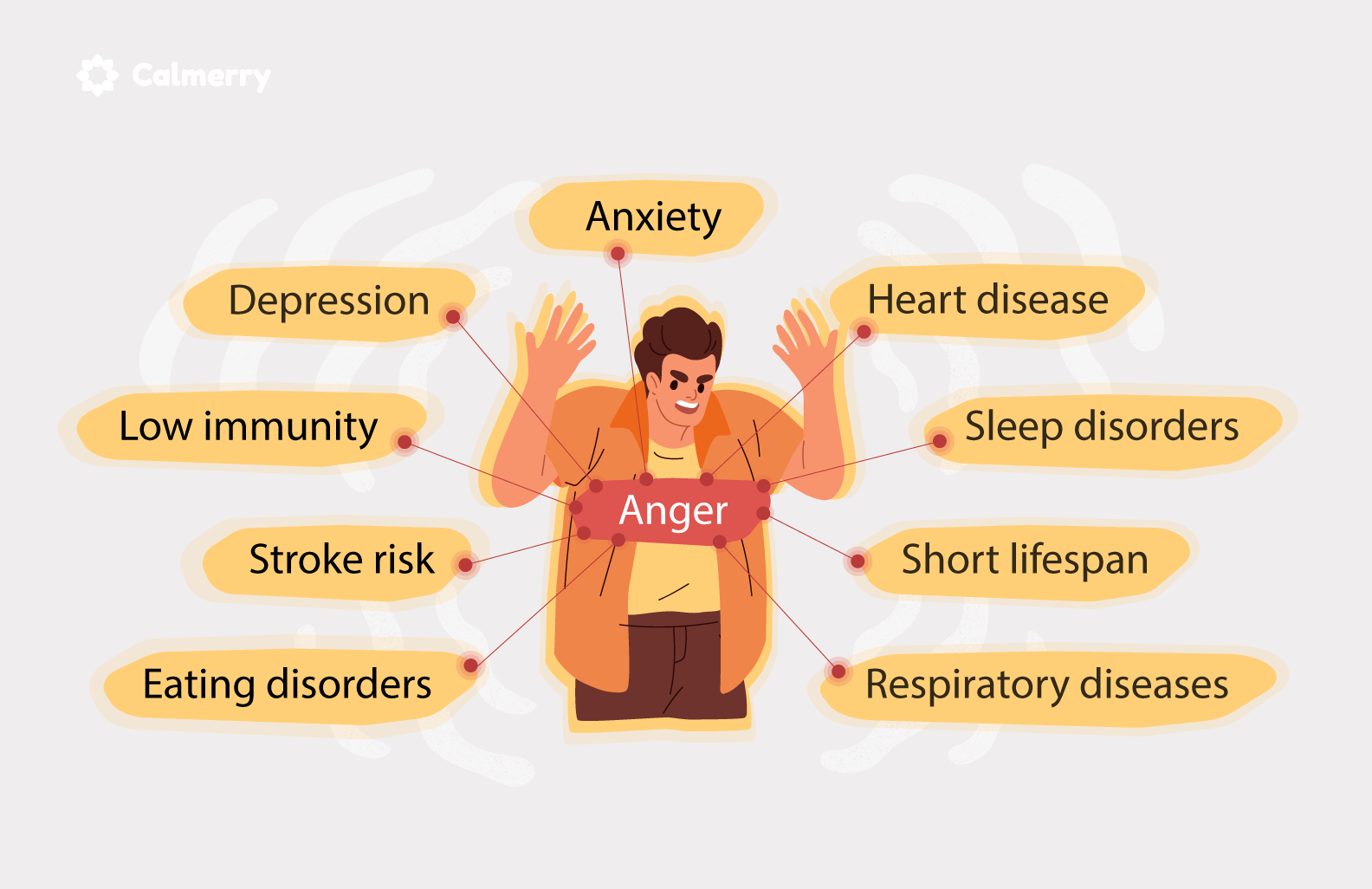
When anger is misunderstood, ignored, or left unmanaged, its impact extends far beyond momentary outbursts. Over time, unresolved anger can contribute to:

  • Breakdown of intimate and family relationships

  • Ongoing conflict and difficulties in the workplace

  • Physical health problems such as high blood pressure, headaches, or fatigue

  • Increased reliance on substances as a coping mechanism

  • Growing emotional isolation and disconnection from others

Although anger may offer short-term protection by creating a sense of control or release, it often causes long-term damage to mental health, relationships, and overall well-being when its underlying causes are not addressed.

Anger Is a Signal, Not a Character Flaw

From a therapeutic perspective, anger is information rather than a defect. It serves as an internal signal that something important is happening beneath the surface. Anger often indicates that:

  • A personal boundary feels violated

  • An emotional or psychological need remains unmet

  • Pain or hurt has gone unheard or unacknowledged

  • Stress has exceeded the individual’s capacity to cope

When anger is treated as the enemy, its underlying message is missed. Understanding what anger is trying to communicate allows for healthier responses, emotional regulation, and meaningful change.

What Helps Men Manage Anger in a Healthy Way

Healthy anger management does not involve suppressing or denying anger. Instead, it focuses on understanding what anger is communicating. When anger is explored rather than avoided, it becomes easier to respond thoughtfully rather than react impulsively.

Helpful steps include:

  • Learning to identify the underlying emotions driving anger, such as fear, hurt, or shame

  • Expanding emotional vocabulary to better name and express inner experiences

  • Developing pause and regulation skills that allow space between feeling and action

  • Addressing sources of chronic stress that keep the nervous system activated

  • Seeking therapy or support without shame, recognizing it as a strength rather than a failure

When men learn to recognize what their anger is protecting, emotional balance and self-control become possible.

Redefining Strength

Explosive control is not strength.
Emotional awareness reflects strength.
Responding with intention shows strength.
Reaching out for help demonstrates strength.

Anger itself does not make a man weak. Ignoring the message behind it does. 

Final Thoughts

Anger issues in men are rarely about anger alone. They are often rooted in unspoken pain, unmet needs, and long-standing emotional silence.

When anger is understood instead of judged, it can become a gateway to insight and healing, rather than a source of harm. Supporting men in exploring what lies beneath anger is not only sound psychology—it is essential for building healthier individuals, stronger relationships, and more compassionate communities.

Frequently Asked Questions (FAQ)

1. Are anger issues common in men?

Yes. Anger is one of the most commonly expressed emotions in men due to social and cultural conditioning.

2. Is anger always the main problem?

No. Anger is often a secondary emotion that masks deeper feelings such as fear, shame, or hurt.

3. Can depression show up as anger in men?

Yes. Depression in men frequently presents as irritability, short temper, or emotional numbness rather than sadness.

4. Why do men express anger more than sadness?

Anger is socially accepted for men, while vulnerable emotions are often discouraged.

5. Does suppressing emotions increase anger?

Yes. Suppressed emotions accumulate and often resurface as anger or sudden outbursts.

6. Is anger a sign of weakness?

No. Anger is a natural emotional response and often signals unmet needs or violated boundaries.

7. Can stress trigger anger issues in men?

Chronic stress keeps the nervous system activated, lowering tolerance and increasing anger reactions.

8. Are anger issues linked to childhood experiences?

Yes. Growing up in environments where anger was the only expressed emotion can shape adult coping patterns.

9. How does anger affect relationships?

Unmanaged anger can lead to conflict, emotional distance, and relationship breakdowns.

10. Can anger cause physical health problems?

Yes. Chronic anger is linked to high blood pressure, headaches, fatigue, and other stress-related conditions.

11. Is therapy helpful for men with anger issues?

Yes. Therapy helps identify underlying emotions, develop regulation skills, and process unresolved pain.

12. Does anger management mean suppressing anger?

No. Healthy anger management focuses on understanding and responding to anger, not suppressing it.

13. Why does anger feel uncontrollable sometimes?

When underlying emotions go unrecognized, anger can surface suddenly and intensely.

14. Can men learn healthier ways to express anger?

Absolutely. Emotional awareness and regulation skills can be learned at any age.

15. What is the first step toward managing anger?

Recognizing anger as a signal rather than a character flaw is the first step toward change.

Written by Baishakhi Das

Counselor | Mental Health Practitioner
B.Sc, M.Sc, PG Diploma in Counseling


Reference 

This topic performs strongly because it addresses men’s mental health, emotional neglect, and loneliness stigma—issues with growing global search interest.


Why Men Struggle to Talk About Their Feelings

https://restorationpsychology.com/userfiles/2556/images/mens-mental-health.png?t=20240606110643

A Psychological and Social Perspective

Many men experience deep emotions—fear, sadness, loneliness, love, and vulnerability—but struggle to put these feelings into words. This difficulty is not a personal flaw, emotional weakness, or lack of emotional capacity. Rather, it develops over time through social conditioning, cultural expectations, and learned coping strategies that teach men how they are supposed to feel and behave. From an early age, many men learn that emotional control is valued more than emotional expression, shaping how they relate to their inner world.

Understanding why men struggle to express their feelings is essential—not only for improving individual mental health, but also for creating healthier relationships, more emotionally safe workplaces, and stronger families. When emotional silence is misinterpreted as disinterest or strength, genuine needs go unnoticed. Greater awareness allows space for empathy, early support, and meaningful connection—helping men feel seen, heard, and understood rather than judged or overlooked.

Emotional Silence Is Learned, Not Inborn

Boys are not born emotionally closed or disconnected. In early childhood, boys and girls express emotions with similar intensity, openness, and range. They cry, seek comfort, show fear, and express joy freely. Over time, however, many boys begin to receive clear social messages—both spoken and unspoken—about which emotions are acceptable and which are not.

Common messages include:

  • “Be strong.”

  • “Don’t cry.”

  • “Handle it yourself.”

  • “Man up.”

These repeated messages gradually teach boys that vulnerability is a weakness and that emotional expression may lead to criticism, shame, or rejection. As a result, emotions are not explored or understood—they are suppressed, minimized, or hidden. What begins as adaptation to social expectations can later become emotional silence, making it difficult for men to recognize, express, or seek support for their inner experiences.

The Narrow Emotional Range Allowed to Men

Culturally, men are often permitted to express only a restricted set of emotions, most commonly those associated with strength or control, such as:

  • Anger

  • Pride

  • Confidence

In contrast, emotions like fear, sadness, shame, loneliness, or grief are frequently discouraged, ignored, or labeled as signs of weakness. When these vulnerable emotions arise, many men do not feel safe expressing them openly. Instead, they learn to translate emotional pain into anger—which is more socially acceptable—or into silence, which feels safer and less exposing.

Over time, this narrowing of emotional expression limits emotional awareness and connection. The original feelings remain unresolved, but their expression becomes indirect, making it harder for men to understand their own needs and for others to recognize their distress.

Lack of Emotional Language

Many men were never taught how to identify, label, or describe emotions beyond a few basic terms such as “fine,” “stressed,” or “angry.” When emotional vocabulary is limited, internal experiences remain vague and difficult to understand. As a result:

  • Feelings become confusing and hard to organize

  • Emotional expression feels overwhelming or unsafe

  • Silence becomes the easiest response

Simply put, what cannot be named cannot be shared, and unspoken emotions often remain unresolved.

Fear of Judgment and Rejection

For many men, opening up emotionally feels risky. There is often a fear that vulnerability will lead to:

  • Being seen as weak

  • Losing respect or authority

  • Burdening others

  • Being misunderstood, dismissed, or minimized

Past experiences—where emotions were mocked, ignored, or punished—strengthen the belief that silence is safer than honesty. Over time, emotional withholding becomes a protective habit rather than a conscious choice.

Identity Tied to Function, Not Feelings

Many men are taught to define their self-worth through what they do, rather than what they feel. Identity becomes closely linked to:

  • Productivity and achievement

  • Providing and responsibility

  • Problem-solving

  • Strength, control, and reliability

When identity is built around functioning and performance, emotions may be viewed as distractions, weaknesses, or failures, rather than important signals that require attention and care.

Emotional Expression Was Never Modeled

If a man grew up in a family where:

  • Emotions were ignored or dismissed

  • Conflict was avoided rather than addressed

  • Vulnerability was absent

He may never have witnessed healthy emotional expression. Without role models demonstrating how emotions can be shared safely, emotional openness can feel unfamiliar, uncomfortable, or even threatening in adulthood.

Emotional Suppression as Survival

For many men, emotional silence once served an important purpose. It may have:

  • Reduced conflict

  • Prevented shame or criticism

  • Ensured acceptance

  • Maintained a sense of control

However, coping strategies that were once protective can become harmful over time. Long-term suppression often contributes to:

  • Depression

  • Anxiety

  • Anger

  • Emotional numbness

  • Disconnection in relationships

What once helped a man survive can later prevent him from fully living.

The Cost of Not Talking

When emotions are not expressed, they do not disappear—they often find other outlets. Suppressed feelings may surface as:

  • Irritability or sudden rage

  • Physical symptoms such as fatigue or chronic pain

  • Substance use or unhealthy coping behaviors

  • Emotional withdrawal from relationships

  • Unexpected emotional breakdowns

Silence may feel safe in the short term, but it carries a significant long-term cost to mental health, relationships, and overall well-being.

Why Talking Feels Hard—even When Support Exists

Even in emotionally supportive environments, many men still struggle to open up. This difficulty is not due to unwillingness or lack of trust, but because emotional expression often feels unfamiliar and unsafe. Vulnerability can trigger deep feelings of shame, especially for those who were taught that emotions should be controlled or hidden.

For many men, words simply do not come easily. Emotional experiences are often held in the body first—as tension, restlessness, or discomfort—long before they are translated into language. When the body reacts before the mind can organize meaning, silence becomes the default response. This is not resistance or avoidance; it is conditioning shaped over years.

What Helps Men Begin to Open Up

Change rarely begins by forcing emotional expression. Instead, it develops gradually in the presence of:

  • Safety, where emotions are not judged or dismissed

  • Patience, allowing expression to unfold at its own pace

  • Non-judgment, removing fear of criticism or weakness

  • Listening without fixing, where being heard matters more than solutions

Often, men begin to open up through actions, shared activities, or subtle signals before they are able to put feelings into words. Trust grows first; language follows.

A Healthier Definition of Strength

Emotional silence is not a measure of strength.
True strength lies in self-awareness.
Reaching out for support reflects courage.
Being able to name what hurts is a sign of growth.

Talking about feelings is not a loss of control—it is a movement toward emotional balance, clarity, and connection.

Final Thoughts

Men struggle to talk about their feelings not because emotions are absent—but because they were taught not to show them.

When emotional expression is normalized and supported, men do not become weaker. They become more present, more connected, and more resilient.

Creating space for men to speak—without pressure, judgment, or expectations—is not just good psychology.
It is essential for mental health, healing, and human connection.

Frequently Asked Questions (FAQ): Why Men Struggle to Talk About Their Feelings

1. Why do many men find it hard to talk about their feelings?

Many men struggle because emotional expression was discouraged during childhood, leading emotions to be suppressed rather than understood or shared.

2. Is difficulty expressing emotions a biological trait in men?

No. Emotional silence is learned through social and cultural conditioning, not determined by biology.

3. Do men feel emotions less intensely than women?

No. Men experience emotions just as deeply, but they are often taught to hide or control emotional expression.

4. Why is anger more commonly expressed by men?

Anger is socially accepted as a “masculine” emotion, making it a safer outlet for underlying feelings like fear, sadness, or shame.

5. Can lack of emotional language affect mental health?

Yes. When emotions cannot be named or expressed, they may contribute to stress, anxiety, depression, or physical symptoms.

6. Why does vulnerability feel unsafe for many men?

Past experiences of being judged, mocked, or dismissed for emotional openness reinforce the belief that vulnerability leads to rejection.

7. Does emotional suppression protect men?

In the short term, suppression may reduce conflict or shame, but long-term suppression often harms mental health and relationships.

8. Can supportive environments alone help men open up?

Support helps, but conditioning may still make expression difficult. Safety and patience over time are essential.

9. Why do men express emotions through actions rather than words?

For many men, emotional awareness develops through behavior first because language for emotions was never modeled or encouraged.

10. Is silence a sign that a man doesn’t trust others?

Not necessarily. Silence often reflects learned coping patterns rather than lack of trust.

11. How does emotional suppression affect relationships?

It can lead to emotional distance, misunderstandings, unresolved conflict, and reduced intimacy.

12. Can therapy help men who struggle to talk about feelings?

Yes. Therapy provides a safe space to build emotional awareness, language, and expression gradually.

13. Does talking about feelings make men weaker?

No. Emotional expression supports resilience, self-awareness, and psychological strength.

14. What helps men begin to express emotions safely?

Non-judgmental listening, patience, emotional safety, and validation—without pressure to “open up.”

15. Can men learn emotional expression later in life?

Absolutely. Emotional skills can be learned and strengthened at any age.

Written by Baishakhi Das

Counselor | Mental Health Practitioner
B.Sc, M.Sc, PG Diploma in Counseling


Reference 


Depression in Men That Doesn’t Look Like Sadness

https://images.squarespace-cdn.com/content/v1/5ec33f400be7e16a9a6dc2af/5caa037a-e96f-4fe6-97d3-accb36237830/Feeling%2BFrustrated%2B%7C%2Bmen%27s%2Bcounseling%2Bin%2Bdetroit%2C%2Bmi%2B%7C%2Bcounselor%2Bfor%2Bmen%2Bin%2Bdetroit%2C%2Bmi%2B%7C%2Bmen%27s%2Btherapy%2Bin%2Bdetroit%2C%2Bmi%2B%7C%2Bmen%27s%2Bissues%2Btherapy%2Bin%2Bdetroit%2C%2Bmi%2B%7C%2Btherapist%2Bfor%2Bmen%2Bin%2Bmichigan%2B%7C%2B48230%2B%7C%2B48236%2B%7C%2B48207

A Psychological Perspective on the Hidden Face of Male Depression

When people think of depression, they often picture visible sadness, frequent crying, social withdrawal, or a clear sense of hopelessness. However, in many men, depression does not present in these familiar ways. Instead, it often hides behind behaviors that appear socially acceptable or even normal, such as anger, irritability, emotional silence, excessive work, substance use, or a persistent sense of numbness. These expressions are frequently overlooked because they do not fit the traditional or clinical stereotype of depression.

Because these signs are subtle or misunderstood, male depression is often missed, minimized, or misdiagnosed—sometimes labeled as stress, personality issues, or anger problems rather than emotional distress. As a result, many men continue to suffer silently, without recognition or support, until the emotional burden becomes overwhelming. Over time, this unaddressed distress may escalate into relationship breakdowns, physical health problems, risky behaviors, or psychological crisis, making early awareness and understanding critically important.

Why Depression Looks Different in Men

From early childhood, many boys are socialized—often subtly and repeatedly—to internalize certain beliefs about emotions and strength. Messages such as “don’t cry,” “be strong,” or “handle it yourself” teach them that emotional vulnerability equals weakness, that sadness should be hidden, and that fear or grief are unacceptable emotions. In contrast, anger is often tolerated or even encouraged, while independence is valued more than emotional expression.

Over time, these beliefs shape how psychological distress is experienced and expressed. Instead of turning inward with visible sadness or openly seeking support, many men learn to externalize pain through irritability or anger, or to shut down emotionally altogether. Emotional suppression can become a coping strategy—one that protects them from judgment but also prevents emotional release and connection.

This does not mean men feel less or experience depression less deeply. Rather, it often means they have been conditioned not to show what they feel, even to themselves. As a result, depression in men may remain hidden—expressed through behavior rather than words—until it reaches a breaking point.

Common Signs of Depression in Men (That Are Often Overlooked)

1. Irritability and Anger

Rather than appearing sad, depression in men often shows up as:

  • Frequent frustration

  • Short temper

  • Aggressive reactions

  • Emotional outbursts over small issues

Anger becomes a socially permitted outlet for deeper feelings like helplessness, shame, or grief.

2. Emotional Numbness

Some men do not feel sad—they feel nothing.

  • Loss of interest in life

  • Feeling disconnected from loved ones

  • Lack of emotional response (even to good news)

  • Sense of emptiness

This numbness is often mistaken for emotional coldness, but psychologically, it is a protective shutdown.

3. Overworking and Constant Busyness

Excessive work can function as emotional avoidance.

  • Working long hours

  • Inability to relax

  • Feeling valuable only when productive

  • Avoiding rest or intimacy

For many men, productivity replaces emotional expression.

4. Risk-Taking or Self-Destructive Behavior

Depression may be expressed through:

  • Reckless driving

  • Gambling

  • Substance use

  • Unsafe sexual behavior

These behaviors are often unconscious attempts to feel something or escape emotional pain.

5. Physical Symptoms Without Clear Medical Cause

Male depression frequently presents through the body:

  • Chronic fatigue

  • Headaches or body pain

  • Sleep disturbances

  • Digestive problems

Because emotional distress is not verbalized, it is somatized.

6. Withdrawal Without Visible Sadness

Men may withdraw silently:

  • Spending more time alone

  • Reduced communication

  • Emotional distance in relationships

  • Loss of interest in social connection

This is often misinterpreted as disinterest rather than distress.

Why Male Depression Is Often Missed

    • Emotional distress is often expressed through anger, irritability, or silence rather than sadness

    • Many men lack the language or permission to describe emotional pain

    • Common screening tools focus on stereotypical depressive symptoms

    • Substance use and risk-taking behaviors are treated as separate problems

    • Physical complaints are addressed without exploring emotional causes

    • Cultural norms discourage men from seeking psychological help

    • Fear of appearing weak delays disclosure and treatment

    • Depression is often recognized only after major personal or social consequences.

As a result, depression in men is frequently identified late, sometimes only after serious consequences.

The Cost of Ignoring Male Depression

When unrecognized, male depression can lead to:

  • Relationship breakdown

  • Workplace burnout

  • Substance dependence

  • Increased risk of suicide

Globally, men die by suicide at higher rates—not because they are weaker, but because their suffering is less visible and less supported.

Clinical and Counseling Perspective

In therapy, male depression often emerges indirectly:

  • Through anger complaints

  • Relationship conflicts

  • Work stress

  • Physical symptoms

Effective counseling focuses on:

  • Expanding emotional vocabulary

  • Normalizing vulnerability

  • Addressing shame

  • Creating safety for emotional expression

Depression is not removed by “being strong”—it is healed through connection, understanding, and support.

What Healing Can Look Like

Healing does not require dramatic emotional expression. It often begins with:

  • Naming internal experiences

  • Learning that emotions are not failures

  • Reconnecting with the body

  • Building safe emotional relationships

Strength is not the absence of pain—it is the willingness to face it.

Final Thoughts

Depression in men frequently presents without sadness.
It may manifest as anger or emotional withdrawal.
Sometimes it looks like success on the outside and emptiness inside.

Recognizing these hidden signs is not just psychological awareness—it is life-saving.

If you or someone you know fits these patterns, support is not a weakness.
It is a step toward healing.

Frequently Asked Questions (FAQ): Depression in Men That Doesn’t Look Like Sadness

1. Can depression exist without feeling sad?

Yes. Depression can appear as anger, emotional numbness, irritability, exhaustion, or withdrawal rather than visible sadness.

2. Why do men express depression differently than women?

Men are often socialized to suppress vulnerable emotions, leading distress to be expressed through behavior rather than words.

3. Is anger a symptom of depression in men?

Anger and irritability are common but often overlooked signs of depression in men.

4. Can overworking be a sign of depression?

Yes. Excessive work can function as emotional avoidance and a way to escape internal distress.

5. Why do some depressed men feel emotionally numb?

Emotional numbness can develop as a protective response when feelings have been suppressed for a long time.

6. Are substance use and depression connected in men?

Yes. Alcohol or substance use is often used to manage unrecognized or unexpressed depressive symptoms.

7. Can physical symptoms indicate depression in men?

Depression may present as fatigue, sleep problems, headaches, or unexplained body pain.

8. Why is male depression often misdiagnosed?

Symptoms may not fit traditional depression criteria and are often treated as anger, stress, or behavioral problems.

9. Do men seek help less often for depression?

Yes. Social stigma and fear of appearing weak often delay help-seeking.

10. Is male depression linked to higher suicide risk?

Men have higher suicide completion rates, partly due to delayed diagnosis and lack of emotional support.

11. Can relationships be affected by hidden depression?

Yes. Emotional withdrawal, irritability, and disconnection can strain intimate and family relationships.

12. Does talking about emotions make depression worse?

No. Emotional expression and validation are key components of healing.

13. Can therapy help men who don’t feel “sad”?

Yes. Therapy focuses on understanding emotional patterns, behaviors, and underlying distress—not just sadness.

14. Is male depression a sign of weakness?

No. Depression is a mental health condition, not a personal failure.

15. Can male depression be treated successfully?

Yes. With appropriate support, therapy, lifestyle changes, and sometimes medication, recovery is possible.

Written by Baishakhi Das

Counselor | Mental Health Practitioner
B.Sc, M.Sc, PG Diploma in Counseling


Reference Links

Fatherhood and Mental Health: What Every Dad Should Know

Fatherhood is often described as one of life’s most meaningful roles—but it is also one of the least emotionally discussed. While much attention is rightly given to mothers’ mental health, fathers’ emotional experiences are frequently minimized, overlooked, or dismissed with phrases like “men are strong” or “fathers just need to provide.”

In reality, fatherhood brings profound psychological, emotional, relational, and identity changes. When these changes go unsupported, many fathers struggle silently—with stress, anxiety, depression, anger, emotional distance, or burnout.

This article explores fatherhood and mental health in depth, addressing the emotional challenges fathers face, why many struggle in silence, and what every dad should know to protect his mental well-being.

Fatherhood Is a Major Psychological Transition

Becoming a father is not just a role change—it is an identity shift.

Men often experience:

  • Increased responsibility and pressure

  • Fear of failure as a provider or protector

  • Changes in self-identity and priorities

  • Reduced personal freedom

  • Emotional reactivation of their own childhood experiences

Unlike women, men are rarely prepared emotionally for this transition. Many enter fatherhood with high expectations but little guidance, leading to internal stress and self-doubt.

Common Mental Health Challenges in Fathers

1. Paternal Depression (Yes, Fathers Get Depressed Too)

Depression in fathers often looks different from stereotypical sadness.

Common signs include:

  • Irritability or anger

  • Emotional numbness

  • Withdrawal from family

  • Overworking or avoiding home

  • Increased substance use

  • Physical complaints (headaches, fatigue)

Many fathers do not recognize these signs as depression, delaying help-seeking.

2. Anxiety and Constant Worry

Fathers frequently experience anxiety related to:

  • Financial responsibility

  • Child’s safety and future

  • Relationship changes with partner

  • Work–life balance

This anxiety may remain unspoken, manifesting instead as restlessness, control, or emotional distance.

3. Anger and Emotional Dysregulation

For many men, anger becomes the default emotion, especially when sadness, fear, or overwhelm feel unacceptable.

Unaddressed anger can:

  • Damage partner relationships

  • Create fear in children

  • Increase guilt and shame

  • Lead to emotional disconnection

Anger in fathers is often a signal of unmet emotional needs, not moral failure.

4. Loneliness and Emotional Isolation

Even in families, many fathers feel deeply alone.

Reasons include:

  • Reduced social connections

  • Emotional focus shifting primarily to the mother–child bond

  • Lack of spaces where men can speak openly

  • Belief that they must “handle it alone”

Loneliness in fathers is strongly linked to depression and burnout.

Postpartum Mental Health in Fathers

Postpartum mental health is not exclusive to mothers. Fathers can experience:

  • Postnatal depression

  • Anxiety

  • Identity confusion

  • Feelings of invisibility

Risk factors include:

  • Partner’s postpartum depression

  • Sleep deprivation

  • Relationship strain

  • Prior mental health history

Yet paternal postpartum mental health remains severely under-recognized.

How Fatherhood Reactivates Childhood Wounds

Fatherhood often brings unresolved childhood experiences to the surface.

Fathers may find themselves thinking:

  • “I don’t want to become my father”

  • “I don’t know how to show affection”

  • “I never learned how to be emotionally present”

Unhealed childhood emotional neglect, abuse, or absence can affect:

  • Emotional availability

  • Attachment with children

  • Parenting style

  • Self-criticism and guilt

Awareness of these patterns is the first step toward breaking generational cycles.

Impact of a Father’s Mental Health on Children

A father’s mental health significantly affects a child’s:

  • Emotional regulation

  • Sense of safety

  • Self-esteem

  • Social development

Children don’t need perfect fathers—they need emotionally present and regulated ones.

When fathers model:

  • Emotional awareness

  • Healthy coping

  • Repair after mistakes

children learn resilience and emotional security.

Why Fathers Often Don’t Seek Help

Common barriers include:

  • Stigma around male vulnerability

  • Fear of being seen as weak

  • Belief that others’ needs matter more

  • Lack of male-focused mental health spaces

Many fathers seek help only when:

  • Relationships break down

  • Anger becomes unmanageable

  • Physical symptoms appear

Early support can prevent long-term harm.

Healthy Ways Fathers Can Support Their Mental Health

1. Normalize Emotional Struggle

Feeling overwhelmed does not mean you are failing as a father. It means you are human.

2. Build Emotional Language

Learning to name emotions reduces anger, stress, and emotional shutdown.

3. Prioritize Sleep and Physical Health

Sleep deprivation alone can severely impact mood, patience, and decision-making.

4. Create Support Systems

This may include:

  • Trusted friends

  • Support groups

  • Therapy or counseling

Isolation intensifies distress.

5. Seek Professional Support Early

Therapy is not about weakness—it is about responsibility and self-awareness.

A Message to Fathers

You are allowed to:

  • Feel overwhelmed

  • Ask for help

  • Rest

  • Talk about fear and doubt

  • Take care of your mental health

Strong fathers are not those who suffer silently—but those who choose awareness, support, and growth.

Final Reflection

Fatherhood is not just about providing—it is about presence. A father’s mental health shapes not only his own well-being, but the emotional climate of his family and the future emotional health of his children.

By acknowledging the emotional realities of fatherhood, breaking silence around men’s mental health, and encouraging support-seeking, we create healthier fathers, stronger families, and more emotionally secure children.

FREQUENTLY ASKED QUESTIONS (FAQ)


1. Is it normal for fathers to struggle with mental health?

Yes. Fatherhood brings major emotional, identity, and lifestyle changes. Stress, anxiety, sadness, anger, or emotional numbness are common and valid experiences, not signs of weakness.


2. What does depression look like in fathers?

Depression in fathers often appears as:

  • Irritability or anger

  • Emotional withdrawal

  • Overworking or avoidance

  • Fatigue and sleep problems

  • Substance use

Many fathers don’t feel “sad,” which is why paternal depression often goes unnoticed.


3. Can fathers experience postpartum depression?

Yes. Paternal postpartum depression affects many men, especially during the first year after childbirth. Risk increases if:

  • The partner has postpartum depression

  • Sleep deprivation is severe

  • There is relationship stress

  • The father has a history of mental health issues


4. How does a father’s mental health affect children?

A father’s mental health influences a child’s:

  • Emotional security

  • Stress regulation

  • Self-esteem

  • Behavioral development

Emotionally present fathers support healthier psychological outcomes in children.


5. Why do many fathers avoid seeking help?

Common reasons include:

  • Social stigma around male vulnerability

  • Pressure to “be strong”

  • Fear of being judged as weak

  • Lack of father-focused mental health resources


6. Is anger in fathers a mental health issue?

Anger is often a secondary emotion masking stress, fear, sadness, or burnout. Persistent anger may signal unmet emotional needs or emotional overload and deserves attention, not shame.


7. When should a father seek professional help?

Support is strongly recommended if emotional distress:

  • Is harming relationships

  • Leads to aggression or emotional shutdown

  • Interferes with work or parenting

  • Coexists with trauma, anxiety, or depression

Early help prevents long-term impact.


8. Does therapy really help fathers?

Yes. Therapy helps fathers:

  • Regulate emotions

  • Process stress and trauma

  • Improve relationships

  • Build emotional confidence

  • Break intergenerational patterns

Therapy is a strength-based choice, not a failure.


9. How can fathers support their mental health daily?

  • Get adequate sleep where possible

  • Share emotional load with trusted people

  • Limit overworking

  • Practice emotional awareness

  • Seek professional support early


10. What is the most important message for fathers?

You don’t have to suffer silently.
Caring for your mental health is part of caring for your family.

Written by Baishakhi Das

Counselor | Mental Health Practitioner
Qualifications: B.Sc in Psychology | M.Sc  | PG Diploma in Counseling

Reference 

  1. World Health Organization (WHO) – Mental Health
    https://www.who.int/teams/mental-health-and-substance-use
    (Global mental health framework and family wellbeing)

  2. American Psychological Association – Fathers & Mental Health
    https://www.apa.org/monitor/2013/02/fatherhood
    (Psychological impact of fatherhood on men)

  3. National Institute of Mental Health (NIMH) – Men and Mental Health
    https://www.nimh.nih.gov/health/topics/men-and-mental-health
    (Male depression, anxiety, help-seeking barriers)

  4. Postpartum Support International – Paternal Mental Health
    https://www.postpartum.net/get-help/help-for-dads/
    (Postpartum depression and anxiety in fathers)

  5. Psychology Today – Fathers and Emotional Health
    https://www.psychologytoday.com/us/basics/fatherhood
    (Fatherhood, stress, identity, and emotional wellbeing)

  6. NHS (UK) – Men’s Mental Health
    https://www.nhs.uk/mental-health/conditions/
    (Accessible public mental health guidance)

  7. Harvard Center on the Developing Child – Parents & Mental Health
    https://developingchild.harvard.edu

  8. 7 Signs You Need to Talk to a Therapist — Don’t Ignore These


Real Stories: How Men Turned Their Mental Health Around

For many men, mental health struggles do not look like sadness or tears. They often show up as anger, emotional numbness, workaholism, isolation, addiction, or physical complaints. Social expectations around masculinity—“be strong,” “don’t talk,” “handle it yourself”—push many men to suffer silently for years.

This article shares real-life inspired stories (names changed for privacy) that reflect common patterns seen in counseling rooms. These stories show that healing is possible, not through sudden transformation, but through awareness, support, and small, consistent changes.

Story 1: “I Didn’t Know I Was Depressed Because I Was Still Functioning”

– Rakesh, 38, Corporate Professional

Rakesh had a stable job, a family, and financial security. From the outside, everything looked fine. Inside, he felt empty, irritable, and disconnected. He worked long hours, avoided emotional conversations, and snapped at his wife and children.

He didn’t identify as “depressed” because he was still going to work and meeting responsibilities. It was only after recurring headaches, insomnia, and a panic episode that he sought help.

Turning Point

In therapy, Rakesh realized he was experiencing high-functioning depression. He had learned early in life that emotions were weakness, so he coped by suppressing them.

What Helped

  • Psychoeducation about male depression

  • Learning emotional language

  • Weekly therapy sessions

  • Setting boundaries at work

Outcome

Over time, Rakesh reported feeling more present, less irritable, and emotionally available to his family. His biggest realization:

“I wasn’t broken—I was exhausted from pretending I was okay.”

Story 2: “Anger Was Easier Than Admitting I Was Hurt”

– Imran, 42, Small Business Owner

Imran was known for his temper. Family members described him as “short-fused” and “controlling.” What no one saw was his unprocessed childhood trauma—a violent home and constant emotional invalidation.

Whenever he felt criticized or ignored, his nervous system reacted as if he was under threat. Anger became his shield.

Turning Point

After his marriage reached the brink of separation, Imran agreed to counseling—reluctantly.

What Helped

  • Trauma-informed therapy

  • Understanding anger as a secondary emotion

  • Learning grounding and regulation skills

  • Exploring childhood emotional neglect

Outcome

Imran didn’t “lose” his anger—he learned to understand it. His reactions softened, and his relationships became less conflict-driven.

“Anger was protecting me. Once I felt safe, I didn’t need it as much.”

Story 3: “I Felt Like a Failure Because I Lost My Job”

– Suman, 35, IT Professional

When Suman was laid off during an economic downturn, his self-worth collapsed. He stopped socializing, avoided family gatherings, and felt deep shame. He believed:

“If I’m not earning, I’m nothing.”

His anxiety increased, sleep reduced, and he began withdrawing emotionally from his partner.

Turning Point

A friend encouraged him to speak to a counselor, framing it not as weakness but as support.

What Helped

  • Challenging identity tied only to productivity

  • Career counseling combined with emotional support

  • Routine building during unemployment

  • Normalizing grief around job loss

Outcome

Suman eventually found new work, but more importantly, he rebuilt a healthier sense of self not solely tied to income.

“Losing my job broke my confidence—but rebuilding it changed my life.”

Story 4: “I Didn’t Know How Lonely I Was Until I Spoke About It”

– Arjun, 29, Single, Living Alone

Arjun rarely talked about his feelings. He spent most evenings scrolling on his phone, gaming, or watching shows. He didn’t feel sad—just numb and disconnected.

He believed loneliness was something “weak people” complained about.

Turning Point

During a health checkup, the doctor asked about stress and sleep. For the first time, Arjun admitted he felt invisible.

What Helped

  • Normalizing male loneliness

  • Group therapy sessions

  • Building offline social routines

  • Learning to initiate emotional conversations

Outcome

Arjun didn’t suddenly become extroverted, but he developed meaningful connections.

“Loneliness wasn’t the absence of people—it was the absence of connection.”

Common Themes Across These Stories

Despite different backgrounds, these men shared common experiences:

  • Emotional suppression

  • Shame around vulnerability

  • Identity tied to productivity or control

  • Delayed help-seeking

  • Fear of being judged

And common healing factors:

  • Being heard without judgment

  • Understanding emotions, not fighting them

  • Safe therapeutic relationships

  • Small, consistent lifestyle changes

Why These Stories Matter

Men often don’t seek help until:

  • Relationships break down

  • Physical symptoms appear

  • Anger becomes unmanageable

  • Burnout sets in

Sharing real stories reduces stigma and sends a powerful message:

You don’t have to reach a breaking point to ask for help.

A Message to Men Who Are Struggling

You don’t need to have the “right words.”
You don’t need to be falling apart.
You don’t need to do this alone.

Mental health recovery is not about becoming someone else—it’s about becoming more yourself, with support.

Final Thought

These stories are not about dramatic transformations. They are about men choosing honesty over silence, support over isolation, and healing over endurance.

you can Also Read

7 Signs You Need to Talk to a Therapist — Don’t Ignore These

Top 7 Tools Men Can Use to Track Their Mental Wellness


Best Books & Podcasts for Men’s Mental Health Growth

https://plusapn.com/wp-content/uploads/2024/11/The-Benefits-of-Reading-for-Mental-Health-m.jpg

Practical, relatable resources to build emotional strength, self-awareness, and resilience

Introduction: Why Men Need Mental Health–Focused Learning Spaces

Men across cultures often grow up with unspoken rules:

  • Don’t show weakness

  • Handle problems alone

  • Stay strong, stay silent

Over time, these beliefs can lead to emotional suppression, chronic stress, anger issues, burnout, relationship difficulties, and untreated anxiety or depression. Many men begin understanding their mental health through books and podcasts, which offer a private and flexible space for reflection, alongside the option of therapy.

Books and podcasts offer men:

  • Language for emotions they were never taught to name

  • Validation without judgment

  • Tools for stress, relationships, and identity

  • Stories that normalize vulnerability

  • Growth without stigma

This article explores the best books and podcasts for men’s mental health growth, explaining why they work, who they’re for, and how to use them effectively.

Why Books & Podcasts 

Men are more likely to engage with:

  • Structured information

  • Narratives that allow emotional insight without direct confrontation

  • Practical tools over abstract advice

Books and podcasts:

  • Reduce pressure to “perform emotions”

  • Allow reflection without exposure

  • Build insight gradually

  • Support men who aren’t ready for therapy yet

They are often the first safe step toward deeper emotional work.

SECTION I: Best Books for Men’s Mental Health Growth

1. The Mask of Masculinity – Lewis Howes

Why This Book Matters

This book directly addresses how traditional masculinity pressures men to hide pain, fear, and vulnerability behind emotional armor.

Core Themes

  • Emotional suppression in men

  • Fear of vulnerability

  • Shame and identity

  • Redefining strength

Why Men Relate

The writing feels relatable and grounded in everyday experiences, without relying on heavy theory.

Best For

Men who:

  • Feel emotionally blocked

  • Struggle to open up

  • Want to understand why vulnerability feels unsafe

2. Man’s Search for Meaning – Viktor E. Frankl

Core Themes

  • Finding meaning in suffering

  • Personal responsibility

  • Psychological resilience

  • Existential growth

Mental Health Impact

This book helps men:

  • Reframe pain without minimizing it

  • Understand depression and hopelessness through purpose

  • Develop inner strength without emotional denial

Best For

Men dealing with:

  • Existential crisis

  • Burnout

  • Loss or life transitions

3. I Don’t Want to Talk About It – Terrence Real

Key Insight

Men often express depression as:

  • Anger

  • Withdrawal

  • Overwork

  • Addictive behaviors

Why It’s Powerful

It validates men who say:

“I’m not sad—I’m just tired, irritated, and numb.”

Best For

Men experiencing:

  • Emotional numbness

  • Irritability

  • Relationship breakdowns

  • Hidden depression

4. Atomic Habits – James Clear

Why It Belongs on a Mental Health List

Core Themes

  • Small consistent change

  • Identity-based habits

  • Self-discipline without self-punishment

Mental Health Benefit

  • Reduces overwhelm

  • Builds self-efficacy

  • Improves mood through structure

Best For

Men who prefer:

  • Action-based growth

  • Practical frameworks

  • Measurable progress

5. Attached – Amir Levine & Rachel Heller

Why Men Need This Book

Many men struggle in relationships without understanding attachment patterns.

Core Themes

  • Anxious, avoidant, secure attachment

  • Emotional distance vs closeness

  • Conflict cycles

Why It Helps Mental Health

Relationship stress is a major contributor to:

  • Anxiety

  • Depression

  • Low self-worth

Understanding attachment reduces shame and blame.

Best For

Men facing:

  • Repeated relationship issues

  • Fear of intimacy

  • Emotional withdrawal

6. The Body Keeps the Score – Bessel van der Kolk

Why This Book Is Transformative

It explains how trauma lives in the body, not just the mind.

Key Topics

  • Childhood trauma

  • Emotional regulation

  • Somatic memory

Why Men Benefit

Men often somaticize emotions as:

  • Headaches

  • Fatigue

  • Anger

  • Health issues

This book legitimizes those experiences.

Best For

Men with:

  • Trauma history

  • Chronic stress

  • Emotional reactivity

SECTION II: Best Podcasts for Men’s Mental Health Growth

1. The Man Enough Podcast

Why It’s Powerful

It challenges harmful masculinity narratives through honest conversations.

Topics Covered

  • Vulnerability

  • Emotional literacy

  • Relationships

  • Mental health stigma

Why Men Listen

It normalizes conversations men rarely hear growing up.

2. The Tim Ferriss Show

Mental Health Angle

  • Burnout

  • Anxiety

  • Failure

  • Emotional resilience

Why It Works

Men who resist “mental health content” often engage through performance and growth conversations first.

3. On Purpose

Core Focus

  • Emotional awareness

  • Purpose

  • Relationships

  • Mindfulness

Why It Helps

Simple language makes psychological concepts accessible.

4. The Psychology Podcast

Why It’s Ideal for Analytical Men

It explores psychology through research, interviews, and evidence-based discussion.

Topics

  • Personality

  • Trauma

  • Creativity

  • Mental health science

5. Therapy for Black Men

Why It’s Important

Addresses cultural stigma and emotional suppression in men of color.

Themes

  • Identity

  • Masculinity

  • Emotional safety

  • Healing narratives

6. Where Should We Begin?

Why Men Benefit

Listening to real therapy sessions helps men:

  • Understand emotions indirectly

  • Learn relational language

  • See vulnerability modeled

7. The Happiness Lab

Mental Health Focus

  • Anxiety

  • Habits

  • Cognitive biases

  • Emotional wellbeing

Practical, science-backed, and engaging.

How Men Can Use Books & Podcasts Effectively

Don’t Binge—Reflect

Growth happens through integration, not consumption.

Pair Learning With Journaling

Ask:

  • What stood out to me the most?
  • Which part challenged or stretched me?
  • What feels relevant to my life right now?

Resistance often points to growth areas.

Books & Podcasts Are Not Therapy—but They Are Gateways

They:

  • Reduce stigma

  • Build insight

  • Encourage help-seeking

  • Normalize emotional experience

For many men, these resources are the bridge to therapy, not the replacement.

 Seek for Professional Support

If you notice:

  • Persistent low mood

  • Anger outbursts

  • Emotional numbness

  • Relationship breakdowns

  • Substance reliance

Books and podcasts are a start—but human support matters.

Conclusion: Growth Begins With Listening

Men’s mental health growth doesn’t start with “fixing” emotions. It starts with understanding them.

Books and podcasts offer:

  • Language where silence existed

  • Permission where shame ruled

  • Strength through awareness

🧠 Real strength isn’t silence—it’s self-awareness.

Reference

Top 7 Tools Men Can Use to Track Their Mental Wellness

Introduction

Mental wellness is not just about the absence of mental illness—it is about emotional balance, self-awareness, resilience, and the ability to cope with daily stressors. For many men, mental health is often deprioritized due to social expectations, demanding schedules, and the belief that they must handle everything on their own.

Men are statistically less likely to seek therapy early, yet they experience high levels of stress, burnout, emotional suppression, and untreated anxiety or depression. This gap has led to a growing interest in self-monitoring and digital mental wellness tools, which allow men to track their mental health privately, consistently, and at their own pace.

Mental wellness tools do not replace professional therapy—but they support awareness, early detection, emotional regulation, and healthy habits. This article explores the top 7 tools men can use to track their mental wellness, explaining how each tool works, why it matters psychologically, and how to use it effectively in daily life.

Why Tracking Mental Wellness Matters for Men

Mental wellness tracking helps men:

  • Recognize emotional patterns early

  • Identify stress triggers

  • Monitor mood and energy fluctuations

  • Reduce emotional suppression

  • Build healthier coping strategies

From a psychological perspective, self-monitoring increases emotional insight, which is the first step toward emotional regulation and behavioral change.

  • Normalizes emotional experiences

  • Reduces stigma around mental health

  • Encourages proactive self-care

  • Supports therapy or counseling when needed

Tool 1: Mood Tracking Apps

https://www.verywellmind.com/thmb/-U0xVf9OJvB7JNgmbS9BRUXCL6o%3D/1500x0/filters%3Ano_upscale%28%29%3Amax_bytes%28150000%29%3Astrip_icc%28%29/Daylio-a12eaa51dd2647e78a9305c2f070b710.jpg?utm_source=chatgpt.com

What Is a Mood Tracker?

Mood tracking apps allow users to log emotions daily using:

  • Emojis or mood scales

  • Emotion labels

  • Short notes or reflections

Over time, these apps generate patterns showing emotional highs, lows, and trends.

Why Mood Tracking Is Helpful for Men

Many men struggle to name or express emotions due to emotional conditioning. Mood trackers help by:

  • Expanding emotional vocabulary

  • Making emotions visible and measurable

  • Reducing emotional avoidance

  • Encouraging reflection without judgment

 Mood tracking asks, “How do I feel today?”

How to Use It Effectively

  • Track mood once or twice daily

  • Add brief notes about triggers

  • Review weekly or monthly patterns

  • Avoid judging “good” or “bad” emotions

Mood awareness improves emotional regulation and stress management.

Tool 2: Stress & Burnout Assessment Tools

What Are Stress Assessment Tools?

These tools use short questionnaires to measure:

  • Stress levels

  • Burnout risk

  • Emotional exhaustion

  • Work-life imbalance

They are often based on validated psychological scales.

Why This Tool Is Important

Men often normalize stress until it becomes burnout. Stress assessment tools:

  • Offer objective feedback

  • Identify early warning signs

  • Reduce denial and minimization

  • Encourage timely action

Psychologically, naming stress reduces its intensity.

How to Use It

  • Take assessments monthly or quarterly

  • Track changes over time

  • Use results to adjust workload or routines

  • Share insights with a counselor if needed

These tools are especially useful for working professionals.

Tool 3: Sleep Tracking Devices or Apps

https://oaksintcare.org/wp-content/uploads/2024/12/VitalRoleofSleep.png?utm_source=chatgpt.com

Why Sleep Is a Mental Health Indicator

Sleep is deeply linked to:

  • Mood regulation

  • Stress tolerance

  • Anxiety and depression

  • Cognitive performance

Poor sleep often worsens emotional reactivity.

How Sleep Tracking Helps Men

Sleep trackers monitor key sleep indicators, including:

  • Total sleep duration

  • Overall sleep quality

  • Night awakenings

  • Sleep consistency

This data helps men recognize how stress, screen time, caffeine, or work pressure affect sleep.

How to Use Sleep Data Wisely

  • Focus on trends, not perfection

  • Adjust bedtime routines gradually

  • Pair data with relaxation practices

  • Avoid obsessing over numbers

Better sleep improves emotional resilience.

Tool 4: Journaling & Reflection Tools

What Is Mental Health Journaling?

Journaling tools allow men to:

  • Write thoughts and emotions

  • Reflect on daily experiences

  • Process stress privately

Digital journals reduce the pressure of “writing perfectly.”

Why Journaling Works Psychologically

Journaling supports:

  • Emotional processing

  • Reduced rumination

  • Self-awareness

  • Problem-solving

For men who find talking difficult, writing becomes a safe emotional outlet.

How to Journal Effectively

  • Write for 5–10 minutes daily

  • Use prompts like:

    • “What stressed me today?”

    • “What helped me cope?”

  • Be honest, not polished

Journaling is one of the most evidence-supported self-help tools.

Tool 5: Mindfulness & Meditation Apps

https://cdn.prod.website-files.com/61258807d2d4f9553cc9d3e6/6646132ec0fbfec684c3113d_The%20Best%20Meditations%20for%20Stress%20Relief%C2%A0.webp?utm_source=chatgpt.com

What These Tools Do

Mindfulness apps guide users through:

  • Breathing exercises

  • Body scans

  • Short meditations

  • Stress-reduction practices

Sessions can be as short as 2–10 minutes.

Why Mindfulness Is Effective for Men

Mindfulness helps men:

  • Slow down impulsive reactions

  • Improve emotional control

  • Reduce anger and anxiety

  • Increase focus

It trains the brain to respond instead of react.

How to Start Without Resistance

  • Begin with short sessions

  • Focus on breathing, not “emptying the mind”

  • Practice consistency over duration

  • Use during work breaks or before sleep

Mindfulness is a skill, not a personality trait.

Tool 6: Habit & Routine Tracking Tools

What Are Habit Trackers?

Habit trackers monitor:

  • Exercise

  • Sleep routines

  • Water intake

  • Screen limits

  • Self-care habits

They visualize consistency and progress.

Why Habits Matter for Mental Wellness

Mental health improves when:

  • Daily structure is predictable

  • Self-care becomes routine

  • Small wins build confidence

For men, habits provide action-based self-care, which often feels more accessible than emotional talk.

How to Use Habit Trackers Well

  • Track only 2–3 habits at first

  • Keep goals realistic

  • Focus on consistency, not streaks

  • Review weekly progress

Healthy habits stabilize mood and energy.

Tool 7: Mental Health Screening & Therapy Platforms

https://menstherapy.online/wp-content/uploads/2025/11/MTO-Square-Logo-White-Background.png?utm_source=chatgpt.com

What These Platforms Offer

These tools provide:

  • Mental health screenings

  • Self-assessment questionnaires

  • Access to online counseling

  • Educational resources

They lower barriers to help-seeking.

Why This Matters for Men

Men often delay professional support due to:

  • Stigma

  • Time constraints

  • Privacy concerns

Digital platforms offer:

  • Confidential access

  • Flexible scheduling

  • Reduced initial resistance

Early screening prevents escalation.

How to Use Responsibly

  • Use screenings as guidance, not diagnosis

  • Seek professional help if symptoms persist

  • Combine tools with offline support when possible

Technology can bridge the gap to care.

How to Choose the Right Tools for Yourself

Not every tool suits everyone. Consider:

  • Your comfort with technology

  • Time availability

  • Emotional awareness level

  • Current stress load

Start with one or two tools, then expand gradually.

Common Mistakes to Avoid

  • Tracking obsessively

  • Expecting instant emotional change

  • Using tools instead of seeking help

  • Comparing progress with others

Tools support wellness; they do not replace human connection.

Integrating Tools into Daily Life

  • Link tracking to existing routines

  • Keep it simple and flexible

  • Review data weekly, not constantly

  • Focus on self-compassion

Consistency matters more than intensity.

When to Seek Professional Support

Tools are helpful, but consider professional help if:

  • Emotional distress persists

  • Mood worsens over time

  • Functioning is affected

  • Thoughts of hopelessness arise

Mental health care is a strength, not a failure.

Conclusion

Mental wellness tracking empowers men to understand themselves better—emotionally, mentally, and behaviorally. From mood trackers and journaling tools to sleep monitors and mindfulness apps, these tools offer accessible, private, and practical ways to support mental health.

Tracking does not mean fixing everything alone. It means paying attention, recognizing patterns, and choosing healthier responses. When combined with support, self-awareness, and compassion, mental wellness tools can play a powerful role in helping men live more balanced, resilient, and emotionally healthy lives.

Frequently Asked Questions (FAQ)

Top 7 Tools Men Can Use to Track Their Mental Wellness


1. What does it mean to track mental wellness?

Tracking mental wellness means regularly monitoring your mood, stress levels, sleep, habits, and emotional patterns to better understand how your mental health changes over time.


2. Why is mental wellness tracking important for men?

Many men suppress emotions or delay seeking help. Tracking tools increase self-awareness, help identify stress or burnout early, and provide a private way to engage with mental health.


3. Can mental wellness tools replace therapy or counseling?

No. These tools support self-awareness and early intervention but do not replace professional mental health care. They work best when combined with counseling if needed.


4. Which mental wellness tool should men start with?

Most men find mood trackers or sleep tracking tools easiest to begin with, as they require minimal effort and provide immediate insights into emotional and physical patterns.


5. How often should mental wellness be tracked?

Consistency matters more than frequency. Tracking once daily or a few times a week is enough to notice patterns without becoming overwhelming.


6. Are mood tracking apps useful if I don’t know how to label emotions?

Yes. Mood tracking apps often use emojis or simple emotion words, helping men gradually expand emotional awareness without pressure.


7. How does sleep tracking help mental health?

Sleep quality directly affects mood, stress tolerance, focus, and emotional regulation. Tracking sleep helps identify habits or stressors that impact mental wellness.


8. Is journaling effective for men who don’t like talking about feelings?

Yes. Journaling provides a private, judgment-free space to process thoughts and emotions, making it especially helpful for men who struggle with verbal expression.


9. Do mindfulness and meditation apps really reduce stress?

Research shows that short, consistent mindfulness practices improve emotional regulation, reduce anxiety, and lower stress—especially when practiced regularly.


10. How do habit trackers support mental wellness?

Habit trackers build structure and routine, which stabilize mood and energy. Small, consistent habits like exercise, hydration, or breaks support overall mental health.


11. Are online mental health screenings accurate?

Screenings are helpful for awareness, not diagnosis. They indicate whether professional support may be beneficial and should not be used as a final conclusion.


12. Can these tools help with burnout prevention?

Yes. Stress assessments, mood tracking, and habit monitoring help detect early warning signs of burnout, allowing timely adjustments before exhaustion becomes severe.


13. What are common mistakes men make when using mental health tools?

Common mistakes include tracking obsessively, expecting instant change, ignoring emotional insights, or using tools as a substitute for seeking help.


14. How can men stay consistent with mental wellness tools?

Link tools to existing routines, keep tracking simple, avoid perfectionism, and focus on self-compassion rather than streaks or scores.


15. When should a man seek professional mental health support?

Professional help is important if emotional distress persists, daily functioning is affected, mood worsens over time, or feelings of hopelessness or isolation increase.


About the Author

Baishakhi Das is a Counselor and Mental Health Practitioner with academic training in psychology and human development. She works with men experiencing stress, burnout, emotional suppression, and mental health challenges, focusing on practical, evidence-based strategies for emotional well-being.

Reference 


  1. World Health Organization. (2022). Mental health of men and boys.
    https://www.who.int/publications/i/item/9789240044149

  2. American Psychological Association. (2023). Technology and mental health.
    https://www.apa.org/monitor/2023/07/technology-mental-health

  3. National Institute of Mental Health. (2023). Caring for your mental health.
    https://www.nimh.nih.gov/health/topics/caring-for-your-mental-health

  4. Torous, J., et al. (2021). Digital mental health and COVID-19: Using technology today to accelerate the curve on access and quality tomorrow. JMIR Mental Health, 7(3).
    https://doi.org/10.2196/18848

  5. Mohr, D. C., et al. (2017). The behavioral intervention technology model. Journal of Medical Internet Research, 19(6).
    https://doi.org/10.2196/jmir.7787

  6. Courtenay, W. H. (2000). Constructions of masculinity and their influence on men’s well-being. Social Science & Medicine, 50(10), 1385–1401.
    https://doi.org/10.1016/S0277-9536(99)00390-1

  7. How to Build Daily Habits for Better Mental Health

10 Common Mental Health Challenges in Men—and How to Address Them

https://calmerry.com/wp-content/uploads/2021/05/depression-in-men.jpg?utm_source=chatgpt.com
Introduction

Mental health challenges in men are often hidden, minimized, or misunderstood. Social expectations frequently teach men to be strong, silent, and self-reliant. As a result, emotional distress is commonly suppressed rather than expressed. Many men struggle silently—until symptoms appear as anger, withdrawal, substance use, physical complaints, or burnout.

Research consistently shows that men are less likely to seek psychological help, yet they face significant mental health risks, including higher suicide rates and untreated emotional distress. Understanding the unique ways mental health challenges present in men is crucial for early support, prevention, and recovery.

This article explores 10 common mental health challenges in men and provides practical, psychologically grounded ways to address them, suitable for individuals, families, counselors, and mental health educators.

Why Men’s Mental Health Often Goes Unnoticed

Men are often conditioned to:

  • Hide vulnerability

  • Avoid emotional expression

  • View help-seeking as weakness

  • Prioritize responsibility over self-care

As a result, mental health symptoms may look different in men than in women—often showing up as irritability, aggression, risk-taking, workaholism, or emotional shutdown rather than sadness or tearfulness.

Recognizing these patterns is the first step toward change.

1. Depression in Men

How It Commonly Appears

Depression in men is often underdiagnosed because it may not look like classic sadness.

Common signs include:

  • Persistent irritability or anger

  • Emotional numbness

  • Loss of interest in work or relationships

  • Fatigue and sleep disturbances

  • Withdrawal and isolation

Men may describe feeling “empty,” “tired,” or “burnt out” rather than “sad.”

How to Address It

  • Normalize emotional expression without judgment

  • Encourage routine and structure

  • Promote physical activity and sleep hygiene

  • Seek counseling or therapy early

  • Challenge beliefs that emotions equal weakness

2. Anxiety Disorders

How It Commonly Appears

Anxiety in men often manifests as:

  • Restlessness

  • Overthinking

  • Muscle tension

  • Difficulty relaxing

  • Avoidance of situations

Some men mask anxiety through overworking or controlling behavior.

How to Address It

  • Learn grounding and breathing techniques

  • Reduce caffeine and stimulants

  • Practice stress-management strategies

  • Cognitive-behavioral therapy (CBT) is highly effective

  • Normalize anxiety as a human experience

3. Anger and Emotional Dysregulation

Why It Happens

Many men were taught that anger is the only acceptable emotion, while sadness or fear were discouraged. As a result, emotional pain often gets expressed as anger.

Signs include:

  • Frequent irritability

  • Explosive reactions

  • Difficulty calming down

  • Relationship conflicts

How to Address It

  • Identify underlying emotions beneath anger

  • Learn emotional labeling skills

  • Practice pause-and-response techniques

  • Therapy focused on emotional regulation can help

  • Develop healthy outlets (exercise, journaling, conversation)

4. Stress and Work-Related Burnout

https://hbr.org/resources/images/article_assets/2022/10/A_Nov22_03_Men-mental-health_1341999505.jpg?utm_source=chatgpt.com

Why Men Are Vulnerable

Many men tie self-worth closely to:

  • Career success

  • Financial responsibility

  • Productivity

Chronic work stress can lead to:

  • Emotional exhaustion

  • Detachment

  • Reduced motivation

  • Physical health problems

How to Address It

  • Set realistic work boundaries

  • Redefine productivity beyond constant output

  • Take regular breaks and leave

  • Develop identity beyond work

  • Seek support before burnout becomes severe

5. Substance Use and Addiction

Why It’s Common

Men are more likely to use substances to:

  • Numb emotional pain

  • Manage stress

  • Avoid vulnerability

This may include alcohol, smoking, drugs, or behavioral addictions (gaming, gambling).

How to Address It

  • Address underlying emotional distress

  • Reduce shame around seeking help

  • Encourage non-judgmental conversations

  • Combine therapy with lifestyle changes

  • Seek specialized addiction support if needed

6. Loneliness and Social Isolation

How It Develops

As men age, friendships often reduce due to:

  • Work pressure

  • Family responsibilities

  • Emotional withdrawal

Loneliness in men is strongly linked to depression and poor physical health.

How to Address It

  • Rebuild social connections intentionally

  • Encourage shared activities rather than only “talk”

  • Maintain friendships outside work

  • Normalize emotional closeness among men

7. Relationship and Intimacy Difficulties

Common Challenges

Men may struggle with:

  • Emotional expression

  • Vulnerability

  • Communication

  • Fear of rejection

Unresolved emotional patterns often affect romantic relationships.

How to Address It

  • Learn emotional communication skills

  • Explore attachment patterns

  • Couples counseling when needed

  • Practice active listening

  • Address fears of intimacy gradually

8. Trauma and Unresolved Childhood Experiences

Why It’s Often Overlooked

Men may minimize past trauma, especially:

  • Childhood abuse

  • Emotional neglect

  • Bullying

  • Family violence

Unprocessed trauma can lead to anger, avoidance, or emotional shutdown.

How to Address It

  • Trauma-informed therapy

  • Safe emotional expression

  • Understanding triggers

  • Gradual processing of past experiences

  • Building emotional safety

9. Low Self-Esteem and Identity Struggles

Common Sources

  • Unrealistic masculine ideals

  • Comparison and performance pressure

  • Failure or job loss

  • Relationship breakdown

Low self-esteem in men may show as defensiveness or withdrawal.

How to Address It

  • Separate self-worth from achievement

  • Identify strengths beyond productivity

  • Practice self-compassion

  • Challenge negative self-beliefs

  • Work with a counselor if patterns persist

10. Suicide Risk and Hopelessness

https://sp-ao.shortpixel.ai/client/q_glossy%2Cret_img%2Cw_300/https%3A//mindthemen.co.uk/wp-content/uploads/2019/11/mind-the-men-asset_logo-300x300.png?utm_source=chatgpt.com

Critical Reality

Men are at higher risk of suicide, often due to:

  • Untreated depression

  • Emotional isolation

  • Reluctance to seek help

Warning signs may include:

  • Withdrawal

  • Talking about feeling like a burden

  • Risk-taking behavior

  • Sudden calm after distress

How to Address It

  • Take warning signs seriously

  • Encourage immediate professional support

  • Maintain open, non-judgmental communication

  • Crisis intervention when needed

  • Community and family support are vital


Breaking the Stigma Around Men’s Mental Health

True strength lies in:

  • Emotional awareness

  • Asking for help

  • Setting boundaries

  • Choosing healing over silence

When men are allowed to be emotionally human, mental health outcomes improve dramatically.


How Families and Society Can Support Men

  • Encourage emotional conversations

  • Avoid shaming vulnerability

  • Model healthy coping

  • Promote mental health education

  • Normalize therapy and counseling

Supportive environments save lives.

Conclusion

Men experience mental health challenges just as deeply as anyone else—often in quieter, less visible ways. Depression, anxiety, anger, burnout, addiction, and loneliness are not personal failures; they are human responses to stress, expectations, and unmet emotional needs.

Addressing men’s mental health requires awareness, compassion, early support, and cultural change. With the right tools and support, men can heal, grow, and thrive emotionally.

Mental health care is not a weakness—it is a responsibility toward oneself and those who depend on us.

Frequently Asked Questions (FAQ)

10 Common Mental Health Challenges in Men—and How to Address Them


1. Why are mental health issues in men often overlooked?

Men are often socialized to suppress emotions and appear strong or self-reliant. As a result, distress may show up as anger, withdrawal, substance use, or overworking rather than openly expressed sadness or anxiety—making it easier to miss.


2. What are the most common mental health challenges men face?

Common challenges include depression, anxiety, anger and emotional dysregulation, work-related burnout, substance use, loneliness, relationship difficulties, unresolved trauma, low self-esteem, and increased suicide risk.


3. How does depression look different in men?

Depression in men may appear as irritability, emotional numbness, fatigue, sleep problems, withdrawal, or loss of interest in work or relationships rather than visible sadness or crying.


4. Is anger a sign of poor mental health in men?

Anger can be a sign of underlying emotional distress. Many men were taught to express anger instead of sadness or fear, so unresolved pain may surface as irritability or outbursts.


5. Why do many men avoid seeking mental health support?

Common barriers include stigma, fear of being judged, beliefs that asking for help is a weakness, lack of emotional language, and limited awareness of mental health resources.


6. How does work stress affect men’s mental health?

Men often tie self-worth to productivity and financial responsibility. Chronic work stress can lead to burnout, emotional exhaustion, irritability, physical health issues, and reduced motivation.


7. Are substance use and addiction linked to men’s mental health?

Yes. Many men use substances such as alcohol or drugs to cope with stress, emotional pain, or unresolved trauma. Addressing the underlying emotional issues is essential for recovery.


8. How does loneliness impact men psychologically?

Loneliness increases the risk of depression, anxiety, substance use, and poor physical health. As men age, social connections may decrease, making isolation a significant mental health risk.


9. What role does childhood trauma play in men’s mental health?

Unresolved childhood trauma—such as abuse, neglect, or emotional invalidation—can affect emotional regulation, relationships, self-esteem, and coping strategies in adulthood.


10. Why is suicide risk higher in men?

Men are less likely to seek help and more likely to use lethal means. Untreated depression, emotional isolation, and social pressure contribute significantly to increased suicide risk.


11. How can men start improving their mental health?

Small steps help, such as:

  • Acknowledging emotions

  • Talking to someone trusted

  • Reducing harmful coping behaviors

  • Practicing stress management

  • Seeking professional support when needed


12. Is therapy effective for men?

Yes. Therapy provides a safe, confidential space to understand emotions, improve coping skills, address trauma, and build healthier relationships. Many men benefit greatly once they engage.


13. How can families and partners support men’s mental health?

Supportive listening, avoiding judgment, encouraging help-seeking, validating emotions, and reducing stigma can make a significant difference.


14. Are mental health struggles a sign of weakness?

No. Mental health challenges are human experiences, not personal failures. Seeking help reflects self-awareness, responsibility, and strength.


15. What is the most important message about men’s mental health?

Men deserve emotional support, understanding, and care just like anyone else. Breaking silence and stigma is essential for prevention, healing, and long-term well-being.


About the Author

Baishakhi Das is a Counselor and Mental Health Practitioner with formal training in psychology and human development. She works with men facing stress, emotional suppression, relationship issues, trauma, and burnout, focusing on practical coping strategies and emotional resilience.

Reference