Automatic Thoughts & Cognitive Distortions in Anxiety

https://static.wixstatic.com/media/28dab0_94961311c1d24d97921c7e7c11eb7da3~mv2.jpg/v1/fill/w_1000%2Ch_777%2Cal_c%2Cq_85%2Cusm_0.66_1.00_0.01/28dab0_94961311c1d24d97921c7e7c11eb7da3~mv2.jpg

Anxiety is not only a physiological response or an emotional state—it is also a cognitive experience. While symptoms such as a racing heart, restlessness, or muscle tension are commonly recognized, the mental component of anxiety is often overlooked. People with anxiety frequently describe their mind as constantly busy, hyper-alert, or trapped in repetitive “what if” thinking, where potential threats are endlessly anticipated and replayed.

Cognitive psychology explains this experience through the interaction of automatic thoughts and cognitive distortions. These rapid, involuntary thoughts interpret situations as dangerous or overwhelming, while distorted thinking patterns exaggerate risk and minimize coping ability. Together, they create a mental environment in which anxiety is repeatedly triggered, sustained, and intensified—even in the absence of real or immediate danger.

This understanding is rooted in Cognitive Behavioral Theory developed by Aaron T. Beck. Beck’s framework helps explain why anxiety feels so real, convincing, and difficult to switch off. Because these thoughts arise automatically and feel believable, individuals often respond as if the threat is certain. Recognizing anxiety as a cognitive process, rather than merely an emotional or physical one, is a crucial step toward effective psychological intervention and long-term relief.

Understanding Automatic Thoughts in Anxiety

What Are Automatic Thoughts?

Automatic thoughts are immediate, involuntary interpretations that arise spontaneously in response to internal or external situations. They occur reflexively, without conscious effort or deliberate reasoning, and often pass so quickly that individuals are unaware of their presence. Yet, despite their subtlety, these thoughts have a powerful influence on emotional and physiological reactions.

In anxiety, automatic thoughts are typically threat-focused. The mind constantly scans for potential danger, uncertainty, or loss of control, interpreting even neutral situations as risky. Because these thoughts arise automatically and feel convincing, they trigger anxiety responses before logical evaluation can take place.

Common Features of Anxious Automatic Thoughts

  • Fast and repetitive
    They appear instantly and often repeat in a loop, making the mind feel busy or stuck.

  • Oriented toward danger or uncertainty
    Thoughts focus on “what if something goes wrong?” rather than what is actually happening.

  • Emotionally intense
    They provoke fear, tension, and unease, activating the body’s stress response.

  • Treated as facts rather than possibilities
    These thoughts are rarely questioned and are experienced as truths instead of hypotheses.

In effect, anxious automatic thoughts function like an internal alarm system that is oversensitive. While designed to protect, this alarm rarely switches off, sending repeated signals of threat even when no real danger exists. Over time, this constant activation maintains anxiety, exhausts mental resources, and reinforces the belief that the world is unsafe.

Recognizing automatic thoughts as mental events—not objective reality—is a crucial first step in reducing anxiety and restoring cognitive balance.

How Automatic Thoughts Trigger Anxiety

Automatic thoughts in anxiety usually involve overestimating threat and underestimating coping ability.

Example

  • Situation: Heart rate increases

  • Automatic thought: “Something is wrong with my heart.”

  • Emotion: Fear, panic

  • Behavior: Checking pulse, avoidance, reassurance-seeking

The anxiety is not caused by the bodily sensation itself, but by the interpretation of that sensation as dangerous.

Over time, this pattern conditions the mind to respond with fear even in neutral situations.

Cognitive Distortions: The Thinking Errors Behind Anxiety

Cognitive distortions are systematic errors in thinking that bias perception toward threat, danger, or catastrophe. In anxiety disorders, these distortions become habitual and automatic.

Below are the most common cognitive distortions seen in anxiety.

1. Catastrophizing

Assuming the worst possible outcome will occur.

“If I make a mistake, everything will fall apart.”

This distortion keeps the nervous system in a constant state of anticipation and fear.

2. Probability Overestimation

Overestimating how likely a feared event is.

“This will definitely go wrong.”

Even low-risk situations feel dangerous because the mind inflates threat probability.

3. Intolerance of Uncertainty

Believing uncertainty itself is unbearable.

“If I don’t know what will happen, I can’t cope.”

This drives excessive planning, reassurance-seeking, and avoidance.

4. Mind Reading

Assuming others are judging or criticizing you.

“They must think I’m incompetent.”

This distortion fuels social anxiety and self-consciousness.

5. Emotional Reasoning

Believing that feeling anxious means danger is real.

“I feel scared, so something must be wrong.”

Here, emotion becomes evidence, bypassing rational evaluation.

6. Selective Attention to Threat

Focusing only on signs of danger while ignoring safety cues.

An anxious mind scans constantly for threat, reinforcing hypervigilance.

The Anxiety Maintenance Cycle

Automatic thoughts and cognitive distortions work together to create a self-reinforcing loop that keeps anxiety active over time. This cycle explains why anxiety often persists even when situations are objectively safe and why temporary relief rarely leads to lasting change.

The cycle typically unfolds as follows:

  1. Trigger (internal or external)
    A trigger may be external (a situation, place, or interaction) or internal (a bodily sensation, memory, or thought). Even neutral stimuli can become triggers once anxiety is established.

  2. Automatic threat-based thought
    The mind immediately generates a threat-focused interpretation such as, “Something is wrong,” or “I won’t be able to handle this.” This thought arises automatically and is rarely questioned.

  3. Anxiety response (physical + emotional)
    The thought activates the body’s fight-or-flight response, leading to symptoms like increased heart rate, muscle tension, restlessness, and intense fear or worry.

  4. Safety behaviors (avoidance, checking, reassurance-seeking)
    To reduce distress, individuals engage in behaviors aimed at preventing danger or gaining certainty—avoiding situations, repeatedly checking, or seeking reassurance from others.

  5. Short-term relief
    These behaviors provide temporary comfort, reinforcing the belief that the threat was real and successfully avoided.

  6. Long-term increase in anxiety
    Because the feared outcome is never tested or disproven, the mind learns that safety depends on these behaviors. Anxiety becomes stronger, more frequent, and more generalized over time.

Crucially, safety behaviors prevent the disconfirmation of fear, meaning the individual never gets the opportunity to learn that the situation could be tolerated or was not truly dangerous. As a result, anxiety remains alive and self-perpetuating.

Understanding this cycle is essential in anxiety treatment, as lasting improvement comes not from eliminating anxiety triggers, but from gradually breaking the loop—especially by reducing safety behaviors and challenging threat-based interpretations.

Core Beliefs Underlying Anxiety

Beneath automatic thoughts lie core beliefs, often formed early in life:

  • “The world is dangerous.”

  • “I am not safe.”

  • “I cannot cope.”

These beliefs prime the mind to interpret ambiguous situations as threatening, making anxiety feel constant and uncontrollable.

Why Anxious Thoughts Feel So Convincing

Anxiety activates the fight-or-flight system, which prioritizes survival over accuracy. In this state:

  • The brain favors speed over logic

  • Threat interpretations dominate

  • Rational counter-arguments feel weak

This is why reassurance often provides only temporary relief—because the problem lies in how thoughts are generated, not whether they are logical.

Therapeutic Implications: How CBT Helps Anxiety

Cognitive Behavioral Therapy targets anxiety by working with both thoughts and behaviors.

Key CBT strategies include:

  • Identifying automatic thoughts

  • Labeling cognitive distortions

  • Evaluating threat realistically

  • Reducing safety behaviors

  • Increasing tolerance of uncertainty

Importantly, CBT does not aim to eliminate anxiety entirely—but to change the relationship with anxious thoughts.

Real-Life Impact of Cognitive Change

When automatic thoughts are recognized as mental events rather than facts:

  • Anxiety intensity decreases

  • Confidence in coping increases

  • Avoidance reduces

  • Emotional flexibility improves

This shift restores a sense of control and psychological safety.

Final Reflection

Automatic thoughts and cognitive distortions are not signs of weakness, lack of intelligence, or “overthinking.” They are learned cognitive habits shaped by life experiences, biological sensitivity, and environmental conditioning. Over time, the mind becomes trained to prioritize threat detection, even in situations that are objectively safe.

Anxiety persists not because danger is everywhere, but because the brain has learned to interpret the world through a lens of risk and uncertainty. When this lens remains unexamined, anxious thoughts feel automatic, convincing, and uncontrollable.

The hopeful message of cognitive psychology is this:

If anxious thoughts are learned, they can be questioned.
And when thinking changes, anxiety no longer has to control life.

Through awareness, practice, and therapeutic support, individuals can learn to recognize anxious thoughts as mental events rather than facts. As this shift occurs, the mind gradually regains flexibility, the nervous system settles, and anxiety loses its power to dominate daily life.

Change does not mean eliminating fear—it means learning that fear does not have to decide how you live.

Frequently Asked Questions (FAQ)

1. What are automatic thoughts in anxiety?

Automatic thoughts are immediate, involuntary interpretations that arise in response to situations, bodily sensations, or emotions. In anxiety, these thoughts are usually threat-focused and trigger fear before conscious reasoning can occur.


2. How are automatic thoughts different from worrying?

Automatic thoughts are brief, fast, and reflexive, while worry is more prolonged and repetitive. Automatic thoughts often trigger worry by signaling danger or uncertainty.


3. What are cognitive distortions in anxiety?

Cognitive distortions are systematic thinking errors that exaggerate threat and underestimate coping ability. Common distortions in anxiety include catastrophizing, probability overestimation, emotional reasoning, and intolerance of uncertainty.


4. Why do anxious thoughts feel so real and convincing?

Anxious thoughts activate the body’s fight-or-flight response, which prioritizes survival over accuracy. In this state, emotions feel like evidence, making thoughts seem factual even when they are not.


5. What are safety behaviors, and why do they maintain anxiety?

Safety behaviors (avoidance, checking, reassurance-seeking) reduce anxiety temporarily. However, they prevent the mind from learning that the feared situation is manageable, reinforcing anxiety in the long term.


6. Can anxiety exist without real danger?

Yes. Anxiety often persists not because danger is present, but because the mind has learned to interpret neutral or uncertain situations as threatening based on past experiences.


7. How does Cognitive Behavioral Therapy (CBT) help anxiety?

CBT helps by:

  • Identifying automatic thoughts

  • Recognizing cognitive distortions

  • Challenging threat-based interpretations

  • Reducing safety behaviors

  • Increasing tolerance of uncertainty

This breaks the anxiety maintenance cycle.


8. Are automatic thoughts a sign of weakness?

No. Automatic thoughts are learned cognitive habits, shaped by biology, environment, and experience. They are common and treatable, not signs of personal failure.

Written by Baishakhi Das

Counselor | Mental Health Practitioner
Qualifications: B.Sc in Psychology | M.Sc  | PG Diploma in Counseling

Reference 


Beck’s Cognitive Model of Depression: An In-Depth Explanation

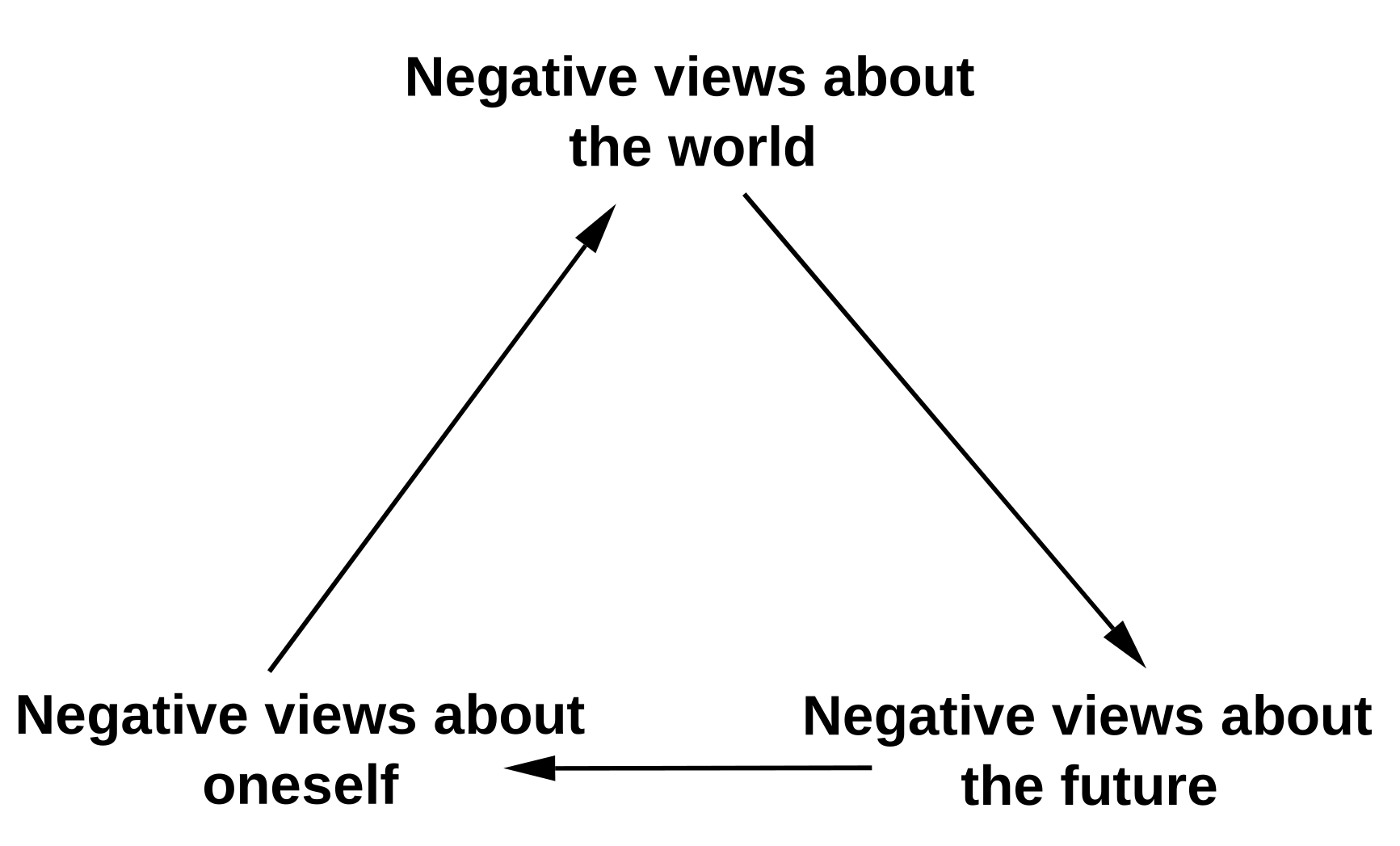
https://upload.wikimedia.org/wikipedia/commons/0/0d/Beck%27s_CognitiveTriad.svg

Beck’s Cognitive Model of Depression is one of the most influential psychological frameworks for understanding why depression develops, persists, and often returns even after periods of improvement. Developed by Aaron T. Beck, this model shifted the understanding of depression away from viewing it solely as a mood disorder or a biological imbalance.

Instead, Beck proposed that depression is fundamentally a cognitive disorder, rooted in habitual patterns of distorted thinking that shape how individuals perceive themselves, their life experiences, and their future. These thinking patterns influence emotional reactions and behavioral choices, gradually creating and maintaining the depressive state.

At its core, the model proposes a powerful and clinically significant idea:

Depression is maintained by persistent negative interpretations of the self, life experiences, and the future.

According to Beck, these interpretations are not random or temporary thoughts. They are structured, predictable, and often automatic cognitive patterns that operate outside conscious awareness. Over time, they become deeply ingrained, making depression feel overwhelming, inevitable, and difficult to escape.

This article explores Beck’s Cognitive Model of Depression in depth—examining its theoretical structure, underlying psychological mechanisms, clinical relevance in therapy, and real-life implications for understanding and treating depressive disorders.

The Foundation of Beck’s Cognitive Model

Beck’s Cognitive Model emerged as a direct challenge to earlier psychological theories that explained depression primarily in terms of unconscious conflicts, unresolved childhood dynamics, or purely biological imbalances. While acknowledging that biological and developmental factors play a role, Beck argued that these explanations alone could not fully account for how depression is experienced and maintained in everyday life.

Through careful clinical observation, Aaron T. Beck noticed a consistent pattern among individuals suffering from depression: they tended to interpret themselves, their experiences, and their future through a systematically negative cognitive lens. These were not occasional pessimistic thoughts, but stable and repetitive thinking errors that appeared across situations.

According to Beck:

  • Depressed individuals do not perceive reality objectively
    Neutral or even positive events are often interpreted negatively, while successes are minimized or dismissed.

  • Their thinking follows predictable negative patterns
    These patterns include habitual self-criticism, pessimism, and rigid conclusions that resist contradictory evidence.

  • These cognitive patterns directly generate depressive emotions
    Feelings of sadness, hopelessness, guilt, and worthlessness arise as logical emotional responses to these distorted interpretations.

From this perspective, depression is not caused simply by external stressors or internal emotional weakness. Instead, emotional suffering emerges because thoughts shape emotional experience.

Thus, in Beck’s model, thoughts are not merely symptoms of depression—they are central mechanisms that create and maintain it. By identifying and modifying these maladaptive thought patterns, individuals can reduce emotional distress and regain psychological functioning, forming the foundation for cognitive-based therapeutic intervention.

The Cognitive Triad: The Core of Depression

The heart of Beck’s model is the Cognitive Triad, which consists of three interrelated negative belief systems:

1. Negative View of the Self

“I am defective, unworthy, or inadequate.”

Common thoughts:

  • “I am a failure.”

  • “There is something wrong with me.”

  • “I’m not good enough.”

This leads to:

  • Low self-esteem

  • Shame and guilt

  • Self-criticism

2. Negative View of the World

“The world is unfair, demanding, or rejecting.”

Common thoughts:

  • “People don’t care about me.”

  • “Nothing ever works out.”

  • “Life is against me.”

This creates:

  • Withdrawal from relationships

  • Loss of interest in activities

  • Emotional numbness

3. Negative View of the Future

“Things will never get better.”

Common thoughts:

  • “Nothing will change.”

  • “There’s no point trying.”

  • “The future is hopeless.”

This fuels:

  • Helplessness

  • Loss of motivation

  • Suicidal ideation in severe cases

➡️ These three views reinforce each other, creating a closed depressive loop.

Automatic Thoughts: The Moment-to-Moment Triggers

Automatic thoughts are immediate, involuntary mental responses that arise spontaneously in reaction to everyday situations. They occur so rapidly that individuals are often unaware of their presence, experiencing only the emotional impact that follows. In Beck’s Cognitive Model, these thoughts are considered the moment-to-moment triggers that translate life events into emotional distress.

In depression, automatic thoughts tend to share several defining characteristics:

  • Negative – They focus on loss, failure, or inadequacy

  • Absolute – They are framed in extreme, all-or-nothing terms

  • Emotionally convincing – They feel true, regardless of evidence

  • Taken as facts – They are rarely questioned or examined

Because these thoughts arise automatically, they bypass rational evaluation and directly activate emotional responses.

Example

  • Situation: A mistake at work

  • Automatic thought: “I ruin everything.”

  • Emotion: Sadness, shame, worthlessness

  • Behavior: Withdrawal, avoidance, reduced effort

In this sequence, the emotional pain is not caused by the mistake itself, but by the interpretation of the mistake. A single error is cognitively transformed into a global judgment about the self.

Crucially, these thoughts occur so quickly and effortlessly that individuals often believe they are reacting emotionally to reality. In truth, they are reacting to their interpretation of reality. Over time, repeated automatic thoughts strengthen depressive beliefs, deepen emotional distress, and reinforce avoidant or withdrawn behavior—maintaining the depressive cycle.

Identifying and challenging automatic thoughts is therefore a central therapeutic task in cognitive-based interventions, as even small shifts in interpretation can lead to meaningful emotional relief.

Cognitive Distortions in Depression

Beck identified specific thinking errors that dominate depressive cognition:

  • All-or-nothing thinking
    “If I fail once, I’m a total failure.”

  • Overgeneralization
    “This always happens to me.”

  • Mental filtering
    Focusing only on negative details and ignoring positives.

  • Personalization
    “It’s my fault, even when it isn’t.”

  • Catastrophizing
    Expecting the worst possible outcome.

These distortions systematically bias perception toward negativity.

Core Beliefs and Schemas: The Deep Structure

Beyond surface thoughts, Beck emphasized core beliefs (schemas)—deep, rigid assumptions formed early in life.

Common depressive core beliefs:

  • “I’m not good enough to be loved.”

  • “Nothing I do changes anything.”

  • “I don’t have much worth.”

These schemas often develop through:

  • Childhood criticism or neglect

  • Emotional abuse

  • Repeated failure experiences

  • Insecure attachment

When life events activate these schemas, depressive thinking is triggered automatically.

The Depression Maintenance Cycle

Beck’s model explains why depression persists even when circumstances improve.

  1. Negative core beliefs shape perception

  2. Automatic thoughts interpret events negatively

  3. Depressive emotions emerge

  4. Withdrawal and inactivity increase

  5. Reduced positive experiences confirm negative beliefs

This self-reinforcing loop explains chronic and recurrent depression.

Behavioral Consequences of Depressive Thinking

Depression is not only cognitive—it is behavioral.

Common behaviors include:

  • Social withdrawal

  • Reduced activity

  • Avoidance of responsibility

  • Procrastination

These behaviors:

  • Reduce opportunities for pleasure or mastery

  • Increase isolation

  • Strengthen beliefs of inadequacy

Thus, behavior becomes evidence for distorted thoughts.

Therapeutic Implications: Why the Model Works

Beck’s model became the foundation of Cognitive Behavioral Therapy (CBT) because it is:

  • Structured and practical

  • Focused on present functioning

  • Collaborative and empowering

  • Skills-based and measurable

CBT targets:

  • Automatic thoughts

  • Cognitive distortions

  • Core beliefs

  • Avoidant behaviors

By modifying thinking patterns, emotional relief follows naturally.

Strengths of Beck’s Cognitive Model

  • Empirically supported across cultures

  • Effective for mild to severe depression

  • Teaches lifelong coping skills

  • Reduces relapse risk

It reframes depression from a personal failure to a treatable thinking pattern.

Limitations and Considerations

  • Severe depression may require medication alongside CBT

  • Trauma-based depression may need additional emotional processing

  • Cultural beliefs can shape cognitive content

Still, Beck’s model remains one of the most clinically effective frameworks in mental health.

Final Reflection

Beck’s Cognitive Model of Depression offers a compassionate yet structured framework for understanding psychological suffering. It reframes depression not as a personal flaw, weakness, laziness, or lack of gratitude, but as the result of maladaptive patterns of thinking that are learned, reinforced, and maintained over time—often in response to life experiences, relationships, and early environments.

This perspective is deeply validating. It removes moral judgment from depression and replaces it with understanding. When suffering is seen as a product of cognitive patterns rather than character defects, individuals can approach their struggles with curiosity instead of self-blame.

Most importantly, Beck’s model delivers hope grounded in psychology, not optimism alone:

If thoughts are learned, they can be unlearned.
And if thinking can change, recovery is possible.

Through awareness, reflection, and therapeutic intervention, individuals can learn to question automatic thoughts, soften rigid beliefs, and develop more balanced ways of interpreting themselves and the world. In doing so, emotional relief becomes not only possible—but sustainable.

Healing, in this model, is not about changing who you are.
It is about changing how you relate to your thoughts—and reclaiming agency over your inner life.

Frequently Asked Questions (FAQ)

1. What is Beck’s Cognitive Model of Depression?

Beck’s Cognitive Model explains depression as a result of persistent negative thinking patterns rather than personal weakness or only biological imbalance. It emphasizes how distorted thoughts about the self, world, and future create and maintain depressive emotions and behaviors.


2. Who developed the Cognitive Model of Depression?

The model was developed by Aaron T. Beck, the founder of Cognitive Therapy and one of the most influential figures in modern psychotherapy.


3. What is the Cognitive Triad in depression?

The cognitive triad refers to three interconnected negative beliefs:

  • A negative view of the self
    “I am inadequate or not good enough.”
  • A negative view of the world
    “The world is demanding, rejecting, or unfair.”
  • A negative view of the future
    “Nothing will change, and improvement is unlikely.”

These beliefs reinforce one another and deepen depressive symptoms.


4. Are negative thoughts a symptom or a cause of depression?

According to Beck’s model, negative thoughts are central causes, not just symptoms. Automatic thoughts and core beliefs directly shape emotional responses and behaviors that maintain depression.


5. What are automatic thoughts?

Automatic thoughts are immediate, involuntary interpretations that arise in response to situations. In depression, these thoughts are usually negative, absolute, and emotionally convincing, and they strongly influence mood and behavior.


6. Can Beck’s model help with severe depression?

Yes. Research shows Cognitive Behavioral Therapy (CBT), based on Beck’s model, is effective for mild, moderate, and severe depression, often in combination with medication for more severe cases.


7. How does CBT use Beck’s model in therapy?

CBT helps individuals:

  • Identify automatic negative thoughts

  • Recognize cognitive distortions

  • Challenge unhelpful beliefs

  • Replace them with balanced, realistic thoughts
    This process leads to emotional relief and healthier behavior patterns.


8. Is Beck’s Cognitive Model scientifically supported?

Yes. Beck’s model is one of the most empirically supported frameworks in psychology, with decades of research validating its effectiveness across cultures and age groups.

Written by Baishakhi Das

Counselor | Mental Health Practitioner
Qualifications: B.Sc in Psychology | M.Sc  | PG Diploma in Counseling

Reference 


Emotional Burnout: Symptoms You Shouldn’t Ignore

Introduction: When Exhaustion Goes Beyond Tiredness

Everyone feels tired sometimes. Long days, responsibilities, emotional demands, and stress are part of modern life. But emotional burnout is different. It is not solved by a weekend off, a good night’s sleep, or a short break.

Emotional burnout is a state of chronic emotional, mental, and physical exhaustion caused by prolonged stress—especially stress that feels inescapable, unrecognized, or unsupported. It slowly drains motivation, empathy, and a sense of meaning, often without dramatic warning signs.

Many people ignore burnout because they believe:

  • “This is just stress.”

  • “I should be able to handle this.”

  • “Others have it worse.”

  • “Once things settle down, I’ll feel better.”

But burnout does not suddenly appear—it builds quietly. And the longer it goes unnoticed, the deeper its impact on mental health, relationships, and physical well-being.

This article explores what emotional burnout really is, how it develops, the symptoms you should never ignore, and how recovery is possible.

What Is Emotional Burnout?

Emotional burnout is a condition marked by persistent emotional depletion, reduced capacity to cope, and a sense of detachment or hopelessness. It occurs when emotional demands consistently exceed a person’s internal and external resources.

Burnout commonly affects:

  • Caregivers

  • Parents

  • Healthcare professionals

  • Counselors and teachers

  • Corporate employees

  • Homemakers

  • Individuals in emotionally demanding relationships

However, burnout is not limited to work—it can arise from chronic family conflict, financial stress, caregiving roles, trauma, or prolonged emotional suppression.

Burnout vs Stress: Understanding the Difference

Stress involves too much pressure.
Burnout involves nothing left to give.

Stress Burnout
Over-engagement Emotional disengagement
Anxiety and urgency Hopelessness and numbness
Feeling overwhelmed Feeling empty
Still motivated Loss of motivation
Temporary Chronic

Stress says, “I can’t keep up.”
Burnout says, “I don’t care anymore.”

How Emotional Burnout Develops

Burnout is rarely sudden. It develops in stages, often unnoticed.

Stage 1: Chronic Overload

  • High expectations

  • Constant responsibility

  • Lack of rest

  • Emotional overextension

Stage 2: Emotional Suppression

  • Ignoring needs

  • “Pushing through”

  • Minimizing feelings

  • Avoiding vulnerability

Stage 3: Depletion

  • Reduced energy

  • Emotional exhaustion

  • Loss of enthusiasm

Stage 4: Detachment

  • Numbness

  • Cynicism

  • Withdrawal from people

Stage 5: Breakdown

  • Anxiety or depressive symptoms

  • Physical illness

  • Emotional shutdown

Recognizing burnout earlier prevents deeper psychological harm.

Emotional Burnout Symptoms You Shouldn’t Ignore

1. Persistent Emotional Exhaustion

You feel drained even after rest. Emotional tasks—listening, caring, responding—feel overwhelming. You may think:

  • “I have nothing left.”

  • “I can’t handle one more thing.”

This exhaustion is emotional, not just physical.

2. Loss of Motivation and Meaning

Tasks that once mattered now feel pointless. You may continue functioning out of obligation, not interest.

Common thoughts:

  • “What’s the point?”

  • “Nothing excites me anymore.”

  • “I’m just going through the motions.”

This loss of meaning is a core burnout signal.

3. Emotional Numbness

Instead of intense feelings, you feel nothing. Happiness, sadness, excitement, and empathy feel distant.

Numbness is not strength—it is a protective shutdown when the nervous system is overwhelmed.

4. Increased Irritability or Detachment

Small things trigger anger or frustration. Alternatively, you may feel emotionally detached and indifferent.

You might:

  • Withdraw from loved ones

  • Avoid conversations

  • Feel guilty for being unavailable

5. Chronic Fatigue

You feel tired all the time, regardless of sleep. Getting through the day feels like an effort.

Burnout fatigue is deep and persistent, not relieved by rest alone.

6. Cognitive Difficulties

Burnout affects thinking:

  • Poor concentration

  • Forgetfulness

  • Indecisiveness

  • Mental fog

You may feel mentally “slow” or ineffective, which further lowers confidence.

7. Physical Symptoms Without Clear Cause

Emotional burnout often manifests physically:

  • Headaches

  • Digestive issues

  • Body aches

  • Weakened immunity

  • Sleep disturbances

The body expresses what the mind has been suppressing.

8. Increased Anxiety or Hopelessness

Burnout can coexist with:

  • Anxiety

  • Low mood

  • Feelings of helplessness

  • Fear of the future

Unchecked burnout may evolve into clinical anxiety or depression.

Emotional Burnout in Different Life Roles

Burnout in the Workplace

  • Feeling undervalued

  • Constant pressure without control

  • Emotional labor without recognition

  • Fear of failure or replacement

High performers are especially vulnerable.

Burnout in Caregivers and Parents

  • Emotional over-responsibility

  • Lack of support

  • No personal time

  • Guilt for needing rest

Caregivers often normalize burnout until collapse occurs.

Burnout in Relationships

  • Constant emotional giving

  • One-sided dynamics

  • Suppressed resentment

  • Fear of conflict

Love does not protect against burnout—lack of boundaries does.

Why Emotional Burnout Is Often Ignored

  • It develops gradually

  • Productivity may remain intact

  • Society rewards overwork

  • Emotional pain is minimized

  • Many confuse burnout with weakness

Ignoring burnout does not make it disappear—it deepens it.

The Psychological Cost of Ignoring Burnout

Untreated burnout can lead to:

  • Anxiety disorders

  • Depression

  • Emotional disconnection

  • Relationship breakdown

  • Identity confusion

  • Loss of self-worth

Burnout does not mean failure—it means you’ve been strong for too long without support.

How Emotional Burnout Affects Identity

Many people tie self-worth to:

  • Productivity

  • Caregiving

  • Achievement

  • Responsibility

Burnout disrupts identity:

“If I can’t function like before, who am I?”

Healing requires redefining worth beyond output.

Recovery from Emotional Burnout: What Actually Helps

1. Acknowledge the Burnout

Naming burnout reduces shame. You are not lazy, weak, or ungrateful—you are exhausted.

2. Reduce Emotional Load (Not Just Tasks)

Burnout is not solved by time management alone. Emotional labor must be addressed.

Ask:

  • What am I emotionally carrying?

  • Where am I over-giving?

  • What boundaries are missing?

3. Rest Without Guilt

True rest is non-productive rest—without self-judgment.

Burnout recovery requires permission to pause.

4. Reconnect with Emotions Safely

Burnout suppresses feelings. Gentle emotional reconnection—through journaling, therapy, or quiet reflection—is essential.

5. Seek Professional Support

Therapy helps:

  • Identify burnout patterns

  • Process suppressed emotions

  • Rebuild boundaries

  • Restore emotional regulation

You do not need to reach crisis to seek help.

When to Seek Help Immediately

Seek professional support if:

  • Burnout lasts more than a few months

  • You feel emotionally numb or hopeless

  • Anxiety or depression symptoms increase

  • Physical health is affected

  • You feel disconnected from yourself or loved ones

Burnout is treatable, especially when addressed early.

Preventing Emotional Burnout Long-Term

  • Set emotional boundaries

  • Normalize asking for help

  • Separate worth from productivity

  • Schedule rest like responsibility

  • Check in with emotions regularly

Prevention is not selfish—it is sustainable care.

Final Thoughts: Burnout Is a Signal, Not a Failure

Emotional burnout is your mind and body asking for care, balance, and recognition. It does not mean you are incapable—it means you have exceeded your emotional capacity without adequate support.

Listening to burnout symptoms early is an act of self-respect.

You deserve rest before collapse.
Support before exhaustion.
Care before breakdown.

Frequently Asked Questions (FAQ): Emotional Burnout


1. What is emotional burnout?

Emotional burnout is a state of chronic emotional, mental, and physical exhaustion caused by prolonged stress and emotional overload. It develops when demands consistently exceed a person’s capacity to cope, leading to exhaustion, detachment, and loss of motivation.


2. How is emotional burnout different from stress?

Stress involves feeling overwhelmed but still engaged and motivated. Burnout, on the other hand, is marked by emotional depletion, numbness, and disengagement. Stress says, “I have too much to do,” while burnout says, “I have nothing left to give.”


3. What are the early symptoms of emotional burnout?

Early signs include persistent fatigue, irritability, lack of motivation, emotional exhaustion, difficulty concentrating, sleep problems, and feeling detached from work or relationships. Ignoring these signs can lead to more serious mental health concerns.


4. Can emotional burnout affect physical health?

Yes. Emotional burnout often manifests physically through headaches, digestive issues, weakened immunity, muscle pain, sleep disturbances, and chronic fatigue. The body reflects prolonged emotional and psychological stress.


5. Who is most at risk of emotional burnout?

Burnout commonly affects caregivers, parents, healthcare professionals, teachers, counselors, corporate employees, and individuals in emotionally demanding roles or relationships. However, anyone experiencing prolonged stress without adequate support can develop burnout.


6. Is emotional burnout the same as depression?

No, but they can overlap. Burnout is primarily related to chronic stress and emotional overload, while depression is a clinical mood disorder. Untreated burnout can increase the risk of anxiety or depressive disorders over time.


7. Can emotional burnout be prevented?

Yes. Prevention includes setting emotional boundaries, balancing responsibilities, prioritizing rest, seeking social support, and addressing stress early. Regular emotional check-ins and self-care practices reduce the risk significantly.


8. How does therapy help with emotional burnout?

Therapy helps individuals identify burnout patterns, process suppressed emotions, rebuild boundaries, and develop healthier coping strategies. Approaches such as Cognitive Behavioral Therapy (CBT) and stress-management interventions are especially effective.


9. When should someone seek professional help for burnout?

You should seek professional help if burnout symptoms persist for weeks or months, interfere with daily functioning, cause emotional numbness or hopelessness, or are accompanied by anxiety, depression, or physical health problems.

Written by Baishakhi Das

Counselor | Mental Health Practitioner
Qualifications: B.Sc in Psychology | M.Sc  | PG Diploma in Counseling

Reference 


High-Functioning Anxiety: When You Look Fine but Aren’t

Introduction: The Anxiety No One Notices

You meet deadlines.
You perform well at work.
You’re dependable, organized, and always “on top of things.”

From the outside, your life looks controlled, successful—even admirable.

But inside, your mind rarely rests.

This is high-functioning anxiety—a hidden form of anxiety where a person appears capable and composed, yet internally struggles with constant worry, self-doubt, and mental exhaustion. Unlike anxiety disorders that visibly disrupt daily functioning, high-functioning anxiety often goes unrecognized, both by others and by the individual experiencing it.

Because society rewards productivity, perfectionism, and emotional restraint, high-functioning anxiety is frequently praised rather than treated.

This article explores what high-functioning anxiety really is, how it feels, why it develops, and—most importantly—how healing is possible.

What Is High-Functioning Anxiety?

High-functioning anxiety is not an official diagnostic category in clinical manuals. Instead, it is a descriptive term used to explain a pattern where anxiety coexists with high achievement and outward competence.

People with high-functioning anxiety:

  • Meet responsibilities

  • Maintain relationships

  • Appear calm and confident

  • Rarely “break down” publicly

Yet internally, they experience:

  • Persistent worry

  • Overthinking

  • Fear of failure

  • Emotional tension

  • Chronic stress

Their anxiety fuels performance, rather than stopping it—until burnout, physical illness, or emotional collapse eventually occurs.

How High-Functioning Anxiety Feels from the Inside

High-functioning anxiety is often misunderstood because it doesn’t look like panic attacks or avoidance. Instead, it feels like:

  • A mind that never switches off

  • Constant mental rehearsal of worst-case scenarios

  • Feeling responsible for everything and everyone

  • An inner voice that says, “Don’t mess this up”

  • Difficulty relaxing, even during rest

  • Guilt when doing nothing

Many describe it as living in a state of permanent alertness.

Common Signs and Symptoms

Emotional & Cognitive Signs

  • Excessive worrying disguised as “planning”

  • Fear of disappointing others

  • Difficulty tolerating uncertainty

  • Harsh self-criticism

  • Overthinking conversations and decisions

  • Feeling restless even during calm moments

Behavioral Signs

  • Overworking and difficulty saying no

  • Perfectionism

  • Procrastination due to fear of failure

  • People-pleasing

  • Avoiding asking for help

  • Over-preparing for simple tasks

Physical Symptoms

  • Muscle tension

  • Headaches

  • Digestive issues

  • Fatigue despite adequate sleep

  • Racing heart or shallow breathing

  • Trouble falling asleep due to racing thoughts

Why High-Functioning Anxiety Often Goes Unnoticed

1. Productivity Masks Distress

In many cultures, productivity is equated with mental strength. If someone is achieving goals, their internal suffering is easily dismissed—even by professionals.

2. You Don’t “Look Anxious”

Because high-functioning anxiety lacks dramatic outward symptoms, people may hear:

  • “But you’re doing so well.”

  • “You don’t seem anxious.”

  • “Everyone feels stressed.”

These responses invalidate the inner experience.

3. You’ve Normalized Anxiety

Many individuals have lived with anxiety for so long that it feels like their personality, not a mental health concern.

High-Functioning Anxiety vs Generalized Anxiety Disorder (GAD)

Aspect High-Functioning Anxiety Generalized Anxiety Disorder
Daily Functioning Appears intact Often impaired
Work Performance High or excessive May decline
Visibility Hidden More noticeable
Help-Seeking Rare More likely
Risk Burnout, chronic stress Functional impairment

A person can have both—but not all high-functioning anxiety meets diagnostic criteria for GAD.

The Role of Perfectionism

Perfectionism is not striving for excellence—it is fear-driven performance.

At its core:

  • “If I make a mistake, I’ll lose worth.”

  • “I must stay in control to feel safe.”

Perfectionism keeps anxiety hidden because success becomes the proof that “nothing is wrong,” even while the nervous system remains overwhelmed.

Childhood Roots of High-Functioning Anxiety

High-functioning anxiety often develops early in life, especially in environments where:

  • Love was conditional on performance

  • Emotional expression was discouraged

  • Children had to mature too quickly

  • Praise was tied to achievement

  • Mistakes were criticized or punished

The child learns:

“If I stay alert, do well, and don’t need anything, I’ll be safe.”

That survival strategy later becomes anxiety in adulthood.

High-Functioning Anxiety in Relationships

People with high-functioning anxiety often:

  • Overthink texts and conversations

  • Take responsibility for others’ emotions

  • Fear being “too much”

  • Struggle to ask for reassurance

  • Appear emotionally strong but feel lonely

They may be excellent partners, friends, and caregivers—but often at the cost of their own emotional needs.

The Hidden Cost: Burnout and Emotional Exhaustion

Because high-functioning anxiety is unsustainable, it often leads to:

  • Burnout

  • Chronic fatigue

  • Emotional numbness

  • Irritability

  • Loss of motivation

  • Anxiety spikes or depressive symptoms

Many only seek help after their coping strategies collapse.

Why High-Functioning Anxiety Is Not “Helpful Anxiety”

Some believe anxiety keeps them successful.

In reality:

  • Anxiety narrows thinking

  • Reduces creativity

  • Increases health risks

  • Weakens emotional resilience

Productivity achieved through anxiety is survival-based, not sustainable well-being.

How Therapy Helps High-Functioning Anxiety

Therapy does not aim to remove ambition or responsibility—it helps separate self-worth from performance.

Effective approaches include:

Cognitive Behavioral Therapy (CBT)

  • Identifies anxiety-driven thought patterns

  • Challenges catastrophic thinking

  • Builds healthier internal dialogue

Acceptance-Based Approaches

  • Reduces resistance to uncertainty

  • Builds emotional tolerance

  • Teaches nervous system regulation

Emotion-Focused Work

  • Helps recognize suppressed emotions

  • Builds self-compassion

  • Encourages authentic expression

Practical Steps to Begin Healing

1. Redefine Rest

Rest is not a reward—it is a biological need.

2. Practice “Good Enough”

Perfection is anxiety’s fuel. Aim for sufficient, not flawless.

3. Learn to Pause

Short pauses calm the nervous system more effectively than long breaks taken too late.

4. Separate Identity from Output

You are not your productivity.

5. Seek Support Early

You do not need to “fall apart” to deserve help.

When to Seek Professional Help

Consider therapy if:

  • Your mind never feels quiet

  • You feel tired even when things go well

  • Anxiety controls your self-worth

  • You fear slowing down

  • You feel emotionally disconnected despite success

High-functioning anxiety is still anxiety—and it is treatable.

Final Thoughts: You Don’t Have to Earn Peace

High-functioning anxiety convinces people that safety comes from vigilance, control, and constant effort. But peace does not come from doing more—it comes from learning to feel safe without overperforming.

You can be capable and calm.
Driven and rested.
Successful and emotionally supported.

Looking fine doesn’t mean you are fine—and that truth deserves care, not dismissal.

Frequently Asked Questions (FAQ): High-Functioning Anxiety


1. What is high-functioning anxiety?

High-functioning anxiety is a non-clinical descriptive term used to explain a pattern where a person appears successful, productive, and emotionally stable, yet experiences chronic internal anxiety, excessive worry, and mental strain. It often goes unnoticed because daily functioning remains intact.


2. Is high-functioning anxiety a diagnosable disorder?

No. High-functioning anxiety is not an official diagnosis in diagnostic manuals like the DSM-5. However, many people with high-functioning anxiety may meet criteria for anxiety-related conditions such as generalized anxiety disorder (GAD) or experience clinically significant distress that benefits from professional support.


3. How is high-functioning anxiety different from regular anxiety?

The key difference lies in external functioning. People with high-functioning anxiety continue to perform well at work and in relationships, while internally feeling tense, overwhelmed, and constantly on edge. In contrast, more visible anxiety disorders often interfere with daily responsibilities.


4. What are common signs of high-functioning anxiety?

Common signs include:

  • Constant overthinking and worry

  • Perfectionism and fear of failure

  • Difficulty relaxing or resting

  • People-pleasing behaviors

  • Physical symptoms like fatigue, muscle tension, or headaches

  • Feeling guilty when not being productive


5. Can high-functioning anxiety lead to burnout?

Yes. Because anxiety is often masked by productivity, individuals may ignore early warning signs. Over time, this can lead to burnout, emotional exhaustion, sleep problems, irritability, or depressive symptoms.


6. What causes high-functioning anxiety?

High-functioning anxiety often develops due to:

  • Childhood environments with high expectations

  • Conditional approval based on performance

  • Emotional neglect or pressure to “stay strong”

  • Long-term stress and responsibility

  • Personality traits like perfectionism and high conscientiousness


7. Is high-functioning anxiety harmful if it helps me succeed?

While it may appear helpful in the short term, anxiety-driven success is not sustainable. Chronic anxiety increases the risk of physical illness, emotional burnout, and reduced quality of life. Healthy motivation does not require constant fear or self-pressure.


8. How can therapy help with high-functioning anxiety?

Therapy helps individuals:

  • Identify anxiety-driven thought patterns

  • Separate self-worth from productivity

  • Learn emotional regulation and nervous system calming

  • Develop self-compassion and realistic standards

Approaches like Cognitive Behavioral Therapy (CBT) and acceptance-based therapies are particularly effective.


9. When should someone seek professional help?

You should consider professional support if:

  • Your mind rarely feels calm

  • You feel exhausted despite success

  • Anxiety controls your decisions

  • You fear slowing down

  • You feel emotionally disconnected or overwhelmed

You do not need to “break down” to deserve help.


Written by Baishakhi Das

Counselor | Mental Health Practitioner
Qualifications: B.Sc in Psychology | M.Sc  | PG Diploma in Counseling

Reference