Top 7 Tools Men Can Use to Track Their Mental Wellness

Introduction

Mental wellness is not just about the absence of mental illness—it is about emotional balance, self-awareness, resilience, and the ability to cope with daily stressors. For many men, mental health is often deprioritized due to social expectations, demanding schedules, and the belief that they must handle everything on their own.

Men are statistically less likely to seek therapy early, yet they experience high levels of stress, burnout, emotional suppression, and untreated anxiety or depression. This gap has led to a growing interest in self-monitoring and digital mental wellness tools, which allow men to track their mental health privately, consistently, and at their own pace.

Mental wellness tools do not replace professional therapy—but they support awareness, early detection, emotional regulation, and healthy habits. This article explores the top 7 tools men can use to track their mental wellness, explaining how each tool works, why it matters psychologically, and how to use it effectively in daily life.

Why Tracking Mental Wellness Matters for Men

Mental wellness tracking helps men:

  • Recognize emotional patterns early

  • Identify stress triggers

  • Monitor mood and energy fluctuations

  • Reduce emotional suppression

  • Build healthier coping strategies

From a psychological perspective, self-monitoring increases emotional insight, which is the first step toward emotional regulation and behavioral change.

  • Normalizes emotional experiences

  • Reduces stigma around mental health

  • Encourages proactive self-care

  • Supports therapy or counseling when needed

Tool 1: Mood Tracking Apps

https://www.verywellmind.com/thmb/-U0xVf9OJvB7JNgmbS9BRUXCL6o%3D/1500x0/filters%3Ano_upscale%28%29%3Amax_bytes%28150000%29%3Astrip_icc%28%29/Daylio-a12eaa51dd2647e78a9305c2f070b710.jpg?utm_source=chatgpt.com

What Is a Mood Tracker?

Mood tracking apps allow users to log emotions daily using:

  • Emojis or mood scales

  • Emotion labels

  • Short notes or reflections

Over time, these apps generate patterns showing emotional highs, lows, and trends.

Why Mood Tracking Is Helpful for Men

Many men struggle to name or express emotions due to emotional conditioning. Mood trackers help by:

  • Expanding emotional vocabulary

  • Making emotions visible and measurable

  • Reducing emotional avoidance

  • Encouraging reflection without judgment

 Mood tracking asks, “How do I feel today?”

How to Use It Effectively

  • Track mood once or twice daily

  • Add brief notes about triggers

  • Review weekly or monthly patterns

  • Avoid judging “good” or “bad” emotions

Mood awareness improves emotional regulation and stress management.

Tool 2: Stress & Burnout Assessment Tools

What Are Stress Assessment Tools?

These tools use short questionnaires to measure:

  • Stress levels

  • Burnout risk

  • Emotional exhaustion

  • Work-life imbalance

They are often based on validated psychological scales.

Why This Tool Is Important

Men often normalize stress until it becomes burnout. Stress assessment tools:

  • Offer objective feedback

  • Identify early warning signs

  • Reduce denial and minimization

  • Encourage timely action

Psychologically, naming stress reduces its intensity.

How to Use It

  • Take assessments monthly or quarterly

  • Track changes over time

  • Use results to adjust workload or routines

  • Share insights with a counselor if needed

These tools are especially useful for working professionals.

Tool 3: Sleep Tracking Devices or Apps

https://oaksintcare.org/wp-content/uploads/2024/12/VitalRoleofSleep.png?utm_source=chatgpt.com

Why Sleep Is a Mental Health Indicator

Sleep is deeply linked to:

  • Mood regulation

  • Stress tolerance

  • Anxiety and depression

  • Cognitive performance

Poor sleep often worsens emotional reactivity.

How Sleep Tracking Helps Men

Sleep trackers monitor key sleep indicators, including:

  • Total sleep duration

  • Overall sleep quality

  • Night awakenings

  • Sleep consistency

This data helps men recognize how stress, screen time, caffeine, or work pressure affect sleep.

How to Use Sleep Data Wisely

  • Focus on trends, not perfection

  • Adjust bedtime routines gradually

  • Pair data with relaxation practices

  • Avoid obsessing over numbers

Better sleep improves emotional resilience.

Tool 4: Journaling & Reflection Tools

What Is Mental Health Journaling?

Journaling tools allow men to:

  • Write thoughts and emotions

  • Reflect on daily experiences

  • Process stress privately

Digital journals reduce the pressure of “writing perfectly.”

Why Journaling Works Psychologically

Journaling supports:

  • Emotional processing

  • Reduced rumination

  • Self-awareness

  • Problem-solving

For men who find talking difficult, writing becomes a safe emotional outlet.

How to Journal Effectively

  • Write for 5–10 minutes daily

  • Use prompts like:

    • “What stressed me today?”

    • “What helped me cope?”

  • Be honest, not polished

Journaling is one of the most evidence-supported self-help tools.

Tool 5: Mindfulness & Meditation Apps

https://cdn.prod.website-files.com/61258807d2d4f9553cc9d3e6/6646132ec0fbfec684c3113d_The%20Best%20Meditations%20for%20Stress%20Relief%C2%A0.webp?utm_source=chatgpt.com

What These Tools Do

Mindfulness apps guide users through:

  • Breathing exercises

  • Body scans

  • Short meditations

  • Stress-reduction practices

Sessions can be as short as 2–10 minutes.

Why Mindfulness Is Effective for Men

Mindfulness helps men:

  • Slow down impulsive reactions

  • Improve emotional control

  • Reduce anger and anxiety

  • Increase focus

It trains the brain to respond instead of react.

How to Start Without Resistance

  • Begin with short sessions

  • Focus on breathing, not “emptying the mind”

  • Practice consistency over duration

  • Use during work breaks or before sleep

Mindfulness is a skill, not a personality trait.

Tool 6: Habit & Routine Tracking Tools

What Are Habit Trackers?

Habit trackers monitor:

  • Exercise

  • Sleep routines

  • Water intake

  • Screen limits

  • Self-care habits

They visualize consistency and progress.

Why Habits Matter for Mental Wellness

Mental health improves when:

  • Daily structure is predictable

  • Self-care becomes routine

  • Small wins build confidence

For men, habits provide action-based self-care, which often feels more accessible than emotional talk.

How to Use Habit Trackers Well

  • Track only 2–3 habits at first

  • Keep goals realistic

  • Focus on consistency, not streaks

  • Review weekly progress

Healthy habits stabilize mood and energy.

Tool 7: Mental Health Screening & Therapy Platforms

https://menstherapy.online/wp-content/uploads/2025/11/MTO-Square-Logo-White-Background.png?utm_source=chatgpt.com

What These Platforms Offer

These tools provide:

  • Mental health screenings

  • Self-assessment questionnaires

  • Access to online counseling

  • Educational resources

They lower barriers to help-seeking.

Why This Matters for Men

Men often delay professional support due to:

  • Stigma

  • Time constraints

  • Privacy concerns

Digital platforms offer:

  • Confidential access

  • Flexible scheduling

  • Reduced initial resistance

Early screening prevents escalation.

How to Use Responsibly

  • Use screenings as guidance, not diagnosis

  • Seek professional help if symptoms persist

  • Combine tools with offline support when possible

Technology can bridge the gap to care.

How to Choose the Right Tools for Yourself

Not every tool suits everyone. Consider:

  • Your comfort with technology

  • Time availability

  • Emotional awareness level

  • Current stress load

Start with one or two tools, then expand gradually.

Common Mistakes to Avoid

  • Tracking obsessively

  • Expecting instant emotional change

  • Using tools instead of seeking help

  • Comparing progress with others

Tools support wellness; they do not replace human connection.

Integrating Tools into Daily Life

  • Link tracking to existing routines

  • Keep it simple and flexible

  • Review data weekly, not constantly

  • Focus on self-compassion

Consistency matters more than intensity.

When to Seek Professional Support

Tools are helpful, but consider professional help if:

  • Emotional distress persists

  • Mood worsens over time

  • Functioning is affected

  • Thoughts of hopelessness arise

Mental health care is a strength, not a failure.

Conclusion

Mental wellness tracking empowers men to understand themselves better—emotionally, mentally, and behaviorally. From mood trackers and journaling tools to sleep monitors and mindfulness apps, these tools offer accessible, private, and practical ways to support mental health.

Tracking does not mean fixing everything alone. It means paying attention, recognizing patterns, and choosing healthier responses. When combined with support, self-awareness, and compassion, mental wellness tools can play a powerful role in helping men live more balanced, resilient, and emotionally healthy lives.

Frequently Asked Questions (FAQ)

Top 7 Tools Men Can Use to Track Their Mental Wellness


1. What does it mean to track mental wellness?

Tracking mental wellness means regularly monitoring your mood, stress levels, sleep, habits, and emotional patterns to better understand how your mental health changes over time.


2. Why is mental wellness tracking important for men?

Many men suppress emotions or delay seeking help. Tracking tools increase self-awareness, help identify stress or burnout early, and provide a private way to engage with mental health.


3. Can mental wellness tools replace therapy or counseling?

No. These tools support self-awareness and early intervention but do not replace professional mental health care. They work best when combined with counseling if needed.


4. Which mental wellness tool should men start with?

Most men find mood trackers or sleep tracking tools easiest to begin with, as they require minimal effort and provide immediate insights into emotional and physical patterns.


5. How often should mental wellness be tracked?

Consistency matters more than frequency. Tracking once daily or a few times a week is enough to notice patterns without becoming overwhelming.


6. Are mood tracking apps useful if I don’t know how to label emotions?

Yes. Mood tracking apps often use emojis or simple emotion words, helping men gradually expand emotional awareness without pressure.


7. How does sleep tracking help mental health?

Sleep quality directly affects mood, stress tolerance, focus, and emotional regulation. Tracking sleep helps identify habits or stressors that impact mental wellness.


8. Is journaling effective for men who don’t like talking about feelings?

Yes. Journaling provides a private, judgment-free space to process thoughts and emotions, making it especially helpful for men who struggle with verbal expression.


9. Do mindfulness and meditation apps really reduce stress?

Research shows that short, consistent mindfulness practices improve emotional regulation, reduce anxiety, and lower stress—especially when practiced regularly.


10. How do habit trackers support mental wellness?

Habit trackers build structure and routine, which stabilize mood and energy. Small, consistent habits like exercise, hydration, or breaks support overall mental health.


11. Are online mental health screenings accurate?

Screenings are helpful for awareness, not diagnosis. They indicate whether professional support may be beneficial and should not be used as a final conclusion.


12. Can these tools help with burnout prevention?

Yes. Stress assessments, mood tracking, and habit monitoring help detect early warning signs of burnout, allowing timely adjustments before exhaustion becomes severe.


13. What are common mistakes men make when using mental health tools?

Common mistakes include tracking obsessively, expecting instant change, ignoring emotional insights, or using tools as a substitute for seeking help.


14. How can men stay consistent with mental wellness tools?

Link tools to existing routines, keep tracking simple, avoid perfectionism, and focus on self-compassion rather than streaks or scores.


15. When should a man seek professional mental health support?

Professional help is important if emotional distress persists, daily functioning is affected, mood worsens over time, or feelings of hopelessness or isolation increase.


About the Author

Baishakhi Das is a Counselor and Mental Health Practitioner with academic training in psychology and human development. She works with men experiencing stress, burnout, emotional suppression, and mental health challenges, focusing on practical, evidence-based strategies for emotional well-being.

Reference 


  1. World Health Organization. (2022). Mental health of men and boys.
    https://www.who.int/publications/i/item/9789240044149

  2. American Psychological Association. (2023). Technology and mental health.
    https://www.apa.org/monitor/2023/07/technology-mental-health

  3. National Institute of Mental Health. (2023). Caring for your mental health.
    https://www.nimh.nih.gov/health/topics/caring-for-your-mental-health

  4. Torous, J., et al. (2021). Digital mental health and COVID-19: Using technology today to accelerate the curve on access and quality tomorrow. JMIR Mental Health, 7(3).
    https://doi.org/10.2196/18848

  5. Mohr, D. C., et al. (2017). The behavioral intervention technology model. Journal of Medical Internet Research, 19(6).
    https://doi.org/10.2196/jmir.7787

  6. Courtenay, W. H. (2000). Constructions of masculinity and their influence on men’s well-being. Social Science & Medicine, 50(10), 1385–1401.
    https://doi.org/10.1016/S0277-9536(99)00390-1

  7. How to Build Daily Habits for Better Mental Health

How to Practice Self-Care as a Busy Man

A realistic, psychology-backed guide for men who juggle work, family, responsibilities, and expectations

Introduction: Why Self-Care Is Not a Luxury for Busy Men

In today’s fast-paced world, being a “busy man” is often worn like a badge of honor. Long work hours, financial responsibilities, family roles, social expectations, and the pressure to remain emotionally strong can leave little room for rest or reflection. Many men believe self-care is time-consuming, selfish, or unmanly. In reality, self-care is a survival skill, not a spa day.

Research from organizations like World Health Organization and National Institute of Mental Health shows that chronic stress, untreated anxiety, and emotional suppression significantly increase risks for depression, cardiovascular disease, substance use, and burnout in men.

Self-care does not mean abandoning responsibilities. It means building sustainable habits that protect your mental, emotional, and physical health—so you can show up better for work, relationships, and yourself.

This article is written specifically for busy men—professionals, fathers, partners, caregivers—who think they don’t have time for self-care. You do. And you don’t need to change your entire life to practice it.

1. Understanding Self-Care Through a Male Lens

What Self-Care Really Means

Self-care is the intentional practice of behaviors that maintain and improve well-being. It includes:

  • Physical health

  • Mental clarity

  • Emotional regulation

  • Social connection

  • Meaning and purpose

For men, self-care often looks different from mainstream portrayals. It may be:

  • Taking a quiet walk instead of talking

  • Fixing something with focus

  • Exercising alone

  • Learning a new skill

  • Sitting in silence

Self-care is not one-size-fits-all.

Why Men Often Avoid Self-Care

Common psychological barriers include:

  • Gender conditioning: “Men should be strong, not vulnerable.”

  • Productivity guilt: Rest feels unproductive.

  • Emotional avoidance: Feelings are uncomfortable.

  • Time scarcity: Everything else feels more urgent.

Understanding these barriers helps you work with yourself, not against yourself.

2. The Cost of Neglecting Self-Care

When self-care is ignored, the body and mind eventually demand attention—often in unhealthy ways.

Psychological Consequences

  • Chronic irritability and anger

  • Emotional numbness

  • Anxiety and panic symptoms

  • Depression masked as fatigue or workaholism

Physical Consequences

  • High blood pressure

  • Poor sleep

  • Weakened immunity

  • Digestive issues

Relational Consequences

  • Emotional distance in relationships

  • Conflict escalation

  • Withdrawal or avoidance

Self-care is preventive mental health.

3. Micro Self-Care: Small Habits That Fit Busy Schedules

https://www.uhhospitals.org/-/media/images/blog/2024/02/man-practices-breathing-1472399571-blog-mainarticleimage.jpg?h=450&hash=93760D0A2E7BD633BF3DD6B6296ECECC&la=en&w=720&utm_source=chatgpt.com
You don’t need hours. You need minutes, practiced consistently.

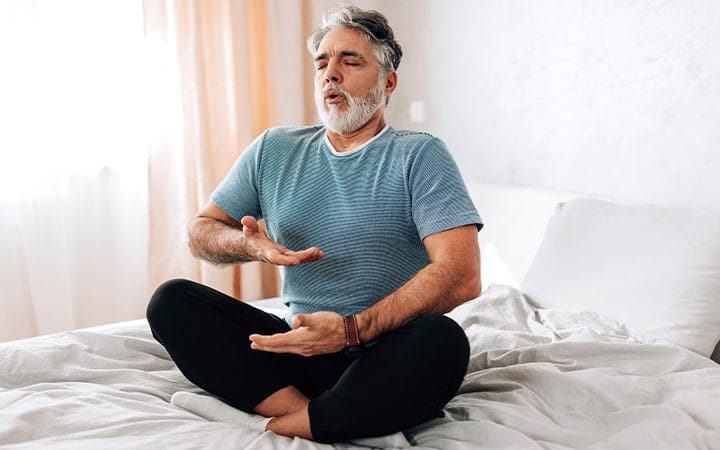
1. Two-Minute Breathing Reset

  • Inhale for 4 seconds

  • Hold for 4

  • Exhale for 6

  • Repeat for 2 minutes

This activates the parasympathetic nervous system, reducing stress hormones.

2. Mental Check-In (Once a Day)

Ask yourself:

  • What am I feeling right now?

  • What do I need most today?

Naming emotions reduces their intensity.

3. Body Awareness Break

Stand up every 90 minutes:

  • Roll shoulders

  • Stretch neck

  • Relax jaw

Stress is stored in the body—movement releases it.

4. Physical Self-Care Without Extreme Fitness

Redefining Exercise

You don’t need:

  • A perfect body

  • Daily gym sessions

  • Extreme discipline

You need consistent movement.

Effective options for busy men:

  • 20-minute brisk walks

  • Home bodyweight workouts

  • Climbing stairs

  • Stretching before bed

Sleep: The Most Ignored Self-Care Tool

Men often sacrifice sleep for work or screens.

Healthy sleep basics:

  • Fixed sleep and wake time

  • No screens 30 minutes before bed

  • Dark, cool room

  • Reduce caffeine after afternoon

Sleep deprivation worsens anxiety, irritability, and decision-making.

5. Emotional Self-Care: The Skill Men Are Rarely Taught

https://dayoneapp.com/wp-content/uploads/2023/06/emotinoal-journaling.jpg?utm_source=chatgpt.com
Emotional Suppression vs Regulation

Many men suppress emotions because they were never taught how to process them.

Suppression leads to:

  • Anger outbursts

  • Emotional shutdown

  • Psychosomatic symptoms

Regulation means:

  • Recognizing feelings

  • Allowing them without judgment

  • Expressing them safely

Simple Emotional Practices

  • Journaling: Write freely for 5 minutes

  • Label emotions: “I feel overwhelmed, not weak”

  • Music processing: Let music help release emotions

Emotional self-care is not weakness—it’s emotional intelligence.

6. Mental Self-Care: Protecting Your Cognitive Energy

Reduce Mental Overload

Your brain is not designed for constant stimulation.

Mental self-care strategies:

  • Single-task instead of multitask

  • Schedule “no-thinking” breaks

  • Limit doom-scrolling

Cognitive Boundaries

Learn to say:

  • “Not today.”

  • “I’ll think about this later.”

  • “This can wait.”

Boundaries protect mental health as much as physical safety.

7. Self-Care at Work: Thriving Without Burning Out

https://workplace.msu.edu/wp-content/uploads/2021/04/workday-break.jpg?utm_source=chatgpt.com
Workplace Self-Care Is Essential

Ignoring stress at work spills into home life.

Practical steps:

  • Take full lunch breaks

  • Step away from your desk

  • Clarify unrealistic expectations

  • Use vacation time

Redefining Success

Success is not:

  • Constant availability

  • Chronic exhaustion

True success includes sustainability.

8. Relationship Self-Care: You Can’t Pour From an Empty Cup

Communicating Needs

Men are often expected to “just handle it.”

Try:

  • “I’m overwhelmed and need quiet time.”

  • “I’m not okay today.”

  • “I need support, not solutions.”

Healthy Solitude vs Isolation

Solitude restores energy.
Isolation drains it.

Choose intentional alone time, not emotional withdrawal.

9. Digital Self-Care in a Hyperconnected World

Technology Fatigue

Constant notifications keep your nervous system activated.

Digital self-care ideas:

  • No phone during meals

  • One screen-free hour daily

  • Remove non-essential apps

Mental space is a form of self-respect.

10. Self-Care for Fathers and Family Men

https://www.bigdaddykreativ.ca/wp-content/uploads/2017/07/father-and-young-son-outdoors-on-sunny-day-sittin-2025-02-10-13-20-21-utc.jpg?utm_source=chatgpt.com

Being strong for your family includes caring for yourself.

Children learn emotional regulation by observing you.

Model:

  • Healthy stress management

  • Emotional expression

  • Rest without guilt

Self-care makes you a better role model, not a selfish one.

11. Spiritual and Purpose-Based Self-Care

Self-care is not only about stress reduction; it’s about meaning.

Purpose-based practices:

  • Prayer or meditation

  • Nature connection

  • Gratitude reflection

  • Service without overgiving

Meaning buffers stress and builds resilience.

12. When Self-Care Is Not Enough: Seeking Professional Help

Self-care is not a replacement for therapy.

Consider professional support if you experience:

  • Persistent sadness or anger

  • Panic attacks

  • Emotional numbness

  • Substance dependence

  • Thoughts of hopelessness

Organizations like American Psychiatric Association emphasize that early intervention prevents long-term mental health issues.

Asking for help is an act of responsibility.

13. Creating a Sustainable Self-Care Plan

Step 1: Identify One Area

Physical, emotional, mental, relational, or spiritual.

Step 2: Choose One Small Habit

Example:

  • 5-minute walk

  • One boundary at work

  • One honest conversation

Step 3: Schedule It

What gets scheduled gets done.

Step 4: Review Weekly

Adjust, don’t abandon.

Consistency beats intensity.

Common Myths About Men and Self-Care

Myth Reality
Self-care is selfish It improves relationships
Men don’t need emotional care Men experience emotions deeply
I don’t have time You can’t afford not to
Therapy is weakness It’s skill-building

Final Thoughts: Redefining Strength Through Self-Care

Strength is not endurance without rest.
Strength is self-awareness, adaptability, and sustainability.

As a busy man, you carry many roles. Self-care ensures those roles don’t consume you.

You don’t need perfection.
You need permission—to pause, to feel, to care for yourself.

Because a well-cared-for man is not only more productive—
he is more present, grounded, and alive.

Frequently Asked Questions (FAQ): Self-Care for Busy Men

1. What does self-care really mean for men?

Self-care for men means maintaining physical, mental, emotional, and social well-being in a practical and sustainable way. It’s not about luxury or indulgence—it’s about managing stress, regulating emotions, staying healthy, and preventing burnout so you can function effectively in daily life.


2. Why do many busy men struggle with self-care?

Many men grow up with beliefs such as:

  • “I must always be strong”

  • “Rest is laziness”

  • “Others’ needs come first”

Busy schedules, work pressure, financial responsibilities, and emotional suppression make self-care feel unnecessary or impossible—until stress shows up as anger, exhaustion, or health issues.


3. Is self-care selfish for men with family responsibilities?

No. Self-care is protective, not selfish. When men neglect themselves, stress spills into relationships through irritability, withdrawal, or emotional unavailability. Caring for yourself helps you be a better partner, father, and provider.


4. How much time does self-care require each day?

Self-care does not require hours. Even:

  • 5 minutes of deep breathing

  • 10 minutes of walking

  • 5 minutes of journaling

can significantly reduce stress if practiced consistently. Micro self-care is ideal for busy men.


5. What are simple self-care habits for men with hectic work schedules?

Some realistic habits include:

  • Taking short movement breaks at work

  • Eating at least one mindful meal daily

  • Setting a fixed sleep time

  • Reducing screen use before bed

  • Saying no to one unnecessary commitment

Small habits done daily are more effective than occasional big efforts.


6. How does self-care help with anger and irritability in men?

Unexpressed stress and emotions often turn into anger. Self-care helps by:

  • Calming the nervous system

  • Improving emotional awareness

  • Reducing physical tension

Practices like exercise, breathing, and emotional check-ins reduce emotional overload and impulsive reactions.


7. Is exercise necessary for self-care, or are there alternatives?

Exercise helps, but self-care is broader than fitness. Alternatives include:

  • Stretching

  • Walking

  • Adequate sleep

  • Healthy eating

  • Mental breaks

The goal is movement and regulation, not physical perfection.


8. How can men practice emotional self-care if they find it difficult to talk?

Emotional self-care doesn’t always require talking. Men can:

  • Write privately in a journal

  • Use music to process emotions

  • Spend time alone mindfully

  • Name emotions internally

Emotional processing can be quiet and private—it doesn’t have to be verbal.


9. What role does sleep play in self-care for men?

Sleep is one of the most powerful self-care tools. Poor sleep increases:

  • Anxiety

  • Irritability

  • Poor concentration

  • Health risks

Improving sleep quality often improves mood, energy, and emotional control without any other changes.


10. How can men practice self-care without feeling guilty?

Guilt comes from outdated beliefs that rest equals weakness. Reframe self-care as:

  • Maintenance, not indulgence

  • Responsibility, not escape

  • Strength-building, not avoidance

When self-care is seen as essential, guilt naturally reduces.


11. Can self-care improve work performance?

Yes. Self-care improves:

  • Focus and decision-making

  • Emotional regulation under pressure

  • Productivity and creativity

  • Long-term career sustainability

Burnout reduces performance; self-care protects it.


12. How does self-care affect relationships?

Men who practice self-care:

  • Communicate more clearly

  • Are less reactive

  • Feel more emotionally available

  • Experience fewer conflicts

Healthy relationships require emotionally regulated individuals.


13. Is digital detox part of self-care for busy men?

Absolutely. Constant notifications keep the brain in a stress state. Digital self-care includes:

  • Limiting social media

  • No-phone time before bed

  • Screen-free meals

Mental silence is a powerful form of rest.


14. When should a man seek professional mental health support?

Self-care is helpful, but professional support is needed if you experience:

  • Persistent sadness or anger

  • Panic attacks

  • Emotional numbness

  • Substance dependence

  • Thoughts of hopelessness

Seeking help is a sign of self-awareness and responsibility—not weakness.


15. How can a man build a long-term self-care routine?

Start simple:

  1. Choose one area (sleep, stress, emotions)

  2. Pick one small habit

  3. Schedule it

  4. Review weekly

Self-care should be sustainable, flexible, and realistic, not perfection-driven.


16. Can fathers practice self-care without neglecting their children?

Yes. In fact, children benefit when fathers model:

  • Healthy stress management

  • Emotional expression

  • Balanced routines

Self-care teaches children emotional intelligence by example.


17. What is the biggest myth about self-care for men?

The biggest myth is:
“Strong men don’t need self-care.”

In reality, strong men understand their limits, protect their health, and seek balance.

Written by Baishakhi Das

Qualifications: B.Sc, M.Sc, PG Diploma in Counseling

Role: Counselor / Mental Health Practitioner

Reference