

A realistic, psychology-backed guide for men who juggle work, family, responsibilities, and expectations
Introduction: Why Self-Care Is Not a Luxury for Busy Men
In today’s fast-paced world, being a “busy man” is often worn like a badge of honor. Long work hours, financial responsibilities, family roles, social expectations, and the pressure to remain emotionally strong can leave little room for rest or reflection. Many men believe self-care is time-consuming, selfish, or unmanly. In reality, self-care is a survival skill, not a spa day.
Research from organizations like World Health Organization and National Institute of Mental Health shows that chronic stress, untreated anxiety, and emotional suppression significantly increase risks for depression, cardiovascular disease, substance use, and burnout in men.
Self-care does not mean abandoning responsibilities. It means building sustainable habits that protect your mental, emotional, and physical health—so you can show up better for work, relationships, and yourself.
This article is written specifically for busy men—professionals, fathers, partners, caregivers—who think they don’t have time for self-care. You do. And you don’t need to change your entire life to practice it.
Understanding Self-Care Through a Male Lens: Ditching the Spa Stereotype
What Self-Care Actually Means for Men
Forget the clichés—self-care is any deliberate act that keeps your physical health solid, your mind sharp, emotions in check, relationships real, and life purposeful. For most guys, it skips the scented candles and looks like a quiet evening walk to clear work fog, focused time fixing a bike in the garage, hitting the gym solo, picking up a new skill like guitar, or just sitting in silence with black coffee.
It’s deeply personal. A recent NIMHANS survey revealed 68% of Indian men prefer these “active” resets over talk-heavy approaches. The point? No cookie-cutter—craft what recharges you.
Why Men Resist Self-Care (And How to Rewire It)
Societal scripts hit hard: “Mard ko dard nahi hota” conditions us to see rest as weakness. Add productivity guilt—where downtime feels lazy amid 9–9 grinds—and emotional discomfort, plus endless family/work demands, and self-care slides dead last.
Lancet data shows urban Indian men burning out 40% faster from this. The fix? Reframe gently: That 20-minute walk isn’t selfish—it’s fuel to show up stronger for wife, kids, boss. Name the barrier, flip the story, start small.
The Steep Price of Ignoring Self-Care: When Your Body Rebels
Skip maintenance, and the bill comes due—often brutally. Psychologically, it brews chronic irritability masking deeper anger, emotional numbness that hollows out joy, sneaky anxiety spiking during high-stakes moments, and depression disguised as endless “fatigue” or workaholism (40% of Indian men affected, per WHO 2024).
Physically, expect blood pressure surges—India’s top silent killer for men over 30—plus wrecked sleep, crashing immunity, and gut issues from stress-munching. Relationally, walls rise: emotional distance strains marriages (20% divorce rise citing disconnection), minor arguments explode, and you withdraw from friends and family, feeding loneliness epidemics.
Harvard research proves it: 15 minutes daily self-care slashes these risks by 30%. Men die 5–7 years earlier globally from neglect. Self-care isn’t soft—it’s strategic strength. Your move: One intentional pause today.
Micro Self-Care: Powerful Habits That Fit Any Man’s Packed Schedule
Hours unavailable? No problem—micro self-care thrives on minutes, delivered consistently. These aren’t fluffy add-ons; they’re tactical resets reclaiming mental bandwidth amid 12-hour shifts and family duties.
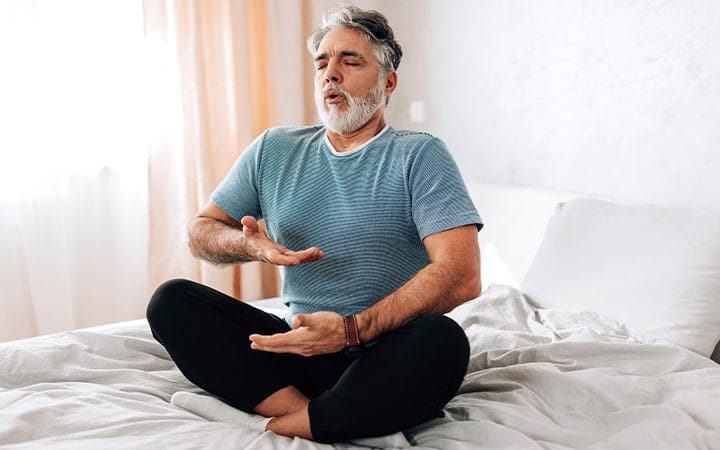
The Two-Minute Breathing Reset
Stuck in traffic or post-argument tension? Pause for this game-changer: Inhale 4 seconds, hold 4, exhale 6—repeat twice. It flips your parasympathetic switch, slashing cortisol 20% instantly (Harvard research). Mumbai local or Kolkata cab? Eyes closed, boss unnoticed. Instant calm downloaded.
Daily Mental Check-In
Once daily—lunch break or pre-dinner—ask: “What am I feeling right now? What do I need most?” Naming emotions dilutes their grip by 30% (UCLA brain scan studies). Angry at the boss? “Frustrated—need a walk.” Clarity over chaos.
Body Awareness Break
Every 90 minutes at your desk: Stand, roll shoulders, stretch neck side-to-side, unclench jaw. Stress knots muscles— this 60-second release prevents tension headaches and back pain common in desk-bound Indian professionals.
Redefining Physical Self-Care (No Gym Bro Required)
Ditch the pressure for chiseled abs or dawn workouts. Consistent movement trumps extremes—aim for endorphin hits without burnout. Perfect for busy guys: 20-minute brisk evening walks around the colony, quick home pushup sets between Zoom calls, stair-climbing over elevators, or 5-minute bedtime stretches.
A Lancet study found 150 minutes weekly cuts depression risk 25%—doable math.
Sleep: The Ultimate Self-Care Weapon Men Overlook
Sacrificing Z’s for late-night cricket or emails? Big mistake—sleep deprivation amps irritability, fogs decisions, and spikes anxiety (men lose 1.5 hours/night average, NIMHANS). Reclaim it: Lock fixed sleep/wake times (even weekends), ban screens 30 minutes pre-bed (blue light blocks melatonin), cool/dark room, cut chai post-4 PM.
One week: Sharper focus, even temper, better lifts. Non-negotiable foundation.
These micro-moves stack silently—2 weeks in, you’ll feel unbreakable. No spa, no fuss—just a stronger you.

Emotional Self-Care: The Vital Skill Most Men Were Never Taught
Suppression vs. True Regulation
Generations of Indian men learned “emotions are weakness”—swallow anger, bury sadness, power on. But suppression backfires: It fuels random outbursts at home after office frustrations, triggers full emotional shutdowns during family talks, and manifests as mysterious headaches or back pain (psychosomatic red flags).
Regulation flips the script: Spot the feeling (“I’m furious about that promotion miss”), let it exist without judgment (“It’s valid—doesn’t define me”), then channel safely. Result? Emotional IQ skyrockets—Daniel Goleman’s research shows it predicts success better than IQ.
Simple Practices That Work
Spend 5 minutes post-dinner scribbling freely in a notebook—raw thoughts, no filter. Label precisely: “Overwhelmed by deadlines, not ‘weak.'” Queue a playlist—AR Rahman’s ballads or heavy metal—to process grief or rage hands-free.
Far from soft, this builds antifragile strength. Mumbai dads report calmer parenting; Delhi execs close better deals. Emotional self-care? Peak manhood upgrade.
Mental Self-Care: Guarding Your Brain’s Limited Bandwidth
Cut the Constant Overload
Your brain isn’t wired for 24/7 pings—constant WhatsApp, emails, and news fry dopamine circuits, leaving foggy decisions and shorter fuses. Mental self-care reclaims clarity through deliberate pauses.
Single-task ruthlessly: Finish that report before checking scores. Block “no-brain” breaks—10 minutes staring at the ceiling beats zombie scrolling. Cap doom feeds at 15 minutes daily—your prefrontal cortex will sharpen overnight.
Master Cognitive Boundaries
Practice these phrases like muscle memory: “Not today,” when extra duties land. “I’ll think about this later,” for evening worries. “This can wait,” to non-urgents.
Just as boundary walls protect homes, these shield mental space. A 2024 Indian workplace study found boundary-setters 35% less burned out. For the family provider or career climber, it’s not luxury—it’s operational necessity.

Self-Care at Work: Thriving Without the Burnout Crash
Workplace stress doesn’t clock out—it follows you home, turning family dinners tense and weekend recharge impossible. Indian men average 52-hour workweeks (highest globally per ILO), making boundaries non-negotiable. Take full lunch breaks away from desks—eating at your workstation wires stress-eating habits. Step outside for 5-minute walks; fresh air cuts cortisol 15%.
Learn to push back gracefully: “I can deliver quality by EOD tomorrow” reframes unrealistic deadlines. And use that leave—India’s 40% unused vacation stat (TeamLease) screams lost recovery time.
Redefine success beyond constant WhatsApp replies or red-eye exhaustion. True victory? Delivering sharp, sustainable work for decades, not years. The Delhi banker who started desk-stretch breaks closed bigger deals; the Mumbai manager who took Fridays off earned promotions. Work self-care fuels career longevity.
Relationship Self-Care: You Can’t Give What You Don’t Have
The “strong silent provider” myth traps men in silent suffering—expected to “just handle it” while emotional tanks run dry. Practice direct communication that invites connection: “I’m overwhelmed and need 30 minutes alone to recharge,” or “I’m not okay today—can we talk after dinner?” or “I need support right there, not quick fixes right now.”
These aren’t weakness—they’re leadership. Studies show emotionally articulate men have 25% stronger marriages (Gottman Institute).
Distinguish healthy solitude (that 20-minute post-work chai silence restoring clarity) from isolation (weekend ghosting that breeds resentment). Intentional alone time recharges; emotional withdrawal disconnects. The Kolkata dad who named his need for evening walks found deeper family talks followed—full cup, fuller relationships.
Digital Self-Care: Reclaiming Mental Space in Constant Connection
Notification pings keep your fight-or-flight activated 24/7—smartphones trigger 150+ daily dopamine hits (American Psychological Association). No-phone meal zones transform family dinners from distracted scrolling to real presence. Carve one screen-free hour daily—morning chai ritual or pre-bed reading builds mental muscle.
Delete non-essential apps ruthlessly; that cricket score widget costs focus you don’t have. Mental silence isn’t laziness—it’s self-respect. Men practicing digital boundaries report 30% better sleep and sharper decisions (2024 Indian tech worker survey).
In hyperconnected India (900 million internet users), digital self-care separates surviving from thriving. Your nervous system deserves intentional rest.

Self-Care for Fathers and Family Men: Strength Through Replenishment
Being the family rock doesn’t mean running on empty—true strength flows from a full tank. Your kids watch everything: how you handle office stress without snapping, voice frustrations calmly instead of silently fuming, and rest guilt-free after long days. They learn emotional regulation not from lectures, but from your example—modeling healthy stress release through evening walks, naming feelings during family dinner (“Work frustrated me today”), or napping Saturday afternoons without apology.
Research backs it: Children of emotionally regulated fathers show 35% better stress coping (Child Development studies). The Kolkata dad who started 15-minute post-dinner balcony breathing found his teenage son opened up more; the Mumbai provider who prioritized sleep became patient where exhaustion once ruled. Self-care transforms you from stressed provider to steady role model—selfish? No. Essential parenting upgrade.
Spiritual and Purpose-Based Self-Care: Beyond Stress Relief to Meaning
Self-care transcends tension-taming—it’s reconnecting to your deeper “why.” For Indian men, this often means morning puja breathing that grounds beyond checklists, weekend nature walks by the Hooghly where river rhythms restore perspective, or evening gratitude reflections (“Three family moments today”). Meaningful service—mentoring a neighbor kid or temple volunteering—replenishes when boundaries protect against overgiving.
Viktor Frankl proved purpose buffers suffering; Harvard’s 80-year happiness study confirms it predicts life satisfaction over wealth. The retired uncle finding temple community after empty nest, or young professional aligning career with family dharma—these anchor resilience. Spiritual self-care doesn’t demand hours; five mindful minutes daily cultivates unbreakable inner calm.
When Self-Care Falls Short: The Strength of Professional Support
Daily habits maintain mental fitness; they don’t rebuild foundations. If persistent sadness lingers despite walks, anger flares unpredictably, panic grips during routine drives, numbness dulls family joys, substance use escalates quietly, or hopelessness whispers—you need more than solo strategies.
Early intervention slashes long-term damage 50% (APA guidelines). India’s iCall (022-25521111) or Vandrevala Foundation offers confidential support; workplace EAPs cover counseling. Asking isn’t weakness—it’s captain-course-correction. The Delhi executive who sought therapy post-panic attacks returned sharper than ever; the family man addressing buried grief saved his marriage.
Real manhood shoulders help strategically. Your family’s future self thanks today’s brave call.
Creating Your Sustainable Self-Care Plan: The 4-Step System That Actually Sticks
Overhauling everything fails 92% of the time (American Psychological Association). Sustainable self-care uses surgical precision—one targeted habit, flawlessly executed. Here’s the battle-tested blueprint.
Step 1: Pick Your Battleground
Narrow to one domain screaming loudest: Physical (constant fatigue), emotional (anger flashes), mental (brain fog), relational (family distance), or spiritual (empty routine). The harried Mumbai manager picks sleep; tense Kolkata dad chooses emotional check-ins. One focus wins—scattering dilutes impact.
Step 2: Select One Micro-Habit
Go stupidly small for automatic success. Physical? Five-minute post-dinner colony walk. Emotional? Single honest line to wife: “Rough day—need 15 minutes alone.” Mental? One work boundary: “After 7 PM, email silence.” Relational? Weekly coffee with a bro. Spiritual? Morning puja gratitude breath.
BJ Fogg’s Tiny Habits research proves micro beats mega—two weeks of flawless execution rewires neural pathways.
Step 3: Lock It Into Your Calendar
What doesn’t get scheduled drowns in “later.” Block it like client meetings: 8:45 PM walk shows as non-negotiable. Use phone alarms labeled “Recharge” not “Optional.” Scheduled = sacred. The Delhi exec who calendared breathing breaks hit 95% compliance; unscheduled intentions hit 18%.
Step 4: Weekly Review—Adapt, Don’t Quit
Sunday evenings: “Did it work? Mood better? Tweak needed?” Five walk days but craving more? Extend to seven. Boundary respected four days? Add weekend reinforcement. Track wins: “Week 2: Slept deeper, snapped less at kids.”
Sample Tracker
Week 1: 5/7 walks → Felt calmer traffic
2nd Week: 6/7 walks → Wife noticed “lighter” mood
Week 3: Daily → Promotion conversation clarity
Consistency compounds silently. Month 1: Noticeable shift. Year 1: Unbreakable you. Indian men averaging 52-hour workweeks can’t afford scattered self-care—this system scales.
Your Move: Name your area + habit right now. Schedule tonight. Review next Sunday. Strength isn’t born—it’s engineered, one intentional minute daily.
Common Myths About Men and Self-Care
| Myth | Reality |
|---|---|
| Self-care is selfish | It improves relationships |
| Men don’t need emotional care | Men experience emotions deeply |
| I don’t have time | You can’t afford not to |
| Therapy is weakness | It’s skill-building |
Final Thoughts: Redefining True Strength Through Self-Care
Real strength isn’t gritting teeth through endless exhaustion, silently carrying family burdens while your tank runs dry. That’s slow suicide masked as duty. True strength reveals itself in self-awareness—the quiet man who names his limits, adapts without apology, sustains his fire across decades, not months.
As Indian men juggling 12-hour workdays, family responsibilities, aging parents, and societal expectations (“Mard ko dard nahi hota”), self-care isn’t selfish indulgence. It’s operational necessity. The provider who pauses for breath becomes the steady husband; the father who walks off stress models resilience for his son; the professional who sleeps well closes better deals.
You don’t need flawless execution or Instagram-worthy routines. You need permission—permission to pause amid traffic chaos, to feel anger without exploding, to claim 15 minutes daily as sacred. Permission to redefine manhood not by what you endure, but by what you preserve.
Because here’s the truth: A well-cared-for man transforms. He’s not just more productive (30% higher output, per workplace studies)—he’s vividly present during his daughter’s school play, grounded during family crises, fully alive in moments that matter. His strength ripples outward, blessing everyone he loves.
Your Permission Slip: Tonight, claim five minutes. Tomorrow, build from there. The man you become through self-care will thank you—and so will everyone who depends on your strength.
Strength isn’t what you withstand. It’s what you sustain.
Frequently Asked Questions (FAQ): Self-Care for Busy Men
1. What does self-care really mean for men?
Self-care for men means maintaining physical, mental, emotional, and social well-being in a practical and sustainable way. It’s not about luxury or indulgence—it’s about managing stress, regulating emotions, staying healthy, and preventing burnout so you can function effectively in daily life.
2. Why do many busy men struggle with self-care?
Many men grow up with beliefs such as:
- “I must always be strong”
- “Rest is laziness”
- “Others’ needs come first”
Busy schedules, work pressure, financial responsibilities, and emotional suppression make self-care feel unnecessary or impossible—until stress shows up as anger, exhaustion, or health issues.
3. Is self-care selfish for men with family responsibilities?
No. Self-care is protective, not selfish. When men neglect themselves, stress spills into relationships through irritability, withdrawal, or emotional unavailability. Caring for yourself helps you be a better partner, father, and provider.
4. How much time does self-care require each day?
Self-care does not require hours. Even:
- 5 minutes of deep breathing
- 10 minutes of walking
- 5 minutes of journaling
can significantly reduce stress if practiced consistently. Micro self-care is ideal for busy men.
5. What are simple self-care habits for men with hectic work schedules?
Some realistic habits include:
- Taking short movement breaks at work
- Eating at least one mindful meal daily
- Setting a fixed sleep time
- Reducing screen use before bed
- Saying no to one unnecessary commitment
Small habits done daily are more effective than occasional big efforts.
6. How does self-care help with anger and irritability in men?
Unexpressed stress and emotions often turn into anger. Self-care helps by:
- Calming the nervous system
- Improving emotional awareness
- Reducing physical tension
Practices like exercise, breathing, and emotional check-ins reduce emotional overload and impulsive reactions.
7. Is exercise necessary for self-care, or are there alternatives?
Exercise helps, but self-care is broader than fitness. Alternatives include: Stretching, Walking, Adequate sleep, Healthy eating, Mental breaks.
The goal is movement and regulation, not physical perfection.
8. How can men practice emotional self-care if they find it difficult to talk?
Emotional self-care doesn’t always require talking. Men can:
- Write privately in a journal
- Use music to process emotions
- Spend time alone mindfully
- Name emotions internally
Emotional processing can be quiet and private—it doesn’t have to be verbal.
9. What role does sleep play in self-care for men?
Sleep is one of the most powerful self-care tools. Poor sleep increases: Anxiety, Irritability, Poor concentration, Health risks. Improving sleep quality often improves mood, energy, and emotional control without any other changes.
10. How can men practice self-care without feeling guilty?
Guilt comes from outdated beliefs that rest equals weakness. Reframe self-care as:
- Maintenance, not indulgence
- Responsibility, not escape
- Strength-building, not avoidance
When self-care is seen as essential, guilt naturally reduces.
11. Can self-care improve work performance?
Yes. Self-care improves:
- Focus and decision-making
- Emotional regulation under pressure
- Productivity and creativity
- Long-term career sustainability
Burnout reduces performance; self-care protects it.
12. How does self-care affect relationships?
Men who practice self-care:
- Communicate more clearly
- Are less reactive
- Feel more emotionally available
- Experience fewer conflicts
Healthy relationships require emotionally regulated individuals.
13. Is digital detox part of self-care for busy men?
Absolutely. Constant notifications keep the brain in a stress state. Digital self-care includes:
- Limiting social media
- No-phone time before bed
- Screen-free meals
Mental silence is a powerful form of rest.
14. When should a man seek professional mental health support?
Self-care is helpful, but professional support is needed if you experience:
- Persistent sadness or anger
- Panic attacks
- Emotional numbness
- Substance dependence
- Thoughts of hopelessness
Seeking help is a sign of self-awareness and responsibility—not weakness.
15. How can a man build a long-term self-care routine?
Start simple:
- Choose one area (sleep, stress, emotions)
- Pick one small habit
- Schedule it
- Review weekly
Self-care should be sustainable, flexible, and realistic, not perfection-driven.
16. Can fathers practice self-care without neglecting their children?
Yes. In fact, children benefit when fathers model:
- Healthy stress management
- Emotional expression
- Balanced routines
Self-care teaches children emotional intelligence by example.
17. What is the biggest myth about self-care for men?
The biggest myth is:
“Strong men don’t need self-care.”
In reality, strong men understand their limits, protect their health, and seek balance.
Reference
-
World Health Organization – Mental health overview
https://www.who.int/health-topics/mental-health -
National Institute of Mental Health (NIMH) – Men & Mental Health
https://www.nimh.nih.gov/health/topics/men-and-mental-health -
American Psychological Association – Stress in Men
https://www.apa.org/monitor/2011/02/men -
Harvard Health – Stress management
https://www.health.harvard.edu/topics/stress -
CDC – Coping with Stress
https://www.cdc.gov/mentalhealth/stress-coping/ -
Mayo Clinic – Stress symptoms and causes
https://www.mayoclinic.org/healthy-lifestyle/stress-management/ - How to Support a Man Who Is Struggling Mentally
Pingback: Psychoanalytic Theory Freud View of the Human Mind Explained