Burnout doesn’t start with collapse; it begins with quiet compromises you don’t even notice—until the stages of burnout have quietly dismantled your energy, purpose, and joy.
Burnout is often described as the slow, silent collapse of your emotional, mental, and physical energy. It sneaks in gradually—one small sacrifice at a time—until one day, you wake up feeling drained, disconnected, and unable to keep going.
Burnout does not happen overnight.
It develops in stages, and understanding these stages is one of the most powerful ways to catch burnout early and heal effectively.
This long, in-depth guide explores:
- What burnout really is
- The 5 scientifically recognized stages
- Signs your body and mind are burning out
- The psychology behind chronic stress
- How burnout affects work, relationships, and identity
- Step-by-step evidence-based recovery strategies
What Is Burnout?
Burnout is a state of emotional, physical, and mental exhaustion caused by prolonged and excessive stress, especially related to work, caregiving, studies, and high-pressure environments.
The World Health Organization defines burnout as an occupational phenomenon characterized by:
- Emotional exhaustion
- Depersonalization or cynicism
- Reduced sense of personal accomplishment
Burnout is not just “being tired”—it is a long-term breakdown of your stress response system.
Why Burnout Happens: The Psychology Behind It
Burnout occurs when the demands placed on you chronically exceed your emotional and physical resources.
Factors include:
- Excessive workload: Deadlines, multitasking, and constant pressure push your nervous system beyond its limits.
- Lack of control: Feeling powerless or micromanaged increases stress.
- Emotional labour: Professions like counselling, healthcare, teaching, childcare, or caregiving require constant emotional energy.
- Perfectionism: High achievers often push themselves far beyond healthy limits.
- Lack of boundaries: Saying “yes” too often drains energy and leaves no space for recovery.
- Poor work-life balance: When work consumes your identity, rest becomes uncomfortable.
- Unresolved trauma: Childhood or relationship wounds can make people overwork to seek approval.
Burnout is not weakness.
It is your mind and body telling you to slow down before something breaks.
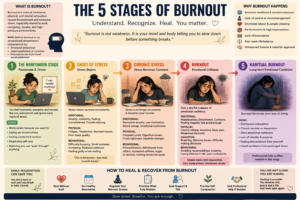
The 5 Stages of Burnout
Burnout follows a predictable cycle.
Most people don’t recognize it until Stage 3 or 4, when symptoms feel overwhelming.
Let’s explore each stage deeply.
1. Stages of Burnout: The Honeymoon Stage
At this stage, you feel: Motivated, Energetic, Passionate, Driven, Willing to take on extra responsibilities
You may think: “I love my work. I can handle anything.”
But beneath the enthusiasm, a pattern slowly forms: Overcommitting, Ignoring early stress, Blurring boundaries, Skipping breaks, Putting work before rest, Seeking validation through performance.
This stage feels productive, but it plants the seeds for burnout.
Signs You’re in Stage 1
- Working late because you want to
- Saying yes to everything
- Feeling excited but restless
- Neglecting self-care
- Believing you can “push through” anything
If you don’t start regulating stress here, the burnout cycle intensifies.
2. Stages of Burnout: Onset of Stress
Stress begins showing up more consistently.
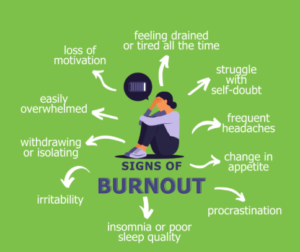
Early Emotional Symptoms: Anxiety, Irritability, Feeling overwhelmed, Trouble relaxing
Physical Symptoms: Fatigue, Headaches, Stomach issues, Poor sleep quality,
Behavioral Signs: Difficulty focusing, Small mistakes increasing, Reduced patience, Feeling guilty when resting,
You start noticing something is wrong, but you may think:
- “This is temporary.”
- “I just need to work harder.”
- “I’ll rest after this project.”
Most people ignore Stage 2—leading to full burnout.
3. Stages of Burnout: Chronic Stress
This is the turning point.
Stress is no longer occasional; it becomes constant.
Emotional Signs: Persistent anxiety, Feeling out of control, Low motivation, Mood swings, Emotional numbness
Physical Symptoms: Frequent colds, Digestive issues, Chest tightness, Loss of appetite or emotional eating
Behavioral Signs: Procrastination, Withdrawal from others, Increased consumption of caffeine, sugar, or alcohol, Getting angry or crying easily
At this stage, burnout begins to damage your physical and mental health.
4. Stages of Burnout: Burnout
This is the full collapse of emotional resilience.
Emotional Symptoms: Feelings of emptiness, Hopelessness, Detachment, Cynicism toward work, Feeling not good enough, Feeling trapped
Physical Symptoms: Chronic fatigue, Insomnia, Body pain, Weakened immunity
Cognitive Symptoms: Brain fog, Memory issues, Difficulty making decisions
Behavioral Signs: Avoiding responsibilities, Isolating yourself, Losing interest in life, Reduced productivity
At this stage, simple tasks feel impossible.
Your body enters “shutdown mode.”
5. Stages of Burnout: Habitual Burnout
This is the most severe stage, when burnout becomes a long-term emotional condition.
Signs of Habitual Burnout: Continuous exhaustion, Chronic anxiety or depression, Deep emotional numbness, Loss of identity, Feeling disconnected from yourself, Loss of purpose, Health problems from prolonged stress, People in this stage often need professional help to heal.
How Burnout Affects Your Life
Burnout impacts every part of your well-being.
- Mental health: Anxiety, Depression, Emotional instability, Feeling “switched off”
- Physical health: Heart problems, Hormonal imbalance, Weak immune system, Gastrointestinal issues
- Work and productivity: Errors and missed deadlines, Loss of motivation, Reduced creativity
- Relationships: Reduced emotional availability, Increased conflict, Withdrawing from loved ones, Irritability
- Self-worth: Burnout makes you believe:
-
-
-
- “I am failing.”
- “Am I not enough.”
- “I can’t do anything right.”
-
-
This emotional distortion becomes a psychological burden.
Burnout vs. Stress vs. Depression
Many confuse burnout with stress or depression.
- Stress: You still believe things will get better.
- Burnout: You feel empty and beyond caring.
- Depression: You feel hopeless, powerless, and disconnected even from things you love.
Someone can have burnout AND depression simultaneously.
How to Recover From Burnout (Stages of Burnout)
A Step-by-Step Healing Guide** Recovery isn’t a one-day change. It is a gradual process of restoring your emotional and physical energy.
Here are complete, science-backed recovery strategies.
1. Acknowledge That You Are Burned Out: Acceptance is the first step. Say to yourself:
- “I am overwhelmed. I need rest.”
- “Cannot continue like this.”
- “My body is asking for healing.”
Awareness reduces guilt and opens the door to recovery.
2. Restore Your Nervous System
Burnout happens because the nervous system is stuck in fight or flight. Use techniques that activate the parasympathetic (rest & digest) system: Deep breathing, Progressive muscle relaxation, Gentle stretching, Nature walks, Mindfulness meditation, Slow music, Warm showers.
These signal your brain: “You are safe. You can relax.”
3. Prioritize Rest—Real Rest
- Not scrolling.
- Watching not TV.
- Not collapsing into sleep after exhaustion.
Real rest = your mind and body fully switching off.
Try: Power naps, Mindful rest, Quiet time without screens, Light journaling, Early bedtime
Rest is not laziness—it is medicine.
4. Reevaluate Your Boundaries
Burnout often comes from:
- Saying yes when you mean no
- Doing more than your capacity
- Taking responsibility for others
- Avoiding conflict
- People-pleasing
You must learn to say: “No, I can’t take this right now.”
Boundary exercises include:
- Limiting your availability
- Creating “no work after ___ PM” rules
- Protecting weekends
- Reducing emotional labour
Boundaries protect your energy like a shield.
5. Reconnect With Your Body
Burnout disconnects you from physical sensations.
Use grounding practices: Yoga, Stretching, Somatic exercises, Slow breathing, Body scan meditation
The more you reconnect with your body, the faster you heal.
6. Redesign Your Work Habits
Small changes make a big difference: Take micro-breaks every 50 minutes, Don’t skip meals, Reduce multitasking, Set realistic to-do lists, Stop pushing through exhaustion, Healthy work habits reduce future burnout.
7. Rebuild Self-Worth
Burnout often makes you feel “not enough.”
Rebuild self-worth by: Challenging negative thoughts, Celebrating small wins, Practicing affirmations, Keeping a success journal, Tracking progress, Checking your inner critic, Your worth is not defined by productivity.
8. Seek Support
Healing becomes easier with the right support: Therapy, Counselling, Supportive friends, Understanding coworkers, Mentors. Talking about burnout reduces shame and speeds recovery.
9. Reconnect With Joy
Burnout steals joy from life. Recovery means rediscovering what brings you pleasure.
Try: Hobbies, Creative activities, Music or dance, Reading, Travel, Cooking, Spending time with loved ones, Joy is a form of healing.
10. Rebuild Your Identity
Burnout often occurs when your identity revolves solely around work or caregiving.
Ask:
- “Who am I beyond my responsibilities?”
- “Do I value?”
- “What do I want for my life?”
Rebuilding your sense of self prevents future burnout.
11. Create a Long-Term Wellness Plan
Burnout recovery requires consistent habits: Sleep routines, Exercise, Healthy meals, Mindfulness practice, Time boundaries, Regular breaks, Limiting screen time, Saying no when necessary, Consistency transforms your energy system.
How Long Does Burnout Recovery Take?
It depends on: Stage of burnout, Severity of stress, Whether you have support, Lifestyle changes.
Recovery can take:
- 2–6 weeks for early stages
- 2–3 months for moderate burnout
- 6–12 months for severe burnout
It’s not linear. Healing goes in waves.
Preventing Burnout in the Future (Stages of Burnout)
Once you recover, prevention becomes essential.
- Maintain boundaries: Your energy is limited—protect it.
- Build self-compassion: You don’t have to be perfect.
- Schedule joy: Happiness is not optional.
- Slow down: Your nervous system needs space.
- Regular wellness check-ins: Ask yourself weekly:
-
-
-
-
- “How am I feeling?”
- “What do I need?”
-
-
-
Burnout starts when you stop listening to yourself.
You Are Not Meant to Live Exhausted (Stages of Burnout)
Burnout is not a badge of honour. You are not meant to survive life—you are meant to live it. If you are feeling overwhelmed, drained, or disconnected, remember:
- You deserve rest.
- Deserve balance.
- You deserve a life that doesn’t exhaust you.
- Deserve to be well.
There is a way back to yourself—slowly, gently, one step at a time.
Conclusion
Burnout is a gradual collapse of your emotional and physical energy. But it is also reversible. By understanding the stages of burnout and adopting science-based recovery strategies, you can rebuild a healthier, calmer, more balanced life.
Remember:
Healing is not a race.
It’s a gentle return to yourself.