

Introduction
Many people think they stay in toxic or abusive relationships because they are weak or confused. But psychology explains something deeper:
A trauma bond is not a choice—it is a survival response created through emotional abuse, intermittent reinforcement, and attachment wounds.
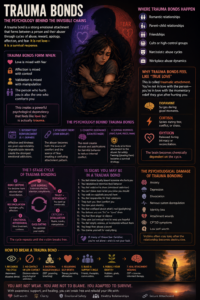
Trauma bonds form when:
- Love is mixed with fear
- Affection is mixed with control
- Validation is mixed with manipulation
- The person who hurts you is also the one who comforts you
This creates a powerful psychological dependency that feels like love but is actually trauma.
Trauma bonds happen in:
- Romantic relationships
- Parent–child relationships
- Friendships
- Cults or high-control groups
- Narcissistic abuse cycles
- Workplace abuse dynamics
This article explains the psychology behind trauma bonds and the 15 strongest signs you may be stuck in one—along with real clinical explanations.
What Is a Trauma Bond? (Psychological Definition)
A trauma bond is a strong emotional attachment that develops between a person experiencing abuse and the person causing the harm through repeated cycles of affection, manipulation, fear, and reconciliation. Rather than forming through trust, respect, or emotional safety, this bond is reinforced by unpredictable patterns of reward and distress, making it extremely difficult to leave the relationship.
Over time, this cycle can create:
- Emotional dependence
- Learned helplessness
- Confusion and self-doubt
- Intense loyalty toward the abusive person
- Difficulty ending the relationship despite ongoing harm
Trauma bonds are not a sign of weakness or a lack of intelligence. They are complex psychological responses shaped by the brain’s efforts to adapt to chronic stress and unpredictable relationships.
The Psychology Behind Trauma Bond
Several well-established psychological theories help explain why trauma bonds develop.
 1. Intermittent Reinforcement (B. F. Skinner)
One of the strongest drivers of trauma bonding is intermittent reinforcement, where affection, approval, or kindness is given unpredictably. Because positive moments occur inconsistently, they become especially powerful and reinforce hope that the relationship will improve, making it harder to walk away.
2. Attachment Theory (John Bowlby)
According to Attachment Theory, healthy relationships provide safety and security. In a trauma bond, however, the same person becomes both the source of comfort and the source of fear. This creates a confusing attachment pattern in which the victim seeks emotional safety from the very person causing emotional harm.
3. Cognitive Dissonance (Leon Festinger)
When a person’s experiences conflict with their beliefs—for example, believing someone loves them while also experiencing abuse—the mind experiences cognitive dissonance. To reduce this psychological discomfort, individuals may minimize, justify, or rationalize harmful behaviors, making it easier to remain in the relationship despite the abuse.
4. Survival Responses (Fight, Flight, Freeze, and Fawn)
Chronic emotional or psychological abuse can activate the body’s survival system. While many people are familiar with the fight, flight, and freeze responses, some individuals also develop a fawn response, prioritizing appeasing or pleasing the abusive person to reduce conflict and maintain a sense of safety. Over time, this survival strategy can strengthen emotional dependence.
Trauma Bonds Are About Survival, Not Love
Trauma bonds can feel intensely emotional and deeply connected, but they are fundamentally different from healthy love. Healthy relationships are built on trust, mutual respect, consistency, and emotional safety. Trauma bonds, in contrast, are maintained through cycles of coercive control, emotional manipulation, fear, and intermittent affection.
Understanding these psychological mechanisms is often the first step toward recognizing an unhealthy relationship and beginning the process of healing and recovery.
Why Trauma Bond Form
Trauma bonds rarely develop overnight. Instead, they are created through repeated cycles of affection, manipulation, and emotional pain that gradually strengthen emotional dependence. The unpredictability of the relationship keeps the brain hoping that the loving version of the person will return, making it increasingly difficult to leave.
A typical trauma bond often follows this pattern:
- Love-bombing: Excessive affection, attention, and idealization create a strong emotional connection.
- Control: The person gradually becomes more controlling, possessive, or emotionally demanding.
- Criticism and Devaluation: Blame, insults, or constant criticism begin to undermine self-esteem.
- Gaslighting: The person’s reality is questioned, leading them to doubt their own thoughts, feelings, or memories.
- Emotional Withdrawal: Affection is suddenly withheld through silence, rejection, or emotional distance.
- Reconciliation: Apologies, promises to change, or brief moments of warmth restore hope and emotional relief.
- The Cycle Repeats: The pattern continues, reinforcing emotional attachment and making the relationship increasingly difficult to leave.
From a psychological perspective, this unpredictable cycle acts as intermittent reinforcement, where occasional rewards strengthen emotional attachment more powerfully than consistent affection. Over time, the nervous system becomes conditioned to anticipate the next positive interaction, creating a pattern of hope, fear, and emotional dependency.
Recognizing this cycle is an important first step in understanding why trauma bonds are so difficult to break—and why leaving an abusive relationship is often far more complex than simply deciding to walk away.
15 Psychology-Backed Signs You May Be in a Trauma Bond
Trauma bonds can be difficult to recognize because they often feel like intense love, loyalty, or commitment. In reality, they are maintained through cycles of fear, emotional manipulation, and intermittent affection. If several of the following signs feel familiar, it may indicate an unhealthy attachment rather than a healthy relationship.
1. You Feel Intense Loyalty Toward Someone Who Hurts You
Despite experiencing disrespect, manipulation, or emotional abuse, you continue to defend the person, justify their behavior, or protect them from criticism. This loyalty is often strengthened by intermittent reinforcement, where occasional acts of kindness make the relationship feel worth saving.
2. You Rationalize or Minimize Their Behavior
You frequently make excuses for harmful behavior by telling yourself:
- “They’re not always like this.”
- “They’re under a lot of stress.”
- “Every relationship has problems.”
- “Maybe I’m overreacting.”
These thoughts can reduce emotional conflict in the short term but may also keep you trapped in an unhealthy relationship.
3. You Feel Emotionally Dependent on Them
You may constantly crave their approval, feel distressed when they withdraw, think about them obsessively, or experience intense relief when they become affectionate again. Although research suggests that abusive relationships can activate some of the same brain reward systems involved in addiction, trauma bonding is not classified as a substance addiction. Instead, the repeated cycle of reward and distress can create a powerful emotional dependence.
4. You Find It Extremely Difficult to Leave
Even when you recognize red flags, emotional abuse, betrayal, or neglect, leaving feels overwhelming or impossible. Fear, hope for change, financial dependence, concern for children, or trauma-related survival responses can all contribute to remaining in the relationship.
5. You Constantly Walk on Eggshells
You carefully monitor your words, tone, behavior, or emotions to avoid triggering anger, criticism, or emotional withdrawal. This state of hypervigilance is a common response to chronic emotional stress and trauma.
6. You Feel Responsible for Their Emotions
You begin believing it is your responsibility to prevent their anger, sadness, jealousy, or emotional outbursts. As a result, you may ignore your own needs while trying to manage theirs.
7. They Hurt You, Then Comfort You
After periods of conflict or emotional abuse, the person apologizes, becomes affectionate, or promises to change. The relief you experience after reconciliation can strengthen the emotional bond and make it more difficult to recognize the unhealthy cycle.
8. You Gradually Lose Your Sense of Identity
Over time, you may stop pursuing hobbies, distance yourself from friends, abandon personal goals, or change aspects of your personality to maintain the relationship. Your emotional world becomes increasingly centered on the other person.
9. You Doubt Your Own Reality
Repeated gaslighting may cause you to question your memory, judgment, emotions, or perception of events. You may find yourself thinking:
- “Maybe I remembered it wrong.”
- “Maybe it really is my fault.”
- “Perhaps I’m being too sensitive.”
Persistent self-doubt can make it difficult to trust your own experiences.
10. You Believe You Can “Fix” or “Save” Them
You may feel responsible for healing their trauma, changing their behavior, or helping them become the person they once appeared to be. This belief often keeps people invested in relationships despite repeated patterns of harm.
11. You Fear Their Anger or Emotional Withdrawal
Their silence, rejection, or anger may feel overwhelming, leading you to over-explain, repeatedly apologize, or do whatever you can to restore the relationship. This fear-based attachment often develops through repeated cycles of conflict and reconciliation.
12. Small Acts of Kindness Give You Hope
Occasional affection, compliments, apologies, or promises to change may feel disproportionately meaningful because they follow periods of emotional pain. These brief positive moments reinforce hope that the relationship will eventually improve.
13. You Feel Empty or Anxious Without Them
When the relationship becomes distant, you may experience intense loneliness, anxiety, panic, or emotional emptiness. Your emotional stability begins to depend on the other person’s attention and approval.
14. You Keep the Abuse a Secret
You avoid telling others about controlling behavior, emotional manipulation, threats, or abuse because you fear being judged, not being believed, or losing the relationship. Secrecy often allows abusive dynamics to continue unchecked.
15. You Blame Yourself for Their Behavior
Instead of recognizing the other person’s responsibility, you may repeatedly think:
- “If I were better, they wouldn’t get angry.”
- “Maybe I caused this.”
- “If I change, things will improve.”
Chronic self-blame is a common consequence of manipulation and emotional abuse and can significantly damage self-esteem over time.
Recognizing these signs does not automatically mean you are in a trauma bond, but persistent patterns of manipulation, fear, emotional dependence, and difficulty leaving may indicate an unhealthy relationship. Understanding these dynamics is the first step toward seeking support, rebuilding self-worth, and moving toward healthier, safer relationships.
Why Trauma Bond Feel Like “True Love”
One of the most confusing aspects of a trauma bond is that it can feel like deep, passionate love. In reality, what many people experience is traumatic attachment—an emotional bond strengthened by cycles of fear, relief, and intermittent affection rather than by trust, consistency, or mutual respect.
After periods of criticism, rejection, or abuse, even small acts of kindness or affection can bring an intense sense of relief. Over time, the brain begins to associate these brief moments of comfort with emotional safety, making the relationship feel uniquely powerful and difficult to leave.
Several psychological and neurobiological processes contribute to this experience:
1. Dopamine Release
Moments of affection, attention, or reconciliation activate the brain’s reward system, releasing dopamine, a neurotransmitter associated with pleasure, motivation, and reward. Because these positive moments are unpredictable, they often feel especially intense and emotionally reinforcing.
2. Cortisol During Stress
Periods of conflict, fear, or emotional uncertainty increase cortisol, the body’s primary stress hormone. Chronic exposure to this stress can keep the nervous system in a heightened state of alertness, making emotional highs and lows feel even more intense.
3. Oxytocin and Emotional Attachment
During moments of physical affection, intimacy, or reconciliation, the body may release oxytocin, often called the “bonding hormone.” Oxytocin promotes feelings of trust and closeness, which can strengthen emotional attachment—even within unhealthy or abusive relationships.
The combination of reward, stress, and attachment can create a powerful emotional cycle that is easily mistaken for love. However, healthy love is built on consistency, mutual respect, emotional safety, and trust—not on fear, unpredictability, or repeated emotional pain.
Understanding this difference is an important step toward recognizing a trauma bond and beginning the journey toward healthier relationships and emotional healing.
Who Is More Likely to Experience Trauma Bond?
Trauma bonds can affect anyone, regardless of age, gender, education, or background. Experiencing a trauma bond is not a sign of weakness or poor judgment. Instead, certain attachment patterns, life experiences, and psychological factors may increase a person’s vulnerability to becoming trapped in unhealthy relationship dynamics.
1. People with Anxious Attachment
Individuals with an anxious attachment style often have a strong fear of rejection or abandonment. They may tolerate unhealthy behaviors in the hope of preserving the relationship, making them more vulnerable to trauma bonding.
2. People with Avoidant or Disorganized Attachment
Those with avoidant or disorganized attachment styles may have experienced inconsistent or frightening caregiving in childhood. As adults, they may find themselves drawn to relationships that alternate between closeness and conflict because unpredictability feels familiar.
3. People with a History of Childhood Trauma
Early experiences of neglect, emotional abuse, inconsistent caregiving, or family conflict can shape beliefs about love and relationships. When instability is experienced in childhood, chaotic or unpredictable relationships may feel familiar, increasing the risk of trauma bonding.
4. Highly Empathetic or Highly Sensitive Individuals
People who are naturally empathetic or highly sensitive often care deeply about others’ emotions. They may repeatedly prioritize another person’s needs, believe they can help or “save” them, or remain hopeful that the relationship will improve despite ongoing harm.
5. People with Low Self-Worth
Individuals with low self-esteem or feelings of unworthiness may believe they do not deserve healthier relationships. This can make it more difficult to recognize abusive behaviors, establish boundaries, or leave harmful situations.
While these factors may increase vulnerability, they do not determine a person’s future. With greater self-awareness, supportive relationships, and trauma-informed therapy, individuals can develop secure attachment patterns, strengthen self-worth, and build healthy, respectful relationships.
How Trauma Bonds Form: The 7-Stage Cycle
Trauma bonds rarely develop all at once. Instead, they emerge through a repeating cycle of emotional highs and lows that gradually strengthens emotional dependence. Understanding this pattern can help individuals recognize unhealthy relationship dynamics and begin the process of breaking free.
1. Love Bombing
The relationship often begins with intense affection, attention, compliments, and promises of a perfect future. This overwhelming display of love creates a strong emotional connection and quickly builds trust.
2. Trust and Emotional Dependency
As the relationship progresses, the individual becomes emotionally invested and vulnerable. They begin sharing personal experiences, relying on their partner for emotional support, and developing a deep sense of attachment.
3. Criticism and Devaluation
Once emotional dependence has formed, the dynamic often changes. The person may begin criticizing, blaming, manipulating, or belittling their partner, gradually damaging their confidence and self-esteem.
4. Gaslighting
The individual is made to question their own thoughts, memories, and feelings. Through denial, manipulation, or distortion of events, they begin doubting their perception of reality and become increasingly dependent on the other person’s version of events.
5. Emotional Withdrawal
The abusive partner may suddenly become emotionally distant, give the silent treatment, withhold affection, or threaten abandonment. This creates fear, anxiety, and a strong desire to restore the relationship.
6. Reconciliation
After a period of conflict or withdrawal, the person may apologize, make promises to change, offer gifts, or become affectionate again. These positive moments provide emotional relief and restore hope that the relationship will improve.
7. The Trauma Bond Deepens
Each cycle of conflict followed by reconciliation strengthens the emotional attachment. The brief moments of kindness feel increasingly meaningful, making it more difficult to recognize the unhealthy pattern or leave the relationship.
Unless the cycle is interrupted through awareness, healthy boundaries, or professional support, it often repeats itself, reinforcing emotional dependence over time. Recognizing this pattern is one of the most important steps toward breaking a trauma bond and rebuilding relationships based on trust, safety, and mutual respect.
The Psychological Impact of Trauma Bond
Trauma bonding can have profound and lasting effects on mental health. Living in a relationship characterized by fear, manipulation, and emotional unpredictability places the nervous system under chronic stress, affecting emotional well-being, self-esteem, and interpersonal relationships. Without support, these effects may persist long after the relationship has ended.
Common psychological consequences include:
1. Anxiety
Constant uncertainty and hypervigilance can lead to persistent worry, panic, restlessness, and difficulty feeling emotionally safe.
2. Depression
Feelings of hopelessness, sadness, emotional exhaustion, and loss of interest in previously enjoyable activities may develop as the abusive cycle continues.
3. Dissociation
Some individuals cope by emotionally disconnecting from painful experiences. They may feel numb, detached from themselves, or as though events are happening from a distance.
4. Nervous System Dysregulation
Repeated exposure to stress can leave the nervous system in a constant state of survival mode, making it difficult to relax, regulate emotions, or feel secure even after the relationship ends.
5. Loss of Identity
Over time, people may lose touch with their personal values, interests, goals, and sense of self as their lives become centered around meeting the needs of the abusive partner.
6. Attachment Difficulties
Trauma bonding can disrupt a person’s ability to trust others and form healthy, secure relationships, increasing fears of abandonment, rejection, or intimacy.
7. Symptoms Associated with Complex Trauma
Some individuals may experience symptoms commonly associated with Complex Post-Traumatic Stress Disorder (CPTSD), such as emotional dysregulation, persistent shame, intrusive memories, and difficulties in relationships. Although CPTSD is recognized in the ICD-11, it is not a separate diagnosis in the DSM-5.
8. Low Self-Worth
Repeated criticism, manipulation, and emotional abuse can gradually erode self-confidence, leaving individuals feeling unworthy of love, respect, or healthier relationships.
Many people remain in trauma-bonded relationships long after they become harmful—not because they choose the abuse, but because the emotional attachment, fear, and psychological conditioning make leaving extraordinarily difficult. Healing begins with recognizing these effects and seeking compassionate, trauma-informed support.
How to Break a Trauma Bond: A Step-by-Step Guide
Breaking a trauma bond is rarely easy. Because the relationship is reinforced by cycles of fear, hope, and emotional dependence, leaving can feel emotionally overwhelming. Recovery is a gradual process that involves healing both the mind and the nervous system. With the right support, however, it is possible to break the cycle and build healthier relationships.
1. Recognize the Pattern
The first step is acknowledging that the relationship follows a cycle of manipulation, emotional pain, and temporary reconciliation. Recognizing these patterns helps reduce denial and allows you to view the relationship more objectively.
2. Create Distance When It Is Safe to Do So
When appropriate and safe, reducing or ending contact with the abusive person can help interrupt the cycle of emotional dependence. In situations where no-contact is not possible—such as co-parenting or workplace relationships—maintaining clear boundaries and limiting unnecessary interaction can be beneficial.
3. Learn Emotional Regulation Skills
Trauma often leaves the nervous system in a constant state of alertness. Techniques such as deep breathing, grounding exercises, mindfulness, and skills from Dialectical Behavior Therapy (DBT) can help regulate intense emotions and reduce the urge to return to unhealthy relationship patterns.
4. Rebuild Your Sense of Self-Worth
Trauma bonding often damages confidence and self-esteem. Therapy, journaling, self-compassion practices, and identifying personal strengths can help rebuild a healthier self-image and challenge beliefs that you deserve mistreatment.
5. Build a Support Network
Recovery is easier when you are not facing it alone. Trusted friends, family members, support groups, or trauma-informed mental health professionals can provide emotional validation, practical guidance, and encouragement throughout the healing process.
6. Rediscover Your Identity
Reconnect with the parts of yourself that may have been lost during the relationship. Returning to hobbies, setting personal goals, strengthening friendships, and establishing healthy routines can help rebuild independence and confidence.
7. Heal Underlying Attachment Wounds
Trauma bonds often reflect deeper attachment injuries. Working with a qualified mental health professional using evidence-based approaches such as Cognitive Behavioral Therapy (CBT), trauma-focused therapies, or attachment-informed therapy can help address these underlying patterns and support long-term recovery.
Breaking a trauma bond can be emotionally painful, and setbacks are common. Healing is rarely a straight path, but with patience, professional support, and self-compassion, it is possible to regain emotional freedom, rebuild self-worth, and create relationships based on trust, safety, and mutual respect.

Conclusion
Trauma bonds create powerful emotional attachments that can make leaving an unhealthy relationship feel confusing, painful, and even impossible. However, understanding the psychology behind these bonds is the first step toward breaking free.
If you recognize yourself in these patterns, remember that experiencing a trauma bond is not a sign of weakness or failure. It is a survival response shaped by emotional manipulation, attachment dynamics, and repeated cycles of fear and intermittent affection. What helped you survive does not have to define your future.
With greater awareness, healthy boundaries, supportive relationships, and trauma-informed professional care, healing is possible. Over time, you can rebuild:
- Self-worth and confidence
- Emotional clarity
- A sense of safety and security
- Healthy, respectful relationships
- More secure attachment patterns
Recovery is rarely immediate, and healing is not always linear. Be patient and compassionate with yourself as you move forward.
You deserve relationships built on trust, respect, consistency, and genuine care—not fear, control, or emotional manipulation. Your healing journey begins with understanding, and every step you take toward recovery is a step toward a healthier, more fulfilling life.
Reference
APA – Trauma & Trauma Bonds Research
National Institute of Mental Health (NIMH)
Psychology Today – Trauma Bonding
https://www.psychologytoday.com
DBT Skills for Emotional Regulation