Structure of Personality: Id, Ego & Superego Explained Simply

Introduction

Impulsive actions often leave us wondering why we didn’t think twice.
Guilt has a way of appearing even in complete privacy.
These experiences point to an inner conflict between what we want and what we believe we should do.

To answer these questions, Sigmund Freud proposed one of the most influential models of personality in psychology—the structural model of personality, consisting of the Id, Ego, and Superego.

Freud believed that human personality is not a single, unified system. Instead, personality is shaped through a dynamic interaction of three mental forces; together, they constantly negotiate and influence behavior.These forces operate largely outside conscious awareness and shape our thoughts, emotions, decisions, behavior, and even mental health.

This article explains the Id, Ego, and Superego in simple language, with real-life examples, clinical relevance, and everyday applications, making it useful for students, counselors, educators, and general readers.

Freud’s Structural Model of Personality: An Overview

Freud introduced the structural model in his work The Ego and the Id (1923). According to him:

  • Personality develops through inner conflict

  • Behavior is the result of interaction, not dominance of one part

  • Psychological problems arise when these parts are imbalanced

The three components are:

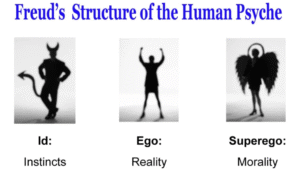
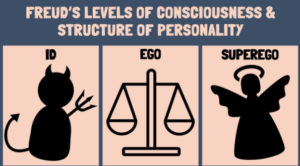
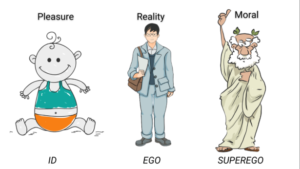
  1. Id – “I want it now”

  2. Ego – “Let’s think logically”

  3. Superego – “This is right or wrong”

They are not physical structures of the brain but theoretical constructs that help explain human behavior.

The Id: The Primitive Core of Personality

What Is the Id?

The Id is the oldest and most primitive part of personality. It is present from birth and operates entirely in the unconscious mind.

The id follows the pleasure principle, meaning:

“Seek pleasure, avoid pain, and satisfy desires immediately.”

The id does not care about:

  • Morality

  • Social rules

  • Consequences

  • Reality

Key Characteristics of the Id

  • Completely unconscious

  • Irrational and impulsive

  • Demands instant gratification

  • Driven by biological instincts

Freud believed the id contains two major instinctual drives:

  • Life instincts (Eros) – hunger, thirst, sex, survival

  • Death instincts (Thanatos) – aggression, destruction

Real-Life Examples of the Id

  • A baby crying loudly until it is fed

  • Eating junk food despite knowing it’s unhealthy

  • Sudden anger and shouting without thinking

  • Impulsive spending without planning

In adulthood, id-driven behavior may appear as:

  • Addictions

  • Aggression

  • Risk-taking

  • Poor impulse control

Id and Mental Health

When the id dominates personality:

  • The person may act recklessly

  • Difficulty delaying gratification

  • Problems with authority and rules

  • Higher risk of antisocial behavior

The id itself is not “bad”—it provides energy and motivation—but without regulation, it becomes destructive.
The Ego: The Rational Decision-Maker

What Is the Ego?

The Ego develops from the id during early childhood. It acts as the mediator between the id’s demands, the superego’s moral pressure, and external reality.

The ego follows the reality principle, which means:

“How can I satisfy this desire in a realistic and socially acceptable way?”

Functions of the Ego

  • Logical thinking

  • Problem-solving

  • Planning and decision-making

  • Delaying gratification

  • Reality testing

The ego operates at all three levels:

  • Conscious

  • Preconscious

  • Unconscious

Everyday Examples of the Ego

  • Feeling hungry (id) but waiting until lunchtime

  • Wanting to shout at your boss but choosing calm communication

  • Saving money instead of spending impulsively

The ego says:

“Not now.”
“Let’s find a better way.”
“Think about consequences.”

Ego Strength and Mental Health

A healthy ego leads to:

  • Emotional balance

  • Good coping skills

  • Problem-solving ability

  • Healthy relationships

A weak ego may result in:

  • Anxiety

  • Poor decision-making

  • Dependence on defense mechanisms

  • Emotional instability

The Superego: The Moral Judge

What Is the Superego?

The Superego represents moral values, conscience, and societal rules. It develops around the age of 4–6 years through parental guidance, cultural norms, and social expectations.

The superego strives for perfection, not pleasure or practicality.

Components of the Superego

  1. Conscience

    • Punishes wrongdoing

    • Produces guilt, shame, anxiety

  2. Ego Ideal

    • Rewards good behavior

    • Produces pride, self-worth

Examples of the Superego

  • Feeling guilty for lying

  • Feeling ashamed after hurting someone

  • Wanting to be a “good person”

  • Avoiding temptation due to moral values

The superego says:

“This is wrong.”
“You should not do this.”
“Be better.”

Superego and Psychological Problems

An overly strict superego may cause:

  • Excessive guilt

  • Low self-esteem

  • Anxiety disorders

  • Depression

  • Perfectionism

A weak superego may lead to:

  • Lack of empathy

  • Moral indifference

  • Rule-breaking behavior

Interaction Between Id, Ego, and Superego

Personality is shaped by constant conflict among these three systems.

Example: Eating Cake on a Diet

  • Id: “Eat it now!”

  • Superego: “It’s unhealthy. Don’t do it.”

  • Ego: “I’ll have a small piece today and exercise later.”
    In this way,
    healthy behavior emerges as the ego creates balance between desire and self-control.

Defense Mechanisms: Ego’s Tools for Balance

When inner conflicts create anxiety, therefore, the ego unconsciously relies on defense mechanisms to protect the individual. unconsciously to protect the individual.

Common defense mechanisms include:

  • Repression

  • Denial

  • Projection

  • Rationalization

  • Displacement

  • Regression

  • Sublimation

Example:

  • Anger at your boss → shouting at family (displacement)

Defense mechanisms are normal, but excessive use can lead to emotional problems.

Clinical Importance in Counseling & Therapy

Understanding the id–ego–superego helps counselors:

  • Identify unconscious conflicts

  • Understand resistance and defense patterns

  • Explore guilt, shame, and impulse control

  • Address childhood-based emotional struggles

In psychodynamic therapy, strengthening the ego is often a key therapeutic goal.

Criticism of the Structural Model

Despite its influence, Freud’s model is criticized for:

  • Lack of scientific testing

  • Overemphasis on unconscious processes

  • Cultural and gender bias

  • Abstract concepts difficult to measure

However, it remains foundational in personality theory and psychotherapy.

Modern Relevance of Id, Ego & Superego

Even today, Freud’s model is used to:

  • Understand emotional conflicts

  • Explain impulsive vs controlled behavior

  • Analyze moral guilt and anxiety

  • Interpret dreams and slips of speech

  • Support psychodynamic counseling

Many modern therapies have evolved but still rely on these core ideas.

Simple Summary Table

Component Key Function Operates On Example
Id Pleasure Unconscious “I want it now”
Ego Reality All levels “Let’s think”
Superego Morality Mostly unconscious “This is wrong”

Conclusion

Freud’s structural model—Id, Ego, and Superego—offers a powerful way to understand human behavior, emotional conflict, and personality development. While the id provides energy, the superego provides values, and the ego maintains balance.

Mental well-being depends not on eliminating any part, but on creating harmony among all three.

Understanding this model helps us become more self-aware, emotionally regulated, and psychologically resilient.

Frequently Asked Questions (FAQ)

Structure of Personality: Id, Ego & Superego Explained Simply


1. What is the structure of personality according to Freud?

According to Sigmund Freud, personality is made up of three interacting components: Id, Ego, and Superego. These parts work together to shape thoughts, emotions, behavior, and decision-making.


2. What is the Id in simple words?

The Id is the impulsive part of personality that wants immediate pleasure. It operates unconsciously and follows the pleasure principle, meaning it seeks instant satisfaction without considering consequences.


3. Is the Id bad or unhealthy?

No. The id is not bad; it provides basic motivation and energy for survival. Problems occur only when the id dominates behavior without control from the ego and superego.


4. What is the Ego and why is it important?

The Ego is the rational decision-maker. It follows the reality principle and balances the demands of the id, the rules of the superego, and real-life situations. A strong ego is essential for emotional stability and mental health.


5. What is the Superego?

The Superego represents moral values, conscience, and societal rules learned from parents and culture. It guides behavior by creating feelings of guilt, shame, pride, or self-approval.


6. What happens if the Superego is too strong?

An overly strong superego can lead to:

  • Excessive guilt

  • Low self-esteem

  • Anxiety or depression

  • Perfectionism

Such individuals may be very self-critical and fear making mistakes.


7. What happens if the Ego is weak?

A weak ego may struggle to manage inner conflicts, leading to:

  • Anxiety

  • Poor decision-making

  • Emotional outbursts

  • Overuse of defense mechanisms


8. How do Id, Ego, and Superego work together?

They constantly interact:

  • Id: “I want this now.”

  • Superego: “This is wrong.”

  • Ego: “Let’s find a realistic and acceptable solution.”

Healthy personality results from effective balance among the three.


9. What are defense mechanisms?

Defense mechanisms are unconscious strategies used by the ego to reduce anxiety caused by conflicts between the id and superego. Examples include repression, denial, projection, rationalization, and sublimation.


10. Are defense mechanisms normal?

Yes. Everyone uses defense mechanisms. They become problematic only when used excessively or rigidly, interfering with healthy emotional functioning.


11. How is this theory useful in counseling and therapy?

Understanding id, ego, and superego helps therapists:

  • Identify unconscious conflicts

  • Understand guilt, shame, and impulse control

  • Work with childhood experiences

  • Strengthen ego functioning

This is especially useful in psychodynamic counseling.


12. Is Freud’s structure of personality scientifically proven?

Freud’s model is largely theoretical and not easily testable through experiments. However, it remains influential for understanding personality, emotions, and therapeutic processes.


13. Is the Id–Ego–Superego theory still relevant today?

Yes. While modern psychology has evolved, this model is still used to explain emotional conflicts, moral struggles, impulsive behavior, and inner tension in both clinical and everyday contexts.


14. Can this theory be explained to students easily?

Yes. Using simple examples like hunger, anger, or temptation makes the id–ego–superego model easy to understand for school, college, and competitive exams.


15. What is the main idea of Freud’s structure of personality?

The core idea is that human behavior results from a constant inner conflict between desire (id), morality (superego), and reality (ego). Mental health depends on how well the ego manages this balance.

Written by Baishakhi Das
Qualifications: B.Sc, M.Sc, PG Diploma in Counseling
Role: Counselor / Mental Health Practitioner

Reference

Psychoanalytic Theory: Freud’s View of the Human Mind
https://www.simplypsychology.org/wp-content/uploads/Freud_Iceberg.jpeg?utm_source=chatgpt.com

Introduction

The Psychoanalytic Theory, developed by Sigmund Freud, is one of the most influential and controversial theories in the history of psychology. Freud’s ideas reshaped how humanity understands the human mind, behavior, emotions, personality, and mental illness. At a time when psychological science was still in its infancy, Freud dared to suggest that much of human behavior is driven by unconscious forces, hidden desires, unresolved childhood conflicts, and instinctual drives.

Freud proposed that the mind is not fully accessible to conscious awareness and that our thoughts, feelings, and actions are often shaped by mental processes operating outside our awareness. This radical idea challenged traditional views of rationality and free will and laid the foundation for modern psychotherapy.

Although many of Freud’s ideas have been debated, modified, or criticized, his psychoanalytic framework continues to influence clinical practice, personality theory, literature, art, and popular culture. This article explores Freud’s view of the human mind in depth—covering its structure, levels of consciousness, instinctual drives, personality development, defense mechanisms, and lasting impact.

Historical Background of Psychoanalytic Theory

Freud was born in 1856 in Austria and trained as a neurologist. While treating patients with hysteria and unexplained physical symptoms, Freud observed that many psychological problems could not be explained by organic causes alone. Working with Josef Breuer, he noticed that patients experienced relief when they talked freely about painful memories—a process later known as catharsis.

From these observations, Freud developed psychoanalysis, both as a theory of personality and a method of therapy. He believed that psychological symptoms arise from unresolved unconscious conflicts, often rooted in early childhood experiences.

https://upload.wikimedia.org/wikipedia/commons/3/36/Sigmund_Freud%2C_by_Max_Halberstadt_%28cropped%29.jpg?utm_source=chatgpt.com

Freud’s Topographical Model: Levels of Consciousness

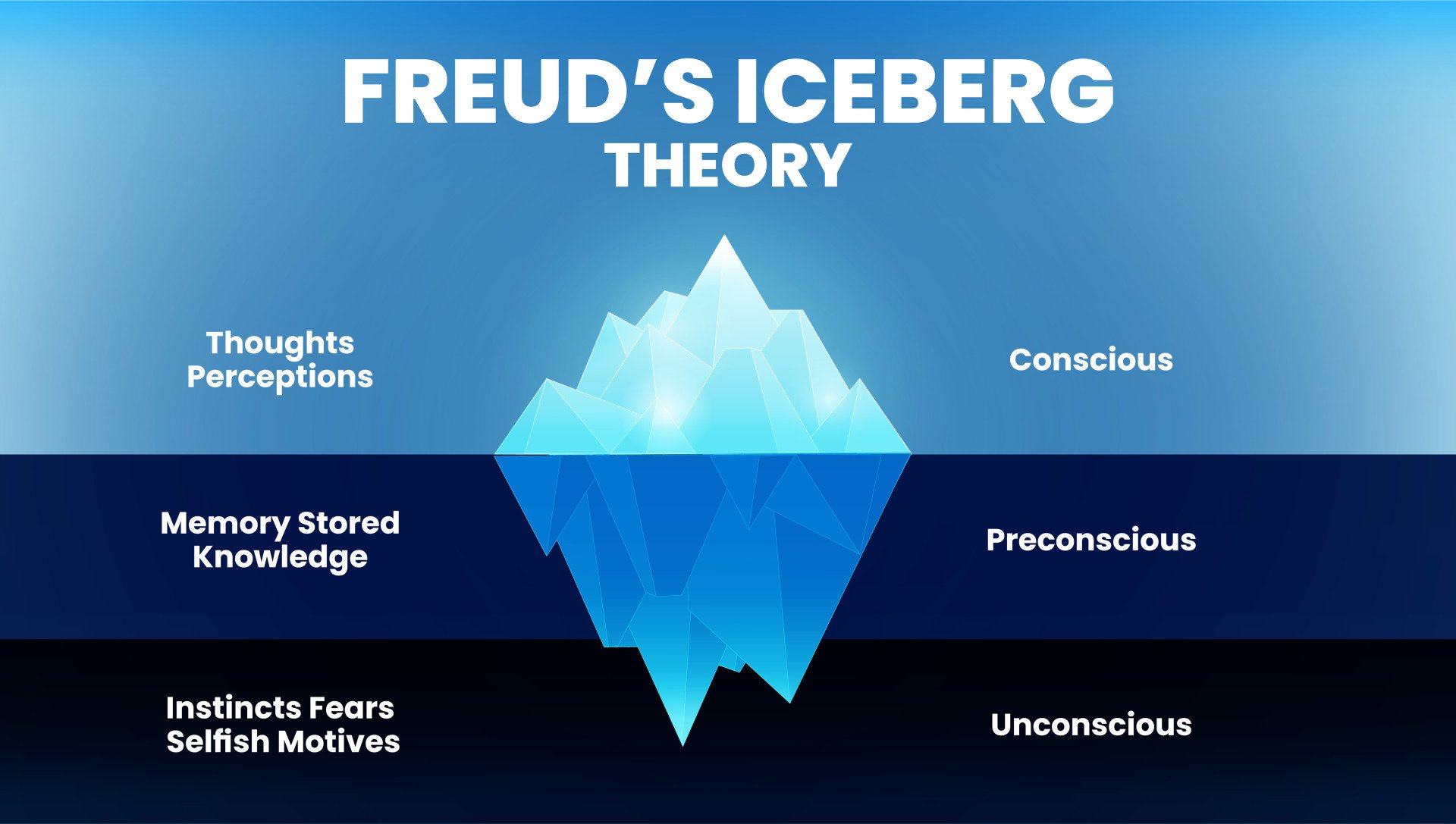
Freud divided the human mind into three levels of awareness:

1. Conscious Mind

The conscious mind includes thoughts, feelings, perceptions, and sensations that we are aware of at any given moment. For example, reading this article, feeling tired, or being aware of anxiety before an exam all belong to conscious awareness.

2. Preconscious Mind

The preconscious contains information that is not currently in awareness but can be easily brought into consciousness. Memories such as your phone number or yesterday’s lunch exist in the preconscious until needed.

3. Unconscious Mind

The unconscious is the most influential and mysterious part of the mind. It contains repressed memories, unresolved conflicts, traumatic experiences, forbidden desires, and instinctual urges. Freud believed that the unconscious mind strongly influences behavior, emotions, dreams, and slips of the tongue (Freudian slips).

The unconscious mind is symbolically represented by the iceberg model, where only a small portion (conscious) is visible above the surface, while the larger mass (unconscious) remains hidden beneath.

The Structural Model of Personality

Freud later refined his theory and introduced the structural model, which explains how personality functions through three interacting components:

1. Id

The id is the most primitive part of personality, present from birth. It operates entirely in the unconscious and follows the pleasure principle, seeking immediate gratification of instincts and desires.

Characteristics of the id:

  • Irrational and impulsive

  • Seeks pleasure and avoids pain

  • Contains sexual (libido) and aggressive instincts

Example: A child crying loudly for food without considering social rules is acting from the id.

2. Ego

The ego develops during early childhood and operates across the conscious, preconscious, and unconscious levels. It follows the reality principle, balancing the demands of the id with the constraints of reality.

Functions of the ego:

  • Logical thinking

  • Decision-making

  • Problem-solving

  • Delaying gratification

The ego acts as a mediator between instinctual urges and societal expectations.

3. Superego

The superego represents internalized moral standards and social rules, largely derived from parents and culture. It develops around the age of five.

Components of the superego:

  • Conscience: punishes behavior with guilt

  • Ego ideal: rewards behavior with pride

The superego strives for perfection and can be overly harsh, leading to feelings of shame or inferiority.

Psychic Energy and Instincts

Freud believed that human behavior is motivated by instinctual energies:

Life Instincts (Eros)

These instincts promote survival, growth, and pleasure. The energy associated with life instincts is called libido, primarily expressed through sexual and affectionate behaviors.

Death Instincts (Thanatos)

Freud later proposed death instincts, which drive aggressive, destructive, and self-destructive behaviors. These instincts may be directed outward as aggression or inward as self-harm.

Psychosexual Stages of Development

One of Freud’s most debated contributions is his theory of psychosexual development, which proposes that personality develops through a series of stages centered on erogenous zones.

1. Oral Stage (0–1 year)

Pleasure is focused on the mouth (sucking, biting).
Fixation may lead to dependency, smoking, overeating, or oral aggression.

2. Anal Stage (1–3 years)

Pleasure focuses on bowel control.
Fixation may result in:

  • Anal-retentive traits: perfectionism, rigidity

  • Anal-expulsive traits: messiness, impulsivity

3. Phallic Stage (3–6 years)

Focus on genital pleasure.
Key concepts:

  • Oedipus Complex: boys’ unconscious desire for the mother and rivalry with the father

  • Electra Complex: girls’ emotional attachment to the father

Resolution leads to identification with the same-sex parent.

4. Latency Stage (6–puberty)

Sexual urges are dormant. Energy is redirected toward learning, friendships, and skill development.

5. Genital Stage (adolescence onward)

Mature sexual interests develop. Successful navigation leads to balanced relationships and productivity.

Defense Mechanisms: Ego’s Protective Strategies

Defense mechanisms are unconscious strategies used by the ego to reduce anxiety caused by internal conflicts.

Common defense mechanisms include:

  • Repression: Blocking distressing thoughts from awareness

  • Denial: Refusing to accept reality

  • Projection: Attributing one’s own feelings to others

  • Displacement: Redirecting emotions to a safer target

  • Rationalization: Justifying unacceptable behavior

  • Regression: Reverting to earlier developmental behaviors

  • Sublimation: Channeling impulses into socially acceptable activities

Defense mechanisms are normal but become problematic when overused.

Dream Analysis: The Royal Road to the Unconscious

Freud believed that dreams provide insight into unconscious desires. He distinguished between:

  • Manifest content: the literal storyline of the dream

  • Latent content: the hidden psychological meaning

Dreams use symbols, condensation, and displacement to disguise unacceptable wishes.

Psychoanalysis as Therapy

Freud developed psychoanalysis as a therapeutic method aimed at making the unconscious conscious. Key techniques include:

  • Free association

  • Dream interpretation

  • Analysis of resistance

  • Transference analysis

The goal is insight, emotional release, and resolution of inner conflicts.

Criticism of Freud’s Theory

Despite its influence, Freud’s theory has faced criticism:

  • Overemphasis on sexuality

  • Lack of scientific testability

  • Gender bias

  • Cultural limitations

Modern psychology has moved toward evidence-based approaches, yet many core ideas remain influential.

Legacy and Modern Relevance

Freud’s work inspired later theorists such as Carl Jung, Alfred Adler, and Erik Erikson. Contemporary therapies like psychodynamic therapy continue to draw from psychoanalytic principles.

Conclusion

Freud’s psychoanalytic theory offers a profound, if complex, understanding of the human mind. By emphasizing unconscious processes, childhood experiences, and internal conflict, Freud transformed psychology from the study of behavior alone into an exploration of inner life. While not without flaws, Freud’s view of the human mind remains a cornerstone of psychological thought, reminding us that beneath conscious awareness lies a vast and powerful mental world shaping who we are.

Frequently Asked Questions (FAQ)

Psychoanalytic Theory: Freud’s View of the Human Mind


1. What is Psychoanalytic Theory?

Psychoanalytic theory is a psychological framework proposed by Sigmund Freud that explains human behavior in terms of unconscious motives, childhood experiences, and inner psychological conflicts. It emphasizes that much of our mental life operates outside conscious awareness.


2. Why is the unconscious mind important in Freud’s theory?

Freud believed the unconscious mind stores repressed memories, unresolved conflicts, and instinctual desires that strongly influence behavior, emotions, dreams, and mental health. Even though we are unaware of these contents, they shape our everyday actions.


3. What are the three levels of consciousness according to Freud?

Freud divided the mind into:

  • Conscious: thoughts and feelings we are aware of

  • Preconscious: information that can be easily recalled

  • Unconscious: hidden desires, memories, and conflicts


4. What are the id, ego, and superego?

They are the three components of personality:

  • Id: instinctual, pleasure-seeking, unconscious

  • Ego: rational, reality-oriented decision-maker

  • Superego: moral conscience and internalized social rules

Personality develops through the constant interaction of these three systems.


5. What is the pleasure principle and reality principle?

  • The pleasure principle (id) seeks immediate gratification of desires.

  • The reality principle (ego) delays gratification and considers social norms and consequences.


6. What are psychosexual stages of development?

Freud proposed that personality develops through five stages:

  1. Oral

  2. Anal

  3. Phallic

  4. Latency

  5. Genital

Unresolved conflicts at any stage may lead to fixation, affecting adult personality.


7. What is fixation in psychoanalytic theory?

Fixation occurs when an individual becomes stuck at a particular psychosexual stage due to unresolved conflict, leading to specific personality traits or behavioral patterns in adulthood.


8. What are defense mechanisms?

Defense mechanisms are unconscious strategies used by the ego to reduce anxiety caused by conflicts between the id, ego, and superego. Common examples include repression, denial, projection, displacement, regression, rationalization, and sublimation.


9. Are defense mechanisms always unhealthy?

No. Defense mechanisms are normal and necessary for psychological functioning. However, excessive or rigid use of certain defenses can contribute to emotional difficulties and mental health problems.


10. What role do dreams play in Freud’s theory?

Freud viewed dreams as the “royal road to the unconscious.” He believed dreams express hidden desires through symbols.

  • Manifest content: what we remember

  • Latent content: the hidden meaning


11. What is psychoanalysis as a therapy?

Psychoanalysis is a long-term therapeutic approach that aims to uncover unconscious conflicts through techniques such as free association, dream analysis, and transference, helping individuals gain insight and emotional healing.


12. What is transference in psychoanalysis?

Transference occurs when a client projects feelings from past relationships (often with parents) onto the therapist. Analyzing transference helps reveal unresolved emotional conflicts.


13. Why is Freud’s theory criticized?

Major criticisms include:

  • Overemphasis on sexuality

  • Lack of scientific testing

  • Gender bias

  • Cultural limitations

Despite this, Freud’s ideas remain historically and clinically influential.


14. Is Freud’s psychoanalytic theory still relevant today?

Yes. While modern psychology has evolved, psychoanalytic concepts continue to influence psychodynamic therapy, personality studies, trauma work, and understanding unconscious processes.


15. How is psychoanalytic theory useful in counseling?

It helps counselors understand:

  • Deep-rooted emotional patterns

  • Childhood trauma effects

  • Repeated relationship conflicts

  • Defense mechanisms and resistance

This insight supports long-term emotional growth and self-awareness.

Reference

Perception

Introduction 

Perception is the complex cognitive process through which humans interpret, organize, and make sense of sensory information received from the environment to create a meaningful experience of the world around them. It is not just passive reception but an active process influenced by the interplay of sensory inputs and cognitive factors, such as previous knowledge, expectations, emotions, cultural background, and attention.

In real life, perception enables individuals to become consciously aware of objects, relationships, and events, allowing them to respond appropriately. For example, when walking down a busy street, a person perceives the colors and shapes of traffic lights, the sounds of vehicles, and the movement of other pedestrians, integrating all this information to navigate safely. Similarly, when smelling freshly baked bread, the sensory input triggers a recognition of its aroma, evoking memories and feelings that influence the desire to eat.

screenshot 2025 11 15 145346


Expanded Real-Life Definition of Perception

Perception is essentially the mental process that transforms raw data from the senses into a coherent and usable understanding of one’s surroundings. This involves organizing sensory stimuli into recognizable patterns, interpreting their meaning based on context and prior experience, and forming a conscious awareness of the environment.

For example, reading text on a page involves perceiving the shapes of letters and words, interpreting their linguistic meaning based on learned language rules, and understanding the overall message. Another daily example is hearing a friend’s voice in a crowded room—using selective attention, the brain filters relevant sounds and interprets them while ignoring background noise.

Thus, perception acts as a filter between objective reality and an individual’s internal representation of the world. Because it is shaped by subjective influences and cognitive processes, different people may experience and interpret the same stimuli differently, underscoring the personalized nature of perception.

Stages of Perception

Perception is a multi-stage process through which sensory information is transformed into meaningful experiences. The major stages are as follows:

  1. Sensation
    • This is the initial stage where sensory organs (eyes, ears, skin, nose, tongue) detect stimuli from the environment.
    • Sensory receptors respond to stimuli like light, sound waves, pressure, odor molecules, and taste compounds.
    • Example: When you see a bright red apple, your eyes detect the color and shape as raw data.
  2. Attention
    • Focuses on selecting relevant stimuli from the environment while filtering out irrelevant or distracting information.
    • Selective attention allows you to concentrate on one conversation in a noisy room or spot a friend in a crowd.
    • Example: Hearing your name mentioned at a busy party while tuning out other noise.
  3. Organization
    • The brain organizes incoming sensory data into recognizable patterns, grouping elements based on factors like similarity, proximity, continuity, and closure (Gestalt principles).
    • It sorts shapes, sounds, and textures into meaningful units.
    • Example: Seeing a series of dots and perceiving them as a complete circle instead of separate elements.
  4. Interpretation
    • The brain assigns meaning to the organized data by integrating it with past experiences, knowledge, emotions, and expectations.
    • This stage can be subjective; different people may interpret the same stimuli differently.
    • Example: Seeing a person in a white coat and interpreting them as a doctor based on cultural knowledge.
  5. Perceptual Constancy
    • The tendency to recognize objects as unchanged despite changes in sensory input such as lighting, angle, distance, or context.
    • This helps maintain a stable perception of the environment.
    • Example: Recognizing a door is rectangular even when viewed from an angle that makes it appear trapezoidal.
  6. Memory and Recall
    • Experiences obtained through perception are stored in memory.
    • Later, this stored information is recalled to help interpret future stimuli and guide behavior.
    • Example: Remembering that a dog barked aggressively previously informs how you perceive and react to dogs in the future.

screenshot 2025 11 15 145540

Perception is thus a dynamic interaction between sensory input and cognitive processes, enabling humans to navigate, understand, and respond to their environment effectively.

This expanded model incorporating memory and recall reflects the complexity and adaptability of human perception, making it not merely a snapshot but an ongoing, evolving process shaped by experience.

Theories of Perception

  1. Bottom-Up Processing
    • This theory suggests that perception begins with raw sensory data flowing from sensory organs to the brain.
    • It is data-driven and works by building perception from the details received through senses without prior knowledge influencing it.
    • For example, when encountering an unfamiliar object, your brain pieces together sensory input like shape, color, and texture to identify it.
  2. Top-Down Processing
    • Here, perception is shaped by prior knowledge, experiences, expectations, and context.
    • The brain uses cognitive factors to interpret sensory data, sometimes filling in missing gaps or interpreting ambiguous information.
    • For example, when reading messy handwriting, past knowledge and the context help you understand the words despite unclear letters.
    • Top-down processing works in tandem with bottom-up, influencing what we attend to and how we make sense of stimuli.
  3. Gestalt Theory
    • This theory highlights that humans perceive entire patterns or configurations, not just individual elements.
    • Principles like proximity, similarity, closure, and continuity show how parts are grouped into wholes.
    • A classic example is perceiving a series of dots arranged in a circle as a complete circle rather than separate dots.
  4. Constructivist Theory
    • Perception is an active process constructed by combining sensory input with memory, experience, and context.
    • It is subjective and influenced by learning and culture.
    • For instance, cultural background may affect how gestures or signs are perceived in communication.
  5. Ecological Theory (Direct Perception)
    • Proposed by James Gibson, this theory argues that the environment provides rich sensory information that humans directly perceive without needing cognitive interpretation.
    • The focus is on “affordances,” or the possibilities for action that the environment offers.
    • For example, the perception of a chair as something to sit on happens directly through sensory interaction with it, without complex mental processing.

Summary

These theories together show perception as a combination of sensory inputs, cognitive interpretations, and environmental interactions. Bottom-up and top-down processing especially highlight how perception is both data-driven and influenced by prior knowledge, making them foundational concepts in understanding how we perceive our world. The Gestalt, Constructivist, and Ecological theories further explain the holistic, subjective, and environment-driven aspects of perception.

Perceptual Mechanisms

  1. Selective Attention
    Selective attention is the cognitive mechanism that filters incoming sensory information to focus on the most important or relevant stimuli while ignoring distractions. This process helps prevent sensory overload and enables effective interaction with the environment. For example, in a noisy café, you can focus on the conversation with your friend, tuning out background chatter.
  2. Perceptual Set
    A perceptual set is a mental predisposition to perceive or interpret stimuli in a particular way based on prior experiences, expectations, emotions, and cultural context. It acts as a filter that influences how new sensory information is processed. For instance, if someone has recently seen a lot of scary movies, they might interpret ambiguous noises at night as something threatening.
  3. Depth Perception
    Depth perception is the ability to perceive the world in three dimensions and judge distances between objects. It relies on visual cues such as binocular disparity (the difference in images between the two eyes), motion parallax, relative size, texture gradients, and shadows. This mechanism is essential for tasks like driving, catching a ball, or walking without bumping into objects.
  4. Perceptual Constancies
    Perceptual constancies allow us to recognize objects as stable and unchanging despite variations in sensory input caused by changes in lighting, distance, angle, or movement. Key types include size constancy, shape constancy, and color constancy. For example, a door is perceived as a rectangle whether it is open or closed, near or far, even though the retinal image changes.screenshot 2025 11 15 150436

These mechanisms ensure that perception is efficient, coherent, and meaningful, allowing humans to effectively interpret and engage with their complex and dynamic environments.

Examples of Perception

  • Visual Perception:
    When driving, visual perception allows a person to read traffic lights, recognize road signs, monitor the movement of other vehicles, and estimate distances on the road. For example, a driver uses visual cues to notice when a pedestrian is about to cross or when a traffic light changes from green to red, enabling timely and safe responses.
  • Auditory Perception:
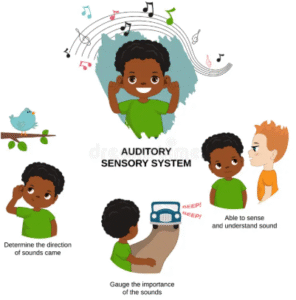
    In a crowded and noisy environment like a party or café, auditory perception enables a person to focus on specific sounds, such as hearing their name being called or recognizing familiar voices, despite background noise. This ability is a demonstration of the “cocktail party effect,” allowing selective attention to auditory stimuli. screenshot 2025 11 15 150108
  • Tactile Perception:
    When touching a hot surface, such as a stove, tactile perception registers the high temperature through skin sensors, triggering a reflexive action such as quickly pulling away the hand to avoid burns. This immediate sensory input combined with perceptual processing ensures safety.screenshot 2025 11 15 150223
  • Social Perception:
    During conversations, social perception allows interpretation of nonverbal cues like facial expressions, body language, and tone of voice to infer emotions and intentions. For example, perceiving a friend’s smile and relaxed posture as indicators of friendliness or comfort, while recognizing crossed arms and averted gaze might be interpreted as discomfort or disinterest.

These examples illustrate how perception integrates sensory input and cognitive processing to help individuals navigate and understand various aspects of everyday life effectively.

Importance and Applications of Perception

Perception is fundamental in helping humans navigate, understand, and interact with their environment. It organizes sensory information into meaningful experiences, enabling effective responses to the world around us.

  • Navigating and Understanding Environment:
    Perception allows individuals to detect and interpret stimuli such as sights, sounds, and smells to move safely and efficiently. For example, perceiving the speed and distance of an oncoming vehicle helps avoid accidents. It also enables recognizing familiar places and objects, which guides everyday actions.
  • Influencing Decision-Making and Social Interactions:
    Perception shapes how people make judgments and decisions by interpreting situations and the behavior of others. Social perception, such as reading facial expressions and body language, is crucial in communication and building relationships. Misinterpretations can lead to misunderstandings or conflicts.
  • Usefulness in Various Fields:
    • Psychology: Understanding perception helps explain human behavior, cognitive function, and mental health challenges.
    • Marketing: Marketers use perception principles to influence consumer choices, brand recognition, and advertising effectiveness.
    • Education: Teaching methods leverage perception theories to design materials that enhance learning and retention.
    • Interface Design: UI/UX professionals apply perceptual principles to create intuitive digital and physical interfaces for better user experiences.
  • Awareness of Perception’s Subjectivity:
    Recognizing that perception is subjective—shaped by personal experiences, culture, and emotions—improves communication and conflict resolution. It fosters empathy by appreciating that people may view the same situation differently.

In summary, perception is not only the gateway to sensory experience but also a critical factor influencing cognition, behavior, and social dynamics, making its understanding vital in diverse practical contexts.

Conclusion

Perception is a vital cognitive process through which humans interpret and organize sensory information, creating a meaningful experience of the surrounding world. It is an active process influenced by both raw sensory input and cognitive factors such as prior knowledge, expectations, and attention. The stages of perception—sensation, attention, organization, interpretation, and perceptual constancy—work together to filter and make sense of incoming stimuli. Theories like Bottom-Up and Top-Down processing, Gestalt, Constructivist, and Ecological approaches provide diverse perspectives on how perception operates, highlighting the balance between sensory data and mental frameworks. Perceptual mechanisms, including selective attention, perceptual set, depth perception, and perceptual constancies, ensure efficient and coherent interpretation of stimuli.

Perception’s importance extends across daily life, influencing navigation, decision-making, social interactions, and various professional fields such as psychology, marketing, education, and technology design. Awareness of perception’s subjective nature can help improve communication and reduce conflicts, emphasizing empathy and understanding. Understanding perception equips us to better comprehend human behavior, optimize environments, and enhance interpersonal interactions, reflecting its foundational role in cognition and experience.

References

  • Study.com. (2014). Perception in Psychology | Definition, Importance & Types.
  • Wikipedia. (2002). Perception.
  • Verywell Mind. (2005). Perception: The Sensory Experience of the World.
  • Bruner, J. S. (Year). The Role of Perception in Defining Reality.
  • Gestalt Psychology principles.
  • Gibson, J. J. (Ecological Theory of Perception).
  • Cognifit.com. (2025). Perception- Cognitive ability CogniFit.
  • Lumen Learning. (2011). Introduction to Perception.


Cognitive Psychology

Cognitive psychology 

Cognitive psychology is the science that deals with the cognitive phenomena that include perception, attention, memory, language, thinking, problem-solving, and decision-making. It tries to cognize how human beings learn, perceive, remember and retrieve information and how the cognitive processes affect the behavior and feelings. Cognitive psychology as opposed to behaviorism studies the inner processes of the mind as opposed to observable behavior.

As an example, consider a mental health blog post that you are reading. The words are initially perceived by your brain via your eyes (perception). You pay your attention to the text regardless of the noise in the background (attention). You remember the related information you have read before (memory), you know what sentences mean (language comprehension) and you think about the material critically (reasoning and problem-solving). The interaction of mental processes is also complex to explain cognitive psychology at work.screenshot 2025 11 15 010509

Eyewitness memory can also be considered another real-life example. Having observed something, a man is able to recollect specifics because of recalling the information which has been stored, however, this memory may be distorted and under the pressure or when the next questions are phrased in a certain way, it proves how cognitive activity influences perceptions and memory.

A therapist in the counseling profession applies cognitive processes in listening to nonverbal and verbal cues of clients, memorizing past sessions, reasoning about client issues, and problem-solving to come up with effective therapy approaches. These illustrations show how cognitive psychology can be used to explain the psychological processes behind the daily experiences and work practice.

Domains of Cognitive Psychology

The core domains of cognitive psychology include the following:

  • Perception: The arrangement of the sensory information, interpretation, and meaning. To give an example, whenever you know a face in a crowd or understand the tone of voice of a client, then it is a perceptual process.
  • Attention: The capacity to direct the mental resources towards certain stimuli to the exclusion of distractions. An example is to pay attention to a counseling conversation when there is background noise.
  • Memory: This involves encoding, storage and retrieval of information. This consists of sensory memory, working memory to store temporarily and long-term memory of facts and events.
  • Language: Interpreting, processing and producing spoken and written language. Following therapy dialogues or writing blogs relies on cognition of language.
  • Learning: This is the process of gaining new knowledge and abilities through experience, or through study or teaching. The acquisition of new counseling methods is a cognitive process of learning.
  • Problem-solving and Decision-making: The working out of strategies to solve the problems and make decisions based on the assessment of information. These domains are used to plan the therapy sessions or daily activities.
  • Reasoning and Intelligence: Rational thinking, inferences and application of knowledge. Thinking is involved in analyzing the behavior of a client or creating theories of psychology.screenshot 2025 11 15 010633

These domains interplay in daily life, such as when reading a blog, remembering a therapy technique, or planning one’s day.

History of Cognitive Psychology

  • The foundations of cognitive psychology are traced to antique philosophy but was defined as a scientific field in the middle of the 20th century.
  • Introspection dominated the initial psychology followed by behaviorism which dismissed the inner mental state in favor of visible behaviors.
  • Dissatisfaction with behaviorism increased in the 1950s-60s over its inability to describe complex mental processes such as language and memory.
  • The Cognitive Revolution was a reinvention of the scientific study of mental mechanisms occasioned by new computer science metaphors of information processing.
  • Classical theorists are George A. Miller (memory capacity), Noam Chomsky (language acquisition critiques of behaviorism), Jerome Bruner (perception and learning) and Ulric Neisser (popularized cognitive psychology).
  • Schools of research around Harvard and elsewhere led to growth, which included neuroscience, computer science, linguistics, and philosophy.

Major Theories and Models

Key cognitive theories include:

Information Processing Model is a classical theory in cognitive psychology, which describes the nature of cognition as a set of successive steps in which information flows. It compares the process of human thought to that of computers. In this model, the way information is can be thought of as cognition:

  1. Encoded: First, the environment sends through the senses, the information that is detected is encoded into a form that can be processed by the brain. As an illustration, when one is looking at a page, the eyes need to convert light into neural messages.
  2. Stored: The information is temporarily stored in various systems of memory as an encrypted form. It is first received by the senses in sensory memory (raw sensory input on a short-term basis (several seconds or less). It is the next stage, short-term/working memory where it is manipulated and processed. Lastly, the key information is stored in long-term memory to be stored more permanently.
  3. Retrieved: The information stored in the long-term memory on the occasion of need is retrieved back into working memory where it is used in the thinking process, problem solving or making decisions.screenshot 2025 11 15 010834

The model acknowledges that cognitive processing is complex interaction like attention (what information to pay attention), rehearsal (to maintain information in short term memory) and encoding plans (arranging information in a manner that facilitates the storage) of the information.

The fact that information processing may be serial (one step at a time) and parallel (several processes running concurrently) is also important and is determined by the nature of the tasks. As an example, when a person reads, the brain is able to recognize letters and interpret the meaning of the words together with comprehending the grammatical structure.

This model is very applicable in the study of memory formation, strategies in problem solving, language comprehension and learning. Indicatively, learning a second language entails encoding words, rehearsing them in the working memory and storing them in the long-term memory.

Schema Theory

Schema theory proposes that humans arrange knowledge in their mind in the form of mental frameworks known as schemes that are patterns that depict concepts and their connection. The schemas are used to help perceive, interpret, and remember new information. To illustrate, a schema of having a therapy session will make you predict the behaviors of the client and how the session is going to run, thus it will be simpler to process and react to new information during the counseling process.

The schemas affect memory and attention due to their expectations. They are also useful to fill the gaps on lack of information but at times, may cause biases or perceptional errors.

screenshot 2025 11 15 012622


Cognitive Dissonance Theory

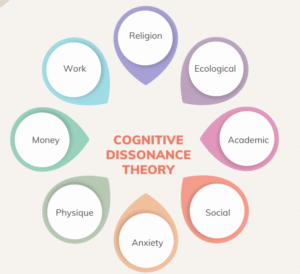
Cognitive dissonance theory was invented by Leon Festinger; it is used to explain instances where individuals develop a sense of discomfort whenever they harbor contradictory beliefs or when their behavior conflicts with beliefs. This unease impels them to minimize inconsistency, which is usually achieved through belief transformation or justification of acts. As an illustration, a counselor may have a dissonance when he/she holds evidence-based practices but sometimes relies on the unproved methods causing them to change their practices or beliefs.

screenshot 2025 11 15 012849


Working Memory Model

The working memory model, introduced by Alan Baddeley, makes the concept of a short-term memory more specific by splitting it into several components:

  • Central Executive: It is the control system that determines attention to and organizes psychological processes.
  • Phonological Loop: Interprets verbal and auditory messages (such as repeating instructions of a client).
  • Visuospatial Sketchpad: Processes visual and spatial data (such as understanding body language of a client).
  • Episodic Buffer: This is where the information within domains is integrated and connected to the long-term memory.screenshot 2025 11 15 013015

This model describes the way individuals store and process information temporarily in order to perform relevant and complicated tasks like reasoning and understanding.

Dual-Coding Theory

Dual-coding theory is the theory that was developed by Allan Paivio and postulates that people have two different systems of stimulus processing of information: verbal system and nonverbal imagery system. The information that is encoded visually and verbally improves learning and memory. To illustrate, written explanations written on diagrams can be used in therapy or teaching, and these are better understood and remembered.


Social Cognitive Theory

According to the social cognitive theory proposed by Albert Bandura, people learn in a social environment by observing and imitating. It lays emphasis on cognitive processes including attention, memory and motivation in learning. Self-efficacy (belief in one’s abilities) is one of the fundamental ideas that may determine the way people approach challenges and continue learning or changing their behavior.

screenshot 2025 11 15 013506

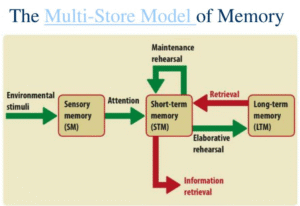
Multi-Store Model of Memory

The presented model, which is suggested by Atkinson and Shiffrin, separates memory into three stores:

  • Sensory Memory: Stores the sensory impressions in a very short time.
  • Short-Term Memory: Limited capacity system The short term memory has a limited capacity to hold information between 20-30 seconds.
  • Long-Term Memory: Permanent and infinite repository of knowledge and experience.
  • screenshot 2025 11 15 013732

Information flows through these stores in a sequential manner where attention is the gateway to short term memory and rehearsal to the transfer to the long term memory.

Cognitive Behavioral Models

The cognitive behavioral models focus on the role dysfunctional thinking patterns play in emotions and behaviors. The concept behind Cognitive Behavioral Therapy (CBT) is that mental health can be enhanced by altering maladaptive thoughts. Cognitive theory has found practical relevance in the treatment process and models such as the Cognitive Triad by Aaron Beck indicate that negative perceptions about the self, the world and the future are the causes of depression and anxiety.

Research Methods and Experiments

Cognitive psychology employs various scientific methods to understand mental processes:

  • Laboratory Experiments: Experiments are strongly controlled environments in which variables are manipulated and their effect on behavior is examined, e.g. the capacity of memory or the Stroop effect in which the meaning of a word can interfere with the recognition of a color.
  • Field Experiments: Research on social interaction or interventions in real life.
  • Natural Experiments: The study of the effects following the occurrence of naturally occurring events without control.
  • Self-Reports and Case Studies: Gathering introspective information or individual studies to study cognition.
  • Neuropsychological Techniques: Scanning the brain and capturing neural activity in order to connect mental processing to brain regions.
  • Computer Simulations: AI and model simulations to simulate cognitive processes.

Two central measures in experiments are accuracy (correctness of responses) and response time, which help delineate underlying cognitive mechanisms.

Cognitive Psychology in Daily Life Examples

  • Episodic memory can be seen when a client prefers something or when he or she has had issues in the past.
  • Selective attention is maintained by spending focus on noisy online sessions.
  • Decision-making and reasoning are used in problem-solving on a daily schedule or therapy.
  • Language cognition is associated with writing blog posts or understanding therapy languages.
  • Cognitive learning is manifested through learning new psychotherapeutic techniques.
  • The perception of emotions of clients depends on the observation of their faces.

For example, a mental health professional integrates perception (reading client cues), memory (retaining theory knowledge), attention (focusing on sessions), language (communication), problem-solving (therapy planning), and reasoning (psychological analysis) to conduct effective counseling and content creation.

Conclusion 

This critical synthesis reports the fields of cognitive psychology, the history of its development, the key theoretical perspectives, research methodology, and applications. It creates a vivid image of the inner mental functioning and its impact on daily life and the practice. This knowledge is necessary to psychologists and educators and people, who are interested in the science of human thought and behavior. In case of further expansion or illustration, they can be attached accordingly as to a given focus.

References:

Anderson, J. R. (2015). Cognitive Psychology and Its Implications (8th ed.). Worth Publishers.

Matlin, M. W. (2013). Cognition (8th ed.). Wiley.

Eysenck, M. W. (2012). Fundamentals of Cognition (2nd ed.). Psychology Press.

Neisser, U. (1967). Cognitive Psychology. Appleton-Century-Crofts.

Miller, G. A. (1956). The Magical Number Seven, Plus or Minus Two: Some Limits on Our Capacity for Processing Information. Psychological Review, 63(2), 81-97.

Baddeley, A. D. (2003). Working Memory: Looking Back and Looking Forward. Nature Reviews Neuroscience, 4(10), 829–839.

Festinger, L. (1957). A Theory of Cognitive Dissonance. Stanford University Press.

Bandura, A. (1986). Social Foundations of Thought and Action: A Social Cognitive Theory. Prentice-Hall.

Tulving, E. (1983). Elements of Episodic Memory. Oxford University Press.