How Long Does Postpartum Depression Last? What Every Mother Needs to Know

Introduction: “Will I Ever Feel Like Myself Again?”

One of the most painful questions mothers silently carry after childbirth is not always “Why do I feel this way?” but rather:

“How long is this going to last?”

Postpartum depression (PPD) can make time feel distorted. Days blur together, exhaustion feels endless, and hope can feel far away. Many mothers fear that what they’re experiencing is permanent—that they will never return to their old selves or fully enjoy motherhood.

This fear is understandable, especially when postpartum depression is misunderstood, minimized, or ignored. Some are told, “It will pass,” while others hear, “You should be over this by now.” Both responses can feel invalidating and confusing.

The truth is nuanced and hopeful: postpartum depression has a timeline, but it is not the same for everyone. With the right understanding and support, recovery is not only possible—it is expected.

This article explains how long postpartum depression lasts, what affects its duration, what recovery actually looks like, and when to seek help—so mothers can replace fear with clarity and compassion.

Understanding Postpartum Depression

What Is Postpartum Depression?

Postpartum depression is a mood disorder that can develop anytime within the first year after childbirth. It affects emotional well-being, thinking patterns, physical energy, self-esteem, and relationships.

Unlike temporary mood changes after birth, postpartum depression:

  • Persists over time

  • Interferes with daily functioning

  • Does not improve with rest alone

  • Often worsens without support

It is not a personal failure—it is a medical and psychological condition.

When Does Postpartum Depression Start?

A common misconception is that postpartum depression begins immediately after delivery. In reality, onset varies widely.

PPD may begin:

  • Within the first 2 weeks

  • At 1–3 months postpartum

  • At 6 months or later

  • Even close to the baby’s first birthday

Because of this delayed onset, many mothers do not associate their symptoms with childbirth at all.

So, How Long Does Postpartum Depression Last?

The Short Answer

Postpartum depression can last:

  • A few weeks with early support

  • Several months without treatment

  • A year or longer if left untreated

There is no fixed expiration date—but there is a clear pattern:
👉 Earlier support = faster recovery

Typical Duration Based on Support

1. With Early Recognition and Support

When postpartum depression is identified early and treated appropriately:

  • Symptoms often improve within 8–12 weeks

  • Many mothers feel significantly better within 3–6 months

  • Emotional stability gradually returns

Early intervention shortens the course and reduces severity.

2. Without Professional Help

When postpartum depression is ignored, minimized, or normalized:

  • Symptoms may persist 6–12 months or longer

  • Emotional distress may deepen

  • Anxiety and guilt often increase

  • Depression may become chronic

Untreated postpartum depression can evolve into major depressive disorder.

3. With Severe or Complicated Depression

In cases involving:

  • Past trauma

  • Severe anxiety

  • Relationship stress

  • Lack of support

  • Hormonal sensitivity

Recovery may take longer—but it is still possible with consistent care.
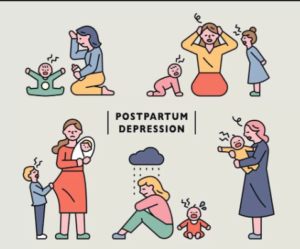
Why the Duration of Postpartum Depression Varies

Postpartum depression is not caused by one factor alone. Its duration depends on multiple interacting influences.

1. Hormonal Sensitivity and Recovery

After childbirth, levels of estrogen and progesterone drop sharply. For some women, this hormonal shift stabilizes quickly. For others, the brain remains sensitive for months.

Women with higher hormonal sensitivity may experience:

  • Longer mood instability

  • Prolonged emotional symptoms

  • Slower recovery without support

This is biological—not a lack of resilience.

2. Sleep Deprivation and Ongoing Exhaustion

Chronic sleep loss:

  • Worsens mood regulation

  • Increases anxiety

  • Reduces coping ability

When sleep deprivation continues for months, depression often lasts longer.

Sleep is not a luxury—it is a mental health necessity.

3. Emotional Support (or Lack of It)

Mothers who feel:

  • Emotionally heard

  • Practically supported

  • Validated without judgment

tend to recover faster.

Those who feel:

  • Criticized

  • Alone

  • Expected to “manage”

often experience prolonged symptoms.

4. Relationship Stress

Conflict with a partner, lack of emotional intimacy, or feeling misunderstood can extend postpartum depression.

Depression thrives in isolation and emotional invalidation.

5. Cultural Pressure and Silence

In many cultures, including India, mothers are expected to:

  • Adjust quietly

  • Be grateful

  • Prioritize everyone else

When emotional pain is silenced, healing is delayed.

6. Past Mental Health History

Women with a history of:

  • Depression

  • Anxiety

  • Trauma

  • Childhood emotional neglect

may experience postpartum depression that lasts longer without targeted support.

This is not relapse—it is vulnerability resurfacing during a sensitive life phase.

Postpartum Depression vs Baby Blues: Duration Matters

Feature Baby Blues Postpartum Depression
Onset 2–5 days postpartum Anytime within 1 year
Duration Up to 2 weeks Weeks to months
Intensity Mild mood swings Persistent distress
Recovery Spontaneous Needs support

If symptoms last beyond two weeks or worsen, it is not baby blues.

What Recovery from Postpartum Depression Really Looks Like

Recovery is gradual, not sudden.

It does not mean:

  • Feeling happy all the time

  • Loving motherhood instantly

  • Never feeling tired or overwhelmed

Recovery does look like:

  • Emotional intensity decreasing

  • Fewer bad days

  • Better coping on difficult days

  • Improved sleep and clarity

  • Reduced guilt and self-blame

Healing happens in layers.

Common Fear: “What If This Never Ends?”

This fear is extremely common in postpartum depression—and it is a symptom of depression itself, not a prediction.

Depression distorts time and hope. With proper support, most women recover fully.

How Treatment Affects Duration

1. Therapy

Psychological therapies significantly shorten recovery time.

Effective approaches include:

  • Cognitive Behavioral Therapy (CBT)

  • Interpersonal Therapy (IPT)

  • Trauma-informed counseling

Therapy helps by:

  • Challenging depressive thought patterns

  • Processing identity changes

  • Improving emotional regulation

2. Medication (When Needed)

For moderate to severe postpartum depression:

  • Antidepressants may be recommended

  • Many are safe during breastfeeding under medical supervision

Medication does not change who you are—it helps stabilize brain chemistry so healing can begin.

3. Lifestyle and Nervous System Support

Recovery is faster when therapy is combined with:

  • Adequate rest

  • Nutritional support

  • Gentle movement

  • Reduced expectations

  • Help with caregiving

Healing is holistic.

What Happens If Postpartum Depression Is Left Untreated?

Without support, postpartum depression may:

  • Last longer

  • Become more severe

  • Affect self-esteem

  • Strain relationships

  • Increase risk of chronic depression

Early care prevents long-term consequences.

Does Postpartum Depression Ever Come Back?

Some women experience:

  • Lingering low mood

  • Recurrence during future pregnancies

  • Sensitivity during major life transitions

This does not mean failure. It means awareness and early support matter.

Knowing your vulnerability helps protect your mental health in the future.

How Long Does Postpartum Anxiety Last?

Postpartum anxiety often accompanies depression and may:

  • Last as long as depression

  • Persist even after mood improves

Anxiety requires targeted treatment alongside depression care.

When Should You Seek Help Based on Duration?

Seek professional help if:

  • Symptoms last longer than 2 weeks

  • Emotional distress is worsening

  • Daily functioning is affected

  • Sleep and appetite are severely disturbed

  • You feel emotionally numb or hopeless

Seek urgent help immediately if there are:

  • Thoughts of self-harm

  • Thoughts of harming the baby

  • Feeling unable to cope at all

Reassurance for Mothers: What You’re Feeling Has a Timeline

Postpartum depression:

  • Is time-limited

  • Is treatable

  • Does not define your motherhood

  • Does not last forever

Many mothers who once felt lost later describe recovery as:

“I slowly started feeling like myself again.”

How Families Can Support Recovery

Family support shortens recovery time by:

  • Validating emotions

  • Reducing pressure

  • Helping with practical tasks

  • Encouraging professional help

Listening without fixing is powerful medicine.

Conclusion: Healing Is a Process, Not a Deadline

There is no “correct” timeline for healing from postpartum depression.

Some mothers recover in weeks. Others take months. All timelines are valid.

What matters most is this:

  • You do not have to suffer in silence

  • You do not have to wait it out

  • You deserve support

Postpartum depression does not last forever—but support makes it end sooner and heal deeper.

If you are struggling right now, know this:
This phase is not permanent. Help works. Healing happens.

Reference

Silent Symptoms of Postpartum Depression No One Talks About

Introduction: When Suffering Is Quiet, It Goes Unnoticed

Postpartum depression is often imagined as constant crying, visible sadness, or emotional breakdowns. While these symptoms do exist, many mothers experiencing postpartum depression do not look depressed at all. They smile, function, care for their baby—and silently struggle.

These silent symptoms are frequently overlooked by families, healthcare providers, and even mothers themselves. Because they do not match the stereotypical image of depression, women often assume their distress is “normal,” “not serious,” or something they should simply push through.

Silence does not mean absence of pain. In fact, quiet suffering is often the most dangerous kind—because it delays recognition, support, and healing.

This article explores the less-talked-about, silent symptoms of postpartum depression, why they go unnoticed, and why acknowledging them can save emotional well-being for both mother and child.

Understanding Postpartum Depression Beyond Stereotypes

What Is Postpartum Depression?

Postpartum depression (PPD) is a mood disorder that can occur anytime within the first year after childbirth. It affects emotions, thinking patterns, physical energy, and relationships.

Unlike temporary emotional changes after delivery, postpartum depression:

  • Persists over time

  • Interferes with daily functioning

  • Affects self-worth and identity

  • Alters emotional connection

Importantly, postpartum depression does not always appear as sadness.

Why Silent Symptoms Are So Common

Many mothers experience quiet symptoms because:

  • Society expects motherhood to be joyful

  • Emotional distress is minimized as “hormonal”

  • Mothers fear judgment or being labeled ungrateful

  • Caregiving responsibilities leave no space for self-reflection

As a result, emotional pain becomes internalized.

1. Emotional Numbness Instead of Sadness

One of the most misunderstood symptoms of postpartum depression is emotional numbness.

Instead of feeling sad, a mother may feel:

  • Empty

  • Emotionally flat

  • Detached

  • Disconnected from herself

She may go through daily routines mechanically, without emotional engagement.

This numbness is often mistaken for strength or adjustment, but it is actually a protective shutdown response of the nervous system.

2. “Functioning” But Feeling Dead Inside

Many women with postpartum depression appear high-functioning:

  • They care for the baby

  • Manage household responsibilities

  • Smile socially

Internally, however, they may feel:

  • Exhausted beyond explanation

  • Emotionally drained

  • Mentally foggy

  • Disconnected from meaning

This mismatch between outer functioning and inner emptiness often delays diagnosis.

3. Persistent Irritability and Low Frustration Tolerance

Depression does not always soften emotions—it can sharpen them.

Silent postpartum depression often appears as:

  • Constant irritation

  • Snapping at loved ones

  • Feeling overwhelmed by small things

  • Internal anger followed by guilt

Because mothers are expected to be patient and nurturing, anger becomes a deeply shamed emotion.

4. Excessive Guilt Without a Clear Reason

Guilt is one of the most common—but quiet—symptoms of postpartum depression.

A mother may feel:

  • She is never doing enough

  • She is failing her baby

  • Others are better mothers than her

This guilt persists even when she is objectively doing well.

Chronic guilt erodes self-worth and reinforces depressive thinking.

5. Anxiety Disguised as “Being a Careful Mother”

Postpartum depression often coexists with anxiety, but anxiety is frequently normalized.

Silent anxiety symptoms include:

  • Constant worry about the baby’s health

  • Difficulty relaxing

  • Mental replaying of “what if” scenarios

  • Physical tension

When anxiety becomes constant and uncontrollable, it is no longer protective—it is exhausting.

6. Difficulty Sleeping Even When the Baby Sleeps

Sleep deprivation is expected with a newborn. But postpartum depression often involves sleep disturbances beyond caregiving demands.

A mother may:

  • Lie awake despite exhaustion

  • Wake frequently with racing thoughts

  • Feel unrested after sleep

This is a sign of nervous system hyperarousal, not just poor routine.

7. Loss of Interest in the Self (Not Just Hobbies)

While loss of interest in hobbies is a known symptom of depression, postpartum depression often causes something deeper: loss of interest in oneself.

This can look like:

  • Neglecting personal hygiene

  • Feeling undeserving of care

  • No desire to be seen or heard

  • Emotional invisibility

This self-erasure is often mistaken for maternal sacrifice.

8. Feeling Like a Stranger to Yourself

Many mothers describe postpartum depression as:

  • “I don’t recognize myself anymore.”

  • “I feel like I disappeared.”

This identity confusion is rarely discussed.

Motherhood changes roles, priorities, and identity rapidly. When this shift happens without emotional processing, it can lead to depersonalization, a quiet but distressing symptom of depression.

9. Emotional Detachment From Loved Ones

Silent postpartum depression often involves withdrawal—not always physically, but emotionally.

A mother may:

  • Feel disconnected from her partner

  • Avoid conversations

  • Feel unseen or misunderstood

This detachment is often internal, making it hard for others to notice.

10. Cognitive Fog and Poor Concentration

Postpartum depression affects thinking.

Common silent cognitive symptoms include:

  • Forgetfulness

  • Difficulty concentrating

  • Slower thinking

  • Mental fatigue

These symptoms are often blamed on “mom brain,” but when persistent, they signal emotional overload.

11. Physical Symptoms Without Medical Explanation

Many mothers with postpartum depression present with physical complaints:

  • Headaches

  • Body aches

  • Digestive problems

  • Chronic fatigue

When medical tests show no cause, emotional distress is often the underlying factor.

12. Feeling Trapped or Wanting to Escape

One of the most hidden symptoms is escape thinking.

This does not always involve suicidal thoughts. It may sound like:

  • “I just want a break from everything.”

  • “I want to disappear for a while.”

  • “I feel trapped in this life.”

These thoughts reflect emotional overwhelm, not lack of love.

13. Inability to Feel Joy, Even During “Happy” Moments

Some mothers attend celebrations, family gatherings, or milestones but feel nothing.

This inability to feel joy—called anhedonia—is a core symptom of depression that often goes unnoticed because the mother continues to participate outwardly.

14. Over-Identification With the Baby and Loss of Boundaries

Interestingly, silent postpartum depression may also appear as over-functioning:

  • Constant hyper-vigilance

  • Difficulty leaving the baby even briefly

  • Ignoring personal needs

This is often driven by anxiety and fear rather than healthy attachment.

Why These Symptoms Are Ignored

These silent symptoms are overlooked because:

  • They do not disrupt others immediately

  • Mothers minimize their pain

  • Families focus on the baby’s needs

  • Cultural narratives glorify sacrifice

As a result, mothers learn to suffer quietly.

Postpartum Depression vs Baby Blues (Silent Edition)

Feature Baby Blues Silent Postpartum Depression
Duration Up to 2 weeks Weeks to months
Visibility Emotional Often hidden
Functioning Mostly intact Functioning but drained
Recovery Spontaneous Needs support

How Silent Postpartum Depression Affects the Baby

Depression affects:

  • Emotional responsiveness

  • Consistency of caregiving

  • Mother’s emotional availability

This does not mean mothers harm their babies—but support improves outcomes for both.

Why Early Recognition Matters

Untreated postpartum depression can:

  • Become chronic

  • Increase relationship strain

  • Affect maternal self-esteem

  • Impact child emotional development

Early support leads to faster recovery.

What Helps Silent Postpartum Depression Heal

1. Psychological Therapy

  • Cognitive Behavioral Therapy (CBT)

  • Interpersonal Therapy (IPT)

  • Trauma-informed counseling

2. Emotional Validation

Being believed, heard, and understood reduces shame.

3. Nervous System Regulation

  • Sleep support

  • Gentle movement

  • Mindfulness

  • Reduced expectations

4. Medical Support (When Needed)

Medication under professional guidance can be life-changing.

When to Seek Immediate Help

Seek urgent support if there are:

  • Thoughts of self-harm

  • Thoughts of harming the baby

  • Complete emotional numbness

  • Inability to function

Asking for help is an act of care.

Breaking the Silence Around Maternal Mental Health

Postpartum depression thrives in silence. Awareness, compassion, and conversation reduce suffering.

No mother should feel invisible during one of life’s most vulnerable transitions.

Conclusion: Quiet Pain Still Deserves Care

Postpartum depression does not always cry loudly. Sometimes, it whispers—through numbness, guilt, exhaustion, and emotional disconnection.

These silent symptoms are real, common, and treatable.

If you recognize yourself in these words, know this:
You are not weak. You are not failing. You are not alone.

Help exists—and healing is possible.

Reference


Why Postpartum Depression Happens Even After a “Normal” Delivery

Introduction: “But Everything Went Fine—So Why Do I Feel This Way?”

One of the most common and painful questions new mothers ask themselves is:

“My delivery was normal. My baby is healthy. So why don’t I feel okay?”

In many families and even medical settings, postpartum depression is often linked only to complicated pregnancies, traumatic births, or medical emergencies. When a woman experiences emotional distress after a “normal” delivery, her feelings are frequently dismissed—by others and by herself.

Statements like:

  • “At least your delivery was smooth.”

  • “You should be grateful.”

  • “Nothing bad happened, so why are you sad?”

can deepen shame and silence.

The truth is this: postpartum depression does not require a traumatic delivery. A medically normal birth does not guarantee emotional or psychological well-being. Postpartum depression is shaped by biology, psychology, relationships, identity shifts, and nervous system changes—many of which are invisible.

This article explores why postpartum depression can occur even after a normal delivery, breaking myths, explaining the science, and validating the emotional reality of new mothers.

Understanding Postpartum Depression Beyond Birth Complications

What Is Postpartum Depression?

Postpartum depression (PPD) is a mood disorder that can develop any time within the first year after childbirth. It affects how a mother thinks, feels, behaves, and connects—with herself, her baby, and others.

PPD is not:

  • A failure of gratitude

  • A sign of weak motherhood

  • Always linked to birth trauma

It is a multifactorial condition, meaning many factors interact to create vulnerability.

The Myth of “Normal Delivery = Emotional Safety”

Medical professionals often define a normal delivery as:

  • No surgical intervention

  • No life-threatening complications

  • Healthy mother and baby

But mental health does not follow medical definitions.

A delivery can be medically smooth while emotionally overwhelming, psychologically destabilizing, and neurologically exhausting.

The body may heal faster than the mind.

1. Sudden Hormonal Crash After Childbirth

One of the most powerful contributors to postpartum depression—regardless of delivery type—is hormonal withdrawal.

What Happens to Hormones After Birth?

Within 24–48 hours after delivery:

  • Estrogen levels drop sharply

  • Progesterone plummets

  • Oxytocin fluctuates

  • Cortisol regulation changes

This hormonal shift is more dramatic than most emotional events in life.

Why This Matters

Hormones regulate:

  • Mood

  • Sleep

  • Emotional regulation

  • Stress response

Even after a “normal” delivery, this sudden biochemical shift can trigger:

  • Low mood

  • Irritability

  • Emotional numbness

  • Anxiety

This is not psychological weakness—it is neurobiology.

2. Nervous System Overload, Not Trauma

Postpartum depression does not always arise from trauma. Sometimes, it emerges from chronic nervous system overload.

The Mother’s Nervous System After Birth

After delivery, a mother’s nervous system is constantly activated by:

  • Sleep deprivation

  • Infant crying

  • Physical recovery

  • Responsibility overload

  • Sensory overstimulation

Even without trauma, the system may remain stuck in:

  • Fight-or-flight (anxiety, irritability)

  • Freeze/shutdown (numbness, detachment)

This dysregulation can evolve into depression.

3. Emotional Shock of Identity Loss

One of the least discussed reasons postpartum depression occurs after normal delivery is identity disruption.

What Changes Emotionally After Birth?

A woman may experience:

  • Loss of personal freedom

  • Loss of professional identity

  • Loss of routine

  • Loss of previous body image

  • Loss of emotional predictability

Motherhood is an identity transition, not just a role addition.

Even when the baby is wanted and loved, grief for the old self can coexist—and that grief is rarely acknowledged.

Unprocessed identity grief often presents as depression.

4. Unrealistic Expectations About Motherhood

Many women enter motherhood with idealized expectations shaped by:

  • Social media

  • Family narratives

  • Cultural glorification of sacrifice

When reality does not match expectations, emotional distress follows.

Common Expectation Gaps

Expectation Reality
Instant bonding Gradual attachment
Constant happiness Mixed emotions
Natural confidence Self-doubt
Maternal instinct Learned caregiving

The gap between expectation and reality creates:

  • Shame

  • Self-blame

  • Feelings of failure

These cognitive patterns are central to postpartum depression.

5. Emotional Invalidations After a Normal Delivery

Ironically, women who have normal deliveries often receive less emotional support.

Comments like:

  • “Others had it worse.”

  • “Why complain?”

  • “Everything went fine.”

invalidate emotional pain.

When feelings are dismissed repeatedly, women learn to:

  • Suppress emotions

  • Minimize distress

  • Internalize guilt

Chronic emotional invalidation is a strong predictor of depression.

6. Attachment Anxiety and Bonding Pressure

Many mothers feel pressure to:

  • Love instantly

  • Bond deeply

  • Feel maternal joy immediately

When bonding feels slow or complicated, fear emerges:

  • “What if something is wrong with me?”

  • “What if I’m not a good mother?”

This anxiety, combined with guilt, often develops into postpartum depression—even without delivery complications.

7. Sleep Deprivation Alters Brain Chemistry

Sleep loss is not just exhaustion—it is a mental health risk factor.

Why Sleep Loss Matters

Chronic sleep deprivation:

  • Reduces serotonin

  • Increases cortisol

  • Impairs emotional regulation

  • Weakens stress tolerance

Even after a normal delivery, disrupted sleep alone can trigger depressive symptoms.

Sleep deprivation is one of the most underestimated causes of postpartum depression.

8. Relationship Changes After Childbirth

After birth, relationships change rapidly:

  • Partner dynamics shift

  • Emotional support may decrease

  • Communication gaps widen

Even supportive partners may struggle to understand maternal emotional needs.

Feeling emotionally alone—even while surrounded by people—is a common pathway to postpartum depression.

9. Cultural Pressure to Be “Strong”

In many cultures, especially in India, mothers are expected to:

  • Adjust silently

  • Endure discomfort

  • Prioritize everyone else

Mental health struggles are often labeled as:

  • Drama

  • Weakness

  • Overthinking

This pressure forces women to suppress distress until it becomes overwhelming.

10. Past Mental Health History Resurfacing

Postpartum is a vulnerable period where unresolved issues may resurface, including:

  • Previous depression

  • Anxiety disorders

  • Childhood emotional neglect

  • Trauma history

A normal delivery does not erase psychological history.

The postpartum phase lowers emotional defenses, allowing buried pain to emerge.

Postpartum Depression Is Not About the Delivery Alone

Postpartum depression is influenced by:

  • Biology (hormones, sleep)

  • Psychology (thought patterns, identity)

  • Relationships (support, validation)

  • Culture (expectations, stigma)

  • Nervous system regulation

Delivery type is only one small piece of a much larger puzzle.

Signs Mothers Miss After Normal Delivery

Because they believe they “should be fine,” mothers may ignore:

  • Emotional numbness

  • Irritability

  • Constant guilt

  • Anxiety

  • Feeling disconnected

  • Thoughts of escape

Delayed recognition delays healing.

Why Guilt Makes Postpartum Depression Worse

Guilt often sounds like:

  • “Others have it harder.”

  • “I shouldn’t feel this way.”

  • “I’m being ungrateful.”

This guilt:

  • Blocks help-seeking

  • Increases self-criticism

  • Deepens depression

Guilt does not protect gratitude—it destroys emotional safety.

How Postpartum Depression Affects the Baby (Indirectly)

Depression affects:

  • Emotional availability

  • Responsiveness

  • Consistency

This does not mean the mother damages the child. With support, outcomes improve significantly.

Healing the mother supports the baby.

What Helps Mothers Recover

1. Therapy

  • CBT for negative thought patterns

  • IPT for role and relationship changes

  • Trauma-informed counseling

2. Emotional Validation

  • Being heard without judgment

  • Normalizing mixed emotions

3. Practical Support

  • Sleep opportunities

  • Shared caregiving

  • Reduced expectations

4. Medical Support (When Needed)

  • Medication under psychiatric care

When to Seek Immediate Help

Seek urgent support if there are:

  • Thoughts of self-harm

  • Thoughts of harming the baby

  • Severe emotional distress

  • Complete emotional numbness

Help is protection—not failure.

Breaking the Myth: Normal Delivery Does Not Mean Normal Emotions

A healthy birth outcome does not guarantee emotional well-being.

Postpartum depression after a normal delivery is:

  • Common

  • Valid

  • Treatable

You do not need a “reason” to deserve support.

Conclusion: Your Feelings Are Real, Even If Your Delivery Was Normal

Postpartum depression does not ask whether your delivery was easy or difficult.

It responds to:

  • Hormonal shifts

  • Emotional overload

  • Identity loss

  • Nervous system exhaustion

If you are struggling after a normal delivery, your pain is real—and help is available.

Motherhood does not require silent suffering.

Reference


Postpartum Depression: Signs New Mothers Often Ignore

Introduction: When Motherhood Doesn’t Feel the Way You Expected

Motherhood is often portrayed as one of the happiest phases of a woman’s life. Social media, family expectations, movies, and even healthcare narratives frequently emphasize joy, fulfillment, and instant bonding with the baby. Yet for many new mothers, the reality is far more complex—and sometimes deeply distressing.

Feeling emotionally overwhelmed after childbirth is common, but when emotional pain lingers, intensifies, or disrupts daily functioning, it may point to postpartum depression (PPD). Unfortunately, many women ignore or normalize early warning signs, believing their suffering is “just part of motherhood.”

Postpartum depression is not a weakness, a failure, or a lack of maternal love. It is a real psychological condition, influenced by biological, emotional, and social factors. Ignoring its early signs can delay recovery and increase emotional distress for both mother and child.

This article explores the often-overlooked signs of postpartum depression, why they are ignored, and why early recognition matters—for healing, bonding, and long-term mental health.

Understanding Postpartum Depression

What Is Postpartum Depression?

Postpartum depression is a mood disorder that can develop anytime within the first year after childbirth, not just immediately after delivery. It goes beyond temporary mood swings and affects a mother’s emotional, cognitive, behavioral, and physical well-being.

Unlike the “baby blues,” which usually resolve within two weeks, postpartum depression:

  • Lasts longer

  • Feels more intense

  • Interferes with daily life and emotional bonding

How Common Is Postpartum Depression?

Globally, postpartum depression affects 1 in 7 mothers. In India, the numbers may be even higher due to:

  • Limited mental health awareness

  • Cultural pressure to “adjust”

  • Stigma around maternal mental health

  • Lack of postpartum emotional screening

Many cases remain undiagnosed because symptoms are subtle, normalized, or misunderstood.

Why New Mothers Ignore the Signs

Before discussing the signs, it’s important to understand why they are often overlooked:

  • Society expects mothers to be happy and grateful

  • Emotional distress is dismissed as hormonal changes

  • Mothers feel guilty complaining after childbirth

  • Family members normalize suffering as “part of motherhood”

  • Women fear being labeled as a “bad mother”

This culture of silence leads many women to suffer quietly.

Early Signs of Postpartum Depression New Mothers Often Ignore

1. Emotional Numbness Instead of Sadness

Many assume depression always involves crying or visible sadness. In reality, postpartum depression often presents as emotional numbness.

A mother may:

  • Feel disconnected from her baby

  • Experience emptiness rather than sadness

  • Feel emotionally “flat” or robotic

  • Struggle to feel joy or excitement

This numbness is frequently misinterpreted as exhaustion or adjustment, but emotionally shutting down is a key depressive sign.

2. Irritability, Anger, or Sudden Outbursts

Postpartum depression does not always look like withdrawal. For some women, it appears as heightened irritability or anger.

Common experiences include:

  • Snapping at loved ones

  • Feeling constantly annoyed or restless

  • Intense frustration over small issues

  • Anger followed by guilt

Because motherhood is associated with patience and warmth, these reactions often lead to shame rather than help-seeking.

3. Excessive Guilt and Self-Blame

Feeling responsible for everything that goes wrong is another overlooked sign.

A mother may think:

  • “I’m not doing enough.”

  • “My baby deserves a better mother.”

  • “Others manage better than me.”

This persistent self-criticism goes beyond normal self-doubt and becomes a core feature of depression, deeply affecting self-worth.

4. Difficulty Bonding with the Baby

Contrary to popular belief, bonding is not always instant. However, when bonding difficulties are accompanied by distress, avoidance, or fear, it may indicate postpartum depression.

Signs include:

  • Feeling detached from the baby

  • Avoiding caregiving tasks emotionally

  • Fear of being alone with the baby

  • Guilt about not feeling “maternal enough”

These feelings are painful and often hidden due to fear of judgment.

5. Constant Anxiety and Overthinking

Postpartum depression frequently coexists with anxiety. Many mothers overlook anxiety because they assume worrying is part of motherhood.

Warning signs include:

  • Constant fear about the baby’s safety

  • Obsessive checking behaviors

  • Racing thoughts that won’t stop

  • Feeling on edge all the time

When anxiety becomes overwhelming and uncontrollable, it is no longer protective—it is harmful.

6. Sleep Problems Beyond Newborn Care

Sleep deprivation is expected with a newborn. However, postpartum depression-related sleep issues are different.

A mother may:

  • Be unable to sleep even when the baby sleeps

  • Wake up feeling unrested despite adequate sleep

  • Experience insomnia linked to anxiety or rumination

Persistent sleep disturbance worsens mood regulation and emotional resilience.

7. Loss of Interest in Self-Care

Neglecting personal needs is often praised as maternal sacrifice. But in postpartum depression, this neglect is driven by emotional exhaustion rather than choice.

Signs include:

  • No interest in eating properly

  • Avoiding bathing or grooming

  • Losing interest in hobbies or social interaction

  • Feeling undeserving of care

This is not dedication—it is emotional depletion.

8. Feeling Overwhelmed All the Time

Feeling overwhelmed occasionally is normal. Feeling overwhelmed constantly is not.

Postpartum depression may cause:

  • Difficulty making decisions

  • Feeling incapable of managing daily tasks

  • Mental fog or confusion

  • A sense of losing control

These cognitive symptoms are often mistaken for weakness or incompetence.

9. Physical Symptoms Without Clear Medical Cause

Postpartum depression often manifests physically, leading women to seek medical help while emotional distress remains unaddressed.

Common complaints include:

  • Headaches

  • Body aches

  • Digestive issues

  • Chronic fatigue

When medical tests show no clear cause, psychological factors should be considered.

10. Thoughts of Escaping or Disappearing

One of the most ignored and misunderstood signs is passive escape thinking.

A mother may think:

  • “I just want to run away.”

  • “Everyone would be better without me.”

  • “I want everything to stop.”

These thoughts are alarming but common in untreated postpartum depression. They require immediate emotional support.

Postpartum Depression vs Baby Blues

Feature Baby Blues Postpartum Depression
Onset 2–3 days after birth Anytime within 1 year
Duration Up to 2 weeks Weeks to months
Intensity Mild mood swings Persistent distress
Functioning Mostly intact Significantly affected
Treatment Emotional support Professional intervention

Ignoring this distinction delays recovery.

Why Early Detection Matters

Untreated postpartum depression can:

  • Affect mother–baby attachment

  • Increase relationship conflict

  • Lead to chronic depression

  • Impact child’s emotional development

Early recognition allows for faster recovery, healthier bonding, and emotional resilience.

Risk Factors That Increase Vulnerability

Some mothers are at higher risk, including those with:

  • History of depression or anxiety

  • Traumatic birth experience

  • Lack of emotional support

  • Relationship stress

  • Childhood emotional neglect

  • High perfectionism

Awareness helps reduce self-blame.

How Postpartum Depression Affects the Baby

A mother’s emotional state shapes early brain development through:

  • Emotional availability

  • Consistent caregiving

  • Secure attachment

When a mother receives support, outcomes improve significantly.

Treatment & Recovery: What Actually Helps

1. Psychological Therapy

  • Cognitive Behavioral Therapy (CBT)

  • Interpersonal Therapy (IPT)

  • Trauma-informed counseling

2. Emotional Support

  • Non-judgmental listening

  • Validation of feelings

  • Practical help with caregiving

3. Medical Support

  • Antidepressants when needed (under medical guidance)

4. Lifestyle & Nervous System Care

  • Rest

  • Nutrition

  • Gentle movement

  • Mindfulness

Recovery is possible and common with the right support.

Breaking the Silence Around Postpartum Mental Health

Postpartum depression thrives in silence. Healing begins with conversation, compassion, and community awareness.

No mother should suffer alone.

When to Seek Help Immediately

Seek urgent support if there are:

  • Thoughts of self-harm

  • Thoughts of harming the baby

  • Severe emotional distress

  • Inability to function

Reaching out is a sign of strength—not failure.

Conclusion: You Are Not Failing—You Are Struggling

Postpartum depression does not mean you are a bad mother. It means you are a human being navigating a profound emotional and biological transition.

The signs are often quiet, normalized, and ignored—but they deserve attention.

With awareness, support, and professional care, healing is not only possible—it is expected.

Motherhood does not require suffering in silence.

Reference