Introduction
Becoming a mother is commonly celebrated as a joyful milestone. Yet for many women the postpartum period is a vulnerable time when mood disorders can develop or worsen. Postpartum depression is more than “baby blues”: it is a clinical depressive disorder that begins during pregnancy or in the weeks after delivery, with significant effects on a mother’s functioning, the mother–infant bond, and child development. Globally, perinatal mental disorders are common; developing countries bear a higher share of the burden. In India, evidence from systematic reviews and regional studies shows a high and variable prevalence of PPD, and growing recognition that cultural and structural factors shape both risk and response (World Health Organization).
What is postpartum depression?
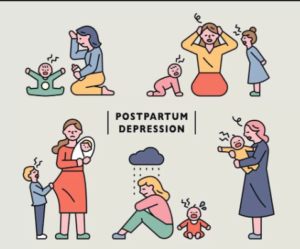
Postpartum depression refers to a depressive episode with onset during pregnancy or in the first year after childbirth (perinatal depression). Symptoms can include persistent low mood, loss of interest or pleasure, sleep and appetite changes, overwhelming fatigue, excessive guilt or worthlessness, difficulty concentrating, and in severe cases thoughts of harming self or baby. Unlike transient “baby blues” (which peak in the first week and remit), PPD is longer-lasting, more intense, and requires clinical attention.
How common is PPD in India?
Global estimates place perinatal mental disorders at roughly 10–13% in high-income settings and higher (about 15–20%) in low- and middle-income countries. Indian studies show wide variability by region, method and population, but meta-analyses and systematic reviews indicate a substantial burden — with pooled prevalence often reported in the range of roughly 15–25% in many Indian samples. Regional hospital- and community-based studies continue to report prevalence figures across that range, reflecting real differences in social determinants and measurement methods (World Health Organization).
Differences in screening tools (EPDS, PHQ-9, clinical interview), timing of assessment (immediate postpartum vs. later months), sample selection (urban tertiary hospitals versus rural community clinics), and socio-economic context (poverty, migration) all affect estimates. Nonetheless, even conservative estimates show that millions of Indian mothers experience clinically meaningful postpartum depressive symptoms every year.
Cultural pressures that raise risk — how Indian context matters
While biological and obstetric factors matter, social and cultural forces often determine who becomes unwell and whether they get help. In India, several culturally rooted pressures amplify vulnerability and silence around postpartum distress.
1. Patriarchy, gender roles and expectations of the “good mother”
Many Indian women are expected to assume the bulk of infant care, household labor and emotional labor within a short time of delivery, regardless of their physical recovery. The pressure to perform as a selfless, ever-capable mother — often without negotiated help from partners — increases stress and reduces opportunities for rest, social support, and help-seeking. When emotional distress emerges, women are often told to “manage” or “be strong,” which invalidates their experience and delays help. Local qualitative studies repeatedly describe mothers feeling trapped between physical exhaustion and moral expectations.
2. Son preference and baby’s gender
Preferences for male children persist in many Indian communities. When a female infant is born, the mother may experience blame, criticism, or diminished status in her marital home, which increases shame and depressive symptoms. Son preference can also heighten anxiety about the child’s future and intensify marital or in-law tensions, both risk factors for perinatal depression. Multiple Indian reviews highlight this as a culturally specific stressor.
3. In-law dynamics and nuclearization of families
Historically extended families could provide practical postpartum support (help with chores, childcare, food). But changing family structures, geographic migration and strained in-law relationships can mean mothers either receive controlling or critical help or else little help at all. Being in a new household (post-marriage relocation) can be isolating: recent mothers may be away from natal support networks and may lack trusted spaces to share emotional difficulties. Studies of perinatal mental health across India point to the double-edged role of family: support can be protective, but family conflict is a potent risk.
4. Stigma, silence and low mental health literacy
Mental health remains stigmatized in many parts of India. Somatic explanations (tiredness, “weakness”) are more acceptable than naming sadness or depression. Women may fear being labeled “mad” or worry that admitting problems will affect familial reputation or lead to blaming. Health providers at primary care levels may not routinely screen for PPD and may also interpret complaints as physical postpartum issues. This creates a double bind: women feel distressed but lack the language, validation or accessible services to get help.
5. Socioeconomic determinants — poverty, nutrition, and health access
Poverty increases stressors (food insecurity, limited rest, inability to access postnatal care), and poor maternal nutrition and anemia are linked to fatigue and low mood. Women with lower education and those facing intimate partner violence are at higher risk. Rural women may also face distant services and cultural conservatism that compound barriers. Reviews of Indian data emphasize that social determinants (poverty, caste, rurality) strongly shape PPD risk.
Clinical picture and comorbidities
PPD commonly co-occurs with perinatal anxiety, sleep disturbance and in some cases PTSD-like reactions to childbirth (traumatic birth, emergency cesarean). Symptoms may be masked when women over-function or present with somatic complaints (headache, body pains, sleep problems) rather than explicit sadness. Suicidal ideation — while less frequently discussed publicly — can occur and must be assessed carefully. Detection therefore requires gentle enquiry, culturally sensitive screening tools, and clinical judgment.
Consequences for mother and child
Untreated postpartum depression affects mothers’ quality of life, capacity to care for the infant, and can impair mother–infant bonding. For infants, maternal depression is associated with poorer breastfeeding outcomes, delayed immunizations or clinic attendance, disrupted attachment, and risks to cognitive, emotional and growth outcomes in the early years. Longitudinal research shows that maternal mental health is a key determinant of child developmental trajectories — a family and public health priority (World Health Organization).
Why PPD is under-detected and under-treated in India
Multiple barriers explain the treatment gap:
-
Low screening: Routine screening for PPD is not uniformly integrated into antenatal and postnatal services. Where screening exists, follow-up can be weak.
-
Stigma and normalization: Both families and clinicians may normalize sadness after childbirth or attribute it to physical recovery rather than a mental health condition.
-
Limited mental health workforce: There are too few mental health specialists per population; primary care staff often lack training in perinatal mental health.
-
Service fragmentation: Reproductive health services and mental health services are siloed, making referral pathways inconsistent.
-
Costs and geography: Out-of-pocket costs, travel time and childcare responsibilities impede attendance.
-
Cultural mismatch in interventions: Generic interventions without cultural adaptation can feel irrelevant or alienating; culturally adapted therapies show more promise.
Evidence-based and culturally adapted interventions
The good news: perinatal depression is treatable, and culturally adapted psychosocial interventions can be effective at scale.
Psychosocial approaches
Low-intensity psychosocial interventions — including cognitive behavioural therapy (CBT) principles, interpersonal therapy (IPT), and structured counseling — delivered by trained non-specialists (peer counselors, community health workers) have shown benefit in low-resource settings. A recent trial in South Asian women found that culturally adapted group CBT interventions accelerated recovery in postnatal depression compared to usual care, underscoring the value of cultural tailoring. Integrating mental health support into maternal-child health platforms (ANC visits, immunization clinics) increases reach.
Task-sharing and community delivery
Task-sharing — training non-specialist health workers (e.g., ASHAs, ANMs, Anganwadi workers) to deliver screening and brief psychosocial support — is an evidence-based strategy recommended for low-resource settings. When accompanied by supervision and referral pathways to specialists, task-sharing can reduce symptom burden and broaden access.
Pharmacotherapy
For moderate to severe PPD, antidepressants (SSRIs) may be indicated, particularly when psychosocial interventions are insufficient. Treatment decisions must account for breastfeeding, maternal preference and risk–benefit discussions with prescribers.
Family-inclusive care
Given the central role of family dynamics in India, involving partners and key family members in psychoeducation can reduce blame, improve support for the mother, and create practical changes (shared chores, help with infant care). Interventions that include in-laws or spouses — when safe and feasible — can address root social stressors.
Practical screening and clinical pointers for Indian practitioners
-
Use a validated screening tool: The Edinburgh Postnatal Depression Scale (EPDS) and PHQ-9 are widely used; adapt language and thresholds locally.
-
Ask gently about sleep, appetite, guilt, anhedonia and thoughts about self-harm; probe somatic complaints for underlying mood symptoms.
-
Screen more than once: Some women become symptomatic later in the postpartum year; repeated contacts are opportunities for detection.
-
Assess safety: Always ask about self-harm or harm to the infant sensitively and have a safety plan and referral pathway.
-
Offer psychoeducation to mother and family about PPD as a treatable health problem; normalize help-seeking.
-
Use community resources: Link mothers to peer support groups, mother-baby groups, and local counseling services (National Institute of Mental Health).
Addressing silence and stigma — community and public health approaches
Reducing stigma and silence requires multi-level work:
1. Public awareness campaigns
Mass media and community-level campaigns can reframe PPD as a common, treatable health condition. Messaging that normalizes emotional difficulty and promotes help-seeking (rather than blame) reduces shame.
2. Integrate mental health into maternal services
Embedding mental health screening and brief interventions into routine antenatal and postnatal visits reduces the need for separate mental health visits and makes care more accessible.
3. Train frontline workers
ASHAs, ANMs and primary health staff need brief, practical training to screen, deliver psychological first aid and refer. Supervision and clear referral pathways to mental health teams are essential.
4. Male engagement and family psychoeducation
Programs that involve fathers and in-laws — offering them information about PPD, practical ways to support mothers, and communication skills — can change household behavior that currently perpetuates silence.
5. Supportive workplace policies
For working mothers, parental leave, flexible schedules and supportive return-to-work policies reduce stress in the postpartum period and signal societal support for caregiving.
Examples and innovations from India (emerging)
There is growing research and pilot implementation across Indian states: community-based screening at immunization clinics, digital counseling platforms, and culturally adapted group interventions delivered by trained lay counselors. Early evidence supports feasibility, but scale requires funding, political will and integration into existing maternal-child health frameworks. Policy analyses call for explicit maternal mental health strategies within India’s health programs to ensure services reach the most vulnerable. Springer+1
Recommendations — what India needs now
-
National policy clarity: Explicit inclusion of perinatal mental health in national maternal health policies, with measurable targets and budgets. Springer
-
Routine screening: Introduce low-burden screening (EPDS/PHQ-2/PHQ-9) into ANC and postnatal visits, with training for primary care staff.
-
Task-sharing scale-up: Train and supervise non-specialist workers to deliver brief psychosocial interventions and create local supervision hubs.
-
Culturally adapted interventions: Fund and evaluate culturally sensitive psychosocial programs that involve family members and address gendered stressors. The Lancet
-
Data and research: Invest in high-quality, regionally representative studies to track prevalence, service coverage and outcomes.
-
Anti-stigma campaigns: Use community leaders, local media and health workers to reframe PPD and encourage help-seeking.
-
Link maternal and child outcomes: Recognize maternal mental health as essential to child development and include mental health indicators in child health monitoring.
Case vignette (composite, anonymized)
Rina is 27, two months postpartum, living in her husband’s city after marriage. She feels exhausted, tearful, guilty and overwhelmed by constant housework and a demanding mother-in-law. She wakes at night to feed the baby and cannot sleep even when the baby sleeps.
Her family assumes she is being “emotional” and that she should simply “get over it.” When she visits the immunization clinic, the nurse notices she looks withdrawn and asks a few gentle questions; the nurse refers her to a community counselor, who provides 6 sessions of structured, culturally adapted counseling and arranges a family meeting.
With social support, psychoeducation for the family, and continued follow-up, Rina’s mood improves and she reengages with breastfeeding and childcare. This vignette illustrates how detection, brief psychosocial help and family engagement can change outcomes.
Conclusion
Postpartum depression in India is not only a clinical disorder but a social and cultural issue shaped by gender norms, family structures, poverty and stigma. Effective responses must combine clinical services with community-level cultural change: routine screening in maternal care, task-sharing to expand access, culturally adapted psychosocial interventions, family-inclusive programs, and national policy commitments. Prioritizing maternal mental health benefits women, children and communities — and must become an integral part of maternal and child health planning in India.
References
-
World Health Organization (WHO) — Perinatal mental health overview, facts on prevalence and global burden. World Health Organization
WHO. Perinatal mental health. (Accessed via WHO maternal mental health pages.) -
Upadhyay RP, et al. (2017) — Postpartum depression in India: a systematic review and meta-analysis. This influential review synthesizes Indian studies on prevalence and risk factors. PMC
-
Panolan S. (2024) — Prevalence and associated risk factors of postpartum depression in India: a comprehensive review. Recent review that discusses psychosocial and demographic determinants across Indian settings. ruralneuropractice.com
-
Husain N., et al. (2024), The Lancet — Efficacy of a culturally adapted CBT group intervention for postnatal depression in South Asian women. Demonstrates that culturally adapted psychosocial interventions can accelerate recovery. The Lancet
-
Priyadarshini U., et al. (2023) — Recommendations for maternal mental health policy in India. A policy analysis highlighting gaps and calling for integration of maternal mental health into national programs. Springer
-
National Institute of Mental Health (NIMH) — Perinatal Depression fact sheet & guidance — practical clinical pointers and public information for perinatal mental health. National Institute of
- How Long Does Postpartum Depression Last? What Every Mother Needs to Know:
- Hormonal Changes After Pregnancy & Their Impact on Mental Health