Burnout in Working Men: Signs and Recovery

A psychological perspective on stress, silence, and healing

https://media.licdn.com/dms/image/v2/D5612AQF1uTcrRkMVWw/article-cover_image-shrink_720_1280/article-cover_image-shrink_720_1280/0/1727425620754?e=2147483647&t=Wtl0qSJhuFraawPKhgZiI8vSaMEstCZQ_O_LQj9MbKI&v=beta

Introduction

Burnout has become one of the most common—yet least openly discussed—mental health issues among working men. Across many societies, men are expected to be productive, resilient, and emotionally steady, regardless of workload, pressure, or inner strain. Admitting exhaustion or emotional distress is often interpreted as weakness, which pushes many men to keep functioning on the surface while struggling internally. As a result, burnout in men frequently goes unrecognized and untreated until it reaches a breaking point.

Unlike temporary stress, burnout is a chronic condition involving physical, emotional, and mental exhaustion caused by sustained pressure without adequate recovery, rest, or emotional support. It develops gradually, often unnoticed, as men continue to meet external expectations while ignoring internal warning signs. For working men, burnout is commonly hidden behind long work hours, irritability, emotional withdrawal, silence, or numbness—signals that are often normalized rather than recognized as distress. Over time, this hidden exhaustion erodes motivation, well-being, and mental health, making recovery more difficult the longer it remains unaddressed.

Why Working Men Are Especially Vulnerable to Burnout

Working men face a unique combination of psychological, social, and cultural pressures that significantly increase their risk of burnout. These pressures often discourage rest and emotional expression, allowing stress to accumulate silently over time.

Identity Tied to Work and Providing

For many men, self-worth is closely linked to productivity, income, and professional success. Being a provider is often seen as a core measure of value. When work becomes overwhelming or performance drops, it can trigger deep feelings of inadequacy—pushing men to work harder rather than pause.

Emotional Suppression

Men are frequently conditioned to endure stress quietly. Expressing vulnerability or emotional exhaustion is often discouraged, while endurance is praised. As a result, stress is internalized rather than processed, increasing psychological strain.

Limited Support Systems

Many adult men have fewer emotionally intimate friendships. Without safe outlets to talk openly, stress has little opportunity to be released, making burnout more likely.

Fear of Appearing Weak

Asking for help—whether emotional support, rest, or flexibility—can feel threatening to identity or social status. This fear keeps many men stuck in silence, even when they are struggling.

Over time, these factors cause stress to build internally rather than discharge, leading to burnout instead of relief.

Common Signs of Burnout in Working Men

Burnout in men does not always look like sadness, tears, or collapse. More often, it appears through subtle emotional, mental, physical, and behavioral changes that are easily mistaken for normal work stress.

1. Emotional Signs

  • Emotional numbness or detachment
  • Irritability, anger, or frequent frustration
  • Loss of motivation or sense of purpose
  • Feeling “empty” or disconnected despite achievements

2. Mental Signs

  • Difficulty concentrating or making decisions
  • Cynicism or negativity toward work or life
  • Constant mental fatigue or brain fog
  • Feeling trapped, stuck, or helpless

3. Physical Signs

  • Persistent tiredness even after rest
  • Headaches, body pain, or digestive problems
  • Sleep disturbances or unrefreshing sleep
  • Frequent illness due to weakened immunity

4. Behavioral Signs

  • Overworking or inability to disconnect from work
  • Withdrawal from family, friends, or activities
  • Increased use of alcohol, nicotine, or other substances
  • Procrastination, mistakes, or declining performance

Many men misinterpret these signs as “normal stress” and continue pushing themselves harder. Unfortunately, this response deepens exhaustion and accelerates burnout rather than resolving it.

Key Insight

Burnout is not a failure of resilience—it is a warning signal that emotional and physical limits have been exceeded. Recognizing these signs early is the first step toward recovery.

Psychological Impact of Untreated Burnout

When burnout is ignored or normalized, its effects extend far beyond feeling tired or stressed. Untreated burnout gradually erodes mental health, emotional stability, and identity, especially in working men who continue functioning without support.

If left unaddressed, burnout can lead to:

  • Depression and anxiety
    Persistent exhaustion and hopelessness can evolve into clinical depression or chronic anxiety, often masked by irritability or emotional withdrawal.

  • Emotional shutdown and relationship conflicts
    Burned-out men may detach emotionally as a form of self-protection, leading to misunderstandings, distance, and frequent conflict in close relationships.

  • Increased risk of substance dependence
    Alcohol, nicotine, or other substances may be used to numb emotional pain or manage stress, creating harmful coping cycles.

  • Loss of self-esteem and identity confusion
    When productivity declines, men who tie identity to work may feel worthless, lost, or disconnected from their sense of self.

  • Higher risk of suicidal thoughts
    Prolonged emotional exhaustion combined with isolation can increase feelings of hopelessness and despair.

It is crucial to understand that burnout is not a lack of resilience or strength. It is a psychological signal that coping capacity has been exceeded for too long without adequate recovery or emotional support. Recognizing burnout early is not weakness—it is an essential step toward healing and long-term mental well-being.

Why Men Struggle to Acknowledge Burnout

Many men delay recognizing or admitting burnout because of deeply ingrained beliefs and external expectations that discourage rest and emotional honesty.

  • Rest is often equated with laziness, making breaks feel undeserved rather than necessary.

  • Fear of disappointing family, employers, or dependents pushes men to keep going even when exhausted.

  • Comparing their struggles to others leads many men to minimize their own distress—believing someone else “has it worse.”

  • Endurance is consistently rewarded, while self-care is rarely acknowledged or encouraged.

Over time, silence becomes a coping mechanism—a way to maintain responsibility and identity. However, this silence does not protect mental health. Instead, it deepens exhaustion, isolates emotional pain, and accelerates burnout, making recovery harder the longer it is postponed.

https://www.stewsmithfitness.com/cdn/shop/articles/ego-balance_1024x1024.png?v=1614173933
Recovery from Burnout: What Actually Helps

Recovering from burnout is not just about taking time off work. While rest is important, real recovery requires psychological, emotional, and lifestyle changes that address the root causes of exhaustion—not just its symptoms.

1. Recognizing Burnout Without Shame

The first and most critical step is acknowledging burnout as a health condition, not a personal failure. Burnout develops when demands exceed coping capacity for too long—not because someone is weak or incapable.

Naming the problem:

  • Reduces self-blame
  • Lowers internal pressure
  • Creates space for reflection and healing

Awareness itself is a powerful beginning.

2. Redefining Productivity and Masculinity

Recovery often requires challenging deeply ingrained beliefs such as:

  • “My worth equals my output”
  • “I must always be strong”
  • “Rest means weakness”

These beliefs keep men trapped in over functioning. Healthy masculinity includes self-awareness, boundaries, and emotional honesty. Productivity should support life—not replace it.

3. Restoring Emotional Expression

Burnout thrives where emotions are suppressed. Men benefit from learning to:

  • Identify emotions beyond anger or stress
  • Talk about pressure without minimizing it
  • Express needs clearly, calmly, and without guilt

Emotional expression allows stress to be processed instead of stored, reducing internal overload and emotional numbness.

4. Rebuilding Boundaries at Work

Burnout improves when men regain a sense of control over time and energy. Practical steps include:

  • Limiting work hours where possible
  • Scheduling non-negotiable rest
  • Reducing constant availability (emails, calls)
  • Taking breaks without guilt

Boundaries are not laziness—they are protective mental health tools.

5. Strengthening Support Systems

Burnout recovers faster in the presence of connection. Helpful supports include:

  • Trusted conversations with friends or family
  • Peer support groups
  • Mentors who model balance and self-respect
  • Therapy or counseling

Connection reduces isolation and reminds men they are not carrying everything alone. Social support is one of the strongest buffers against burnout.

6. Therapy as a Recovery Tool

Therapy provides a structured space for working men to:

  • Understand personal burnout patterns
  • Address perfectionism and chronic pressure
  • Heal emotional suppression
  • Develop sustainable coping strategies
  • Seeking therapy is not weakness—it is preventive mental healthcare and an investment in long-term well-being.

Preventing Burnout in the Long Term

Burnout prevention is an ongoing process, not a one-time fix. It involves:

  • Regular emotional check-ins
  • Maintaining interests and identity outside work
  • Building friendships not centered on productivity
  • Prioritizing sleep, movement, and rest
  • Allowing vulnerability without self-judgment

Burnout becomes less likely when life holds meaning beyond performance and when self-worth is not tied solely to output.

Conclusion

Burnout in working men is not a personal flaw—it is a systemic outcome of chronic pressure, emotional silence, and unrealistic expectations.

Men are not machines.
They are not meant to endure endlessly.

Rest is not quitting.
Asking for help is not weakness.
Recovery is responsibility.

When working men are allowed to slow down, speak up, and reconnect—with themselves and others—burnout loses its grip, and mental health finally has space to heal.

Frequently Asked Questions (FAQs)

1. What is burnout in working men?

Burnout in working men is a state of chronic physical, emotional, and mental exhaustion caused by prolonged work stress without sufficient rest or emotional support.

2. How is burnout different from normal stress?

Stress is usually temporary and situation-based, while burnout is long-term and leads to emotional numbness, reduced motivation, and mental exhaustion.

3. Why are men at higher risk of burnout?

Men often tie self-worth to productivity, suppress emotions, and hesitate to seek help, allowing stress to accumulate silently.

4. What are the early signs of burnout in men?

Early signs include irritability, emotional detachment, chronic fatigue, reduced concentration, and loss of motivation.

5. Can burnout affect relationships?

Yes. Burnout often leads to emotional withdrawal, poor communication, and increased conflict with partners and family members.

6. Is burnout linked to depression and anxiety?

Yes. Untreated burnout significantly increases the risk of depression, anxiety, substance use, and suicidal thoughts.

7. Why do men struggle to admit burnout?

Many men equate rest with laziness, fear disappointing others, and are socially rewarded for endurance rather than self-care.

8. Can taking leave alone cure burnout?

No. Leave helps temporarily, but full recovery requires emotional awareness, boundary setting, lifestyle changes, and support.

9. How does therapy help with burnout?

Therapy helps men understand stress patterns, challenge perfectionism, process emotions, and develop sustainable coping strategies.

10. Is seeking help a sign of weakness?

No. Seeking help is a sign of psychological maturity and preventive mental healthcare.

11. What role does emotional suppression play in burnout?

Suppressing emotions increases internal stress, leading to emotional numbness and faster burnout.

12. How can men prevent burnout long-term?

By maintaining work boundaries, nurturing relationships, prioritizing rest, and developing emotional literacy.

13. Does burnout only affect high-pressure jobs?

No. Burnout can occur in any job where effort is high and recovery or recognition is low.

14. Can burnout return after recovery?

Yes, if underlying patterns are not addressed. Sustainable changes reduce recurrence.

15. What is the most important step in burnout recovery?

Recognizing burnout without shame and seeking support early.

Written by Baishakhi Das

Counselor | Mental Health Practitioner
B.Sc, M.Sc, PG Diploma in Counseling


Reference 

  1. World Health Organization (WHO). Burn-out an “occupational phenomenon”
    https://www.who.int

  2. American Psychological Association (APA). Stress & Burnout
    https://www.apa.org

  3. Maslach, C., & Leiter, M. P. (2016). Understanding the Burnout Experience.
    World Psychiatry.

  4. Schaufeli, W. B., Leiter, M. P., & Maslach, C. (2009). Burnout: 35 years of research.
    Career Development International.

  5. McLeod, S. A. (2023). Burnout. Simply Psychology
    https://www.simplypsychology.org

  6. Anger Issues in Men: What’s Really Going On

This topic performs well due to rising searches around men’s mental health, workplace stress, and burnout recovery. Combining emotional insight with practical steps increases engagement and trust.
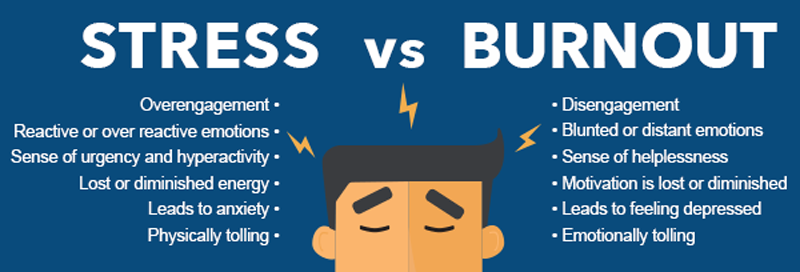

Stress vs Burnout: How to Tell the Difference

https://doctorondemand.com/wp-content/uploads/2022/04/stress-vs-burnout.png

In today’s fast-paced world, feeling overwhelmed has become almost a normal part of daily life. Long work hours, constant digital connectivity, financial pressures, and growing personal responsibilities have blurred the line between productivity and exhaustion. As a result, many people use the terms stress and burnout interchangeably—but psychologically, they are not the same experience.

Understanding the difference between stress and burnout is crucial because they affect the mind and body in very different ways and require different responses. Stress is often a short-term reaction to pressure and can sometimes be managed with rest or problem-solving. Burnout, however, develops gradually from prolonged, unmanaged stress and leads to deep emotional, mental, and physical exhaustion.

When burnout is mistaken for ordinary stress and addressed only with quick fixes—such as taking a short break or pushing harder—it can silently worsen. Over time, this may contribute to anxiety, depression, physical illness, emotional numbness, and a loss of meaning or motivation.

What Is Stress?

Stress is the body’s natural response to pressure, challenge, or perceived demand. It arises when external situations or internal expectations feel greater than one’s current coping capacity. From a psychological perspective, stress is not inherently harmful—it is a signal, alerting the mind and body to mobilize resources for adaptation.

Stress is usually:

  • Situational – tied to a specific circumstance or phase of life

  • Short- to medium-term – it rises and falls as demands change

  • Demand-linked – connected to identifiable tasks, responsibilities, or pressures

Common stressors include work deadlines, academic exams, financial strain, caregiving roles, relationship conflicts, health concerns, or major life transitions. These stressors activate the body’s stress response system (sympathetic nervous system), preparing a person to respond, solve, or endure.

Psychological Experience of Stress

Psychologically, stress is often experienced as:

  • Feeling overwhelmed but still mentally engaged

  • Persistent worry, tension, or irritability

  • Racing or repetitive thoughts, especially about “what needs to be done”

  • Heightened alertness and a strong sense of urgency

  • Difficulty relaxing, even during rest periods

Despite discomfort, motivation is usually still present. The person may feel exhausted yet continues to push forward, believing effort will resolve the situation.

A key cognitive belief commonly seen in stress is:

“Once this situation improves, I’ll feel better.”

This belief reflects an important distinction:
Under stress, people generally retain hope and purpose. They expect relief once the pressure eases, which is why stress—though uncomfortable—often remains psychologically manageable in the short term.

When stress becomes chronic or unrelenting, however, this belief can begin to fade, increasing the risk of emotional exhaustion and burnout.

What Is Burnout?

Burnout is a state of chronic emotional, mental, and physical exhaustion that develops after prolonged exposure to stress that has not been adequately managed or relieved. It is most commonly associated with work, caregiving, and helping professions, where demands are continuous and recovery is limited or absent.

Unlike stress—which involves overactivation—burnout reflects depletion. The system no longer has enough emotional or psychological resources to respond.

The World Health Organization defines burnout as an occupational phenomenon characterized by three core dimensions:

  • Emotional exhaustion – feeling completely drained, depleted, and unable to give more

  • Mental distance, cynicism, or depersonalization – emotional withdrawal from work or responsibilities, often expressed as negativity or indifference

  • Reduced sense of effectiveness – feeling incompetent, unproductive, or that one’s efforts no longer matter

Burnout does not occur suddenly. It develops gradually, often disguised as “just being tired” or “having a bad phase,” and frequently goes unrecognized until daily functioning, relationships, or physical health are significantly affected.

Psychological Experience of Burnout

Psychologically, burnout is experienced very differently from stress:

  • Emotional numbness or emptiness, rather than anxiety

  • Detachment and cynicism, especially toward work, people, or responsibilities once cared about

  • Profound loss of motivation, meaning, and purpose

  • Feeling trapped, helpless, or stuck, with no sense of agency

  • Reduced emotional reactivity—both positive and negative feelings feel muted

While stressed individuals are often still striving and hoping for relief, burned-out individuals feel psychologically disconnected. Tasks that once felt manageable now feel pointless or unbearable.

A defining cognitive belief in burnout is:

“Nothing will change—even if the pressure stops.”

This belief reflects learned helplessness and emotional shutdown. Even rest or time off may not bring relief, because the nervous system and sense of meaning are already depleted.

Key Psychological Difference from Stress

  • Stress → “Too much to handle, but I must keep going.”

  • Burnout → “I have nothing left to give, and it doesn’t matter anymore.”

Burnout is not a personal failure or lack of resilience—it is a systemic response to prolonged overload without recovery, support, or control. Recovery therefore requires more than rest; it involves restoring meaning, boundaries, autonomy, and emotional safety.

Stress vs Burnout: Key Differences

Aspect Stress Burnout
Duration Short-term or episodic Long-term, chronic
Energy Overactive, tense Depleted, exhausted
Emotions Anxiety, irritability Hopelessness, numbness
Motivation Still present Significantly reduced
Engagement Over-engaged Disengaged
Recovery Improves with rest Persists despite rest

Emotional Signs: How They Feel Different

Stress Feels Like

  • “Everything feels urgent.”
  • “There’s no space to pause.”
  • “If I rest, I’ll fall behind.”

Burnout Feels Like

  • “I don’t care anymore”

  • “I’m empty”

  • “I’m done, but I can’t leave”

Stress pushes you to keep going.
Burnout makes you want to stop altogether.

Behavioral Differences

Under Stress

  • Overworking

  • Difficulty relaxing

  • Short temper

  • Sleep problems

Under Burnout

  • Procrastination or withdrawal

  • Reduced performance

  • Emotional detachment

  • Avoidance of responsibility

Burnout often looks like laziness from the outside—but psychologically, it is exhaustion, not lack of effort.

Physical Symptoms

Both stress and burnout affect the body, but differently:

Stress

  • Headaches

  • Muscle tension

  • Rapid heartbeat

  • Digestive issues

Burnout

  • Chronic fatigue

  • Frequent illness

  • Sleep disturbances

  • Body aches with no clear cause

Burnout weakens the immune system due to prolonged nervous system overload.

Why Stress Turns Into Burnout

Stress becomes burnout when:

  • Recovery time is insufficient

  • Emotional needs are ignored

  • Boundaries are consistently crossed

  • Effort is high but control or reward is low

Caregiving professionals, healthcare workers, counselors, parents, and corporate employees are especially vulnerable.

Can You Be Stressed and Burned Out at the Same Time?

Yes. Many people experience high stress on top of burnout. This feels like:

  • Emotional emptiness + anxiety

  • Exhaustion + pressure to perform

  • Detachment + guilt

This combination significantly increases the risk of depression and anxiety disorders.

How to Respond: Stress vs Burnout

If It’s Stress

  • Time management

  • Short breaks

  • Relaxation techniques

  • Problem-solving

  • Temporary rest

If It’s Burnout

  • Reducing demands (not just resting)

  • Emotional support or therapy

  • Re-evaluating roles and boundaries

  • Restoring meaning and autonomy

  • Long-term lifestyle changes

Burnout cannot be healed by a weekend break.

When to Seek Professional Help

Consider professional support if:

  • Emotional numbness lasts weeks or months

  • You feel detached from people or work

  • Motivation does not return after rest

  • Physical symptoms persist without cause

The American Psychological Association emphasizes early intervention to prevent long-term mental health consequences.

Key Takeaways

  • Stress is about too much

  • Burnout is about nothing left

  • Stress responds to rest

  • Burnout requires deeper change

  • Recognizing the difference protects mental health

Final Reflection

Stress says:
“I can’t slow down.”

Burnout says:
“I can’t go on.”

Stress reflects pressure within capacity—painful, but still fueled by urgency and hope. Burnout reflects depletion beyond capacity—where motivation, meaning, and emotional energy are exhausted.

Listening carefully to this internal shift is critical. When “pushing through” turns into emotional numbness, detachment, or hopelessness, the body and mind are signaling the need for deeper intervention—not just rest.

Recognizing this difference early can prevent long-term emotional collapse, protect mental health, and create space for recovery before functioning is severely compromised.

Frequently Asked Questions (FAQ)

1. Is stress always harmful?

No. Stress is a normal psychological and physiological response to challenges. Short-term stress can improve focus and performance. It becomes harmful when it is chronic, intense, and unmanaged, increasing the risk of anxiety, depression, and burnout.


2. How is burnout different from stress?

Stress involves over-engagement—too much pressure and urgency. Burnout involves disengagement—emotional exhaustion, cynicism, and loss of meaning. Stress says “I must keep going,” while burnout says “I have nothing left.”


3. Can stress turn into burnout?

Yes. Prolonged stress without adequate rest, control, emotional support, or recovery can gradually develop into burnout. Burnout is often the result of long-term stress that feels unavoidable.


4. Is burnout a mental illness?

Burnout is not classified as a mental disorder. According to the World Health Organization, it is an occupational phenomenon. However, burnout can increase vulnerability to depression, anxiety disorders, and physical health problems.


5. Can taking a break cure burnout?

Short breaks may help stress, but burnout usually requires deeper changes, such as:

  • Reducing ongoing demands

  • Restoring boundaries and autonomy

  • Reconnecting with meaning and values

  • Psychological support or counseling

Without these, symptoms often return quickly.


6. Who is most at risk of burnout?

People in high-responsibility or caregiving roles, such as healthcare workers, counselors, teachers, parents, corporate employees, and caregivers—especially when there is high demand and low support.


7. When should someone seek professional help?

Professional support is recommended when symptoms include:

  • Persistent emotional numbness or hopelessness

  • Loss of motivation lasting weeks or months

  • Withdrawal from work or relationships

  • Physical symptoms (sleep issues, fatigue, frequent illness)

  • Feeling trapped or helpless

Early intervention can prevent long-term psychological and occupational damage.


Written by Baishakhi Das

Counselor | Mental Health Practitioner
B.Sc, M.Sc , PG Diploma in Counseling

Reference 

  1. World Health Organization (WHO)
    Burn-out an occupational phenomenon
    https://www.who.int/news/item/28-05-2019-burn-out-an-occupational-phenomenon

  2. American Psychological Association (APA)
    Stress effects on the body
    https://www.apa.org/topics/stress/body

  3. National Institute for Occupational Safety and Health (NIOSH)
    Stress at work
    https://www.cdc.gov/niosh/topics/stress

  4. Maslach, C., & Leiter, M. P. (2016).
    Understanding the burnout experience. World Psychiatry
    https://onlinelibrary.wiley.com/doi/10.1002/wps.20311

  5. Harvard Health Publishing
    Burnout: Symptoms and prevention
    https://www.health.harvard.edu/blog/burnout-modern-affliction-or-human-condition-2017071912199

  6. Why You Feel Emotionally Numb: When You Can’t Feel What You Know You Should  
  7. Emotional Burnout: Symptoms You Shouldn’t Ignore


How to Handle Work Stress Without Burning Out

https://docsmedicalgroup.com/docsurgentcare/wp-content/uploads/sites/2/2024/05/How-To-Manage-Work-Stress-and-Avoid-Burnout-6-Tips-From-Trusted-Primary-Care-Doctor-in-Fairfield-CT.jpg?utm_source=chatgpt.com

Introduction

In today’s fast-paced, achievement-driven world, work stress has become almost unavoidable. Long working hours, constant deadlines, financial pressure, job insecurity, multitasking, and digital overload have blurred the boundary between professional and personal life.

As a result, many individuals experience mental exhaustion, emotional depletion, and physical fatigue—often without realizing they are gradually moving toward burnout.

Although closely related, stress and burnout are not the same. Stress is characterized by feeling overwhelmed while remaining engaged, whereas burnout involves prolonged emotional, mental, and physical exhaustion accompanied by a gradual loss of motivation, productivity, and sense of purpose.

The good news is that burnout is preventable. With the right awareness, mindset, and practical strategies, work stress can be managed effectively without reaching a breaking point.

This article offers a psychology-based, practical guide on how to handle work stress without burning out—suitable for working professionals, managers, caregivers, freelancers, and anyone struggling to balance work and well-being.

Understanding Work Stress

What Is Work Stress?

Work stress arises when the demands of a job exceed an individual’s capacity to manage them successfully.  It can stem from:

  • Heavy workload

  • Tight deadlines

  • Lack of control or autonomy

  • Poor work-life balance

  • Job insecurity

  • Workplace conflict

  • High expectations or perfectionism

Occasional stress is normal and can even enhance performance. However, chronic unmanaged stress gradually impacts mental health, physical health, and emotional stability.

Stress vs Burnout: Know the Difference

Understanding the difference is crucial for early intervention.

Work Stress

  • You feel pressured and overwhelmed

  • You may still care about your work

  • Energy fluctuates

  • Motivation is present but strained

Burnout

  • Emotional numbness or detachment

  • Feeling hopeless or trapped

  • Constant exhaustion

  • Reduced performance and meaning

  • Cynicism toward work

Recognizing stress early allows you to take action before burnout develops.

Early Warning Signs You Should Not Ignore

Burnout does not happen overnight. It builds gradually through warning signs such as:

Emotional Signs

  • Irritability and frustration

  • Feeling emotionally drained

  • Anxiety or low mood

  • Reduced motivation

Cognitive Signs

  • Difficulty concentrating

  • Overthinking work issues

  • Forgetfulness

  • Negative self-talk

Physical Signs

  • Headaches

  • Muscle tension

  • Sleep disturbances

  • Frequent illness

Behavioral Signs

  • Procrastination

  • Withdrawal from others

  • Increased caffeine or screen use

  • Working excessively without rest

Recognizing these signs early is the first step toward prevention.

Why Burnout Happens (Psychological Perspective)

Burnout often develops when:

  • Effort is high but rewards are low

  • There is a lack of recognition

  • Boundaries are unclear

  • Control is limited

  • Values conflict with work demands

Psychologically, burnout is linked to:

  • Chronic stress activation

  • Emotional suppression

  • Lack of recovery time

  • Identity tied only to productivity

Therefore, managing stress requires both external changes and internal mindset shifts.

1. Set Clear Boundaries Between Work and Personal Life

One of the most effective ways to prevent burnout is by creating clear boundaries.

How to Do This

  • Define work hours and stick to them

  • Avoid checking emails late at night

  • Create a separate workspace at home

  • Communicate availability clearly

Why it works:
Boundaries protect your mental energy and allow your nervous system to recover.

2. Learn to Prioritize, Not Multitask

Multitasking increases mental fatigue and reduces efficiency. Instead, prioritize tasks based on importance and urgency.

Practical Tips

  • Use a daily task list with 3 key priorities

  • Break large tasks into smaller steps

  • Focus on one task at a time

  • Accept that everything cannot be done at once

Psychological benefit:
Prioritization reduces cognitive overload and decision fatigue.

3. Redefine Productivity (Quality Over Quantity)

Many professionals equate productivity with long hours. However, productivity is about effective output, not exhaustion.

Healthy Productivity Means

  • Working with focus, not fear

  • Taking breaks to maintain efficiency

  • Allowing rest without guilt

When productivity is defined realistically, stress naturally reduces.

4. Practice Emotional Regulation at Work

Work stress often intensifies due to unprocessed emotions such as frustration, fear, or anger.

Simple Emotional Regulation Techniques

  • Pause and take 5 deep breaths

  • Label the emotion: “I feel overwhelmed”

  • Ground yourself by noticing your surroundings

  • Avoid reacting immediately during conflict

Result:
Better emotional control prevents impulsive decisions and emotional burnout.

5. Take Micro-Breaks Throughout the Day

Rest does not always mean long holidays. Short, intentional breaks are powerful.

Examples of Micro-Breaks

  • Stretching for 2 minutes

  • Stepping away from the screen

  • Drinking water mindfully

  • Brief breathing exercises

These breaks reset the nervous system and improve focus.

6. Manage Perfectionism and Unrealistic Expectations

Perfectionism is a major contributor to burnout. Constantly trying to meet unrealistic standards drains emotional energy.

Healthy Mindset Shifts

  • Progress is better than perfection

  • Mistakes are part of learning

  • Self-worth is not equal to performance

Letting go of perfectionism allows sustainable growth.

7. Improve Sleep and Physical Health

Stress and sleep are deeply connected. Poor sleep increases stress sensitivity.

Tips for Better Sleep

  • Maintain a consistent sleep schedule

  • Reduce screen exposure before bed

  • Avoid excessive caffeine

  • Practice relaxation techniques

Physical movement, even light exercise, helps regulate stress hormones.

8. Build Supportive Workplace Relationships

Social support acts as a buffer against stress.

How to Strengthen Support

  • Communicate openly with colleagues

  • Ask for help when needed

  • Share workload concerns respectfully

  • Avoid isolation

Feeling understood at work reduces emotional exhaustion.

9. Learn to Say No Without Guilt

Overcommitment is a fast track to burnout.

Assertive Communication Examples

  • “I don’t have the capacity right now.”

  • “Can we prioritize this for later?”

  • “I need to focus on existing deadlines.”

Saying no is not a failure—it is self-respect.

10. Create Meaning Beyond Work

When identity is limited only to work, stress becomes overwhelming.

Protective Factors

  • Hobbies

  • Creative activities

  • Relationships

  • Spiritual or reflective practices

Meaning outside work creates emotional balance and resilience.

11. Use Stress-Reduction Techniques Regularly

Stress management is most effective when practiced consistently, not only during crisis.

Effective Techniques

  • Mindfulness

  • Journaling

  • Progressive muscle relaxation

  • Guided breathing

Even 10 minutes a day can significantly reduce stress levels.

12. Recognize When You Need Professional Help

Sometimes, self-help is not enough—and that is okay.

Consider Professional Support If

  • Stress feels unmanageable

  • Emotional numbness persists

  • Anxiety or depression develops

  • Work impacts daily functioning

Counseling helps identify patterns, strengthen coping skills, and restore emotional balance.

Long-Term Strategies for Burnout Prevention

  • Regular self-check-ins

  • Annual leave without guilt

  • Career alignment with values

  • Ongoing skill development

  • Emotional self-awareness

Burnout prevention is a long-term lifestyle practice, not a one-time solution.

Conclusion

Work stress is a reality of modern life, but burnout does not have to be. By recognizing early warning signs, setting healthy boundaries, regulating emotions, redefining productivity, and prioritizing mental health, it is possible to manage work stress without sacrificing well-being.

Remember, rest is not a reward for exhaustion—it is a requirement for sustainability. Taking care of your mental health is not a weakness; it is the foundation of long-term success and fulfillment.

Frequently Asked Questions (FAQ)

How to Handle Work Stress Without Burning Out


1. What is work stress?

Work stress occurs when job demands exceed a person’s ability to cope. It can be caused by heavy workload, tight deadlines, lack of control, job insecurity, or poor work–life balance.


2. What is burnout and how is it different from stress?

Stress involves feeling overwhelmed but still engaged and motivated. Burnout, on the other hand, is a state of chronic emotional, mental, and physical exhaustion marked by detachment, reduced performance, and loss of meaning at work.


3. What are the early signs of burnout?

Early signs include constant fatigue, irritability, lack of motivation, difficulty concentrating, sleep problems, emotional numbness, and feeling disconnected from work or colleagues.


4. Can work stress be managed without quitting the job?

Yes. Most work stress can be managed through healthy boundaries, prioritization, emotional regulation, realistic expectations, proper rest, and supportive communication—without changing jobs.


5. Why is setting boundaries important for preventing burnout?

Boundaries protect mental and emotional energy. Without clear limits on work hours and availability, the nervous system does not get enough time to recover, increasing the risk of burnout.


6. How does perfectionism contribute to burnout?

Perfectionism creates constant pressure to perform flawlessly, leading to self-criticism, fear of failure, and emotional exhaustion. Over time, this significantly increases burnout risk.


7. Do short breaks really help with work stress?

Yes. Micro-breaks help reset the nervous system, improve focus, and reduce mental fatigue. Even 2–5 minutes of rest can lower stress levels during the workday.


8. How does poor sleep affect work stress?

Lack of sleep increases emotional reactivity, reduces concentration, and weakens stress tolerance. Poor sleep and work stress often reinforce each other, accelerating burnout.


9. Is it okay to say no at work for mental health reasons?

Yes. Saying no respectfully is a form of self-care. Overcommitting may temporarily please others but often leads to long-term stress, reduced performance, and burnout.


10. Can emotional regulation reduce workplace stress?

Absolutely. Skills like pausing, deep breathing, labeling emotions, and responding instead of reacting help manage stress, prevent conflict, and reduce emotional exhaustion.


11. How does social support at work reduce burnout?

Supportive colleagues and supervisors provide emotional validation, shared problem-solving, and a sense of belonging, all of which buffer against stress and burnout.


12. Is burnout only related to workload?

No. Burnout is also linked to lack of recognition, value conflicts, poor control over work, emotional suppression, and identity being tied solely to productivity.


13. When should someone seek professional help for work stress?

Professional support is recommended if stress becomes unmanageable, symptoms persist for weeks, emotional numbness develops, or work stress affects daily functioning and relationships.


14. Can counseling help with burnout recovery?

Yes. Counseling helps identify stress patterns, improve coping strategies, strengthen emotional regulation, rebuild boundaries, and restore balance and motivation.


15. What is the most important step in preventing burnout?

Self-awareness. Regularly checking in with your emotional, mental, and physical state allows early intervention before stress turns into burnout.

About the Author

Baishakhi Das is a Counselor and Mental Health Practitioner with academic training in psychology and human development. She works with individuals experiencing work stress, emotional exhaustion, anxiety, and burnout, focusing on practical coping strategies and emotional resilience.

Reference

How to Practice Self-Care as a Busy Man

A realistic, psychology-backed guide for men who juggle work, family, responsibilities, and expectations

Introduction: Why Self-Care Is Not a Luxury for Busy Men

In today’s fast-paced world, being a “busy man” is often worn like a badge of honor. Long work hours, financial responsibilities, family roles, social expectations, and the pressure to remain emotionally strong can leave little room for rest or reflection. Many men believe self-care is time-consuming, selfish, or unmanly. In reality, self-care is a survival skill, not a spa day.

Research from organizations like World Health Organization and National Institute of Mental Health shows that chronic stress, untreated anxiety, and emotional suppression significantly increase risks for depression, cardiovascular disease, substance use, and burnout in men.

Self-care does not mean abandoning responsibilities. It means building sustainable habits that protect your mental, emotional, and physical health—so you can show up better for work, relationships, and yourself.

This article is written specifically for busy men—professionals, fathers, partners, caregivers—who think they don’t have time for self-care. You do. And you don’t need to change your entire life to practice it.

1. Understanding Self-Care Through a Male Lens

What Self-Care Really Means

Self-care is the intentional practice of behaviors that maintain and improve well-being. It includes:

  • Physical health

  • Mental clarity

  • Emotional regulation

  • Social connection

  • Meaning and purpose

For men, self-care often looks different from mainstream portrayals. It may be:

  • Taking a quiet walk instead of talking

  • Fixing something with focus

  • Exercising alone

  • Learning a new skill

  • Sitting in silence

Self-care is not one-size-fits-all.

Why Men Often Avoid Self-Care

Common psychological barriers include:

  • Gender conditioning: “Men should be strong, not vulnerable.”

  • Productivity guilt: Rest feels unproductive.

  • Emotional avoidance: Feelings are uncomfortable.

  • Time scarcity: Everything else feels more urgent.

Understanding these barriers helps you work with yourself, not against yourself.

2. The Cost of Neglecting Self-Care

When self-care is ignored, the body and mind eventually demand attention—often in unhealthy ways.

Psychological Consequences

  • Chronic irritability and anger

  • Emotional numbness

  • Anxiety and panic symptoms

  • Depression masked as fatigue or workaholism

Physical Consequences

  • High blood pressure

  • Poor sleep

  • Weakened immunity

  • Digestive issues

Relational Consequences

  • Emotional distance in relationships

  • Conflict escalation

  • Withdrawal or avoidance

Self-care is preventive mental health.

3. Micro Self-Care: Small Habits That Fit Busy Schedules

https://www.uhhospitals.org/-/media/images/blog/2024/02/man-practices-breathing-1472399571-blog-mainarticleimage.jpg?h=450&hash=93760D0A2E7BD633BF3DD6B6296ECECC&la=en&w=720&utm_source=chatgpt.com
You don’t need hours. You need minutes, practiced consistently.

1. Two-Minute Breathing Reset

  • Inhale for 4 seconds

  • Hold for 4

  • Exhale for 6

  • Repeat for 2 minutes

This activates the parasympathetic nervous system, reducing stress hormones.

2. Mental Check-In (Once a Day)

Ask yourself:

  • What am I feeling right now?

  • What do I need most today?

Naming emotions reduces their intensity.

3. Body Awareness Break

Stand up every 90 minutes:

  • Roll shoulders

  • Stretch neck

  • Relax jaw

Stress is stored in the body—movement releases it.

4. Physical Self-Care Without Extreme Fitness

Redefining Exercise

You don’t need:

  • A perfect body

  • Daily gym sessions

  • Extreme discipline

You need consistent movement.

Effective options for busy men:

  • 20-minute brisk walks

  • Home bodyweight workouts

  • Climbing stairs

  • Stretching before bed

Sleep: The Most Ignored Self-Care Tool

Men often sacrifice sleep for work or screens.

Healthy sleep basics:

  • Fixed sleep and wake time

  • No screens 30 minutes before bed

  • Dark, cool room

  • Reduce caffeine after afternoon

Sleep deprivation worsens anxiety, irritability, and decision-making.

5. Emotional Self-Care: The Skill Men Are Rarely Taught

https://dayoneapp.com/wp-content/uploads/2023/06/emotinoal-journaling.jpg?utm_source=chatgpt.com
Emotional Suppression vs Regulation

Many men suppress emotions because they were never taught how to process them.

Suppression leads to:

  • Anger outbursts

  • Emotional shutdown

  • Psychosomatic symptoms

Regulation means:

  • Recognizing feelings

  • Allowing them without judgment

  • Expressing them safely

Simple Emotional Practices

  • Journaling: Write freely for 5 minutes

  • Label emotions: “I feel overwhelmed, not weak”

  • Music processing: Let music help release emotions

Emotional self-care is not weakness—it’s emotional intelligence.

6. Mental Self-Care: Protecting Your Cognitive Energy

Reduce Mental Overload

Your brain is not designed for constant stimulation.

Mental self-care strategies:

  • Single-task instead of multitask

  • Schedule “no-thinking” breaks

  • Limit doom-scrolling

Cognitive Boundaries

Learn to say:

  • “Not today.”

  • “I’ll think about this later.”

  • “This can wait.”

Boundaries protect mental health as much as physical safety.

7. Self-Care at Work: Thriving Without Burning Out

https://workplace.msu.edu/wp-content/uploads/2021/04/workday-break.jpg?utm_source=chatgpt.com
Workplace Self-Care Is Essential

Ignoring stress at work spills into home life.

Practical steps:

  • Take full lunch breaks

  • Step away from your desk

  • Clarify unrealistic expectations

  • Use vacation time

Redefining Success

Success is not:

  • Constant availability

  • Chronic exhaustion

True success includes sustainability.

8. Relationship Self-Care: You Can’t Pour From an Empty Cup

Communicating Needs

Men are often expected to “just handle it.”

Try:

  • “I’m overwhelmed and need quiet time.”

  • “I’m not okay today.”

  • “I need support, not solutions.”

Healthy Solitude vs Isolation

Solitude restores energy.
Isolation drains it.

Choose intentional alone time, not emotional withdrawal.

9. Digital Self-Care in a Hyperconnected World

Technology Fatigue

Constant notifications keep your nervous system activated.

Digital self-care ideas:

  • No phone during meals

  • One screen-free hour daily

  • Remove non-essential apps

Mental space is a form of self-respect.

10. Self-Care for Fathers and Family Men

https://www.bigdaddykreativ.ca/wp-content/uploads/2017/07/father-and-young-son-outdoors-on-sunny-day-sittin-2025-02-10-13-20-21-utc.jpg?utm_source=chatgpt.com

Being strong for your family includes caring for yourself.

Children learn emotional regulation by observing you.

Model:

  • Healthy stress management

  • Emotional expression

  • Rest without guilt

Self-care makes you a better role model, not a selfish one.

11. Spiritual and Purpose-Based Self-Care

Self-care is not only about stress reduction; it’s about meaning.

Purpose-based practices:

  • Prayer or meditation

  • Nature connection

  • Gratitude reflection

  • Service without overgiving

Meaning buffers stress and builds resilience.

12. When Self-Care Is Not Enough: Seeking Professional Help

Self-care is not a replacement for therapy.

Consider professional support if you experience:

  • Persistent sadness or anger

  • Panic attacks

  • Emotional numbness

  • Substance dependence

  • Thoughts of hopelessness

Organizations like American Psychiatric Association emphasize that early intervention prevents long-term mental health issues.

Asking for help is an act of responsibility.

13. Creating a Sustainable Self-Care Plan

Step 1: Identify One Area

Physical, emotional, mental, relational, or spiritual.

Step 2: Choose One Small Habit

Example:

  • 5-minute walk

  • One boundary at work

  • One honest conversation

Step 3: Schedule It

What gets scheduled gets done.

Step 4: Review Weekly

Adjust, don’t abandon.

Consistency beats intensity.

Common Myths About Men and Self-Care

Myth Reality
Self-care is selfish It improves relationships
Men don’t need emotional care Men experience emotions deeply
I don’t have time You can’t afford not to
Therapy is weakness It’s skill-building

Final Thoughts: Redefining Strength Through Self-Care

Strength is not endurance without rest.
Strength is self-awareness, adaptability, and sustainability.

As a busy man, you carry many roles. Self-care ensures those roles don’t consume you.

You don’t need perfection.
You need permission—to pause, to feel, to care for yourself.

Because a well-cared-for man is not only more productive—
he is more present, grounded, and alive.

Frequently Asked Questions (FAQ): Self-Care for Busy Men

1. What does self-care really mean for men?

Self-care for men means maintaining physical, mental, emotional, and social well-being in a practical and sustainable way. It’s not about luxury or indulgence—it’s about managing stress, regulating emotions, staying healthy, and preventing burnout so you can function effectively in daily life.


2. Why do many busy men struggle with self-care?

Many men grow up with beliefs such as:

  • “I must always be strong”

  • “Rest is laziness”

  • “Others’ needs come first”

Busy schedules, work pressure, financial responsibilities, and emotional suppression make self-care feel unnecessary or impossible—until stress shows up as anger, exhaustion, or health issues.


3. Is self-care selfish for men with family responsibilities?

No. Self-care is protective, not selfish. When men neglect themselves, stress spills into relationships through irritability, withdrawal, or emotional unavailability. Caring for yourself helps you be a better partner, father, and provider.


4. How much time does self-care require each day?

Self-care does not require hours. Even:

  • 5 minutes of deep breathing

  • 10 minutes of walking

  • 5 minutes of journaling

can significantly reduce stress if practiced consistently. Micro self-care is ideal for busy men.


5. What are simple self-care habits for men with hectic work schedules?

Some realistic habits include:

  • Taking short movement breaks at work

  • Eating at least one mindful meal daily

  • Setting a fixed sleep time

  • Reducing screen use before bed

  • Saying no to one unnecessary commitment

Small habits done daily are more effective than occasional big efforts.


6. How does self-care help with anger and irritability in men?

Unexpressed stress and emotions often turn into anger. Self-care helps by:

  • Calming the nervous system

  • Improving emotional awareness

  • Reducing physical tension

Practices like exercise, breathing, and emotional check-ins reduce emotional overload and impulsive reactions.


7. Is exercise necessary for self-care, or are there alternatives?

Exercise helps, but self-care is broader than fitness. Alternatives include:

  • Stretching

  • Walking

  • Adequate sleep

  • Healthy eating

  • Mental breaks

The goal is movement and regulation, not physical perfection.


8. How can men practice emotional self-care if they find it difficult to talk?

Emotional self-care doesn’t always require talking. Men can:

  • Write privately in a journal

  • Use music to process emotions

  • Spend time alone mindfully

  • Name emotions internally

Emotional processing can be quiet and private—it doesn’t have to be verbal.


9. What role does sleep play in self-care for men?

Sleep is one of the most powerful self-care tools. Poor sleep increases:

  • Anxiety

  • Irritability

  • Poor concentration

  • Health risks

Improving sleep quality often improves mood, energy, and emotional control without any other changes.


10. How can men practice self-care without feeling guilty?

Guilt comes from outdated beliefs that rest equals weakness. Reframe self-care as:

  • Maintenance, not indulgence

  • Responsibility, not escape

  • Strength-building, not avoidance

When self-care is seen as essential, guilt naturally reduces.


11. Can self-care improve work performance?

Yes. Self-care improves:

  • Focus and decision-making

  • Emotional regulation under pressure

  • Productivity and creativity

  • Long-term career sustainability

Burnout reduces performance; self-care protects it.


12. How does self-care affect relationships?

Men who practice self-care:

  • Communicate more clearly

  • Are less reactive

  • Feel more emotionally available

  • Experience fewer conflicts

Healthy relationships require emotionally regulated individuals.


13. Is digital detox part of self-care for busy men?

Absolutely. Constant notifications keep the brain in a stress state. Digital self-care includes:

  • Limiting social media

  • No-phone time before bed

  • Screen-free meals

Mental silence is a powerful form of rest.


14. When should a man seek professional mental health support?

Self-care is helpful, but professional support is needed if you experience:

  • Persistent sadness or anger

  • Panic attacks

  • Emotional numbness

  • Substance dependence

  • Thoughts of hopelessness

Seeking help is a sign of self-awareness and responsibility—not weakness.


15. How can a man build a long-term self-care routine?

Start simple:

  1. Choose one area (sleep, stress, emotions)

  2. Pick one small habit

  3. Schedule it

  4. Review weekly

Self-care should be sustainable, flexible, and realistic, not perfection-driven.


16. Can fathers practice self-care without neglecting their children?

Yes. In fact, children benefit when fathers model:

  • Healthy stress management

  • Emotional expression

  • Balanced routines

Self-care teaches children emotional intelligence by example.


17. What is the biggest myth about self-care for men?

The biggest myth is:
“Strong men don’t need self-care.”

In reality, strong men understand their limits, protect their health, and seek balance.

Written by Baishakhi Das

Qualifications: B.Sc, M.Sc, PG Diploma in Counseling

Role: Counselor / Mental Health Practitioner

Reference