
In today’s fast-paced world, many people appear confident, productive, and highly organized—but behind the scenes, they may be silently fighting high-functioning anxiety. Unlike typical anxiety, where symptoms are visible, high-functioning anxiety hides behind perfectionism, overworking, people-pleasing, and constant internal pressure.
These individuals look successful on the outside, but internally they experience worry, tension, fear of failure, and self-doubt. Because they function well, their struggles often go unnoticed—even by themselves.
This article explores the silent symptoms that often stay hidden beneath a calm and composed exterior.
1. Overthinking Everything—Even Small Decisions: A Common Sign of High-Functioning Anxiety
One of the most common symptoms of high-functioning anxiety is constant overthinking. While everyone worries occasionally, people with high-functioning anxiety often find their minds constantly occupied with analyzing, predicting, and second-guessing every situation.
They may overthink:
- Messages or emails they send
- Conversations they had hours or even days ago
- Mistakes from the past
- Future possibilities and “what if” scenarios
- What other people think about them
- Even simple daily decisions
Example
Sarah spends 20 minutes rewriting a simple text message to her colleague because she’s worried it might sound rude. After sending it, she repeatedly checks her phone, wondering if she said the wrong thing.
Why This Is High-Functioning Anxiety
The anxiety isn’t about the message itself—it’s the intense fear of making a mistake, being judged, or losing approval. Although Sarah appears calm and capable, her mind is constantly working overtime, creating unnecessary stress behind the scenes.
2. Constant Need to Stay Busy: The Hidden Productivity of High-Functioning Anxiety
People with high-functioning anxiety often struggle to slow down. Staying busy becomes a way to avoid uncomfortable thoughts and emotions. Productivity may look impressive from the outside, but internally it is often driven by anxiety rather than genuine motivation.
They may:
- Take on extra responsibilities
- Work beyond office hours
- Keep a packed schedule
- Always plan several steps ahead
- Feel restless when they have nothing to do
Example: Rahul finishes all his office work by 6 PM but continues answering emails late into the night. On weekends, he fills every hour with errands, courses, or side projects because sitting quietly makes him feel uneasy.
Why This Is High-Functioning Anxiety
Busyness becomes an emotional escape. The moment there is free time, anxious thoughts begin to surface. Constant activity temporarily distracts the mind but doesn’t address the underlying anxiety.
3. Difficulty Saying “No”: People-Pleasing in High-Functioning Anxiety
Many individuals with high-functioning anxiety find it extremely difficult to refuse requests, even when they are already overwhelmed. Their desire to avoid conflict often comes at the expense of their own well-being.
They often say “yes” because they fear:
- Disappointing others
- Being criticized
- Feeling guilty
- Being judged or rejected
Example: Priya already has several deadlines but agrees to help another coworker because she’s afraid they might think she’s selfish if she refuses. She sacrifices her own rest to avoid disappointing someone else.
Why This Is High-Functioning Anxiety
People-pleasing is often fueled by anxiety about rejection or negative evaluation. Saying “yes” provides temporary relief from those fears, even though it increases stress and exhaustion later.
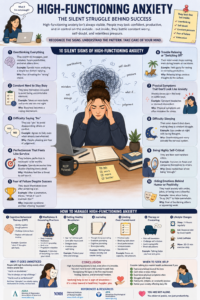
4. Perfectionism That Feels Like Survival: A Hidden Feature of High-Functioning Anxiety
Perfectionism in high-functioning anxiety goes beyond simply wanting to do well. It becomes tied to self-worth, making mistakes feel deeply threatening.
Common thoughts include:
- “If I’m not perfect, I’ll fail.”
- “I have to prove myself.”
- “Mistakes mean I’m not good enough.”
This often leads to:
- Over-preparing
- Constantly checking work
- Avoiding new challenges
- Harsh self-criticism
Example: Before submitting a report, Amit rereads it more than ten times, even though it was already reviewed. He worries that one tiny mistake could ruin his professional reputation.
Why This Is High-Functioning Anxiety
The goal isn’t excellence—it’s avoiding failure, criticism, or embarrassment. Perfectionism becomes a protective strategy against anxiety rather than a healthy pursuit of quality.
5. Fear of Failure Despite Success: The Self-Doubt of High-Functioning Anxiety
Even after achieving significant success, people with high-functioning anxiety often struggle to believe they deserve it. Their accomplishments rarely bring lasting confidence.
They may think:
- “What if I can’t keep this up?”
- “What if everyone realizes I’m not actually good enough?”
- “I was just lucky.”
Example: After receiving a promotion, Neha spends more time worrying about making mistakes than celebrating her achievement. She feels like she’s constantly one step away from being exposed as a fraud.
Why This Is High-Functioning Anxiety
This reflects imposter syndrome, where anxiety causes people to discount their abilities and overestimate the likelihood of failure despite strong evidence of competence.
6. Trouble Relaxing or “Switching Off”: When High-Functioning Anxiety Never Takes a Break
Relaxation can feel surprisingly uncomfortable for someone with high-functioning anxiety. Even during time off, their mind continues racing.
This may happen during:
- Vacations
- Weekends
- Holidays
- Evenings after work
- Scheduled breaks
Example: While watching a movie with family, Arjun keeps thinking about unfinished tasks, tomorrow’s meetings, and everything that could go wrong next week. Instead of enjoying the moment, he feels guilty for relaxing.
Why This Is High-Functioning Anxiety
The nervous system remains in a constant state of alertness. Downtime creates space for anxious thoughts, making relaxation feel stressful rather than restorative.
7. Physical Symptoms That Don’t Look Like Anxiety: The Body’s Response to High-Functioning Anxiety
Anxiety doesn’t only affect the mind—it also affects the body. Many people with high-functioning anxiety experience physical symptoms without realizing anxiety may be the underlying cause.
Common symptoms include:
- Muscle tension
- Jaw clenching
- Frequent headaches
- Fatigue
- Digestive discomfort
- Restlessness
- Neck or shoulder pain
Example: Although medical tests show everything is normal, Rina frequently experiences tension headaches and tight shoulders after work. She assumes it’s simply because she’s busy.
Why This Is High-Functioning Anxiety
Chronic anxiety keeps the body’s stress response activated, increasing muscle tension and releasing stress hormones that contribute to ongoing physical discomfort.
8. Difficulty Sleeping: How High-Functioning Anxiety Affects Rest
Sleep problems are extremely common in high-functioning anxiety because the brain remains active long after the day has ended.
Common sleep difficulties include:
- Trouble falling asleep
- Waking up during the night
- Early morning waking
- Racing thoughts before bed
- Feeling tired despite sleeping
Example: Although Karan goes to bed at 11 PM, he spends two hours replaying conversations and worrying about tomorrow’s responsibilities before finally falling asleep.
Why This Is High-Functioning Anxiety
The brain remains in problem-solving mode instead of transitioning into a relaxed state. Persistent mental activity prevents restful, restorative sleep.
9. Being Highly Self-Critical: The Inner Voice of High-Functioning Anxiety
People with high-functioning anxiety often appear confident, yet internally they maintain extremely high standards for themselves.
Their inner dialogue may include:
- “I should have done better.”
- “Everyone else is doing better than me.”
- “I’m not good enough.”
- “I always make mistakes.”
Example: After giving a successful presentation that receives praise from colleagues, Meera spends the rest of the day focusing on one sentence she stumbled over instead of appreciating the positive feedback.
Why This Is High-Functioning Anxiety
Anxiety amplifies imperfections while minimizing achievements. This constant self-criticism gradually erodes self-esteem and increases emotional exhaustion.
10. Hiding Emotions Behind Humor or Positivity: The Invisible Mask of High-Functioning Anxiety
Many individuals with high-functioning anxiety become experts at hiding their emotional struggles. They often appear cheerful, confident, and energetic, even when feeling overwhelmed inside.
They may cope by using:
- Humor
- Sarcasm
- Constant smiling
- Being overly positive
- Avoiding conversations about their emotions
Example: Everyone sees Vikram as the funniest person in the office. He constantly makes jokes and lifts everyone’s mood. However, once he gets home, he feels emotionally drained and spends the evening worrying about work, relationships, and the future.
Why This Is High-Functioning Anxiety
Humor and positivity can become emotional masks. They help people avoid appearing vulnerable or burdening others, but they also make it harder for friends, family, and even mental health professionals to recognize that support may be needed.
Important Note: While high-functioning anxiety is a widely used term that describes a pattern of anxiety experienced by people who continue to function well in daily life, it is not an official mental health diagnosis in the Diagnostic and Statistical Manual of Mental Disorders (DSM-5-TR). If these symptoms are persistent, cause significant distress, or interfere with daily functioning, seeking an assessment from a qualified mental health professional is recommended.
Why High-Functioning Anxiety Goes Unnoticed
Because these individuals perform well, they often receive praise like:
- “You’re so disciplined.”
- “Always on top of things.”
- “You’re such a perfectionist!”
But these “strengths” are actually coping mechanisms for anxiety.
People assume they’re fine, so their struggles stay invisible.
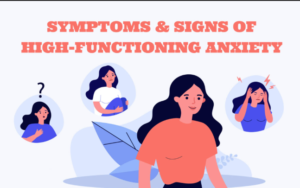
How to Manage High-Functioning Anxiety: 7 Evidence-Based Strategies That Actually Help
Managing high-functioning anxiety doesn’t mean eliminating anxiety completely. Instead, it’s about learning healthier ways to respond to anxious thoughts, reducing their impact on your daily life, and improving your overall well-being.
While high-functioning anxiety is not an official mental health diagnosis, the symptoms are very real. The good news is that research shows several evidence-based strategies can help reduce overthinking, perfectionism, people-pleasing, and chronic stress.
Below are practical approaches supported by psychological research.
1. Cognitive Behavioral Therapy (CBT) for High-Functioning Anxiety
Cognitive Behavioral Therapy (CBT) is considered one of the most effective treatments for anxiety disorders. It focuses on identifying unhelpful thought patterns, challenging irrational beliefs, and replacing them with healthier, more balanced ways of thinking.
People with high-functioning anxiety often experience automatic thoughts such as:
- “I’ll disappoint everyone.”
- “If I make one mistake, everything will go wrong.”
- “People will think I’m incompetent.”
CBT teaches you to question these thoughts instead of automatically believing them.
How CBT Helps with High-Functioning Anxiety
- Breaks the cycle of overthinking
- Reduces catastrophizing (expecting the worst-case scenario)
- Improves emotional regulation
- Builds healthier coping skills
- Reduces perfectionistic thinking
- Increases confidence in handling uncertainty
Example: Ananya spends hours worrying about a presentation, convinced that one mistake will ruin her career.
During CBT, she learns to ask herself:
- “What evidence supports this thought?”
- “Has one mistake ever ended someone’s career?”
- “What would I tell a friend in this situation?”
Gradually, her thinking becomes more balanced and less fear-driven.
Why CBT Works for High-Functioning Anxiety
CBT helps interrupt the automatic cycle of anxiety by teaching people to recognize distorted thinking patterns before they spiral into excessive worry. Over time, the brain learns healthier ways of interpreting stressful situations.
2. Mindfulness and Grounding Practices for High-Functioning Anxiety
People with high-functioning anxiety often spend most of their time replaying the past or worrying about the future. Mindfulness shifts attention back to the present moment, reducing mental overload.
Grounding techniques also calm the nervous system and reduce physical symptoms of anxiety.
Effective Mindfulness Practices
- Deep breathing exercises
- Body scan meditation
- 5-4-3-2-1 sensory grounding technique
- Mindful walking
- Progressive muscle relaxation
- Guided meditation
Example: Before an important meeting, Raj notices his heart racing and his thoughts spiraling.
Instead of continuing to panic, he practices the 5-4-3-2-1 grounding technique:
- 5 things he can see
- 4 things he can touch
- 3 things he can hear
- 2 things he can smell
- 1 thing he can taste
Within a few minutes, his breathing slows and he feels more present.
Why Mindfulness Helps High-Functioning Anxiety
Mindfulness reduces the brain’s tendency to predict worst-case scenarios. By focusing on the present, it interrupts anxious thought loops and activates the body’s natural relaxation response.
3. Setting Healthy Boundaries to Reduce High-Functioning Anxiety
One of the biggest challenges for people with high-functioning anxiety is saying “no.”
Many fear disappointing others, creating conflict, or appearing selfish. As a result, they take on far more responsibilities than they can realistically manage.
Healthy boundaries help protect emotional energy.
Healthy Boundaries Include
- Saying “no” respectfully
- Limiting work outside office hours
- Delegating tasks
- Prioritizing self-care
- Communicating personal limits
- Taking breaks without guilt
Example: Priya usually agrees to every request from coworkers, leaving her exhausted.
- Instead of saying: “Sure, I’ll do it.”
- She begins responding: “I’d love to help, but I don’t have the capacity right now.”
She discovers that most people understand—and her stress gradually decreases.
Why Boundaries Help High-Functioning Anxiety
Boundaries reduce chronic stress by preventing emotional overload. They allow individuals to make decisions based on their capacity rather than fear of rejection or guilt.
4. Journaling for High-Functioning Anxiety
Journaling is a simple yet effective way to organize racing thoughts and process emotions. Writing thoughts down reduces mental clutter and increases self-awareness.
Types of Journaling That Help
- Thought Dump Journaling: Write everything on your mind without worrying about grammar or structure.
- Gratitude Journaling: Record three positive experiences from each day.
- Cognitive Journaling: Identify anxious thoughts and challenge them with evidence.
- Stress Journaling: Track situations that trigger anxiety and note emotional or physical reactions.
Example: Every night before bed, Rahul writes down everything he’s worrying about. After several weeks, he notices a pattern—most of his anxiety revolves around fear of disappointing others.
Recognizing this pattern helps him begin addressing the root cause.
Why Journaling Helps High-Functioning Anxiety
Writing externalizes anxious thoughts, making them easier to evaluate objectively rather than letting them continuously circulate in the mind.
5. Limiting Over-Commitment in High-Functioning Anxiety
People with high-functioning anxiety often believe they must constantly prove themselves by doing more.
Unfortunately, overcommitting usually leads to burnout rather than better performance.
Practical Ways to Reduce Over-Commitment
- Prioritize essential tasks
- Break large projects into manageable steps
- Accept that “good enough” is sometimes enough
- Schedule regular breaks
- Use planners to organize workload
- Leave room for unexpected events
Example: Instead of accepting five extra responsibilities this week, Sneha chooses only one that aligns with her priorities. She finishes it well and avoids feeling overwhelmed.
Why This Helps High-Functioning Anxiety
Choosing commitments based on your actual capacity—not anxiety-driven pressure—reduces chronic stress and helps maintain long-term productivity.
6. Therapy or Counseling for High-Functioning Anxiety
Although many people with high-functioning anxiety appear successful, they often struggle privately. Therapy provides a safe, confidential space to explore these experiences without judgment.
A mental health professional can help uncover the underlying beliefs that fuel anxiety, perfectionism, and self-criticism.
Benefits of Therapy
- Challenges perfectionistic thinking
- Reduces self-criticism
- Improves emotional awareness
- Develops healthier coping skills
- Builds confidence
- Supports long-term emotional well-being
Example: For years, Vikram believed he had to be perfect to earn approval. Through therapy, he realized this belief began during childhood, when praise depended almost entirely on academic success.
Understanding this connection helped him develop healthier expectations of himself.
Why Therapy Helps High-Functioning Anxiety
Therapy addresses the underlying causes—not just the symptoms. It provides personalized strategies that promote lasting emotional resilience and healthier patterns of thinking and behavior.
7. Lifestyle Changes That Support Recovery from High-Functioning Anxiety
Daily habits have a powerful influence on the nervous system. While lifestyle changes alone may not eliminate anxiety, they can significantly reduce its intensity and improve overall mental health.
Prioritize Quality Sleep
Sleep deprivation makes anxiety, irritability, and overthinking worse.
Aim for 7–9 hours of consistent sleep each night and maintain a regular bedtime routine.
Example: Instead of scrolling through social media before bed, Aisha reads a book for 20 minutes and keeps her phone outside the bedroom. Within a few weeks, she falls asleep more easily and wakes feeling more refreshed.
Why Sleep Helps High-Functioning Anxiety
Adequate sleep allows the brain to regulate emotions more effectively, reducing reactivity to stress and improving concentration.
Eat a Balanced Diet
A nutritious diet supports both brain function and emotional well-being.
Focus on foods rich in:
- Omega-3 fatty acids
- Magnesium
- Whole grains
- Fruits and vegetables
- Lean proteins
Limit excessive sugar and highly processed foods, which may contribute to energy fluctuations and irritability.
Example: Instead of skipping breakfast and relying on sugary snacks, David begins eating oatmeal with nuts and fruit. He notices more stable energy and fewer afternoon mood crashes.
Why Nutrition Helps High-Functioning Anxiety
Balanced nutrition supports stable blood sugar levels and provides essential nutrients involved in healthy brain and nervous system function.
Reduce Excessive Caffeine
Caffeine can increase heart rate, restlessness, and jitteriness, which may resemble or worsen anxiety symptoms in some individuals.
Consider reducing intake or replacing some caffeinated drinks with:
- Herbal tea
- Decaffeinated coffee
- Warm lemon water
Example: After reducing from four cups of coffee to one cup each morning, Maya notices fewer episodes of nervousness and improved sleep quality.
Why Reducing Caffeine Helps High-Functioning Anxiety
Lower caffeine intake can decrease physical symptoms such as rapid heartbeat and restlessness, making it easier to distinguish genuine anxiety from stimulant-related effects.
Stay Physically Active
Regular physical activity helps regulate stress hormones, improves mood, and supports overall mental health.
Aim for 20–30 minutes of activity most days, such as:
- Walking
- Yoga
- Stretching
- Dancing
- Cycling
- Swimming
Example: After work, Arjun takes a 30-minute walk instead of continuing to answer emails. Over time, he notices reduced tension and improved mental clarity.
Why Exercise Helps High-Functioning Anxiety
Exercise stimulates the release of endorphins, improves sleep quality, lowers muscle tension, and helps regulate the body’s stress response, making it an effective complement to psychological treatments.
Final Thoughts
Managing high-functioning anxiety is not about becoming less ambitious or productive—it’s about creating healthier ways to cope with stress, uncertainty, and self-imposed pressure. Small, consistent changes, combined with evidence-based approaches such as CBT, mindfulness, healthy boundaries, and professional support, can make a meaningful difference over time.
Remember, high-functioning anxiety is not an official clinical diagnosis, but the experiences associated with it are real. If anxiety is causing significant distress or interfering with your work, relationships, or daily functioning, seeking support from a qualified mental health professional is an important step toward better emotional well-being.
When to Seek Help
Seek professional support if:
- Anxiety affects daily functioning
- You feel overwhelmed
- Your relationships suffer
- You cannot relax
- Perfectionism controls your life
- You constantly feel “not enough”
Early intervention helps prevent burnout and emotional exhaustion.
Conclusion
High-functioning anxiety is often difficult to recognize because it hides behind qualities that society tends to admire—success, productivity, reliability, and perfectionism. People living with high-functioning anxiety may excel at work, maintain relationships, and appear calm and confident, yet internally they are coping with constant worry, self-doubt, fear of failure, and relentless pressure to meet unrealistic expectations.
Recognizing the signs of high-functioning anxiety is the first step toward improving mental well-being. Symptoms such as chronic overthinking, people-pleasing, perfectionism, difficulty relaxing, sleep disturbances, and persistent self-criticism should not be dismissed as simply being “hardworking” or “high-achieving.” Left unaddressed, these patterns can contribute to chronic stress, burnout, emotional exhaustion, and a reduced quality of life.
The good news is that high-functioning anxiety is manageable. Evidence-based approaches such as Cognitive Behavioral Therapy (CBT), mindfulness practices, healthy boundaries, regular physical activity, quality sleep, and professional mental health support can help individuals develop healthier coping strategies and reduce the burden of anxiety over time.
Remember, asking for help is not a sign of weakness—it is a sign of self-awareness, courage, and self-care. You do not have to wait until anxiety begins affecting your work, relationships, or health before seeking support. Early intervention can make a significant difference in preventing burnout and improving overall emotional well-being.
If you recognize yourself or someone you care about in these signs of high-functioning anxiety, know that you are not alone. With the right support, practical coping strategies, and self-compassion, it is possible to move beyond constant worry and build a life that feels not only productive, but also balanced, fulfilling, and emotionally healthy.
Reference
-
Anxiety & Depression Association of America (ADAA)
https://adaa.org -
National Institute of Mental Health – Anxiety Disorders
https://www.nimh.nih.gov/health/topics/anxiety-disorders -
American Psychological Association – Anxiety
https://www.apa.org/topics/anxiety - Contact Us