
Introduction
Social media is part of everyday life. It keeps us informed, connected, and entertained. Although it offers many benefits, it also affects the brain in ways that many people do not fully understand. As screen time increases, a new problem has become common: digital burnout.
Digital burnout is a state of mental and emotional exhaustion caused by constant online activity. It develops gradually but affects focus, energy, and mental health in a major way. In this article, we explore how social media shapes the brain, why digital burnout happens, and what you can do to protect your well-being.
What Is Digital Burnout?
Digital burnout is more than simple tiredness. It is a deeper exhaustion linked to overstimulation from screens, notifications, messaging, and endless content. When the brain receives too much information, it becomes overwhelmed. As a result, daily tasks feel harder, motivation decreases, and emotional balance becomes unstable.
Unlike traditional burnout, digital burnout can appear even in people who enjoy using social media. This happens because the brain struggles to process the constant flow of posts, comments, and alerts.
Why Social Media Overloads the Brain
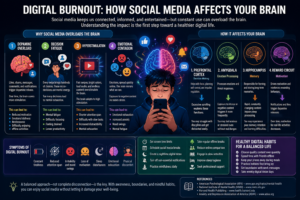
Social media does more than influence our habits—it changes how the brain processes rewards, emotions, attention, and decision-making. Every notification, video, and post competes for your attention, activating multiple neural systems at once. While these platforms are designed to keep users engaged, prolonged exposure can overwhelm the brain’s natural ability to regulate focus and emotions. Over time, this constant stimulation contributes to mental fatigue, reduced concentration, and ultimately, digital burnout.
1. Dopamine and the Brain’s Reward System
Dopamine is a neurotransmitter involved in motivation, learning, and reward. It is often called the brain’s “reward chemical,” although its primary role is helping us anticipate and pursue rewarding experiences rather than simply creating pleasure.
Social media platforms are intentionally designed to trigger dopamine release through unpredictable rewards, such as:
- Likes
- Shares
- Comments
- Messages
- Notifications
- New followers
Because these rewards are unpredictable, the brain keeps anticipating the next positive interaction. This pattern, known as variable reward reinforcement, is similar to the psychological principle that makes slot machines highly engaging. As a result, many people find themselves checking their phones repeatedly—even without a conscious reason.
Over time, frequent dopamine stimulation can make the brain less responsive to everyday rewards. Activities that once felt satisfying, such as reading a book, having a conversation, or spending time outdoors, may seem less exciting compared to the instant gratification of social media.
This can contribute to:
- Reduced motivation
- Restlessness when offline
- Emotional flatness or reduced enjoyment
- Frequent urges to check the phone
- Difficulty staying engaged in slower, real-world activities
These changes are common features of the early stages of digital burnout.
2. Decision Fatigue
Every time you open a social media app, your brain is flooded with countless choices:
- Which video should I watch?
- Should I like this post?
- I should reply to this message?
- Should I keep scrolling?
- Which account should I follow?
Although each decision seems small, every choice consumes mental resources. This phenomenon is known as decision fatigue—a gradual decline in the brain’s ability to make thoughtful decisions after repeated mental effort.
After making hundreds or even thousands of micro-decisions throughout the day, the brain becomes mentally exhausted. Consequently, people often feel drained, distracted, and less productive, even if they spent hours online believing they were relaxing.
3. Hyperstimulation and Attention Overload
Modern social media platforms are designed to capture attention within seconds. Short-form videos, autoplay features, bright visuals, rapid scene changes, and engaging sound effects continuously stimulate the brain.
This constant sensory input trains the brain to expect immediate novelty and fast-paced entertainment.
Common sources of overstimulation include:
- Short-form videos
- Bright colors and visual effects
- Loud music and sound effects
- Rapid scene transitions
- Endless scrolling with new content every few seconds
As the brain adapts to this high level of stimulation, slower activities begin to feel unrewarding. Reading a book, studying, working on a project, or even having a quiet conversation may seem unusually difficult because they cannot compete with the rapid pace of digital content.
Over time, this can contribute to:
- Reduced attention span
- Increased distractibility
- Difficulty concentrating
- Impatience with slower tasks
- Mental exhaustion after prolonged screen use
4. Emotional Contagion and Stress
Human emotions are highly contagious. Through a process known as emotional contagion, people naturally absorb and mirror the emotions they observe in others. On social media, this happens continuously as users scroll through emotionally charged content.
Exposure to distressing news, online conflicts, criticism, or highly emotional posts activates brain regions involved in emotional processing, including the amygdala, which plays a central role in detecting potential threats.
Regular exposure to content such as:
- Negative news headlines
- Online arguments and hostility
- Unrealistic lifestyle portrayals
- Social comparison
- Fear-inducing or sensational content
- Pressure to maintain an ideal online image
can keep the brain in a heightened state of emotional alertness.
As a result, many people experience increased stress, anxiety, emotional exhaustion, and feelings of inadequacy—even when they are not directly involved in the situations they are viewing. Over weeks or months, this continuous emotional load can significantly contribute to digital burnout and reduce overall psychological well-being.
Symptoms of Digital Burnout
Digital burnout affects both mental and physical well-being. Unlike ordinary tiredness, it develops gradually as the brain remains exposed to constant digital stimulation with little opportunity to recover. The symptoms may seem mild at first, but if left unaddressed, they can interfere with daily functioning, work performance, relationships, and overall quality of life.
Recognizing these early warning signs can help you take action before digital fatigue develops into more serious mental health concerns.
1. Persistent Mental Fatigue
One of the earliest signs of digital burnout is feeling mentally exhausted, even after getting enough sleep. While your body may be physically rested, your brain continues to process a constant stream of information from notifications, messages, videos, and online interactions.
You may notice:
- Feeling mentally “drained” early in the day
- Difficulty thinking clearly
- Reduced mental energy despite adequate rest
- Feeling overwhelmed by simple tasks
This happens because the brain has insufficient time to disengage from continuous digital stimulation and recover.
2. Reduced Attention Span and Difficulty Concentrating
Frequent exposure to fast-paced digital content trains the brain to expect constant novelty and instant rewards. As a result, maintaining focus on slower, more demanding tasks becomes increasingly difficult.
Common signs include:
- Difficulty reading books or lengthy articles
- Frequently switching between tasks
- Losing focus during conversations
- Feeling restless while studying or working
- Constantly reaching for your phone without realizing it
Over time, this fragmented attention can reduce productivity and make deep, focused work more challenging.
3. Increased Irritability
Digital burnout often leaves the nervous system in a heightened state of alertness. Continuous notifications, information overload, and emotional stimulation reduce patience and increase emotional reactivity.
You may experience:
- Becoming frustrated over minor inconveniences
- Feeling impatient or easily annoyed
- Mood swings throughout the day
- Difficulty regulating emotions
These reactions occur because chronic digital overstimulation keeps the brain’s stress-response systems more active than usual.
4. Loss of Motivation and Enjoyment
Excessive social media use can make everyday activities feel less rewarding. As the brain becomes accustomed to frequent dopamine-driven stimulation, ordinary experiences may no longer provide the same sense of satisfaction.
People experiencing digital burnout often notice:
- Reduced interest in hobbies
- Difficulty starting important tasks
- Procrastination
- Feeling emotionally “flat”
- Less enjoyment from offline activities that were once meaningful
This doesn’t necessarily indicate laziness—it often reflects mental exhaustion and changes in the brain’s reward system.
5. Sleep Disturbances
Screen use, particularly before bedtime, can interfere with healthy sleep. Blue light emitted by electronic devices suppresses melatonin—the hormone that helps regulate the sleep-wake cycle. In addition, emotionally engaging or stimulating content keeps the brain alert when it should be preparing for rest.
Signs of sleep disruption include:
- Difficulty falling asleep
- Frequent nighttime awakenings
- Feeling unrefreshed in the morning
- Daytime sleepiness
- Irregular sleep schedules
Poor sleep further worsens attention, emotional regulation, and stress, creating a cycle that reinforces digital burnout.
6. Emotional Exhaustion
Constant exposure to news, opinions, online debates, social comparison, and emotionally charged content can overwhelm the brain’s capacity to process emotions.
You may experience:
- Feeling emotionally drained after scrolling
- Increased anxiety or worry
- Feeling emotionally numb
- Reduced empathy or compassion fatigue
- Difficulty managing everyday stress
Over time, this emotional overload can contribute to chronic stress and negatively affect overall psychological well-being.
7. Physical Symptoms
Digital burnout is not only psychological—it often manifests physically as well. Spending long hours on screens can place strain on both the body and the nervous system.
Common physical symptoms include:
- Headaches
- Digital eye strain or blurred vision
- Neck, shoulder, and back pain
- Muscle tension
- Dry eyes
- Fatigue and low energy
Poor posture, prolonged screen exposure, and limited movement often contribute to these physical discomforts.
When Should You Be Concerned?
Experiencing one or two of these symptoms occasionally is normal. However, if several symptoms persist for weeks, interfere with work, studies, relationships, or daily responsibilities, or continue despite adequate rest, it may indicate digital burnout rather than ordinary fatigue.
Early recognition is important. Making small changes—such as reducing screen time, creating digital boundaries, prioritizing sleep, and taking regular offline breaks—can help the brain recover and prevent symptoms from becoming more severe.

How Social Media Affects Different Parts of the Brain
Social media influences far more than our attention—it engages multiple brain networks involved in thinking, memory, emotions, and motivation. While occasional use is unlikely to cause lasting changes, excessive or prolonged use can alter how these systems function over time. Understanding these brain regions helps explain why social media can affect concentration, emotional well-being, and daily behavior.
1. Prefrontal Cortex: Focus, Decision-Making, and Self-Control
The prefrontal cortex is the brain’s executive control center. It is responsible for higher-order cognitive functions such as:
- Maintaining attention and focus
- Planning and organizing tasks
- Making thoughtful decisions
- Solving problems
- Regulating impulses and self-control
- Managing working memory
Social media constantly competes for the brain’s attention through notifications, new content, and endless scrolling. Frequent interruptions encourage rapid task-switching, making it more difficult to sustain attention on a single activity.
Over time, excessive scrolling may be associated with:
- Reduced concentration
- Increased distractibility
- More impulsive phone checking
- Difficulty completing complex tasks
- Reduced productivity
Rather than permanently “weakening” the prefrontal cortex, excessive digital stimulation can temporarily reduce its efficiency by overloading attentional resources and encouraging habitual, automatic behaviors.
2. Amygdala: Emotional Processing and Stress Response
The amygdala plays a key role in processing emotions, especially fear, stress, and emotionally significant experiences. It helps the brain quickly detect potential threats and prepares the body to respond.
Social media frequently exposes users to emotionally intense content, including:
- Distressing news
- Online conflicts
- Fear-inducing headlines
- Graphic images or videos
- Emotional personal stories
Repeated exposure to highly emotional content can increase amygdala activation, making people feel more emotionally reactive even when they are physically safe.
This may contribute to:
- Heightened anxiety
- Increased stress
- Emotional overwhelm
- Irritability
- Difficulty relaxing after prolonged scrolling
The brain often responds to emotionally charged digital experiences in ways that resemble real-world emotional events.
3. Hippocampus: Learning and Memory
The hippocampus is essential for forming new memories and transferring information from short-term to long-term storage. It also supports learning and helps organize experiences into meaningful memories.
Because social media delivers an endless stream of rapidly changing information, the brain has little time to process and consolidate what it sees. Constant switching between posts, videos, and notifications encourages superficial information processing rather than deep learning.
As a result, excessive social media use may be associated with:
- Reduced memory retention
- Difficulty recalling recently learned information
- Less effective learning
- Frequent forgetfulness
- Reduced ability to focus on complex material
While social media does not directly damage the hippocampus in healthy individuals, constant information overload can interfere with the cognitive processes necessary for effective learning and memory formation.
4. Reward Circuit: Motivation and Habit Formation
The brain’s reward system—which includes structures such as the ventral tegmental area (VTA), nucleus accumbens, and their dopamine pathways—helps regulate motivation, learning, and habit formation.
Every notification, like, comment, or new piece of content can activate this reward circuit by triggering dopamine release. These brief rewards encourage repeated engagement and reinforce the habit of checking social media.
Over time, excessive reliance on these instant rewards may lead to:
- Frequent urges to check the phone
- Reduced motivation for slower, real-world activities
- Increased dependence on immediate gratification
- Difficulty delaying rewards
- Habitual or automatic scrolling
Importantly, this does not mean social media permanently damages the brain’s reward system. However, repeated exposure to highly rewarding digital experiences can shift attention toward short-term rewards and make everyday activities—such as studying, exercising, or reading—feel less immediately satisfying.
The Brain Works as an Integrated System
These brain regions do not work in isolation. The prefrontal cortex, amygdala, hippocampus, and reward system constantly communicate with one another to regulate attention, memory, emotions, and decision-making. Excessive social media use can influence this balance, making it harder to concentrate, regulate emotions, and stay motivated.
The encouraging news is that the brain remains remarkably adaptable throughout life. By reducing excessive screen time, practicing mindfulness, improving sleep, and engaging in meaningful offline activities, these cognitive and emotional functions can recover and become more balanced over time.
Why Digital Burnout Happens Faster Today
Digital burnout is not a new phenomenon, but it has become increasingly common in recent years. Advances in technology, widespread smartphone use, and the rise of social media have made it easier than ever to stay connected around the clock. While these innovations offer convenience and connection, they also expose the brain to continuous stimulation with little opportunity for recovery.
Several factors contribute to the growing prevalence of digital burnout in modern life.
1. Increased Screen Time
The average person spends several hours each day using smartphones, computers, and other digital devices for work, education, entertainment, and social interaction. Unlike earlier forms of media, today’s digital platforms are always accessible, making it easy to remain connected from morning until bedtime.
Prolonged screen time can lead to:
- Mental fatigue
- Reduced concentration
- Information overload
- Increased stress
- Less time for restorative offline activities
The longer the brain remains engaged with digital content without adequate breaks, the greater the risk of cognitive overload and emotional exhaustion.
2. The Rise of Short-Form Video Content
Platforms such as TikTok, Instagram Reels, and YouTube Shorts are designed to deliver highly engaging content in rapid succession. Every swipe introduces something new, encouraging continuous scrolling and making it difficult to stop.
Short-form videos often feature:
- Fast scene changes
- Attention-grabbing visuals
- Instant entertainment
- Personalized recommendations
- Endless autoplay
This constant novelty activates the brain’s reward system and encourages repeated engagement. Over time, the brain becomes accustomed to rapid stimulation, making slower activities—such as reading, studying, or completing complex tasks—feel less engaging.
3. Fear of Missing Out (FOMO)
Fear of Missing Out (FOMO) refers to the anxiety that others may be experiencing rewarding events or important information without us. Social media amplifies this feeling by providing constant updates about friends, celebrities, trends, and global events.
People may feel pressure to:
- Check notifications immediately
- Respond to messages quickly
- Stay informed about trending topics
- Maintain an active online presence
- Keep up with friends’ activities
This persistent sense of urgency keeps the brain in a state of heightened alertness, increasing stress and making it difficult to fully disconnect.
4. Social Comparison and Self-Esteem
People naturally compare themselves with others, but social media dramatically increases both the frequency and intensity of these comparisons. Most online content showcases carefully selected highlights rather than everyday reality, creating unrealistic standards for success, appearance, relationships, and lifestyle.
Repeated exposure to idealized content may contribute to:
- Lower self-esteem
- Feelings of inadequacy
- Body image concerns
- Reduced life satisfaction
- Increased anxiety and depressive symptoms
Research in psychology suggests that frequent upward social comparisons—comparing oneself to people perceived as more successful or attractive—can negatively affect emotional well-being, particularly among adolescents and young adults.
5. Blurred Digital Boundaries
One of the biggest contributors to digital burnout is the disappearance of clear boundaries between online and offline life. Smartphones allow work, social media, emails, entertainment, and messaging to remain accessible 24 hours a day.
Without intentional limits, digital interruptions can occur during:
- Meals
- Family conversations
- Work or study sessions
- Exercise
- Leisure time
- Bedtime
Constant notifications and the expectation of being continuously available prevent the brain from fully resting. Over time, this lack of recovery increases mental fatigue, reduces productivity, and accelerates the development of digital burnout.
Modern Technology Requires Healthy Boundaries
Digital technology itself is not the problem—how we use it matters. Social media and smartphones offer valuable opportunities for communication, education, creativity, and support. However, when digital engagement becomes constant and unbalanced, the brain has fewer opportunities to recover from continuous stimulation.
Creating healthy digital boundaries, scheduling regular offline time, and using technology more intentionally can help protect cognitive function, emotional well-being, and long-term mental health.
How to Prevent and Manage Digital Burnout
The good news is that digital burnout is both preventable and manageable. Thanks to the brain’s remarkable ability to adapt—a quality known as neuroplasticity—healthy digital habits can improve attention, emotional regulation, sleep quality, and overall well-being over time.
The goal is not to eliminate technology from your life but to create a healthier relationship with it. By using social media more intentionally and allowing your brain regular periods of rest, you can reduce mental fatigue and restore balance.
Below are practical, evidence-based strategies that support long-term digital wellness.
1. Set Healthy Screen Time Limits
Reducing unnecessary screen time gives your brain more opportunities to recover from continuous stimulation. Rather than aiming for perfection, focus on making gradual, sustainable changes.
Helpful strategies include:
- Set a realistic daily screen time goal.
- Use built-in app timers or digital well-being tools.
- Create “phone-free” zones, such as the dining table or bedroom.
- Avoid mindless scrolling during short breaks.
Even reducing screen time by 30–60 minutes per day can improve focus, mood, and sleep quality.
2. Schedule Social Media Use
Instead of checking social media every few minutes, designate specific times during the day.
For example:
- Morning (after completing your routine)
- During a lunch break
- Early evening
This reduces constant interruptions, helps you regain control over your attention, and prevents habitual phone checking throughout the day.
3. Create a Nighttime Digital Detox
Using screens close to bedtime can interfere with both sleep quality and emotional recovery. Blue light suppresses melatonin production, while stimulating content keeps the brain mentally active.
Aim to avoid screens for at least one hour before sleep.
Instead, try relaxing activities such as:
- Reading a book
- Journaling
- Gentle stretching
- Meditation
- Listening to calming music
- Practicing deep breathing
A consistent nighttime routine signals to the brain that it is time to rest.
4. Turn Off Non-Essential Notifications
Notifications constantly compete for your attention and interrupt your focus. Every alert prompts your brain to shift attention, increasing mental fatigue over time.
Consider:
- Turning off unnecessary app notifications
- Disabling social media alerts
- Keeping only essential calls or emergency notifications
- Checking messages at scheduled times instead of immediately
Fewer interruptions allow the brain to remain focused and reduce cognitive overload.
5. Practice Mindfulness
Mindfulness helps counteract the effects of digital overstimulation by strengthening attention, reducing stress, and improving emotional regulation. Research suggests that regular mindfulness practice can improve concentration and decrease psychological distress.
Simple techniques include:
- Deep breathing exercises
- Body scan meditation
- Grounding techniques (such as the 5-4-3-2-1 method)
- Guided mindfulness sessions
- Mindful walking
Even 5–10 minutes of daily practice can make a meaningful difference over time.
6. Take Regular Offline Breaks
Your brain needs regular periods away from screens to recover. Offline activities reduce mental fatigue and help restore attention.
Healthy screen-free activities include:
- Walking outdoors
- Cooking
- Gardening
- Playing with pets
- Exercising
- Spending time with family or friends
- Creative hobbies
These activities activate different brain networks and provide a refreshing mental reset.
7. Reduce Social Comparison
Social media often presents carefully curated versions of people’s lives rather than reality. Constant comparison with these idealized images can negatively affect self-esteem and emotional well-being.
To create a healthier digital environment:
- Follow educational and inspiring content
- Unfollow or mute accounts that trigger insecurity
- Limit exposure to unrealistic or negative content
- Remember that social media rarely reflects the complete picture of someone’s life
Being intentional about the content you consume can improve your overall emotional health.
8. Reintroduce Slow, Focused Activities
Fast-paced digital content trains the brain to expect constant novelty. Slower activities help rebuild sustained attention and improve patience.
Consider activities such as:
- Reading books
- Journaling
- Painting or drawing
- Knitting or crafting
- Playing a musical instrument
- Solving puzzles
- Listening to calming music
These hobbies encourage deep focus and give the brain a chance to slow down.
9. Prioritize Healthy Sleep Habits
Quality sleep is essential for memory, emotional regulation, and cognitive recovery. Without adequate sleep, the effects of digital burnout become more pronounced.
Healthy sleep habits include:
- Going to bed and waking up at consistent times
- Keeping your bedroom dark, cool, and quiet
- Limiting caffeine later in the day
- Reducing evening screen exposure
- Using blue-light filters if nighttime screen use is unavoidable
Better sleep strengthens resilience against stress and improves overall brain function.
10. Seek Professional Support When Needed
If digital burnout begins to interfere with your work, relationships, emotional well-being, or daily functioning, speaking with a mental health professional can be beneficial.
Therapists can help you:
- Develop healthier digital habits
- Improve emotional regulation
- Manage anxiety and stress
- Address compulsive social media use
- Build coping strategies that support long-term well-being
Seeking help is a proactive step toward protecting your mental health.
Long-Term Effects of Digital Burnout
When left unaddressed, digital burnout can affect multiple areas of psychological and physical health. Persistent overstimulation, poor sleep, and chronic stress may increase the risk of:
- Chronic stress and anxiety
- Depressive symptoms
- Persistent mental fatigue
- Difficulty concentrating
- Reduced productivity and creativity
- Memory and learning difficulties
- Lower self-esteem
- Emotional exhaustion or numbness
- Sleep disturbances
- Strained personal relationships
These effects often develop gradually, making them easy to overlook. Fortunately, early recognition and healthy digital habits can significantly reduce their impact, and many people experience noticeable improvements after making sustainable lifestyle changes.
Healthy Digital Habits for Long-Term Well-Being
Maintaining digital wellness is not about avoiding technology—it is about using it intentionally and in ways that support your mental health.
Simple habits that promote a healthier relationship with technology include:
- Prioritize meaningful content over endless scrolling.
- Spend quality time with friends and family offline.
- Keep your phone away during meals and conversations.
- Schedule regular screen-free periods each day.
- Engage in hobbies that promote creativity and relaxation.
- Set clear boundaries for work emails and messages.
- Take a weekly digital detox or low-screen day.
- Spend time outdoors whenever possible.
- Practice mindfulness and self-reflection regularly.
- Be intentional about when, why, and how you use social media.
Small, consistent changes often produce the greatest long-term benefits.
Conclusion
Social media has transformed the way we communicate, learn, and connect. While it offers countless benefits, excessive or unbalanced use can overwhelm the brain’s natural capacity to process information, regulate emotions, and maintain attention. Over time, this constant stimulation may contribute to digital burnout, affecting both mental and physical well-being.
Understanding how social media influences the brain empowers us to make healthier choices. Setting boundaries, prioritizing quality sleep, taking regular offline breaks, practicing mindfulness, and using technology intentionally can all help protect cognitive function and emotional health.
The goal is not to disconnect completely but to create a balanced relationship with technology—one that supports productivity, meaningful relationships, and psychological well-being. By making mindful digital habits part of everyday life, you can enjoy the advantages of social media while reducing its impact on your brain and overall mental health.
Reference
This article is for educational purposes only and is not a substitute for professional medical or psychological advice. If digital burnout or mental health symptoms significantly affect your daily life, consult a qualified healthcare or mental health professional.