
Emotional Triggers can make a simple conversation feel like rejection, a delayed text feel like abandonment, or constructive criticism feel deeply personal. But why do certain situations provoke such intense emotional reactions? Understanding your emotional triggers is the first step toward breaking unhealthy patterns, improving relationships, and building lasting emotional resilience.
Introduction
Everyone has emotional triggers—situations, words, or memories that activate intense emotional reactions. A simple comment can feel like rejection. A delay in reply may feel like abandonment. A disagreement might feel like a personal attack.
For many people, these reactions feel automatic, uncontrollable, and overwhelming. Emotional triggers can:
- Damage relationships
- Lower self-esteem
- Cause anxiety and panic
- Influence decisions
- Create impulsive behaviors
- Lead to shame and guilt
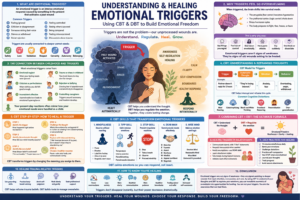
But here’s the truth psychology teaches us: Triggers are not the problem—our unprocessed wounds are.
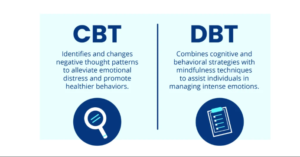
Two therapy models, Cognitive Behavioral Therapy (CBT) and Dialectical Behavior Therapy (DBT), offer scientifically backed tools to transform these reactions into clarity, calmness, and emotional resilience.
This article explores:
- What emotional triggers are
- They feel so powerful
- How the brain reacts under threat
- CBT helps you understand triggers
- How DBT helps you regulate them
- Step-by-step strategies to heal emotional triggers
- How to apply skills in relationships and daily life
Let’s begin the journey toward emotional freedom.
What Are Emotional Triggers?
An emotional trigger is any situation, event, interaction, thought, or memory that evokes a sudden and intense emotional reaction. The response often feels stronger than the current situation alone would explain because it is influenced by previous experiences, deeply held beliefs, or unmet emotional needs.
For example, a delayed text message might trigger intense anxiety in one person but barely affect someone else. Similarly, constructive criticism may motivate one individual while leaving another feeling deeply hurt or rejected. This difference exists because emotional triggers are shaped by each person’s unique life experiences, coping patterns, and psychological history.
Common Emotional Triggers
Although triggers vary from person to person, some of the most common include:
- Feeling ignored or excluded
- Criticism, disagreement, or negative feedback
- Someone raising their voice or displaying anger
- Emotional distance, silence, or withdrawal from others
- Social rejection or fear of being left out
- Feeling controlled, criticized, or micromanaged
- Comparing yourself with others or witnessing another person’s success
- Being compared to siblings, peers, or colleagues
- Feeling misunderstood, invalidated, or dismissed
- Conversations, places, or reminders associated with traumatic or distressing experiences
The Emotional Needs Behind Triggers
Many emotional triggers are linked to important psychological needs that help people feel emotionally secure and connected. These may include:
- Safety and security
- Love and acceptance
- Validation and understanding
- Respect and appreciation
- Predictability and certainty
- Autonomy and personal control
- Belonging and meaningful connection
When one or more of these needs feels threatened, the brain may interpret the situation as emotionally significant—even if there is no immediate danger. As a result, previously learned emotional patterns and protective responses can become activated automatically.
It is important to remember that not every emotional trigger originates from childhood trauma or a single painful event. Triggers can also develop through repeated life experiences, stressful relationships, major losses, discrimination, chronic stress, or other emotionally significant events. Understanding where your triggers come from is the first step toward responding to them with greater awareness, self-compassion, and emotional resilience rather than reacting automatically.
Why Do Emotional Triggers Feel So Overwhelming?
Have you ever reacted so intensely to a situation that, later, you wondered, “Why did I respond that way?” Emotional triggers can feel overwhelming because they activate the brain’s built-in survival system, which is designed to protect us from perceived threats.
When the brain interprets a situation as emotionally or psychologically threatening—even if there is no immediate physical danger—it prioritizes survival over careful reasoning. This response is automatic and happens within milliseconds.
What Happens in the Brain?
During an emotional trigger, several important changes occur:
- The amygdala, a brain region involved in detecting threats and processing emotions such as fear and anger, becomes highly active.
- The prefrontal cortex, responsible for reasoning, planning, decision-making, and impulse control, becomes less effective under intense emotional stress. This makes it harder to think clearly and respond thoughtfully.
- Stress hormones, including adrenaline and cortisol, are released to prepare the body for action.
- The autonomic nervous system activates a protective response, which may lead to fight, flight, freeze, or fawn reactions depending on the situation and the individual’s past experiences.
These biological changes are normal survival mechanisms. However, when they are triggered by everyday interpersonal situations rather than genuine danger, they can lead to reactions that feel confusing or disproportionate.
How This Can Affect You
When your nervous system is in survival mode, you may:
- Say things you later regret
- Feel emotionally overwhelmed or out of control
- Become defensive, angry, or withdrawn
- Shut down emotionally or mentally “go blank”
- Experience intense anxiety or, in some cases, panic attacks
- Cry unexpectedly or struggle to stop crying
- Overthink every detail of a situation
- Feel detached from yourself or your surroundings (dissociation), particularly during overwhelming stress or trauma-related triggers
- Find it difficult to communicate calmly or solve problems effectively
These reactions are not signs of personal weakness or failure. They reflect the way the brain and nervous system are designed to respond to perceived threats.
With greater self-awareness, emotional regulation skills, and evidence-based approaches such as Cognitive Behavioral Therapy (CBT) and Dialectical Behavior Therapy (DBT), it is possible to reduce the intensity of emotional triggers, strengthen resilience, and respond with greater clarity instead of reacting automatically.
Rather than viewing emotional triggers as something to fear, they can be understood as valuable signals. They often point toward unresolved experiences, learned patterns, or unmet emotional needs that deserve curiosity, compassion, and, when necessary, professional support.
The Connection Between Childhood Experiences and Emotional Triggers
Many emotional triggers have roots in early life experiences. During childhood, the brain is rapidly developing, and repeated interactions with caregivers, family members, teachers, and peers shape how we perceive ourselves, others, and the world around us. These early experiences influence our emotional regulation, beliefs, coping strategies, and expectations in relationships.
When important emotional needs are consistently met, children are more likely to develop a sense of safety, trust, and resilience. However, when those needs are repeatedly unmet or disrupted, the brain may learn protective patterns that continue into adulthood. These patterns can later be activated by situations that resemble earlier experiences, even when the present circumstances are different.
It is important to note that not all emotional triggers originate in childhood. Triggers can also develop from experiences later in life, such as relationship difficulties, workplace stress, loss, discrimination, traumatic events, or chronic adversity. Childhood experiences are simply one of the most common influences on how we respond emotionally.
Common Childhood Experiences That Can Contribute to Emotional Triggers
1. Emotional Neglect
When a child’s emotions are consistently ignored, dismissed, or minimized, they may grow up believing that their feelings do not matter. As adults, they may become especially sensitive to feeling unheard, overlooked, or emotionally disconnected.
2. Frequent Criticism or Perfectionistic Expectations
Children who receive constant criticism or feel valued only for their achievements may develop a deep fear of making mistakes. Even gentle feedback or constructive criticism in adulthood can trigger feelings of shame, inadequacy, or failure.
3. Inconsistent Affection or Unpredictable Caregiving
When love, attention, or support is unpredictable, children may become emotionally hypervigilant, constantly scanning for signs of rejection or abandonment. As adults, delays in communication or changes in another person’s behavior may provoke significant anxiety.
4. Trauma, Abuse, or Chronic Family Conflict
Growing up in an environment marked by fear, instability, violence, or ongoing conflict can teach the brain to remain on high alert. This heightened sensitivity may persist into adulthood, causing relatively minor stressors to feel threatening.
5. Rejection, Bullying, or Social Exclusion
Repeated experiences of rejection, bullying, or exclusion can shape core beliefs such as “I don’t belong” or “People will eventually reject me.” These beliefs may increase sensitivity to criticism, social evaluation, or perceived disapproval later in life.
6. Controlling or Overprotective Caregivers
Children who have little opportunity to make their own choices may struggle with autonomy and confidence. As adults, they may feel distressed when they perceive others as controlling, critical, or limiting their independence.
How Early Experiences Shape Present-Day Reactions
Our current emotional reactions often reflect patterns the brain learned while trying to adapt to earlier experiences. These responses once served a protective purpose, but they may no longer be helpful in our present lives.
The encouraging news is that the brain remains capable of change throughout adulthood—a concept known as neuroplasticity. Through increased self-awareness, healthy relationships, and evidence-based approaches such as Cognitive Behavioral Therapy (CBT) and Dialectical Behavior Therapy (DBT), individuals can recognize these patterns, develop healthier ways of responding, and gradually reduce the emotional intensity of their triggers.
Understanding where a trigger comes from is not about assigning blame to the past. It is about gaining insight into your emotional experiences so you can respond with greater compassion, flexibility, and resilience in the present.
How Cognitive Behavioral Therapy (CBT) Helps Heal Emotional Triggers
Cognitive Behavioral Therapy (CBT) is one of the most extensively researched and effective psychological treatments for managing emotional distress. It is based on the understanding that our thoughts, emotions, physical reactions, and behaviors are closely interconnected. While we cannot always control the situations we encounter, we can learn to recognize and change the patterns of thinking and behavior that influence how we respond to them.
When an emotional trigger occurs, the distress we experience is often shaped not only by the event itself but also by the meaning our mind automatically assigns to it. These interpretations are influenced by past experiences, core beliefs, and cognitive habits. CBT helps individuals become aware of these patterns so they can respond with greater clarity and flexibility rather than reacting automatically.
The CBT Model: Understanding the Trigger Cycle
CBT explains emotional reactions through a simple but powerful sequence:
Trigger → Automatic Thought → Emotion → Behavior
Each part of this cycle influences the next. By identifying and modifying unhelpful thoughts, people can reduce emotional intensity and choose healthier behaviors.
A Real-Life Example
Imagine your partner does not reply to your message for two hours.
- Trigger: Your partner hasn’t responded to your text.
- Automatic Thought: “They’re losing interest in me.”
- Emotion: Anxiety, fear, insecurity, or sadness.
- Behavior: Repeated texting, seeking reassurance, becoming angry, withdrawing emotionally, or overthinking the situation.
Although the delayed reply is the triggering event, the emotional reaction is strongly influenced by the automatic interpretation rather than the event alone. There may be many alternative explanations—for example, your partner could be busy at work, driving, sleeping, or simply unable to check their phone.
How CBT Helps Reduce Emotional Triggers
CBT equips people with practical skills to interrupt this automatic cycle by helping them:
- Identify automatic thoughts that arise immediately after a trigger.
- Recognize cognitive distortions such as catastrophizing, mind reading, or personalization.
- Examine the evidence supporting and challenging these thoughts.
- Identify deeper core beliefs that may contribute to recurring emotional reactions.
- Develop more balanced, realistic, and evidence-based perspectives.
- Choose intentional behaviors instead of reacting impulsively.
Rather than suppressing emotions or pretending everything is fine, CBT encourages curiosity and critical thinking. It asks, “Is this thought completely accurate?” and “What other explanations might exist?” These questions help create psychological flexibility and reduce the emotional intensity of triggers.
Why CBT Is Effective
Research consistently shows that CBT helps strengthen emotional awareness, improve problem-solving, and reduce symptoms of anxiety, depression, and emotional reactivity. As individuals repeatedly practice these skills, the brain begins to form healthier thinking patterns through neuroplasticity—its natural ability to reorganize and create new neural pathways.
Over time, situations that once triggered overwhelming emotional reactions often become more manageable. The goal is not to eliminate emotions but to respond with greater awareness, balance, and self-control.
By understanding the thoughts that fuel emotional triggers, CBT transforms automatic reactions into thoughtful, intentional responses. This creates the foundation for lasting emotional resilience and prepares the way for complementary approaches, such as Dialectical Behavior Therapy (DBT), which focuses on regulating the intense emotions that triggers can evoke.
Common Cognitive Distortions That Intensify Emotional Triggers
When we experience an emotional trigger, our minds often rely on cognitive distortions—habitual patterns of thinking that can exaggerate threats, reinforce fears, and increase emotional distress. These thoughts occur automatically and often feel convincing, even when they are inaccurate or incomplete.
Recognizing these thinking patterns is one of the first and most important steps in Cognitive Behavioral Therapy (CBT). By identifying cognitive distortions, we can evaluate them more objectively and respond with greater emotional balance.
1. Mind Reading
Definition: Assuming you know what another person is thinking without sufficient evidence.
Example: “They’re upset with me. I just know it.”
Healthier Perspective: “I don’t know what they’re thinking unless I ask. There may be many possible explanations.”
2. Catastrophizing
Definition: Expecting the worst possible outcome or believing that a difficult situation will inevitably become a disaster.
Example: “They haven’t replied to my message. Our relationship must be over.”
Healthier Perspective: “A delayed reply doesn’t automatically mean something is wrong. There are many reasonable explanations.”
3. Black-and-White (All-or-Nothing) Thinking
Definition: Viewing people, situations, or yourself in extreme categories without recognizing the middle ground.
Example: “They’re either perfect or they’re terrible.”
Healthier Perspective: “People can have strengths and flaws at the same time. Relationships are rarely all good or all bad.”
4. Emotional Reasoning
Definition: Believing that because you feel something intensely, it must be true.
Example: “I feel rejected, so I must have been rejected.”
Healthier Perspective: “My feelings are valid, but they are not always proof of reality. I can explore the facts before reaching a conclusion.”
5. Personalization
Definition: Taking excessive responsibility for events or assuming that other people’s behavior is caused by you.
Example: “They’re being quiet because I must have done something wrong.”
Healthier Perspective: “Their mood may have nothing to do with me. There could be many factors influencing their behavior.”
6. Overgeneralization
Definition: Drawing broad conclusions from a single event or a small number of experiences.
Example: “This always happens. No one ever stays.”
Healthier Perspective: “This situation is painful, but it doesn’t define every relationship or every future experience.”
How CBT Helps Challenge Cognitive Distortions
CBT encourages us to become curious about our automatic thoughts instead of accepting them as facts. Therapists often guide individuals to ask questions such as:
- What evidence supports this thought?
- Evidence challenges it?
- Am I making assumptions or jumping to conclusions?
- Is there another explanation that fits the facts?
- What would I say to a friend experiencing this situation?
These questions help create psychological distance from unhelpful thinking patterns and promote more balanced, evidence-based interpretations.
The goal of CBT is not to replace negative thoughts with unrealistic optimism, but to develop thinking that is flexible, compassionate, and grounded in reality. As people repeatedly practice identifying and challenging cognitive distortions, emotional triggers gradually lose their intensity, allowing for calmer emotions, healthier behaviors, and more resilient responses.
CBT Step-by-Step: A Practical Guide to Healing Emotional Triggers
Emotional triggers often feel automatic, but they are not permanent. Cognitive Behavioral Therapy (CBT) provides a structured, evidence-based process for understanding why a trigger occurs and learning how to respond in healthier, more intentional ways.
Rather than trying to suppress emotions, CBT encourages you to become curious about your thoughts, examine the evidence, and replace automatic reactions with balanced, reality-based responses. With regular practice, these skills can reduce emotional intensity and strengthen resilience over time.
Step 1: Identify the Trigger
The first step is to notice exactly what activated your emotional response. A trigger may be an event, a conversation, a facial expression, a memory, or even a physical sensation.
Ask yourself:
- What happened immediately before I felt this emotion?
- Who was involved?
- What situation or event triggered my reaction?
Simply identifying the trigger helps shift you from reacting automatically to observing your experience with greater awareness.
Step 2: Identify the Automatic Thought
Once you’ve identified the trigger, pay attention to the first thought that crossed your mind. These automatic thoughts often occur so quickly that we mistake them for facts.
Ask yourself:
- What did I instantly assume?
- Story is my mind telling me?
- What am I afraid this situation means?
For example:
Trigger: A friend cancels plans at the last minute.
Automatic Thought: *”They don’t want to spend time with me anymore.” *
Step 3: Identify the Underlying Core Belief
Automatic thoughts are often connected to core beliefs—deeply held assumptions about ourselves, other people, or the world. These beliefs usually develop gradually through life experiences and influence how we interpret situations.
Common core beliefs include:
- “I’m not lovable.”
- “People always leave me.”
- “I’m not good enough.”
- “Have to be perfect to be accepted.”
- “I can’t trust anyone.”
Recognizing these beliefs helps explain why certain situations trigger such strong emotional reactions.
Step 4: Examine and Challenge the Thought
Instead of accepting your first interpretation as reality, CBT encourages you to evaluate it with curiosity and evidence.
Ask yourself:
- What evidence supports this thought?
- Evidence challenges it?
- Am I confusing feelings with facts?
- Am I engaging in cognitive distortions such as catastrophizing, mind reading, or personalization?
- What are some other realistic explanations for this situation?
The goal is not to dismiss your emotions but to determine whether your interpretation is accurate, balanced, and supported by evidence.
Step 5: Develop a More Balanced Perspective
After evaluating your automatic thought, create an alternative interpretation that acknowledges your feelings while remaining grounded in reality.
Instead of forcing positive thinking, aim for a response that is realistic, compassionate, and evidence-based.
For example:
Automatic Thought: “They’re abandoning me.”
Balanced Thought: “I’m feeling insecure because this situation reminds me of past experiences. A delayed response doesn’t necessarily mean they’re losing interest. I’ll wait for more information before drawing conclusions.”
Balanced thinking reduces emotional intensity without invalidating your feelings.
Step 6: Choose an Intentional Response
Once your emotional intensity has decreased, decide how you want to respond rather than reacting impulsively.
Helpful strategies include:
- Pause before responding.
- Take a few slow, deep breaths.
- Use grounding or mindfulness techniques.
- Communicate your feelings calmly and assertively.
- Ask questions instead of making assumptions.
- Delay important decisions until your emotions have settled.
Intentional responses strengthen emotional regulation and often lead to healthier relationships and better outcomes.
Why This Process Works
Every time you practice these steps, you strengthen your ability to pause, reflect, and respond thoughtfully. Over time, your brain begins to form healthier cognitive and emotional patterns through neuroplasticity, reducing the intensity of future triggers.
CBT does not eliminate difficult emotions or prevent triggering situations from occurring. Instead, it helps you recognize unhelpful thinking patterns, evaluate them objectively, and respond in ways that align with your values rather than your fears.
The more consistently these skills are practiced, the less power emotional triggers tend to have, allowing you to navigate challenging situations with greater confidence, emotional balance, and resilience.
How Dialectical Behavior Therapy (DBT) Helps Heal Emotional Triggers
While Cognitive Behavioral Therapy (CBT) helps us understand and reframe the thoughts that fuel emotional triggers, Dialectical Behavior Therapy (DBT) teaches us how to regulate the intense emotions and impulsive behaviors that often follow those triggers.
Developed by psychologist Dr. Marsha Linehan, DBT combines cognitive-behavioral principles with mindfulness and acceptance-based strategies. It is widely recognized as an evidence-based treatment for emotional dysregulation and has proven effective for a range of mental health conditions, including borderline personality disorder, anxiety, depression, post-traumatic stress, and chronic emotional distress.
DBT is built around four core skill areas:
- Mindfulness – Becoming aware of your thoughts, emotions, and physical sensations without immediately reacting.
- Emotion Regulation – Understanding and managing intense emotions in healthy ways.
- Distress Tolerance – Coping effectively with emotional crises without making the situation worse.
- Interpersonal Effectiveness – Communicating needs, setting boundaries, and maintaining healthy relationships.
CBT primarily helps you change unhelpful thinking patterns.
DBT helps you manage overwhelming emotions and respond effectively under stress.
Together, these therapies provide a comprehensive approach to healing emotional triggers by addressing both how we think and how we respond emotionally.
DBT Skills That Transform Emotional Triggers
1. Mindfulness: Observing Without Reacting
Mindfulness is the foundation of DBT. Rather than trying to suppress or avoid emotions, mindfulness teaches you to observe your internal experience with curiosity and without judgment.
When you become emotionally triggered, pause and notice:
- What thoughts are arising?
- Which emotions am I experiencing?
- What physical sensations do I notice?
- Urge do I have right now?
A simple mindfulness practice includes:
- Pause.
- Take several slow, intentional breaths.
- Name the emotion (e.g., “I’m feeling fear,” “I’m noticing shame,” or “I’m experiencing frustration.”)
- Allow the emotion to exist without trying to immediately eliminate it.
- Choose your next action intentionally instead of reacting impulsively.
Mindfulness creates a crucial pause between stimulus and response, allowing the thinking brain to re-engage before you act.
2. TIPP Skill: Calming Intense Emotions Quickly
Sometimes emotional triggers become so intense that logical thinking becomes difficult. DBT’s TIPP skill helps reduce physiological arousal by calming the nervous system.
TIPP stands for:
- Temperature: Splash cold water on your face or hold a cold pack briefly to activate the body’s calming reflex.
- Intense Exercise: Engage in short bursts of physical activity to release excess adrenaline.
- Paced Breathing: Slow your breathing, aiming for a longer exhale than inhale to activate the parasympathetic nervous system.
- Paired Muscle Relaxation: Gradually tense and relax muscle groups while breathing slowly.
These strategies help reduce emotional intensity so you can think more clearly before responding.
3. STOP Skill: Preventing Impulsive Reactions
Many emotional triggers lead to immediate reactions such as arguing, repeatedly texting, withdrawing, or making impulsive decisions.
The STOP skill helps interrupt this cycle.
- S – Stop: Pause before reacting.
- T – Take a Step Back: Breathe and create some distance from the situation.
- O – Observe: Notice your thoughts, emotions, physical sensations, and the facts of the situation.
- P – Proceed Mindfully: Choose the response that aligns with your values rather than your immediate emotions.
Even a brief pause can prevent words or actions you may later regret.
4. DEAR MAN: Communicating Needs Effectively
Many emotional triggers occur within close relationships. DBT’s DEAR MAN skill helps people express their needs clearly while maintaining respect for both themselves and others.
DEAR MAN stands for:
- Describe the situation objectively.
- Express your feelings.
- Assert what you need.
- Reinforce the benefits of meeting that need.
- Stay Mindful of your goal.
- Appear Confident through your tone and body language.
- Negotiate when appropriate.
For example:
“When I didn’t hear from you yesterday, I noticed I became anxious. I understand you may have been busy, but I’d appreciate a quick message if plans change because it helps me feel more secure.”
This approach encourages open communication instead of assumptions or emotional escalation.
5. Wise Mind: Balancing Emotion and Logic
DBT teaches that our decisions are influenced by three mental states:
- Emotion Mind: Thoughts and actions are driven primarily by intense emotions.
- Reasonable Mind: Decisions rely mainly on facts and logic while minimizing emotional experiences.
- Wise Mind: Wise Mind integrates both emotional awareness and rational thinking, allowing us to make balanced, thoughtful decisions.
Rather than choosing between emotion and logic, Wise Mind encourages us to use both. This balanced perspective supports healthier choices, stronger relationships, and greater emotional resilience.
Combining CBT and DBT: A Powerful Approach to Healing Emotional Triggers
CBT and DBT complement one another because they address different aspects of emotional functioning.
CBT helps you:
- Understand automatic thoughts.
- Identify cognitive distortions.
- Challenge unhelpful beliefs.
- Develop balanced thinking.
DBT helps you:
- Regulate intense emotions.
- Tolerate distress without impulsive reactions.
- Strengthen mindfulness.
- Communicate effectively during conflict.
Together, these approaches can help you:
- Reduce emotional reactivity.
- Understand why certain situations trigger you.
- Respond more thoughtfully rather than impulsively.
- Build emotional resilience.
- Develop healthier coping strategies.
- Gradually weaken the emotional intensity associated with recurring triggers.
Healing does not necessarily mean that triggers disappear completely. Instead, healing often means that situations which once felt overwhelming become manageable, and your responses become more intentional, flexible, and aligned with your values.
Healing Emotional Triggers in Relationships
Close relationships often activate our deepest emotional vulnerabilities, making them a common source of triggers. Healthy communication and emotional awareness can significantly reduce recurring conflict.
Helpful strategies include:
1. Communicate Openly
Express your feelings using “I” statements, such as: “I felt hurt when…” rather than “You always…”
2. Ask for Support Clearly
If reassurance helps you feel emotionally safe, communicate this respectfully instead of expecting others to read your mind.
3. Avoid Assumptions
Before concluding what another person thinks or feels, ask questions and seek clarification.
4. Understand Attachment Patterns
Learning about attachment styles can provide insight into recurring relationship dynamics and improve mutual understanding.
5. Take a Pause During Conflict
When emotions become overwhelming, use mindfulness, grounding, or TIPP skills before continuing the conversation.
6. Practice Mutual Validation
Validation means acknowledging another person’s emotional experience without necessarily agreeing with their perspective. Feeling understood often reduces defensiveness and promotes healthier communication.
Healing Trauma-Related Triggers
Some emotional triggers are connected to traumatic experiences. Trauma-related triggers may involve intense emotional reactions, physical sensations, intrusive memories, or feelings of being unsafe, even when no immediate danger exists.
Helpful strategies include:
- Practice grounding techniques that reconnect you with the present moment.
- Use slow breathing and body-based relaxation exercises.
- Approach difficult memories gradually rather than forcing yourself to confront them all at once.
- Replace self-criticism with self-compassion.
- Seek support from a qualified mental health professional when trauma symptoms significantly affect daily life.
CBT can help identify and modify trauma-related beliefs, while DBT provides practical skills for managing emotional overwhelm and increasing distress tolerance. For many individuals, trauma-focused therapies may also be recommended depending on their specific needs.
Daily Practices to Reduce Emotional Reactivity
Healing emotional triggers is an ongoing process that develops through consistent practice.
Helpful daily habits include:
- Practicing 10–15 minutes of mindfulness each day.
- Naming and acknowledging your emotions throughout the day.
- Challenging cognitive distortions using CBT techniques.
- Treating yourself with kindness and self-compassion.
- Using the STOP skill during emotionally charged moments.
- Journaling about triggers, thoughts, emotions, and alternative perspectives.
- Tracking your progress to recognize patterns and growth.
- Building supportive, secure, and emotionally healthy relationships.
- Prioritizing adequate sleep, physical activity, and stress management, as these also influence emotional regulation.
Small, consistent efforts often produce meaningful long-term change.
How to Know You’re Healing Emotional Triggers
Healing is usually gradual rather than dramatic. Over time, you may notice:
- You pause before reacting.
- Emotional reactions become less intense.
- Anxiety decreases more quickly after stressful situations.
- You communicate more calmly and confidently.
- Recover from conflict more easily.
- You establish healthier boundaries.
- Feel safer and more emotionally secure.
- You understand yourself with greater clarity and compassion.
- Situations that once overwhelmed you become easier to manage.
Progress does not mean never feeling triggered again—it means becoming increasingly capable of responding with awareness rather than reacting automatically.
Conclusion
Emotional triggers are not signs of weakness or failure. They are signals that highlight areas where your mind and nervous system may need greater understanding, healing, and support.
Through Cognitive Behavioral Therapy (CBT), you can learn to recognize and reshape unhelpful thinking patterns. Through Dialectical Behavior Therapy (DBT), you can develop the emotional regulation skills needed to navigate life’s challenges with greater calm and confidence.
Healing is not about eliminating every difficult emotion. It is about strengthening your ability to respond thoughtfully, recover more quickly, and live in alignment with your values.
You are more than your emotional reactions. With patience, consistent practice, self-compassion, and, when needed, professional guidance, emotional resilience is a skill that can be developed throughout life.
Every trigger you understand is another opportunity to grow, heal, and build a healthier relationship with yourself and those around you.
Reference
American Psychological Association (APA) – CBT & DBT Resources
National Institute of Mental Health (NIMH)
Beck Institute (Founded by Dr. Aaron Beck — CBT Research Institute)
What Is CBT? A Simple Guide for Everyone
DBT Skills for Emotional Regulation
Pingback: Can Inner Peace Reduce Anxiety and Stress?