
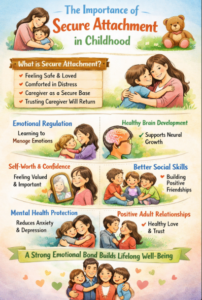
One of the most valuable pillars of psychological, emotional, and social development of a child is secure attachment. Secure attachment was initially theorized in the Attachment Theory of John Bowlby but was elaborated on by observational theorists such as Mary Ainsworth, secure attachment is the intense emotional connection that develops when a caregiver is willing to support a child with warmth, sensitivity, and dependability. Experience of being comforted, understood, and protected many times leads to the child developing a sense of safety in the world.
This premature relationship goes much further than offering immediate comfort. It forms the framework within which children perceive relationships, control their emotions and form a sense of self. When the caregivers are emotionally present and predictable, children get to learn that they can trust other people, that their feelings are important to them, and they deserve love and care. In the long run, this feeling of safety enables them to venture into their world with a feeling of confidence, gain strength in stressful life issues and to form healthy relationships with others.
Through this, secure attachment is not only a characteristic of early childhood bonding; it is a developmental resource that predicts personality, mental health and patterns of relationship in the lifespan.
What is Secure Attachment?
Secure attachment develops when a child consistently experiences a sense of safety and emotional connection with their caregiver. It grows in everyday moments when the child feels:
- Safe and protected, knowing someone will take care of their physical and emotional needs
- Emotionally understood, as their feelings are noticed, named, and accepted rather than ignored or dismissed
- Comforted during distress, with the caregiver offering reassurance, soothing, and presence when the child is upset or frightened
- Confident that the caregiver will return, building trust that separations are temporary and relationships are reliable
These experiences repeated give the child a feeling of security within him or her. It is natural that such children start to rely on their caregiver as some safe point where they can feel secure and may seek to explore the world, experience new things and become independent. Meanwhile, the caregiver turns into a safe haven that he or she can come to to de-stress, be reassured and emotionally refuelled in the face of stress or uncertainty. This is the reason why this equilibrium between exploration and safety is a primary indicator of healthy attachment formation.
Why Secure Attachment is Important
Builds Emotional Regulation
Children with secure attachment learn how to manage emotions because caregivers help them calm down during distress. Over time, they internalize this ability and develop better self-control, frustration tolerance, and coping skills.
Shapes Brain Development
Early nurturing relationships influence neural pathways related to:
- Stress response
- Memory
- Emotional processing
- Social understanding
Consistent caregiving helps reduce toxic stress and supports healthy brain growth.
Develops Self-Worth and Confidence
When caregivers respond sensitively, children learn:
“I am valued”
“My needs matter”
“I am safe in relationships”This becomes the base of healthy self-esteem and identity formation.
Improves Social Relationships
Securely attached children usually:
- Show empathy toward others
- Form friendships easily
- Trust people appropriately
- Communicate feelings better
They are less likely to develop aggressive or withdrawn social patterns.
Protects Mental Health
Research shows secure attachment lowers the risk of:
- Anxiety disorders
- Depression
- Behavioural problems
- Emotional dysregulation
It acts as a psychological buffer against trauma and stress later in life.
Influences Adult Relationships
Attachment patterns often continue into adulthood. Securely attached children are more likely to become adults who:
- Maintain stable romantic relationships
- Communicate openly
- Handle conflict constructively
- Trust without excessive fear of abandonment
How Caregivers Can Promote Secure Attachment
Secure attachment does not require perfect parenting — it requires consistent emotional availability. Children do not need caregivers who never make mistakes; they need caregivers who are present, responsive, and willing to reconnect after difficult moments. It is this pattern of reliable care, rather than perfection, that helps a child feel emotionally safe.
Practical ways to nurture secure attachment include:
- Responding to a child’s cries with warmth, showing them that their needs matter and that help is available
- Maintaining eye contact and affectionate touch, which strengthens emotional connection and reassures the child of the caregiver’s presence
- Listening to their feelings without dismissing or minimizing them, helping the child feel understood and emotionally validated
- Being predictable in daily routines, so the child experiences stability, structure, and a sense of control in their environment
- Repairing after conflict, for example saying, “I’m sorry I shouted, I was upset, but I still love you” — this teaches the child that relationships can recover after mistakes
Through these repeated experiences, children gradually internalize a sense of trust and security. Even small, everyday interactions — a comforting hug, a patient response, or a moment of shared attention — quietly build the foundation of attachment security that supports emotional wellbeing throughout life.
Conclusion
Secure attachment is not just about childhood comfort — it is about lifelong psychological resilience. When children feel safe, seen, and supported, they grow into emotionally healthy, confident, and socially capable adults. Investing in early emotional bonding is therefore one of the most powerful ways to promote mental health across the lifespan.
FAQs: Secure Attachment in Childhood
1. What is secure attachment in simple terms?
Secure attachment is the emotional bond between a child and caregiver where the child feels safe, loved, and confident that their needs will be met.
2. At what age does secure attachment develop?
Attachment begins in infancy and becomes clearly visible between 6–24 months, though it continues to develop throughout early childhood.
3. Can working parents still build secure attachment?
Yes. Attachment depends on quality of interaction, not the number of hours spent. Consistent warmth, responsiveness, and emotional availability matter most.
4. What are signs of a securely attached child?
They usually:
- Seek comfort from caregivers
- Calm down when reassured
- Explore confidently
- Show empathy and social interest
5. What causes insecure attachment?
Inconsistent caregiving, emotional neglect, chronic stress, trauma, or frequent separations without reassurance may contribute to insecure attachment patterns.
6. Is secure attachment only about the mother?
No. Secure attachment can form with any consistent caregiver — father, grandparent, adoptive parent, or guardian.
7. Can attachment problems be fixed later?
Yes. Children can develop stronger attachment security through:
- Therapy
- Stable caregiving
- Emotion coaching
- Positive relational experiences
8. Does secure attachment make children dependent?
No. It actually promotes healthy independence, because children feel safe enough to explore the world.
9. How does secure attachment affect mental health?
It lowers risk of anxiety, depression, behavioural problems, and improves emotional regulation and resilience.
10. Can too much comfort spoil a child?
No. Responding to emotional needs builds security, not spoiling. Security actually reduces clinginess over time.
11. What is a “secure base”?
A caregiver who provides emotional safety so the child feels confident exploring new environments.
12. What is a “safe haven”?
A caregiver the child returns to for comfort during fear, stress, or sadness.
13. How do daily routines help attachment?
Predictable routines create a sense of stability and trust, which strengthens emotional security.
14. Can teachers help in attachment development?
Yes. Warm, responsive teachers can act as secondary attachment figures, supporting emotional development.
15. Is secure attachment important for adult relationships?
Yes. Early attachment influences how adults form trust, manage conflict, and maintain emotional closeness in relationships.
Written by Baishakhi Das
Counselor | Mental Health Practitioner
B.Sc, M.Sc, PG Diploma in Counseling
Reference
-
Bowlby, J. (1969). Attachment and Loss, Vol. 1
https://www.simplypsychology.org/bowlby.html -
Ainsworth, M. D. S. (1978). Patterns of Attachment
https://www.simplypsychology.org/ainsworth-strange-situation.html -
American Psychological Association – Attachment
https://www.apa.org/monitor/sep99/attachment -
Harvard Center on the Developing Child – Early Relationships
https://developingchild.harvard.edu/science/key-concepts/serve-and-return/ -
UNICEF – Early Childhood Development
https://www.unicef.org/early-childhood-development -
Zero to Three – Attachment and Bonding
https://www.zerotothree.org - How Trauma in Parents Affects Child Development
This topic performs well due to rising searches around men’s mental health, workplace stress, and burnout recovery. Combining emotional insight with practical steps increases engagement and trust.
Pingback: The Food & Mood Connection: Eat for Better Mental Health
Pingback: Signs of Parentification Trauma: When Childhood Ends Early