

1. Cognitive Dissonance Theory
(Leon Festinger)
Cognitive Dissonance Theory explains the mental discomfort or psychological tension we experience when our beliefs, values, or attitudes conflict with our actions or decisions. Human beings naturally strive for internal consistency, so when this balance is disturbed, it creates unease that we feel compelled to reduce.
Everyday examples:
- “I know smoking is harmful, but it helps me relax.”
- “I shouldn’t eat junk food… but I had a stressful day.”
- “This job makes me unhappy, but at least it pays the bills.”
Instead of changing the behavior—which often requires effort, discipline, or discomfort—we tend to adjust our thoughts to justify what we’ve already done. We may downplay the risks, exaggerate the benefits, or create rational explanations that make our actions feel acceptable.
This theory explains why people defend unhealthy habits, remain in unsatisfying relationships, or justify poor decisions after the fact. Cognitive dissonance acts as a psychological self-protection mechanism, helping us preserve our self-image and reduce guilt or anxiety. While this coping strategy is very human and often unconscious, becoming aware of it can help individuals make more intentional and healthier choices over time.
2. Social Comparison Theory
(Leon Festinger)
Social Comparison Theory suggests that human beings have a natural tendency to evaluate themselves by comparing their abilities, achievements, opinions, and appearance with others. When objective standards are unclear, we look to people around us to understand how well we are doing and where we stand.
Everyday examples:
- Checking Instagram and thinking, “Everyone else is doing better than me.”
- Feeling inadequate after seeing others’ success, beauty, or lifestyle
- Feeling proud or confident when you perform better than your peers
These comparisons can be upward (comparing with someone perceived as better) or downward (comparing with someone perceived as worse). While downward comparison may temporarily boost self-esteem, upward comparison often leads to feelings of inadequacy, envy, or self-doubt—especially on social media, where people usually display only their best moments.
This theory helps explain why social media has such a powerful impact on self-esteem, anxiety, body image, and life satisfaction. Constant exposure to curated and idealized lives can distort reality, making individuals feel they are falling behind, even when they are doing well. Understanding Social Comparison Theory encourages more mindful media consumption and greater self-compassion in an increasingly comparison-driven world.
3. Operant Conditioning
(B. F. Skinner)
Operant Conditioning explains how our behavior is shaped and maintained by its consequences. According to this theory, actions followed by rewards are more likely to be repeated, while actions followed by punishment or negative consequences are less likely to occur again. Over time, these patterns strongly influence habits, motivation, and learning.
Everyday examples:
- Studying harder after receiving praise, good grades, or recognition
- Avoiding certain behaviors after being scolded or criticized
- Checking your phone repeatedly because notifications, likes, or messages feel rewarding
Rewards do not always have to be tangible; verbal praise, attention, approval, or digital feedback can be powerful reinforcers. Similarly, punishment may be direct (scolding, penalties) or indirect (loss of privilege, social disapproval).
This theory is widely used—often unconsciously—in parenting, education, and workplaces, where rewards are used to encourage desired behavior and punishments to discourage unwanted actions. It is also heavily applied in app and social media design, where notifications, streaks, and likes are carefully structured to reinforce repeated engagement. Understanding Operant Conditioning helps explain why certain habits are hard to break and how behavior can be shaped more intentionally and ethically.

6. Self-Fulfilling Prophecy
(Robert K. Merton)

The Self-Fulfilling Prophecy explains how our beliefs, expectations, or predictions about a situation can directly influence our behavior in ways that cause those beliefs to come true. In other words, what we expect often shapes how we act—and how we act shapes the outcome.
Everyday examples:
- Believing “I’m bad at interviews” → feeling anxious and underconfident → giving short or hesitant answers → performing poorly
- Believing “I can improve” → preparing more, staying motivated → performing better → achieving success
These expectations work subtly. Negative beliefs can lead to self-doubt, avoidance, or reduced effort, while positive beliefs can increase confidence, persistence, and resilience. Over time, repeated experiences reinforce the original belief, strengthening the cycle.
The Self-Fulfilling Prophecy plays a powerful role in education, workplace performance, relationships, and mental health. Expectations—whether our own or those placed on us by others—can limit or unlock potential. Becoming aware of this process helps individuals challenge negative self-beliefs and consciously adopt expectations that support growth and well-being.
7. Maslow’s Hierarchy of Needs
(Abraham Maslow)

Maslow’s Hierarchy of Needs explains human motivation as a structured progression of needs, arranged from the most basic requirements for survival to the highest level of personal growth and fulfillment. According to Maslow, people are generally motivated to satisfy lower-level needs before they can focus on higher-level psychological and self-actualization needs.
Everyday examples:
- Struggling to focus on dreams, creativity, or personal growth when financial security, health, or safety is unstable
- Prioritizing a stable job and income before pursuing passion projects
- Seeking respect, confidence, purpose, and meaning once basic needs like food, shelter, and safety are met
The hierarchy typically includes physiological needs, safety, love and belonging, esteem, and finally self-actualization. When lower needs remain unmet for long periods, individuals may experience stress, frustration, or burnout, even if they appear successful externally.
This theory helps explain motivation, burnout, life priorities, and emotional exhaustion. It reminds us that lack of motivation is often not laziness, but a signal that more fundamental needs require attention. Understanding this hierarchy encourages empathy toward ourselves and others, especially during times of struggle.
8. Confirmation Bias
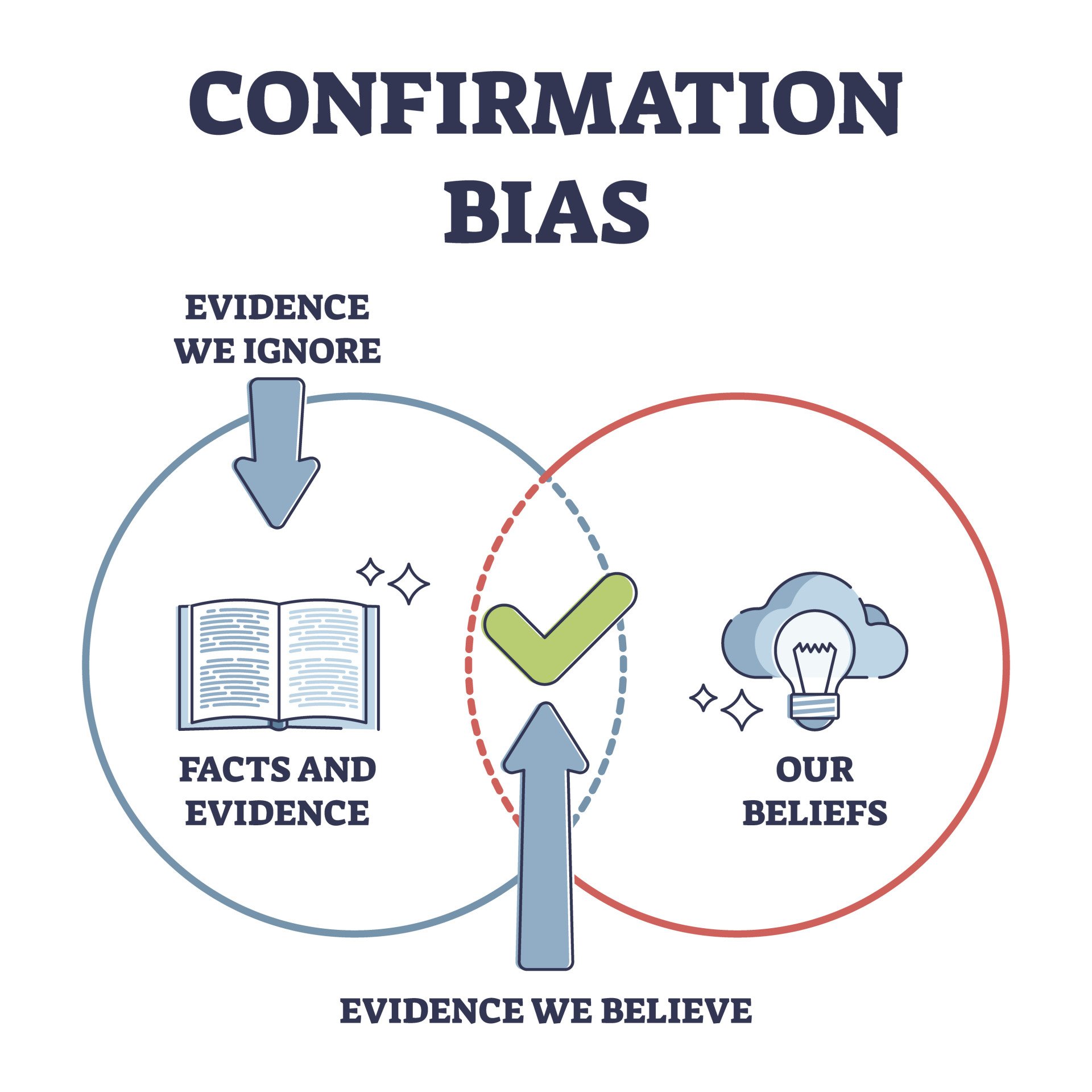
Confirmation bias refers to our natural tendency to seek out, interpret, and remember information that supports our existing beliefs, while ignoring, dismissing, or minimizing information that challenges them. This happens automatically and often without conscious awareness.
Everyday examples:
- Reading news articles or watching videos that match our political or social opinions
- Paying attention only to comments that agree with us while ignoring constructive criticism
- Rejecting feedback that contradicts our self-image or long-held beliefs
Because confirmation bias feels comfortable, it protects our sense of certainty and identity. However, it can also limit learning, distort reality, and deepen misunderstandings. In arguments, people may selectively use facts that support their side, making productive dialogue difficult. In relationships, this bias can lead to unfair assumptions, where we only notice behaviors that confirm our negative expectations about others.
Confirmation bias plays a major role in conflicts, polarization, decision-making errors, and rigid thinking. Becoming aware of this bias encourages open-mindedness, critical thinking, and healthier communication. Actively considering alternative viewpoints is one of the most effective ways to reduce its impact and grow psychologically.
Why This Matters
Understanding these psychological theories is not just an academic exercise—it has practical value in everyday life. When we become aware of the hidden forces influencing our thoughts and behaviors, we gain the ability to respond more consciously rather than react automatically.
By understanding these theories, we can:
- Become more self-aware: Recognize why we think, feel, or behave in certain ways, especially in stressful or emotional situations. This awareness helps us identify patterns that may be holding us back.
- Improve relationships: Understanding concepts like attachment, defense mechanisms, and social comparison allows for greater empathy, clearer communication, and healthier emotional boundaries.
- Reduce emotional reactivity: Awareness helps us pause, reflect, and regulate our emotions instead of reacting impulsively based on fear, insecurity, or past experiences.
- Make healthier choices: When we understand how beliefs, rewards, and expectations shape behavior, we can challenge unhelpful thought patterns and make decisions aligned with our long-term well-being.
Psychology isn’t just something we study in books or classrooms—it’s something we live every day. The more we understand it, the better equipped we are to navigate life with insight, compassion, and intentionality.
Final Thought
Once you begin to recognize these psychological theories in your daily life, you start viewing your thoughts, emotions, and behaviors with greater clarity and compassion. Instead of judging yourself harshly for your reactions or habits, you begin to understand the deeper patterns and processes shaping them.
Awareness doesn’t mean perfection or constant self-correction. It simply means becoming curious about why we do what we do—why certain situations trigger us, why we repeat familiar patterns, and why change can feel difficult. This understanding creates space for self-acceptance, emotional growth, and more mindful choices.
When we understand ourselves better, we respond to life with patience rather than criticism, intention rather than impulse. In this way, psychology becomes not just a field of study, but a tool for living more consciously and compassionately every day.
Frequently Asked Questions (FAQ)
1. What does it mean to use psychology theories unconsciously?
It means we apply psychological principles in daily life without realizing there is a scientific theory behind our thoughts or behaviors.
2. Are psychology theories only useful for therapists or psychologists?
No. These theories are relevant to everyone because they explain everyday behavior, emotions, relationships, and decision-making.
3. Why do people justify their mistakes instead of changing behavior?
This is explained by Cognitive Dissonance Theory, which helps reduce mental discomfort when actions conflict with beliefs.
4. Why does social media affect self-esteem so strongly?
Because of Social Comparison Theory, where people compare themselves to others—often unrealistically.
5. How do rewards influence habits?
According to Operant Conditioning, behaviors followed by rewards are more likely to be repeated.
6. Can childhood experiences affect adult relationships?
Yes. Attachment Theory explains how early bonds shape emotional patterns in adulthood.
7. Are defense mechanisms unhealthy?
Not always. They help cope with stress, but overuse can block self-awareness and growth.
8. Why do negative beliefs often come true?
This happens due to the Self-Fulfilling Prophecy, where expectations influence behavior and outcomes.
9. Why is motivation low during stress or burnout?
Maslow’s Hierarchy of Needs explains that unmet basic needs reduce motivation for higher goals.
10. Why do people ignore opinions that challenge them?
Because of Confirmation Bias, which favors information that supports existing beliefs.
11. Can understanding psychology improve relationships?
Yes. It increases empathy, communication, and emotional regulation.
12. Is awareness enough to change behavior?
Awareness is the first step; consistent effort and reflection lead to lasting change.
13. Are these theories scientifically proven?
Most are supported by extensive research, though interpretations may evolve over time.
14. Can psychology theories help with mental health?
Yes. They form the foundation of counseling, therapy, and self-help approaches.
15. How can I apply these theories consciously?
By reflecting on your thoughts, questioning assumptions, and responding intentionally rather than automatically.
Written by Baishakhi Das
Counselor | Mental Health Practitioner
B.Sc, M.Sc, PG Diploma in Counseling
Reference
-
American Psychological Association (APA)
https://www.apa.org -
Simply Psychology – Psychology Theories Explained
https://www.simplypsychology.org -
McLeod, S. A. (2023). Psychology Theories. Simply Psychology
https://www.simplypsychology.org/psychology-theories.html -
Maslow, A. H. (1943). A Theory of Human Motivation
https://psychclassics.yorku.ca/Maslow/motivation.htm -
Festinger, L. (1957). A Theory of Cognitive Dissonance
https://doi.org/10.1037/10318-000 - Group Behavior & Conformity Theory
This topic performs well due to rising searches around men’s mental health, workplace stress, and burnout recovery. Combining emotional insight with practical steps increases engagement and trust.
Pingback: Understanding the Human Mind Through Cinema
Overthinking is often mistaken for simply “thinking too much,” but the real difficulty can be getting stuck in repetitive thought without reaching resolution.