
Is your child not responding to their name, avoiding eye contact, or repeating words again and again? These could be early signs of autism. Many parents ignore these signals, thinking it’s “just a phase.” But early understanding can make a big difference in a child’s development. In this guide, you’ll learn the early signs, causes, and what you should do as a parent.
Introduction
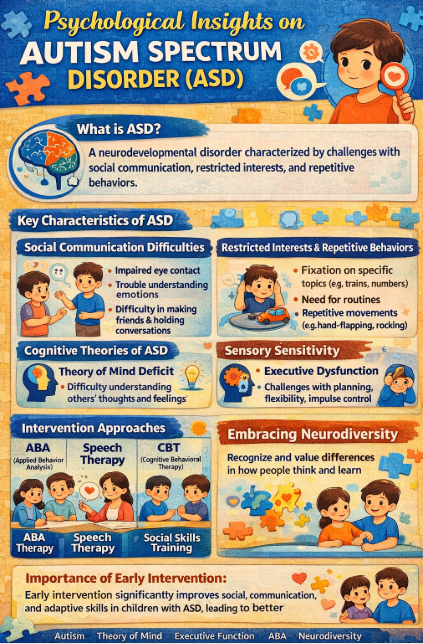
Autism Spectrum Disorder (ASD) is a complex neurodevelopmental condition characterized by differences in social communication, behavior, and sensory processing. The term “spectrum” reflects the wide variability in how symptoms present, ranging from individuals requiring significant support to those who function independently but experience subtle social and cognitive challenges. From a psychological viewpoint, autism is not simply a disorder but a different cognitive and perceptual style. Modern frameworks, especially the neurodiversity perspective, emphasize acceptance and understanding rather than focusing solely on deficits. For example, a child with ASD may not engage in typical peer interaction but might demonstrate exceptional memory or pattern recognition abilities, highlighting the diversity within the spectrum.
Core Features of Autism
The defining features of ASD lie in two major domains: social communication deficits and restricted, repetitive behaviors. Difficulties in social communication include impairments in social-emotional reciprocity, challenges in interpreting nonverbal cues such as facial expressions and gestures, and problems in forming and maintaining relationships. For instance, when someone smiles or uses sarcasm, an individual with ASD may interpret it literally or fail to grasp the underlying emotion. This often leads to misunderstandings in social contexts.
Researchers frequently identify restricted and repetitive behaviors (RRBs) as another core feature of ASD.These include stereotyped movements like hand-flapping, insistence on sameness, and highly focused interests. Cognitive rigidity plays a major role here, where even small changes in routine can lead to distress. For example, a child who follows a fixed morning routine may become extremely anxious when a change disrupts that routine, demonstrating difficulty adapting to change.
Cognitive Theories and Psychological Mechanisms
Several psychological theories help explain the characteristics of ASD. One of the most prominent is the Theory of Mind (ToM) deficit, which refers to difficulty in understanding others’ thoughts, intentions, and emotions. This can impact empathy and social interaction. For example, when a peer experiences distress, a neurotypical child may offer comfort, whereas a child with ASD may have difficulty recognizing the emotional context or may respond in an atypical manner.
Executive functioning deficits are also significant, affecting planning, flexibility, and impulse control. This often leads to challenges in switching tasks or coping with unexpected situations. Weak central coherence is another important concept, where individuals focus more on details rather than the overall context. For instance, instead of understanding a story’s main theme, a child may focus on minor details like specific words or objects.
Language and Communication Patterns
Language development in autism varies widely, ranging from nonverbal individuals to those with fluent but socially atypical speech. A common feature is echolalia, where individuals repeat words or phrases they have heard. While it may seem non-functional, it often serves as a way to process language or communicate needs. Pragmatic language deficits are particularly prominent, affecting the ability to use language appropriately in social situations.
For example, a child might repeat a question like “Do you want water?” instead of expressing “I want water.” Similarly, understanding humor, sarcasm, or indirect communication can be challenging due to differences in social cognition.
Sensory Processing and Emotional Regulation
Sensory processing differences are a hallmark of ASD, with individuals showing either hypersensitivity or hyposensitivity to stimuli. Loud noises, bright lights, or certain textures may be overwhelming, leading to avoidance behaviors. Conversely, some individuals may seek intense sensory input, such as spinning or touching objects repeatedly.
These sensory challenges are closely linked to emotional regulation difficulties. When overwhelmed, individuals may experience meltdowns, which are not intentional behaviors but responses to excessive sensory or emotional input. For instance, a crowded environment like a shopping mall can trigger distress, resulting in crying, withdrawal, or repetitive behaviors used as self-soothing mechanisms.
Comorbid Psychological Conditions
Autism often coexists with other psychological conditions, which can complicate both diagnosis and intervention. Common comorbidities include Attention-Deficit/Hyperactivity Disorder (ADHD), anxiety disorders, obsessive-compulsive disorder (OCD), and intellectual disability. For example, a child with ASD and anxiety may show heightened fear of unfamiliar situations, not only due to cognitive rigidity but also due to excessive worry and anticipation of negative outcomes.
Assessment and Diagnosis for autism
The diagnosis of ASD involves a comprehensive, multidisciplinary assessment. Clinicians use a combination of behavioral observations, developmental history, and standardized tools such as the Autism Diagnostic Observation Schedule (ADOS-2). The process focuses on identifying patterns of social communication deficits and repetitive behaviors across different settings. Early diagnosis is crucial, as it allows timely intervention, which significantly improves long-term outcomes.
Intervention and Therapeutic Approaches for autism
Intervention strategies for ASD are most effective when individualized and evidence-based. Applied Behavior Analysis (ABA) is widely used to reinforce adaptive behaviors and reduce maladaptive ones through systematic reinforcement. Cognitive Behavioral Therapy (CBT) is particularly useful for managing anxiety and emotional difficulties by helping individuals recognize and modify maladaptive thought patterns.
Speech and language therapy plays a critical role in improving communication skills, while occupational therapy addresses sensory integration and daily functioning. Social skills training helps individuals learn appropriate social behaviors, such as turn-taking and recognizing emotional cues. For example, structured role-play exercises can help a child practice greeting others or maintaining conversations.
Role of Family and Environment for autism
The family environment plays a significant role in the development and well-being of individuals with ASD. Consistent routines, clear communication, and structured environments help reduce anxiety and improve adaptive functioning. Visual supports, such as picture schedules, can enhance understanding and predictability. For instance, showing a sequence of daily activities through images can help a child transition smoothly between tasks.
Educational Support and Inclusion for autism
Children with ASD benefit from tailored educational approaches, including Individualized Education Plans (IEPs). These plans focus on accommodating specific learning needs through strategies like visual aids, task breakdown, and reinforcement techniques. Inclusive education settings, when supported properly, can promote social interaction and learning, although they require trained educators and appropriate resources.
Strengths and Neurodiversity Perspective
While ASD is often discussed in terms of challenges, it is equally important to recognize the strengths associated with it. Many individuals demonstrate exceptional abilities in areas such as memory, attention to detail, mathematics, music, or technology. The neurodiversity movement emphasizes valuing these differences rather than attempting to “normalize” individuals.
For example, a person with ASD who has a strong interest in patterns may excel in data analysis or coding. Recognizing and nurturing such strengths can lead to meaningful personal and professional achievements.
Conclusion
Autism Spectrum Disorder is a multifaceted condition that requires a holistic and empathetic understanding. By integrating psychological theories such as Theory of Mind, executive functioning, and sensory processing with evidence-based interventions, we can provide effective support. Moving toward a neurodiversity-affirming approach allows society to appreciate the unique perspectives of individuals with ASD. Ultimately, awareness, acceptance, and appropriate support systems are key to enhancing quality of life and promoting inclusion.
Frequently Asked Questions (FAQs)
1. What are early signs of autism in toddlers?
Early signs include lack of eye contact, not responding to their name, delayed speech, limited social interaction, repetitive behaviours (like hand-flapping), and difficulty expressing needs.
2. At what age is autism detected?
Autism can be detected as early as 18–24 months, although some signs may appear even earlier. Early screening and observation are important.
3. Can autism be cured?
Autism is not a disease, so it cannot be “cured.” However, early intervention, therapy, and support can significantly improve communication, behaviour, and daily functioning.
4. What causes autism?
Autism is caused by a combination of genetic and environmental factors that affect brain development. There is no single known cause.
5. Is delayed speech a sign of autism?
Delayed speech can be one of the early signs of autism, especially when combined with poor eye contact, lack of gestures, or limited social interaction.
6. When should I see a doctor for autism?
You should consult a professional if your child is not speaking, avoiding eye contact, not responding to their name, or showing repetitive behaviours.
7. Can autism improve with therapy?
Yes, therapies like speech therapy, occupational therapy, and behavioural interventions can greatly improve a child’s skills and independence.
8. Is autism genetic?
Yes, genetics play a significant role in autism. It can run in families, although environmental factors may also contribute.
9. How to help a child with autism at home?
Parents can help by maintaining routines, using visual supports, encouraging communication, being patient, and creating a calm, structured environment.
10. Can children with autism go to normal school?
Yes, many children with autism can attend mainstream schools with proper support, accommodations, and individualized learning plans.
Reference
Centers for Disease Control and Prevention. (2024). Autism spectrum disorder (ASD). https://www.cdc.gov/ncbddd/autism/index.html
National Institute of Mental Health. (2024). Autism spectrum disorder. https://www.nimh.nih.gov/health/topics/autism-spectrum-disorders-asd
World Health Organization. (2023). Autism spectrum disorders. https://www.who.int/news-room/fact-sheets/detail/autism-spectrum-disorders
Autism Speaks. (2024). What is autism? https://www.autismspeaks.org
Monoprova Counselling. (2025). About us. https://monoprovacounselling.in/about-us/
Monoprova Counselling. (2025). Contact / Book appointment. https://monoprovacounselling.in/contact/
This article is written for knowledge purposes, aiming to help readers understand the topic better and gain useful insights for learning and awareness.
Pingback: Autism Treatment Guide: Best Therapies for ASD
Pingback: How Aripiprazole Affects Behaviour: Psychological Effects