
Sometimes the emotions that feel too big for the moment are really old wounds asking for inner child healing.
Introduction
Every adult carries within them a collection of memories, emotional experiences, beliefs, and impressions formed during childhood. Some of these early experiences are nurturing—moments of love, safety, and encouragement. Others are painful—rejection, scolding, neglect, abandonment, or trauma that the child did not understand. Although we grow up physically, parts of our emotional world remain rooted in these early experiences. These tender, sensitive, unprocessed layers are often described as the inner child.
Inner child healing is the process of recognizing, understanding, and nurturing those younger emotional parts of ourselves. It helps us reconnect with the unmet needs, unresolved feelings, and forgotten memories that still influence how we think, feel, and behave today.
This article explores the concept of the inner child, the signs of an inner child wound, the science behind emotional healing, how this affects relationships, and evidence-based practices to heal and reconnect with your inner self.
What Is the Inner Child?
The inner child is not a literal child inside you. It is a psychological and emotional construct representing:
- Your childhood memories
- Early beliefs about yourself and the world
- Your emotional responses formed during development
- Vulnerability, creativity, innocence, and spontaneity
- Your unhealed wounds and unmet needs
Psychologists often use similar concepts—such as Freud’s “child ego state” or Carl Jung’s “divine child archetype”—to explain how early experiences influence adult personality.
Your inner child carries both:
1. The Wounded Child
This part holds:
- Childhood pain or trauma
- Fear, shame, guilt, insecurity
- Feelings of being unwanted or unworthy
- Suppressed emotions
2. The Free Child
This part carries:
- Joy and curiosity
- Creativity and imagination
- Playfulness
- Authentic expression
Inner child healing is about integrating these parts, not eliminating them. You learn to give your past self what you needed but did not receive—validation, care, safety, compassion, and boundaries.
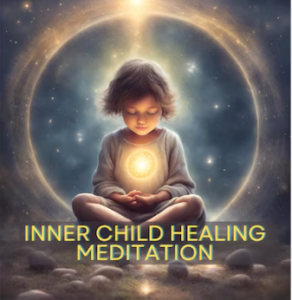
Why the Inner Child Matters in Adulthood
Even if past experiences are forgotten consciously, the body keeps emotional memories. Childhood shapes:
- Your attachment style
- Self-esteem
- Coping mechanisms
- Beliefs about love, success, and safety
- How you react to conflict or stress
- You handle emotions how
When these childhood imprints are unprocessed, the inner child sends signals through behaviors, emotions, or triggers.
Examples:
- Feeling rejected when someone says “no” → childhood abandonment wound
- Unworthy feeling of success → childhood criticism or lack of validation
- People-pleasing → fear of punishment or disapproval growing up
- Difficulty expressing needs → was not allowed to speak or be heard as a child
This is why healing the inner child is essential for emotional freedom and a healthier adult life.
Signs Your Inner Child May Be Wounded
A wounded inner child shows up through patterns, reactions, and emotional struggles. Here are key signs:
A. Emotional Signs
- Overreacting to small conflicts or criticism
- Intense fear of rejection or abandonment
- Feeling unloved, unseen, or not “good enough”
- Deep guilt or shame
- Emotional numbness or disconnection
- Difficulty regulating emotions
B. Behavioral Patterns
- People-pleasing
- Self-sabotaging behavior
- Avoidance of intimacy
- Perfectionism
- Overworking to feel worthy
- Impulsivity or escapism
C. Relationship Problems
- Fear of vulnerability
- Trust issues
- Attachment anxiety or avoidance
- Clinging or pushing partners away
- Choosing emotionally unavailable people
D. Physical & Somatic Signs
- Chronic tension in body
- Anxiety in chest or stomach
- Feeling “small,” frozen, or scared
If any of these resonate, your inner child may be asking for healing.
How Inner Child Wounds Are Formed
Inner child wounds develop due to unmet emotional needs, not just physical or severe abuse. Even the most caring parents can inadvertently create wounds due to:
- Emotional neglect
- Excessive criticism
- High expectations
- Parental conflict
- Being compared with siblings
- Bullying
- Lack of affection
- Growing up too fast
- Being shamed for emotions (“Stop crying! Don’t be dramatic!”)
- Inconsistent parenting
Trauma does not always come from major events—it can form quietly, through chronic emotional deprivation.
Types of Childhood Wounds:
- Abandonment wound
- Rejection wound
- Injustice wound
- Trust wound
- Humiliation wound
- Neglect wound
Each wound influences adult behavior in predictable ways. For example:
- Abandonment wound → clingy or avoidant relationships
- Rejection wound → fear of expressing needs
- Humiliation wound → excessive shame
Understanding your wound is the first step toward healing.

The Psychology & Neuroscience Behind Inner Child Work
Inner child healing is not just a spiritual or emotional idea—it has scientific grounding.
1. Memory Encoding in the Brain
During childhood, the brain is still developing. Emotional experiences embed strongly in the amygdala and limbic system, which manage emotional memory.
When a similar situation arises in adulthood, the brain reacts as it did in childhood—often with fear, anger, or withdrawal.
2. Attachment Theory
John Bowlby and Mary Ainsworth showed that childhood attachment patterns create templates for adult relationships. Inner child healing helps shift unhealthy attachment patterns by reparenting the self.
3. Neuroplasticity
The brain can rewire itself throughout life. By nurturing the inner child, one can form new emotional pathways:
- From shame → to acceptance
- Fear → to safety
- From self-criticism → to self-compassion
4. Somatic Memory
The body retains unprocessed trauma. Techniques like grounding, breathwork, and somatic experiencing help release stored tension linked to childhood pain.
What Happens if the Inner Child Is Not Healed?
Unhealed childhood wounds lead to emotional and interpersonal struggles:
A. Emotional Consequences
- Anxiety, depression, low self-worth
- Chronic guilt or self-blame
- Difficulty trusting oneself
B. Relationship Consequences
- Codependency
- Controlling or avoidant behaviors
- Attracting toxic or unavailable partners
C. Life Choices
- Staying in unfulfilling jobs due to fear
- Self-sabotage in career or finances
- Difficulty taking risks or believing in oneself
D. Self-Identity
- Confusion about personal boundaries
- Inability to express needs
- A harsh inner critic
Healing the inner child breaks these cycles and creates emotional freedom.
How Inner Child Healing Works
Inner child healing works through a combination of awareness, emotional processing, self-compassion, and reparenting.
Step 1: Awareness & Identification
This involves recognizing:
- Your childhood story
- Wounds of your
- Patterns repeating in adulthood
- Emotions you suppress
Journaling and introspection are useful here.
Step 2: Connecting With the Inner Child
This means visualizing or imagining your younger self and building a compassionate internal relationship.
You learn to:
- Listen
- Validate
- Understand their fears and needs
Step 3: Emotional Release
Healing requires allowing emotions that were suppressed during childhood:
- Crying
- Expressing anger
- Speaking unspoken thoughts
- Feeling sadness
This is done safely—often with therapeutic guidance.
Step 4: Reparenting the Inner Child
Reparenting means giving your inner child the care, guidance, and boundaries you did not receive.
You become the adult your younger self needed.
Reparenting includes: Self-soothing, Self-validation, Setting healthy boundaries, Protecting your emotional space, Practicing self-compassion
Step 5: Integration
This is where the wounded child and the adult self work together.
You learn to:
- Respond, not react
- Make conscious decisions
- Build healthy relationships
- Express needs clearly
This integration leads to emotional maturity and stability.

Practical Tools for Inner Child Healing
Here are evidence-based strategies used in therapy:
1. Inner Child Journaling
Prompts you can use:
- “What did I need as a child that I did not receive?”
- “When do I feel small or scared?”
- “What triggers remind me of childhood?”
- “Would I say to my younger self today?”
Journaling brings clarity and emotional awareness.
2. Visualization & Guided Meditation
This involves imagining:
- Your younger self
- A safe space
- Giving them comfort and reassurance
Visualizations help rewire emotional memory.
3. Writing a Letter to Your Inner Child
A nurturing letter might include:
- “I see you.”
- “Believe you.”
- “It wasn’t your fault.”
- “You deserved love, care, and safety.”
This supports emotional validation.
4. Reparenting Practices
Examples:
- Celebrating small achievements
- Speaking kindly to yourself
- Staying consistent with self-care
- Setting boundaries
- Allowing time for rest and play
Reparenting heals self-worth and emotional security.
5. Affirmations for Inner Child Healing
- “I am safe now.”
- “My feelings matter.”
- “I am allowed to rest.”
- “Deserve love and kindness.”
Use gentle, validating language.
6. Somatic Practices
Since childhood trauma lives in the body:
- Breathwork
- Body scanning
- Movement therapy
- Grounding exercises
These help release stored tension.
7. Art, Music, and Creative Expression
Children express emotions through creativity.
Drawing, painting, singing, or dancing can reconnect you with emotional freedom.
8. Therapy Approaches That Support Inner Child Work
- Inner child therapy
- Schema therapy
- EMDR
- Cognitive Behavioral Therapy
- Somatic Experiencing
- Attachment-based therapy
A therapist can guide deep emotional healing in a structured, safe way.
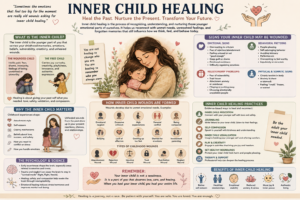
How Inner Child Healing Improves Your Relationship with Yourself
Inner child healing transforms self-perception by helping you:
1. Build Self-Compassion: You understand the root of your behaviors and stop blaming yourself.
2. Silence the Inner Critic: The harsh, punishing voice becomes softer and kinder.
3. Develop Emotional Regulation: You learn to soothe fear instead of reacting impulsively.
4. Strengthen Self-Worth: You begin believing you deserve love, rest, success, and happiness.
5. Break Old Patterns: Self-awareness helps you choose consciously, not act from childhood conditioning.
How Inner Child Healing Transforms Relationships
Healing your inner child can dramatically improve how you relate to others.
A. Better Communication: You express needs without fear and listen without defensiveness.
B. Healthier Attachment: Fear-based relationships transform into secure and emotionally stable bonds.
C. Improved Conflict Resolution: Triggers reduce, and you respond more calmly.
D. Increased Intimacy: Vulnerability becomes safer, enabling deeper connection.
E. Breaking Toxic Cycles: You stop attracting emotionally unavailable or controlling partners.
F. Setting Healthy Boundaries: You learn to say no without guilt.
Inner child healing is therefore a relationship healing process as well—starting from the relationship with yourself.
Common Myths About Inner Child Healing
Myth 1: It’s only for people with trauma.
Truth: Everyone has childhood wounds, even from healthy families.
Myth 2: It’s about blaming parents.
Truth: It’s about understanding, not blaming. Healing is for you, not your parents.
Myth 3: It’s “childish” or unnecessary.
Truth: Emotional maturity requires addressing unmet childhood needs.
Myth 4: It’s too painful to look back.
Truth: Healing is painful, but remaining unhealed is even harder.
How to Know Your Inner Child Is Healing
You may notice:
- Reduced emotional triggers
- Less people-pleasing
- Increased confidence and self-worth
- Ability to say no
- Better relationships
- Feeling calmer and grounded
- Clearer boundaries
- More joy and creativity
Healing is not a linear process. It is a lifelong, gentle relationship with yourself.
Inner Child Healing for Parents & Caregivers
Healing your own inner child positively affects your parenting style. You become:
- More emotionally aware
- Less reactive
- More empathetic
- Better at boundary-setting
- More consistent
- Patient and compassionate
A healed parent raises emotionally secure children.
Inner Child Healing & Cultural Context
In many cultures, especially in South Asia, emotional needs are often dismissed:
- “Don’t cry.”
- “Be strong.”
- “What will people say?”
- “You must obey elders without question.”
As a result, adults grow up learning to suppress feelings.
Inner child healing challenges these generational patterns and encourages emotional growth.
Steps to Start Your Own Inner Child Healing Journey
Here is a structured 10-step path:
- Acknowledge your inner child exists
- Identify your wounds and emotional triggers
- Build awareness through journaling
- Create a safe inner space through visualization
- Revisit childhood memories gently
- Allow emotional expression
- Practice self-validation
- Develop reparenting habits
- Set boundaries with harmful people
- Seek therapeutic support when needed
Healing requires patience, compassion, and consistency.
Conclusion: Why Inner Child Healing Truly Matters
Inner child healing is not about living in the past. It is about freeing your present and empowering your future.
When you heal your inner child:
- You cultivate emotional resilience
- Strengthen self-worth
- You unlearn harmful patterns
- Build healthier relationships
- You develop a deeper connection with yourself
- Finally allow yourself to experience peace, joy, and authenticity
Everyone deserves a second chance at childhood—not through reliving it, but through healing the child who is still waiting to be seen, heard, and loved.
Your inner child holds your deepest wounds—but also your greatest potential.
Healing begins the moment you say, “I am ready to take care of you now.”
Frequently Asked Questions (FAQs)
1. What is inner child healing?
Inner child healing is the process of understanding and nurturing unresolved emotions from childhood.
2. Why is inner child healing important?
Because childhood experiences shape adult emotions, behavior, and relationships.
3. What are signs of a wounded inner child?
Low self-esteem, fear of abandonment, people-pleasing, emotional triggers, and difficulty trusting others.
4. Can inner child healing reduce anxiety?
Yes. It helps process unresolved emotions and improves emotional regulation.
5. What is reparenting in psychology?
Reparenting means giving yourself the care, validation, and support you didn’t receive as a child.
6. How long does inner child healing take?
It varies. Healing is a gradual, ongoing process.
7. Can I heal my inner child without therapy?
Yes, through journaling, self-awareness, and mindfulness—but therapy can deepen the process.
8. Does inner child healing improve relationships?
Yes. It helps reduce emotional triggers and improves communication and attachment patterns.
9. What triggers the inner child?
Situations that resemble past emotional experiences like rejection, criticism, or neglect.
10. Is inner child healing only for trauma survivors?
No. Everyone has childhood experiences that influence adult life.
Reference
American Psychological Association. (2025). Childhood trauma and emotional development.
https://www.apa.org/topics/trauma
National Institute of Mental Health. (2026). Trauma and stress-related disorders.
https://www.nimh.nih.gov/health/topics/trauma-and-violence
Verywell Mind. (2026). Inner child work and emotional healing.
https://www.verywellmind.com/inner-child-work-7484127
Cleveland Clinic. (2026). Understanding trauma and emotional health.
https://my.clevelandclinic.org/health/articles/trauma
Psychology Today. (2026). Inner child and emotional healing.
https://www.psychologytoday.com/us/basics/inner-child
Monoprova Counselling, (2026), “About Us”,
Monoprova Counselling, (2026), “Contact Us”,
This article is written for knowledge purposes, aiming to help readers understand the topic better and gain useful insights for learning and awareness.
Pingback: How to Deal With Feeling Not Good Enough: A Complete Guide
Pingback: Stages of Burnout & How to Recover: A Complete Guide
Pingback: How to Regulate Emotions Using CBT Techniques: Full Guide
Pingback: Why People-Pleasing Happens & How to Stop It: Full Guide
Pingback: Love Bombing: Signs, Dangers & How to Stay Safe
Pingback: Impact of Toxic Parenting on a Child’s Brain Development