

Introduction
Psychology is one of the most dynamic and meaningful fields of study, focusing on understanding human behavior, thoughts, and emotions. In recent years, awareness around mental health has increased significantly, creating a growing demand for trained psychology professionals. As a result, pursuing a career in psychology has become not only intellectually rewarding but also professionally promising.
Whether you are interested in helping individuals overcome emotional challenges, working with children, conducting research, or applying psychological principles in corporate settings, psychology offers diverse career paths. This article explores the scope, career options, qualifications, skills, and future opportunities in psychology.
What is Psychology?
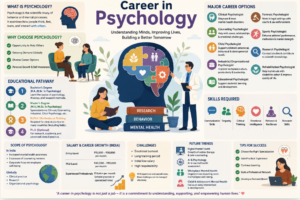
Psychology is the scientific study of behavior and mental processes. It examines how people think, feel, learn, and interact with others. Psychologists use research-based methods to understand human behavior and apply this knowledge to improve mental health, relationships, and overall well-being.
Why Choose Psychology as a Career?
Choosing psychology as a career can be deeply fulfilling for several reasons:
- Opportunity to Help Others: Psychology allows you to support individuals dealing with stress, trauma, mental health disorders, and life challenges.
- Growing Demand: With rising awareness of mental health, the demand for psychologists, counselors, and therapists is increasing worldwide.
- Diverse Career Options: Psychology is not limited to therapy—it extends to education, business, healthcare, research, and more.
- Personal Growth: Studying psychology enhances self-awareness, emotional intelligence, and interpersonal skills.
Educational Pathway in Psychology
To build a career in psychology, you need a structured academic journey.
1. Bachelor’s Degree (B.A./B.Sc. in Psychology): This is the foundation where students learn basic psychological concepts, theories, and research methods.
2. Master’s Degree (M.A./M.Sc. in Psychology): Specialization begins at this stage. Popular specializations include:
- Clinical Psychology
- Counseling Psychology
- Industrial/Organizational Psychology
- Child Psychology
3. M.Phil / Professional Training: For clinical practice in many countries (including India), an M.Phil in Clinical Psychology is required.
4. Ph.D. (Optional): A Ph.D. is ideal for those interested in research, academia, or advanced clinical practice.
Major Career Options in Psychology
Psychology offers a wide range of career opportunities.
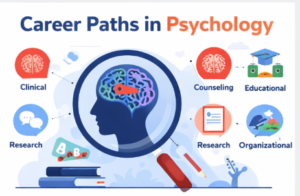
- Clinical Psychologist: Clinical psychologists diagnose and treat mental health disorders such as depression, anxiety, and personality disorders. They work in hospitals, clinics, and private practice.
- Counseling Psychologist: Counseling psychologists help individuals deal with everyday stress, relationship issues, and emotional challenges.
- Child Psychologist: They specialize in understanding and supporting children’s emotional, behavioral, and developmental needs.
- Industrial/Organizational Psychologist: These professionals work in corporate settings to improve employee productivity, workplace culture, and leadership.
- Educational Psychologist: They work in schools and educational institutions to support students’ learning and development.
- Forensic Psychologist: Forensic psychologists apply psychological principles in legal settings, working with criminals, courts, and law enforcement.
- Sports Psychologist: They help athletes improve performance, motivation, and mental resilience.
- Research Psychologist: Research psychologists conduct studies to advance knowledge in psychology and contribute to scientific developments.
- Rehabilitation Psychologist: They support individuals with disabilities, helping them adapt and improve their quality of life.
Skills Required for a Career in Psychology
Success in psychology requires both academic knowledge and interpersonal skills.
- Communication Skills: Ability to listen actively and communicate effectively.
- Empathy: Understanding and sharing the feelings of others.
- Critical Thinking: Analyzing situations and making informed decisions.
- Emotional Intelligence: Managing emotions and building relationships.
- Patience and Resilience: Working with clients requires time, effort, and emotional strength.
- Research Skills: Important for evidence-based practice and academic growth.

Scope of Psychology in India and Globally
In India
The field of psychology is growing rapidly due to:
- Increased mental health awareness
- Expansion of counseling services in schools and colleges
- Corporate focus on employee well-being
Globally
International opportunities are expanding, especially in:
- Clinical practice
- Research
- Organizational psychology
Salary and Career Growth
Salary in psychology varies based on specialization, experience, and location.
Entry-Level: ₹15,000 – ₹30,000 per month (India)
Mid-Level: ₹40,000 – ₹80,000 per month
Experienced Professionals: ₹1 lakh+ per month (private practice or specialized roles)
Freelancing and private practice can significantly increase income over time.
Challenges in Psychology Careers
While rewarding, psychology also has challenges:
- Emotional burnout
- Long training period
- Initial low salary
- High responsibility
However, with experience and specialization, these challenges can be managed effectively.
Future Trends in Psychology
The future of psychology is promising, with new opportunities emerging in:
- Digital Mental Health : Online therapy and tele-counseling are growing rapidly.
- AI and Psychology: Use of artificial intelligence in mental health assessment.
- Workplace Mental Health: Organizations are investing more in employee well-being.
- Child and Adolescent Mental Health: Increasing focus on early intervention and development.
How to Build a Successful Career in Psychology
- Choose the Right Specialization: Identify your interest—clinical, counseling, corporate, or research.
- Gain Practical Experience: Internships and fieldwork are essential.
- Continue Learning: Attend workshops, certifications, and training programs.
- Build a Professional Network: Connect with professionals in the field.
- Develop a Personal Brand: Use platforms like LinkedIn, YouTube, or blogs to share knowledge.

Conclusion
A career in psychology is both meaningful and evolving. It offers the opportunity to make a real difference in people’s lives while also providing diverse career options and growth opportunities. Although the journey requires dedication, education, and emotional resilience, the rewards—both personal and professional—are significant.
As mental health awareness continues to grow, the demand for skilled psychology professionals will only increase. By choosing the right path, developing essential skills, and staying committed to continuous learning, you can build a successful and impactful career in psychology.
Frequently Asked Questions (FAQs)
1. Is psychology a good career option?
Yes. It is a growing field with increasing demand in mental health, education, and corporate sectors.
2. What qualifications are needed to become a psychologist?
A bachelor’s degree, master’s degree, and specialized training (like M.Phil or Ph.D.) are required.
3. Which field in psychology has the highest salary?
Clinical psychology, industrial psychology, and private practice roles offer higher earning potential.
4. Can I become a psychologist after 12th?
Yes. You can start with a B.A./B.Sc. in Psychology after 12th.
5. What skills are required in psychology?
Communication, empathy, emotional intelligence, critical thinking, and patience.
6. Is psychology in demand in India?
Yes. Mental health awareness is increasing, creating more job opportunities.
7. Can psychologists work in corporate jobs?
Yes. Industrial/Organizational psychologists work in HR, training, and employee well-being.
8. How long does it take to become a psychologist?
Typically 5–8 years depending on specialization and qualifications.
9. Can I earn well in psychology?
Yes, especially with experience, specialization, or private practice.
10. Is psychology a stressful career?
It can be emotionally demanding, but also highly rewarding.
References
American Psychological Association. (n.d.). Careers in psychology. https://www.apa.org/careers
National Institute of Mental Health. (n.d.). Mental health careers. https://www.nimh.nih.gov
Monoprova Counselling, (2026), “About Us”,
Monoprova Counselling, (2026), “Contact Us”,
This article is written for knowledge purposes, aiming to help readers understand the topic better and gain useful insights for learning and awareness.