
“Tired even after resting? It might not be laziness—it could be burnout. Here are the signs your mind and body have been trying to warn you about.”
Introduction: The Silent Crisis in Modern Workplaces
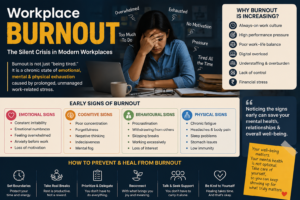
Workplace Burnout is one of the most common yet misunderstood mental health challenges of the modern world. With rising workloads, unrealistic deadlines, digital fatigue, high competition, and emotional exhaustion, employees across industries are reaching breaking points silently.
Burnout is not just “being tired.” It is a chronic psychological state, involving emotional depletion, mental fog, hopelessness, irritability, and reduced productivity caused by prolonged stress. Today, even the most passionate professionals—teachers, healthcare workers, entrepreneurs, corporate employees, and social service professionals—are experiencing burnout at alarming rates.
Understanding burnout early can prevent long-term mental health issues like anxiety, depression, insomnia, chronic stress, and breakdowns. This article explores the early warning signs, psychology, causes, and strategies to heal.
What Is Workplace Burnout?
Workplace burnout is a chronic state of physical, emotional, and mental exhaustion caused by prolonged, unmanaged work-related stress.
It develops when the demands of your job consistently exceed your ability to cope, recover, and feel fulfilled. The World Health Organization (WHO) describes burnout as a workplace-specific syndrome that arises from chronic job stress that has not been successfully managed. It is linked to your work environment and roles, rather than general life stress.
Burnout typically shows up through three core dimensions:
- Emotional exhaustion: A deep sense of inner fatigue where you feel mentally and emotionally drained, overwhelmed, and unable to recharge even after rest. Everyday tasks start to feel heavy, and you may feel you have “nothing left to give.”
- Depersonalization (cynicism): A gradual emotional distancing from your work, colleagues, or clients. You may become more irritable, negative, or detached, sometimes feeling like you are “on autopilot” or no longer caring the way you used to.
- Reduced personal accomplishment: A painful sense of being ineffective or “not good enough,” even when you are putting in effort. You may doubt your skills, feel unproductive, or believe that your work no longer makes a difference.
Burnout usually builds slowly over time rather than overnight, starting with subtle signs—like growing irritability, fatigue, or loss of enthusiasm—and, if ignored, can intensify into severe emotional, mental, and physical exhaustion.
Why Burnout Is Increasing in Today’s Workforce
Workplace burnout is rising sharply across industries, and it is not just because people are “busier” than before. Several modern work conditions are combining to create chronic, unrelenting stress.
- Always-on work culture: Emails, Teams messages, WhatsApp groups, and remote work keep employees mentally “at work” even at night and on weekends. There is little real downtime, so the mind never fully switches off or recovers.
- High performance pressure: Many workplaces prioritize constant speed, perfection, and measurable results. Targets, deadlines, and comparisons with peers or competitors create a sense of never being “good enough,” fueling ongoing stress.
- Poor work–life balance: Work slowly starts taking priority over rest, hobbies, and relationships. Breaks, vacations, and personal time are either postponed or filled with more work, leaving very little space for recovery and joy.
- Digital overload: Back-to-back online meetings, constant screen time, and multitasking across multiple apps overload the brain. Attention becomes fragmented, and mental fatigue builds up much faster.
- Understaffing and overburden: Many teams work with fewer people and tighter timelines. Employees end up doing the work of multiple roles, which leads to exhaustion and a constant feeling of being behind.
- Lack of control: When people feel powerless, unheard, or unable to influence decisions that affect their workload and schedule, stress intensifies. A lack of autonomy at work is strongly linked with burnout.
- Financial stress: Rising costs of living, job insecurity, and fear of losing income push people to overwork, accept unhealthy workloads, or avoid taking time off, even when they feel mentally and physically drained.
Together, these factors mean that burnout is no longer a rare experience—it is becoming a widespread workplace epidemic, silently affecting employees’ health, motivation, and overall quality of life.

Early Signs of Burnout You Must Not Ignore
Burnout rarely appears suddenly. It usually starts with small, easily overlooked changes in emotions, thinking, behaviour, and the body. Noticing these early signs can help you intervene before it turns into a crisis.
Emotional Signs
- Constant irritability: You find yourself getting annoyed or snappy over small things—emails, messages, or simple questions.
- Emotional numbness: You feel detached, disconnected, or indifferent about work, as if you are just going through the motions.
- Feeling overwhelmed: Even simple tasks feel too big, too heavy, or too stressful to start or complete.
- Anxiety before work: You feel dread, restlessness, tightness in the chest, or palpitations before starting your workday or opening your laptop.
- Increased negative thinking: Your inner dialogue becomes harsh and hopeless, with thoughts like:
“I can’t do this anymore.” “What’s the point?” “I’m failing.” These are strong indicators of emotional exhaustion.
Cognitive Signs (Mind and Thinking)
- Difficulty concentrating: Your mind feels foggy or scattered, and it is harder to stay focused on tasks.
- Forgetfulness: You struggle to remember tasks, deadlines, or even recent conversations.
- Reduced problem-solving ability: Situations that you would usually handle easily now feel confusing or mentally draining.
- Overthinking small mistakes: You keep replaying minor errors in your mind and blow them out of proportion.
- Reduced creativity: New ideas don’t come as easily, and you may lose interest in innovation or brainstorming.
Behavioural Signs
- Increased procrastination: You delay starting tasks because they feel mentally exhausting, even when you know they are important.
- Avoiding meetings or calls: You feel drained by basic interactions and may keep your camera off or stay silent.
- Withdrawing from colleagues: You stop engaging in casual chats, lunch breaks, or team conversations and prefer to stay alone.
- Loss of enthusiasm: Projects or roles that once excited you now feel heavy, boring, or meaningless.
- Irrational anger or frustration: Small inconveniences trigger big reactions, and you may feel “on edge” most of the time.
- Declining performance: Tasks take longer than before, and maintaining your usual quality feels like a struggle.
Physical Signs
Burnout does not only live in the mind; it often shows up in the body as well.
- Chronic fatigue: You feel tired most of the time, even after sleeping or taking breaks.
- Sleep problems: You may have difficulty falling asleep, wake up frequently at night, or wake up feeling unrefreshed.
- Headaches and migraines: Persistent tension headaches or migraines become more frequent as stress builds.
- Digestive issues: You may notice acidity, stomach discomfort, or other digestive problems, reflecting the gut–brain connection.
- Frequent illness: Your immunity weakens, and you catch colds or infections more often than usual.
- Muscle tension: You experience tight shoulders, neck pain, back pain, or general body stiffness that doesn’t fully relax.
Psychological Causes Behind Burnout
Burnout is not only about workload; it is also deeply connected to certain psychological patterns and beliefs. Understanding these patterns can help you recognize why burnout keeps repeating and what needs to change internally.
- People-pleasing and overcommitment: When you feel responsible for keeping everyone happy, you may say “yes” to extra tasks, stay late, or avoid setting limits. Over time, this leads to exhaustion, hidden resentment, and a feeling that your needs never matter.
- Perfectionism: Perfectionistic thinking sounds like “It has to be flawless” or “Anything less than 100% is failure.” This creates constant pressure, fear of mistakes, and difficulty delegating or switching off, which steadily drains emotional and mental energy.
- Imposter syndrome: When you secretly feel like a “fraud” despite your skills and achievements, you may overwork to prove yourself or avoid being “found out.” This self-doubt fuels anxiety and keeps you in a cycle of pushing beyond healthy limits.
- Lack of boundaries: Difficulty saying no, taking breaks, or disconnecting from work means your time, energy, and emotional space are constantly open to demands. Without clear boundaries, work quietly invades evenings, weekends, and even your thoughts at home.
- Fear of failure: If failure feels unbearable or shameful, you may cope by over-preparing, overworking, or avoiding new opportunities. This constant state of tension and “never enough” effort becomes a major driver of burnout.
- Unhealthy work environment: Toxic leadership, unclear expectations, unfair workload distribution, or chronic conflict can activate chronic stress responses. Even a resilient person can burn out when constantly navigating criticism, chaos, or lack of support.
- Emotional suppression: Pushing down frustration, sadness, anger, or disappointment to “stay professional” doesn’t make those feelings disappear. They build up inside, leading to emotional numbness, sudden outbursts, or a sense of being emotionally overloaded.
- Low self-worth: When you believe deep down that you are “not good enough,” work becomes a way to prove your value. You may overachieve, ignore limits, and tie your entire identity to performance—making burnout more likely and recovery harder.
Stages of Burnout
Burnout usually doesn’t appear suddenly; it tends to unfold gradually through different stages. Recognizing where you are in this process can help you take action earlier and prevent deeper damage.
Stage 1: The Enthusiasm Phase: You feel highly motivated, excited, and committed to your work. You may accept extra responsibilities, work long hours, and hold very high or unrealistic expectations of what you can achieve. At this stage, early warning signs (like skipping breaks or ignoring fatigue) are often dismissed.
Stage 2: The Stress Phase: Pressure slowly begins to build. You start experiencing fatigue, tension, and occasional anxiety or frustration. You may notice disturbed sleep, irritability, or difficulty switching off after work, but you still believe you can “handle it” if you just push a little harder.
Stage 3: Chronic Stress Phase: Stress becomes more constant rather than occasional. Irritability, mood swings, and emotional exhaustion increase. Performance begins to decline, you may withdraw from colleagues, and work that once felt meaningful starts to feel like a burden. Coping habits like procrastination, emotional eating, or scrolling may intensify.
Stage 4: Burnout Phase: At this point, mental, emotional, and physical exhaustion become overwhelming. You may feel numb, detached, or hopeless about work. Concentration drops significantly, motivation is very low, and even simple tasks feel hard to complete. You may also experience stronger physical symptoms like frequent headaches, sleep problems, or body aches.
Stage 5: Habitual Burnout: Burnout turns into an ongoing state rather than a temporary phase. Exhaustion, cynicism, and low sense of achievement become part of daily life and start affecting your identity (“Maybe I’m just not capable”), your relationships, and your overall health. Anxiety, depression, or other long-term health issues may appear if support is not sought.
Long-Term Risks of Ignoring Burnout
When burnout is ignored for a long time, it stops being “just work stress” and can turn into serious mental and physical health problems that affect every area of life.
If left untreated, burnout can contribute to:
- Anxiety disorders: Constant stress can gradually turn into generalized anxiety, panic attacks, or excessive worry that continues even outside work.
- Depression: Persistent exhaustion, loss of interest, and feelings of hopelessness can develop into clinical depression, affecting mood, motivation, and daily functioning.
- Chronic fatigue syndrome: The body may enter a prolonged state of exhaustion where even small activities feel draining, and rest does not fully restore energy.
- High blood pressure and heart issues: Long-term stress keeps the body’s stress response activated, increasing the risk of hypertension, heart disease, and other cardiovascular problems.
- Substance dependence: Some people may turn to alcohol, nicotine, or other substances to “cope,” which can lead to dependency and worsen both physical and emotional health.
- Emotional breakdowns: Suppressed emotions and ongoing overload can eventually lead to breakdowns—sudden episodes of intense crying, anger, or feeling unable to function.
- Social withdrawal: As energy and mood decline, people may isolate themselves, pull away from friends and family, and feel disconnected from others.
- Job dissatisfaction and career stagnation: Burnout can erode motivation, creativity, and confidence, leading to poor performance, loss of interest in growth, and feeling “stuck” in one’s career.
Burnout is not a temporary weakness or a sign of laziness—it is a serious, chronic health concern that deserves attention, compassion, and proper support. Getting help early can prevent these long-term consequences and make recovery much easier.
How to Prevent Burnout
Burnout prevention is not about one big change, but about many small, consistent habits that protect your emotional, mental, and physical energy. These strategies are aligned with what research shows helps reduce stress and burnout over time.
1. Strengthen Emotional Boundaries
- Say “no” when needed: Protect your energy by refusing unrealistic deadlines and extra tasks that push you beyond healthy limits. Learning to say “no” (or “not right now”) is a powerful burnout-prevention skill.
- Set communication limits: Avoid answering work calls or messages late at night or during off-days whenever possible. Decide your “cut-off” time and communicate it clearly to colleagues.
- Establish personal space: Keep work away from your bedroom or main relaxation areas. A separate workspace helps your brain switch off after work.
2. Reduce Digital Overload
- Take short screen breaks every 60–90 minutes.
- Use focus mode or “Do Not Disturb” during deep work.
- Avoid constant multitasking between apps and chats.
- Reduce unnecessary meetings and limit back-to-back calls where you can.
- Turn off non-essential notifications.
These changes give your brain downtime to recover and restore attention.
3. Practice Stress-Management Techniques
Evidence-based mind–body practices help calm the nervous system and reduce burnout risk.
- Deep breathing: Slow, diaphragmatic breathing activates the body’s relaxation response and lowers stress levels.
- Journaling: Writing about your thoughts and feelings helps you process emotions and gain clarity instead of carrying everything in your head.
- Meditation or mindfulness: Regular mindfulness practice increases awareness of stress signals, improves emotional regulation, and has been shown to reduce burnout in workplace programs.
- Yoga or mindful movement: Gentle yoga, stretching, or mindful walking reduce muscle tension and stress hormones and can improve well-being in stressed professionals.
4. Improve Work–Life Balance
- Schedule short breaks into your workday.
- Prioritize rest as much as productivity.
- Take vacations or days off without guilt when possible.
- Spend time offline each day.
- Engage in hobbies and enjoyable activities unrelated to work.
Balance between effort and recovery is what prevents exhaustion from becoming burnout.
5. Build Support Networks
- Connect with trusted colleagues instead of struggling alone.
- Share workload concerns or stress with supervisors when possible.
- Seek mentorship for guidance and perspective.
- Nurture emotional support systems with friends, family, or support groups.
Social connection is a strong protective factor against stress and burnout.
6. Reevaluate Career Expectations
Reflect honestly on:
- Whether your goals are realistic in your current life context.
- Your workload matches your capacity and health.
- Whether your job aligns with your values and long-term direction.
Sometimes burnout is a signal that something needs to shift—role, boundaries, expectations, or even career path.
7. Practice Self-Compassion
Instead of attacking yourself for feeling tired or “not productive enough”:
- Acknowledge the effort you are already making.
- Accept that imperfection is human, not failure.
- Celebrate small wins, not just big achievements.
Self-kindness and realistic self-talk are linked to greater resilience and lower burnout.
8. Develop Healthy Daily Routines
Core lifestyle habits strongly influence how well you handle stress.
- Sleep hygiene: Aim for 7–8 hours of quality sleep with a consistent sleep–wake time.
- Physical movement: Include regular walking, stretching, or exercise; movement improves mood, sleep, and stress tolerance.
- Nutrition: Eat balanced meals at regular intervals to stabilize energy and focus.
- Hydration: Drink enough water throughout the day; even mild dehydration can worsen fatigue and concentration.
Daily, small, sustainable habits create long-term emotional strength and make you less vulnerable to burnout.
How Managers & Leaders Can Prevent Team Burnout
Leaders play a crucial role in either reducing or fueling burnout. When managers create a supportive, realistic, and human work culture, they not only protect employees’ mental health but also improve performance and retention.
- Set realistic expectations: Avoid impossible deadlines and constant “urgent” tasks. Clarify priorities so employees know what truly must be done now and what can wait. When goals are achievable, teams feel motivated instead of overwhelmed.
- Encourage work–life balance: Respect personal boundaries by not expecting late-night replies, weekend work, or constant availability. Model balance yourself by taking breaks and time off, which gives your team permission to do the same.
- Provide autonomy: Give employees some control over how they organize their work, schedule tasks, or solve problems. When people feel trusted and empowered, their stress decreases and engagement increases.
- Recognize achievements: Acknowledge effort and progress, not just big results. Simple, specific appreciation—public or private—boosts morale and counters the feeling of “nothing I do is enough” that often contributes to burnout.
-
Improve communication: Be clear, consistent, and transparent about expectations, changes, and feedback. Open communication reduces confusion, anxiety, and unnecessary stress caused by assumptions or mixed messages.
-
Distribute workload fairly: Notice if the same people are always given extra tasks or “urgent” responsibilities. Aim for a balanced distribution of work, and check in regularly with your team about capacity and pressure.
A healthy work environment is one of the strongest protections against burnout. When leaders focus on realistic demands, respect, fairness, and psychological safety, employees are far more likely to stay well and perform at their best.
When You Should Seek Professional Help
There is a point where burnout and stress move beyond “normal pressure” and start seriously affecting your mental health, body, and daily life. That is when professional help becomes not just useful, but important.
You should consider reaching out to a mental health professional if you notice:
- Persistent anxiety or sadness: You feel worried, low, or emotionally heavy most days for weeks, not just during isolated stressful moments.
- Severe fatigue: You feel exhausted almost all the time, even after sleep or rest, and basic tasks feel like a big effort.
- Panic attacks: You experience episodes of intense fear, rapid heartbeat, breathlessness, or dizziness that feel overwhelming or out of control.
- Loss of interest in life: Activities, relationships, or hobbies that once brought you joy now feel empty, boring, or pointless.
- Inability to function at work: You struggle to meet basic responsibilities, concentrate, or complete tasks, and it feels harder and harder to “push through.”
- Emotional breakdowns: You frequently cry, feel like you are “on the edge,” or have sudden outbursts of anger or despair that feel unmanageable.
Therapists and counsellors can support you with:
- CBT for stress: Identifying unhelpful thought patterns and behaviours, and learning healthier ways to respond to pressure and self-criticism.
- Emotional regulation techniques: Skills to understand, express, and manage strong emotions without shutting down or exploding.
- Burnout recovery planning: Step-by-step strategies to restore energy, set boundaries, and gradually rebuild a healthier relationship with work.
- Coping skills: Practical tools for handling triggers, conflict, workload, and overwhelming situations more effectively.
- Productivity restructuring: Helping you design a realistic work rhythm, prioritize tasks, and work with your brain instead of against it.
Seeking help is not a sign of weakness; it is a proactive step toward healing and protecting your long-term well-being. The earlier you reach out, the easier recovery usually is.
Conclusion: Burnout Is a Signal—Not a Failure
Burnout doesn’t mean you’re weak—it means you’ve been strong for too long without rest or support.
By recognizing early signs, setting boundaries, and nurturing emotional health, you can recover and protect your mental well-being.
Burnout is preventable, manageable, and treatable.
Listen to your mind. Listen to your body.
Your well-being matters more than any deadline.
FAQ
1. What is workplace burnout?
Workplace burnout is a chronic state of emotional, mental, and physical exhaustion caused by prolonged, unmanaged work-related stress. It often shows up as feeling drained, detached from work, and doubting your own effectiveness.
2. How is burnout different from normal stress or tiredness?
Normal stress or tiredness usually improves with rest, time off, or a lighter week. Burnout, on the other hand, persists for weeks or months, affects your mood, sleep, health, and productivity, and makes it hard to feel motivated even after breaks.
3. What are the early signs that I might be burning out?
Early signs can include irritability, emotional numbness, feeling overwhelmed by small tasks, difficulty concentrating, increased procrastination, chronic fatigue, and sleep problems. Catching these signals early helps prevent a full burnout crash.
4. Can burnout affect my physical health?
Yes. Burnout is closely linked with headaches, muscle tension, digestive issues, frequent colds, sleep disturbances, high blood pressure, and increased risk of heart problems. The mind and body are connected, so long-term stress often shows up physically too.
5. Who is most at risk of workplace burnout?
People in high-pressure or helping roles (such as teachers, healthcare professionals, managers, entrepreneurs, and social workers) are at higher risk. Perfectionists, people-pleasers, and those with weak boundaries at work are also more vulnerable.
6. Can burnout be completely cured?
Burnout is treatable. With rest, healthier boundaries, lifestyle changes, and sometimes professional support, most people can recover and rebuild a healthier relationship with work. However, if underlying patterns don’t change, burnout can return.
7. How can I start recovering from burnout on my own?
You can begin by slowing down, prioritizing sleep, taking regular breaks, reducing digital overload, saying “no” to extra demands, and reconnecting with hobbies and relationships. Simple practices like deep breathing, journaling, and gentle movement can also help.
8. When should I seek help from a therapist or counsellor?
You should seek professional help if you notice persistent anxiety or sadness, severe fatigue, panic attacks, frequent emotional breakdowns, loss of interest in life, or difficulty functioning at work or home. You don’t have to wait until things “get really bad” to ask for support.
9. How can managers and leaders reduce burnout in their teams?
Leaders can prevent burnout by setting realistic expectations, respecting work–life boundaries, recognizing effort, improving communication, offering autonomy, and distributing workload fairly. A supportive culture is one of the strongest protections against burnout.
10. Can changing my job help with burnout?
Sometimes, yes—but not always. If the main cause is a toxic or unhealthy work environment, a job change can be very helpful. However, if burnout is also linked to inner patterns like perfectionism, people-pleasing, or poor boundaries, those patterns need attention too, otherwise they may follow you into the next workplace.
Reference
-
World Health Organization. (2019). “Burn-out an “occupational phenomenon”: International Classification of Diseases. World Health Organization”. Available at https://www.who.int
-
American Psychological Association. (2026). “Stress in the workplace. American Psychological Association”. Available at https://www.apa.org
- MonoProva Counselling. (2026). What is CBT? A simple guide for everyone. What Is CBT? A Simple Guide for Everyone
-
Harvard Business Review. (2026). Burnout and productivity at work. Harvard Business Publishing.
https://hbr.org - MonoProva Counselling. (2026). How to build mental toughness for career growth. Available at How to Build Mental Toughness for Career Growth
-
Mayo Clinic Staff. (2026). Job burnout: How to spot it and take action. Mayo Clinic.
https://www.mayoclinic.org - MonoProva Counselling. (2026), Contact Us
This article is written for knowledge purposes, aiming to help readers understand the topic better and gain useful insights for learning and awareness.
Mental health is often discussed only when things become overwhelming. Articles like this remind us that understanding our thoughts, emotions, and behavioral patterns early can make a meaningful difference. Awareness is often the first step toward healthier coping.