
Introduction
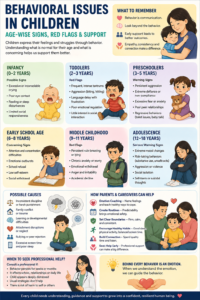
Children do not always have the language or emotional maturity to explain what they are experiencing. Instead, they often communicate through behavior. A child who appears “naughty,” “stubborn,” aggressive, withdrawn, or excessively demanding may not simply be trying to misbehave. These behavioral issues can sometimes reflect frustration, anxiety, developmental difficulties, emotional distress, unmet needs, environmental stress, or difficulties with self-regulation.
This does not mean that every challenging behavior signals a psychological problem. Children naturally experience tantrums, fears, mood changes, impulsivity, and occasional defiance as part of development. The important question is whether the behavior is developmentally expected and temporary—or persistent, intense, unusual for the child’s developmental stage, and interfering with everyday functioning.
For example, tantrums are common during the toddler years, particularly between ages 1 and 3. However, persistent and severe emotional or Behavioral Issues difficulties that interfere with family life, school, friendships, or the child’s own well-being deserve closer attention.
Therefore, understanding behavior age by age can help parents, teachers, and caregivers distinguish normal developmental challenges from signs that may require additional support.
What Are Behavioral Issues in Children?
Behavioral issues are patterns of behavior or emotional responses that become concerning because they are persistent, intense, developmentally inappropriate, or disruptive to the child’s functioning.
They may affect:
- Home life
- School performance
- Friendships
- Family relationships
- Emotional well-being
- Daily routines
- Safety
Behavioral difficulties can appear in different forms.
Common Categories of Behavioral Difficulties
 Externalizing behaviors
- Aggression
- Defiance
- Impulsivity
- Hyperactivity
- Rule-breaking
Internalizing behaviors
- Anxiety
- Excessive worry
- Withdrawal
- Persistent sadness
- Avoidance
Emotional regulation difficulties
- Frequent emotional outbursts
- Difficulty calming down
- Extreme reactions to frustration
- Rapid shifts in emotional state
Developmental or social concerns
- Delayed communication
- Difficulty interacting with others
- Limited social reciprocity
- Difficulty adapting to everyday expectations
Importantly, these behaviors do not automatically indicate a psychiatric disorder. A proper assessment considers the child’s developmental stage, environment, history, and functioning across settings.
The key question is: Is this behavior temporary and developmentally expected, or is it persistent, intense, and interfering with the child’s daily life?
Behavioral Signs in Infancy: 0–2 Years
Infancy is a period of rapid neurological, emotional, and social development. Babies communicate primarily through crying, facial expressions, body movements, feeding patterns, sleep, and social responses.
Behaviors That Can Be Developmentally Typical
Depending on age and temperament, infants may experience:
- Crying when hungry, tired, uncomfortable, or overstimulated
- Stranger anxiety
- Separation distress
- Changes in sleep patterns
- Fussiness during developmental transitions
- Difficulty settling when overtired
These behaviors alone do not indicate a Behavioral Issues disorder.
Signs That May Require Further Attention
1. Persistent Difficulty Being Comforted
Frequent or prolonged distress that is difficult to soothe may warrant attention, particularly when accompanied by feeding, sleep, developmental, or physical concerns.
However, excessive crying should not automatically be interpreted as an attachment problem. Medical causes, temperament, sensory sensitivity, sleep difficulties, and environmental factors should also be considered.
2. Limited Social Responsiveness
Concerns may arise when a child consistently shows limited responses to social interaction, such as reduced social engagement, limited reciprocal interaction, or a lack of expected developmental communication behaviors.
A single sign, such as limited eye contact, is not enough to diagnose a developmental condition. Development should be considered across multiple domains and compared with established developmental milestones.
3. Significant Feeding or Sleep Difficulties
Persistent feeding difficulties, major disruptions in sleep, or difficulties with regulation may warrant discussion with a pediatrician, particularly when they affect growth, development, or family functioning.
4. Limited Communication or Social Interaction
Limited babbling, gestures, social engagement, or response to caregivers may be worth discussing with a healthcare professional when these concerns persist or occur alongside other developmental differences.
Why Early Identification Matters
Early childhood provides an important opportunity to identify developmental and emotional concerns and connect families with appropriate support. Early intervention can improve developmental and psychosocial outcomes when difficulties are identified.
Behavioral Issues in Toddlers: 2–3 Years
The toddler period is characterized by rapidly developing autonomy, language, emotional expression, and self-control.
Tantrums, saying “no,” testing boundaries, and becoming upset when routines change are common during this stage. Tantrums are particularly common between ages 1 and 3.
Typical Toddler Behaviors
- Saying “no” frequently
- Tantrums when frustrated
- Wanting independence
- Difficulty waiting
- Separation anxiety
- Testing limits
- Strong emotional reactions
Possible Warning Signs
1. Very Frequent or Highly Intense Tantrums
Concern increases when tantrums are unusually intense or frequent, involve significant aggression or self-injury, are difficult to manage, or substantially interfere with everyday functioning.
Rather than focusing only on how many minutes a tantrum lasts, consider:
- How often it occurs
- Intense it becomes
- What triggers it
- How the child recovers
- Whether the child can be supported or redirected
- It is Whether affects family or social functioning
2. Persistent Aggression
Occasional hitting or biting can occur during toddler development. However, frequent or severe aggression that poses a safety risk deserves attention.
3. Communication Difficulties Accompanied by Frustration
A toddler who cannot effectively communicate wants, needs, or discomfort may become frustrated and express themselves through crying, screaming, or aggressive behavior.
Communication difficulties should therefore be considered when evaluating challenging behavior.
4. Significant Difficulty With Emotional Regulation
Some toddlers may consistently struggle to recover from frustration, transitions, or disappointment. The concern is greater when the child rarely returns to a calm state even with appropriate caregiver support.
5. Limited Social Engagement
Persistent difficulty engaging with caregivers or other children, particularly when combined with communication or developmental concerns, may warrant developmental evaluation.
Behavioral Issues in Preschool Children: 3–5 Years
Preschool is a major period for developing:
- Social skills
- Language
- Impulse control
- Emotional regulation
- Cooperative play
- Understanding of rules
Children are still learning these skills, so occasional defiance and emotional outbursts are expected.
Typical Preschool Behaviors
- Imaginary play
- Strong emotional reactions
- Occasional lying related to imagination or wishful thinking
- Difficulty sharing consistently
- Testing boundaries
- Occasional fears
Warning Signs to Watch For
1. Persistent Aggression
Frequent hitting, kicking, threatening, or intentionally hurting others becomes more concerning when it is persistent, severe, or interferes with preschool and peer relationships.
2. Extreme Defiance
Occasional refusal is normal. However, persistent opposition across situations—especially when it significantly disrupts family or school functioning—may require further evaluation.
3. Excessive Anxiety or Fear
Possible signs include:
- Extreme clinginess
- Persistent fear
- Refusal to attend preschool
- Frequent physical complaints without an identifiable medical explanation
- Recurrent nightmares
- Strong distress around separation
Children can experience anxiety through both emotional and physical symptoms.
4. Persistent Difficulty With Peer Relationships
Concern may arise when a child consistently struggles to:
- Participate in cooperative play
- Take turns
- Communicate with peers
- Resolve minor conflicts
- Develop age-appropriate friendships
5. Regression
A temporary return to earlier behaviors can occur during periods of stress or major change.
Examples may include:
- Increased dependence
- Baby talk
- Increased thumb-sucking
- Toileting difficulties
Regression should be interpreted in context rather than automatically considered pathological.
Behavioral Issues in Early School-Age Children: 6–8 Years
As children enter school, expectations increase. They must manage:
- Academic demands
- Classroom rules
- Peer relationships
- Homework
- Delayed gratification
- Greater independence
Possible Warning Signs
1. Persistent Attention and Concentration Difficulties
Watch for difficulties such as:
- Frequently losing track of tasks
- Excessive distractibility
- Difficulty following instructions
- Frequently leaving tasks unfinished
- Impulsive behavior
However, these signs alone do not establish ADHD. Attention difficulties can also occur because of anxiety, sleep problems, learning difficulties, stress, environmental factors, or other developmental concerns.
2. Frequent Emotional Outbursts
Repeated intense anger, crying, or frustration over relatively minor situations may indicate difficulties with emotional regulation, particularly when these reactions interfere with school or family life.
3. School Avoidance or School Refusal
Possible signs include:
- Frequent physical complaints before school
- Intense distress about attending school
- Repeated requests to stay home
- Anxiety related to separation, academics, teachers, or peers
The underlying reason should be explored rather than treating school avoidance simply as disobedience.
4. Negative Self-Concept
Statements such as:
- “I am stupid.”
- “can’t do anything.”
- “Everyone is better than me.”
can sometimes reflect emerging low self-esteem, academic frustration, bullying, or anxiety.
5. Social Withdrawal
A persistent loss of interest in friends or activities, increasing isolation, or difficulty forming relationships deserves attention, particularly if it represents a noticeable change from the child’s previous behavior.
Behavioral Issues in Middle Childhood: 9–11 Years
During middle childhood, children develop greater self-awareness, moral reasoning, independence, and sensitivity to peer evaluation.
Expected Developmental Changes
Children may:
- Want greater independence
- Become increasingly influenced by peers
- Question rules
- Compare themselves with others
- Become more aware of social status
- Experience more complex emotions
Possible Red Flags
1. Persistent Rule-Breaking
Occasional lying or testing boundaries is not unusual. However, repeated serious rule-breaking, stealing, deliberate aggression, or persistent disregard for consequences warrants further assessment.
2. Chronic Anxiety or Excessive Worry
Possible signs include:
- Perfectionism
- Fear of failure
- Excessive reassurance-seeking
- Persistent overthinking
- Avoidance of challenging situations
- Excessive concern about peer judgment
3. Emotional Withdrawal
A child who becomes increasingly quiet, disconnected, or uninterested in previously enjoyable activities may be experiencing emotional distress.
4. Persistent Anger and Irritability
Frequent explosive reactions, chronic irritability, or significant changes in mood should be considered in the broader context of the child’s environment and functioning.
5. Sudden Academic Decline
A noticeable decline in academic performance may sometimes be associated with:
- Learning difficulties
- Anxiety
- Bullying
- Family stress
- Attention difficulties
- Sleep problems
- Emotional difficulties
Therefore, academic decline should be investigated rather than immediately interpreted as laziness.
Behavioral Issues in Adolescents: 12–18 Years
Adolescence involves major biological, cognitive, emotional, and social changes.
Teenagers naturally begin to:
- Seek greater independence
- Question parental authority
- Develop their identity
- Value peer relationships
- Desire more privacy
- Experience stronger emotions
These changes are not automatically signs of a Behavioral Issues. However, persistent or extreme changes in behavior, personality, functioning, or safety deserve attention.
Behavioral Issues : Important Warning Signs
1. Persistent Mood Changes
Look for:
- Persistent sadness
- Irritability
- Emotional numbness
- Loss of interest
- Significant changes in energy
- Frequent emotional shutdown
A significant change from the adolescent’s usual functioning is particularly important.
2. Risk-Taking Behaviors
Examples may include:
- Substance use
- Reckless behavior
- Dangerous driving
- Unsafe sexual behavior
- Repeated involvement in dangerous situations
Risk-taking should be evaluated in relation to frequency, severity, context, and safety.
3. Aggression or Violence
Serious concerns include:
- Repeated physical fights
- Threatening others
- Serious intimidation
- Destruction of property
- Escalating aggression
4. Increasing Social Isolation
Teenagers naturally seek privacy, so wanting time alone is not necessarily problematic.
Concern increases when isolation is accompanied by:
- Loss of friendships
- Loss of interest in activities
- Persistent sadness
- Academic decline
- Significant sleep changes
- Avoidance of family and peers
NIMH identifies increasing social withdrawal and loss of interest as signs that may warrant professional evaluation when they persist or interfere with functioning.
5. Self-Harm or Suicidal Thoughts
Warning signs may include:
- Cutting or burning
- Talking about wanting to die
- Expressing hopelessness
- Saying they are a burden
- Giving away important possessions
- Searching for ways to die
- Sudden dangerous risk-taking
- Significant behavioral changes
Any indication that a child or adolescent may hurt themselves should be taken seriously. If there is an immediate safety concern, seek urgent professional or emergency assistance rather than leaving the young person alone.
Behavioral Issues: Why Do Behavioral Problems Develop?
There is rarely one single explanation for a child’s behavior.
Behavior is influenced by an interaction between the child, family, school, peer environment, developmental factors, and broader social circumstances.
Possible Contributing Factors
- Inconsistent or harsh discipline
- Family conflict
- Major life changes
- Bullying
- Peer rejection
- Learning difficulties
- Communication difficulties
- Neurodevelopmental conditions
- Anxiety or depression
- Trauma or exposure to violence
- Sleep difficulties
- Emotional neglect
- Difficulties with emotional regulation
- Excessive or poorly structured digital-media use
- Chronic family or socioeconomic stress
Importantly, identifying a contributing factor does not mean assigning blame to parents or caregivers. WHO emphasizes that children’s mental health is influenced by the quality of their relationships and environments, including experiences at home, school, and in digital spaces.
Behavioral Issues : When Should Parents Seek Professional Help?
Parents do not need to wait until behavior becomes severe before asking for help.
Consider consulting a pediatrician, child psychologist, psychiatrist, counselor, developmental specialist, or other qualified professional when:
- The behavior persists for weeks or months
- The behavior is significantly different from the child’s usual pattern
- It interferes with school or learning
- Friendships are being affected
- Family relationships are deteriorating
- The child appears persistently anxious, sad, angry, or withdrawn
- Usual supportive strategies are not helping
- There is developmental regression or significant developmental concern
- The behavior creates a safety risk
There is no universal rule that a parent must wait six months before seeking help. Earlier consultation can be appropriate whenever the child’s functioning, well-being, development, or safety is being affected. NIMH specifically recommends seeking professional evaluation when emotional or behavioral difficulties persist, cause distress, or interfere with functioning.
Behavioral Issues : How Parents and Caregivers Can Support Children
1. Look Beyond the Behavior
- Instead of asking only: “How do I stop this behavior?”
- also ask: “What might this behavior be communicating?”
This does not mean accepting harmful behavior. It means understanding the possible need behind it.
2. Practice Emotion Coaching
Help children:
- Identify emotions
- Name what they are feeling
- Understand emotional triggers
- Learn appropriate ways to express feelings
- Practice calming strategies
For example: “I can see that you’re angry because playtime ended. It’s okay to feel angry. It is not okay to hit.”
This approach validates the emotion while maintaining the behavioral boundary.
3. Maintain Predictable Routines
Children often regulate better when they know what to expect. Consistent routines around: Sleep, Meals, School, Homework, Play, Family time, Screen use. can provide structure and predictability.
4. Set Clear and Compassionate Boundaries
Effective discipline should teach rather than simply punish.
Use:
- Clear expectations
- Consistent consequences
- Calm communication
- Positive reinforcement
- Logical consequences
- Opportunities to repair mistakes
AAP guidance also emphasizes consistency, attention to positive behavior, and calm strategies during tantrums.
5. Create Opportunities for Connection
Children need regular opportunities to feel emotionally connected with caregivers.
Simple activities can include:
- Talking before bedtime
- Reading together
- Playing
- Going outdoors
- Having meals together
- Listening without immediately correcting
- Asking about their day
Connection does not eliminate behavioral problems, but it can strengthen the child’s emotional support system.
6. Pay Attention to Sleep, Activity, and Digital Habits
Sleep deprivation, lack of physical activity, excessive digital-media use, and an unstructured daily routine can sometimes contribute to difficulties with attention, mood, and behavior.
Instead of focusing only on reducing screen time, create a balanced routine that includes:
- Sleep
- Physical activity
- Face-to-face interaction
- Play
- Learning
- Family connection
- Appropriate digital use
7. Seek Professional Support When Needed
Professional support is not a sign that a child is “bad” or that parents have failed.
A professional assessment can help identify whether behavioral difficulties are related to:
- Emotional distress
- Developmental differences
- Learning difficulties
- Anxiety
- ADHD
- Family stress
- Trauma
- Other psychological or developmental factors
Depending on the child’s needs, support may include parent training, behavioral interventions, psychological therapy, developmental services, school-based support, or medical assessment. WHO recommends psychosocial interventions and caregiver skills training as evidence-informed approaches for behavioral difficulties.
Normal Behavior vs. Warning Signs: What Should Parents Look For?
A useful way to understand children’s behavior is to consider five questions:
- Frequency: How often does the behavior happen?
- Intensity: How extreme is the behavior?
- Duration: Has it continued for a short period or persisted over time?
- Context: Does it happen everywhere, or only in particular situations?
- Impact: Is it affecting the child’s:
-
-
-
- Schooling?
- Friendships?
- Family relationships?
- Emotional well-being?
- Safety?
-
-
This is more clinically useful than labeling a child simply as “difficult” or “misbehaving.”
Conclusion
Children’s behavioral difficulties should be understood within the context of development, relationships, environment, and emotional well-being.
A tantrum in a toddler may be a normal expression of frustration. A teenager asking for privacy may be demonstrating healthy independence. At the same time, persistent aggression, severe anxiety, social withdrawal, major academic changes, self-harm, or significant changes in functioning may indicate that a child needs additional support.
The goal is therefore not to label every difficult behavior as a disorder. The goal is to notice patterns, understand context, respond appropriately, and seek help when necessary. Most importantly, behavior should become an opportunity for understanding rather than immediately becoming a reason for blame.
Behind challenging behavior, there may be a need that the child does not yet know how to express. Understanding the need does not mean ignoring the behavior—it means responding to it more effectively. Early recognition and appropriate support can help children develop stronger emotional regulation, healthier relationships, better coping skills, and greater resilience.
References
- CDC – Developmental Milestones
- American Academy of Pediatrics – HealthyChildren.org
- WHO – Child and Adolescent Mental Health
- NIMH – Children and Mental Health
- UNICEF – Mental Health