
Top 7 Tools Men Can Use to Track Mental Wellness

Introduction

Mental wellness is not just about the absence of mental illness—it is about emotional balance, self-awareness, resilience, and the ability to cope with daily stressors. For men, learning to Track Mental Wellness can be an important step toward understanding emotional patterns, managing stress, and building healthier coping strategies. However, mental health is often deprioritized due to social expectations, demanding schedules, and the belief that they must handle everything on their own.

Moreover, men are statistically less likely to seek therapy early, even though they may experience significant levels of stress, burnout, emotional suppression, and untreated anxiety or depression. As a result, there is growing interest in self-monitoring and digital mental wellness tools, which allow men to track their mental health privately, consistently, and at their own pace. In addition, these tools can make it easier to recognize changes in mood, stress, sleep, and daily habits before they become more difficult to manage.

Importantly, mental wellness tools do not replace professional therapy. Instead, they support awareness, early detection, emotional regulation, and healthy habits. Therefore, this article explores the top 7 tools men can use to track their mental wellness, explaining how each tool works, why it matters psychologically, and how it can be used effectively in daily life.

Why Tracking Mental Wellness Matters for Men

Tracking mental wellness can help men become more aware of their emotional and behavioral patterns. By regularly paying attention to their mental well-being, men can:

  • Recognize emotional patterns early
  • Identify common stress triggers
  • Monitor changes in mood and energy levels
  • Reduce emotional suppression and avoidance
  • Build healthier and more effective coping strategies

From a psychological perspective, self-monitoring increases emotional insight. As a result, greater awareness can become an important first step toward emotional regulation and positive behavioral change. In addition, regularly observing thoughts, emotions, and daily patterns can make it easier to recognize when something needs attention.

Furthermore, mental wellness tracking can:

  • Normalize emotional experiences by making emotional awareness part of everyday life
  • Reduce stigma around mental health by encouraging men to view self-care as a normal and proactive practice
  • Encourage proactive self-care before stress or emotional difficulties become overwhelming
  • Support therapy or counseling when needed by providing useful observations about mood, stress, habits, and emotional changes

Ultimately, tracking mental wellness is not about constantly analyzing every emotion. Instead, it is about developing enough self-awareness to recognize patterns, respond to challenges earlier, and make healthier choices.
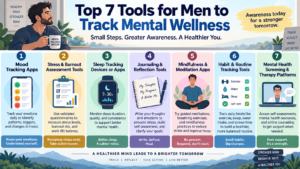
Tool 1: Mood Tracking Apps

What Is a Mood Tracker?

Mood tracking apps allow users to record their emotions regularly using simple features such as:

  • Emojis or mood scales
  • Emotion labels
  • Short notes or reflections

Over time, these records can reveal patterns, including emotional highs, lows, recurring triggers, and changes in mood. Therefore, mood tracking can make emotional experiences easier to observe and understand.

Why Mood Tracking Is Helpful for Men

Many men may struggle to identify, name, or express emotions because of emotional conditioning and social expectations. As a result, mood trackers can provide a simple and private way to begin developing emotional awareness.

Specifically, mood tracking can help by:

  • Expanding emotional vocabulary
  • Making emotions more visible and easier to recognize
  • Reducing emotional avoidance
  • Encouraging reflection without judgment

In other words, mood tracking encourages a simple but important question: “How do I feel today?” By asking this question consistently, men can gradually become more comfortable noticing and acknowledging their emotional states.

How to Use It Effectively

To make mood tracking useful rather than overwhelming:

  • Track your mood once or twice daily
  • Add brief notes about possible triggers
  • Review weekly or monthly patterns
  • Avoid labeling emotions as simply “good” or “bad”

Most importantly, focus on patterns rather than individual mood changes. Over time, greater mood awareness can support emotional regulation and improve stress management.

Tool 2: Stress & Burnout Assessment Tools

What Are Stress Assessment Tools?

Stress and burnout assessment tools use short questionnaires to help users evaluate areas such as:

  • Stress levels
  • Burnout risk
  • Emotional exhaustion
  • Work-life imbalance

In many cases, these assessments are based on validated psychological scales. Consequently, they can provide a more structured way to reflect on stress than relying only on how you feel in the moment.

Why This Tool Is Important

Men may sometimes normalize ongoing stress until it develops into significant exhaustion or burnout. Therefore, regularly assessing stress can help identify warning signs before they become more difficult to manage.

Stress assessment tools can:

  • Offer objective feedback
  • Identify early warning signs
  • Reduce denial and minimization
  • Encourage timely action

Furthermore, putting stress into words can make an otherwise vague experience easier to recognize and address. Once stress is identified, it becomes easier to consider what needs to change.

How to Use It

For practical use:

  • Take assessments monthly or quarterly
  • Track changes in your results over time
  • Use the findings to adjust workload or daily routines
  • Share relevant insights with a counselor if needed

As a result, these tools can be particularly useful for working professionals who regularly face demanding schedules, deadlines, and competing responsibilities.

Tool 3: Sleep Tracking Devices or Apps

Why Sleep Is a Mental Health Indicator

Sleep is closely connected to several aspects of mental well-being, including:

  • Mood regulation
  • Stress tolerance
  • Anxiety and depression
  • Cognitive performance

Furthermore, poor or inconsistent sleep can contribute to greater emotional reactivity. Therefore, paying attention to sleep patterns can provide valuable insight into changes in overall mental wellness.

How Sleep Tracking Helps Men

Sleep trackers monitor key sleep indicators, including:

  • Total sleep duration
  • Overall sleep quality
  • Night awakenings
  • Sleep consistency

By reviewing this information over time, men can begin to recognize how factors such as stress, screen time, caffeine, or work pressure may affect their sleep. In turn, these observations can help identify areas where daily routines may need adjustment.

How to Use Sleep Data Wisely

However, sleep tracking is most useful when the data is treated as guidance rather than a score to achieve. To use it effectively:

  • Focus on trends, not perfection
  • Adjust bedtime routines gradually
  • Pair sleep data with relaxation practices
  • Avoid becoming overly focused on numbers

Ultimately, the goal is not to achieve perfect sleep statistics. Instead, it is to understand your sleep patterns and make practical changes that support better rest and emotional resilience. 

Tool 4: Journaling & Reflection Tools

What Is Mental Health Journaling?

Journaling tools provide a private space where men can:

  • Write about thoughts and emotions
  • Reflect on daily experiences
  • Process stress privately

Additionally, digital journals can reduce the pressure of feeling that thoughts need to be written perfectly. This makes journaling more accessible for people who may otherwise avoid traditional writing.

Why Journaling Works Psychologically

Journaling can support several aspects of psychological well-being, including:

  • Emotional processing
  • Reduced rumination
  • Self-awareness
  • Problem-solving

Moreover, putting thoughts into words can create some distance from overwhelming experiences, making them easier to examine. For men who find talking about emotions difficult, writing can therefore become a safe and private emotional outlet.

How to Journal Effectively

To begin, keep the process simple:

  • Write for 5–10 minutes daily
  • Use prompts such as:
    • “What stressed me today?”
    • “What helped me cope?”
  • Be honest rather than polished

Most importantly, journaling does not need to be lengthy or perfectly written to be useful. Consistent, honest reflection can gradually strengthen self-awareness and help identify recurring emotional patterns.

Tool 5: Mindfulness & Meditation Apps

What These Tools Do

Mindfulness and meditation apps guide users through practices such as:

  • Breathing exercises
  • Body scans
  • Short meditations
  • Stress-reduction practices

Because many sessions take only 2–10 minutes, they can be incorporated into everyday routines without requiring a significant time commitment. For example, they can be used during a work break or before bedtime.

Why Mindfulness Is Effective for Men

Mindfulness can help men:

  • Slow down impulsive reactions
  • Improve emotional control
  • Reduce anger and anxiety
  • Increase focus

More importantly, mindfulness encourages people to notice thoughts and emotions before automatically acting on them. In this way, it trains the ability to respond rather than simply react.

How to Start Without Resistance

For beginners, the best approach is to start small:

  • Begin with short sessions
  • Focus on breathing rather than trying to “empty the mind”
  • Practice consistently instead of focusing on duration
  • Use mindfulness during work breaks or before sleep

Remember, mindfulness is a skill rather than a personality trait. Therefore, it can be developed gradually through regular practice, even if meditation initially feels uncomfortable or unfamiliar.

Tool 6: Habit & Routine Tracking Tools

What Are Habit Trackers?

Habit trackers help users monitor everyday behaviors such as:

  • Exercise
  • Sleep routines
  • Water intake
  • Screen limits
  • Self-care habits

In addition, these tools make consistency and progress more visible. This can help users recognize which routines are supporting their mental wellness and which may need improvement.

Why Habits Matter for Mental Wellness

Mental wellness can benefit from:

  • Predictable daily structure
  • Consistent self-care routines
  • Small achievements that build confidence

Furthermore, repeated small actions can make healthy behaviors easier to maintain over time. For men, habit tracking can provide a form of action-based self-care, which may feel more accessible than starting with emotional conversations.

How to Use Habit Trackers Well

To avoid making habit tracking another source of pressure:

  • Track only 2–3 habits at first
  • Keep goals realistic
  • Focus on consistency rather than streaks
  • Review your progress weekly

Ultimately, the purpose of a habit tracker is not perfection. Instead, it is to create sustainable routines that support stable mood, energy, and overall mental wellness. 

Tool 7: Mental Health Screening & Therapy Platforms

What These Platforms Offer

Mental health screening and therapy platforms may provide:

  • Mental health screenings
  • Self-assessment questionnaires
  • Access to online counseling
  • Educational resources

As a result, these platforms can lower some of the practical barriers associated with seeking mental health support.

Why This Matters for Men

Men may delay professional support because of factors such as:

  • Stigma
  • Time constraints
  • Privacy concerns

However, digital platforms can make the first step toward support feel more manageable. Depending on the platform, they may offer:

  • Confidential access
  • Flexible scheduling
  • Reduced initial resistance

Therefore, online screening can serve as an early opportunity to recognize concerns that may deserve further attention. Importantly, however, screening should not be confused with diagnosis.

How to Use Responsibly

To use these platforms appropriately:

  • Use screenings as guidance, not as a diagnosis
  • Seek professional help if symptoms persist or worsen
  • Combine digital tools with offline support when possible

Ultimately, technology can help bridge the gap between recognizing a mental health concern and seeking appropriate care. However, when significant or persistent difficulties are present, professional assessment and support remain important.

How to Choose the Right Tools for Yourself

Not every mental wellness tool will suit everyone. Therefore, choosing the right tool depends on your personal needs, lifestyle, and comfort level. Before getting started, consider:

  • Your comfort with technology
  • The amount of time you can realistically dedicate
  • Your current level of emotional awareness
  • Your current stress load

Instead of trying several tools at once, start with one or two that feel manageable. Then, as you become more comfortable with tracking and reflection, you can gradually expand your approach. This makes the process more sustainable and reduces the risk of turning mental wellness tracking into another daily obligation.

Common Mistakes to Avoid

Although mental wellness tools can be helpful, they can become counterproductive when used incorrectly. For example, common mistakes include:

  • Tracking obsessively
  • Expecting instant emotional change
  • Using tools instead of seeking professional help
  • Comparing your progress with other people

In addition, remember that tracking is a means of developing awareness, not a measure of personal success or failure. Tools can support mental wellness; however, they do not replace human connection, professional care, or meaningful social support.

Integrating Tools into Daily Life

To make mental wellness tracking easier to maintain, connect it with routines you already follow. For instance, you can:

  • Link tracking to existing daily routines
  • Keep the process simple and flexible
  • Review your data weekly rather than constantly
  • Focus on self-compassion instead of perfection

Most importantly, consistency matters more than intensity. A simple practice that you can maintain regularly is generally more useful than an elaborate system that quickly becomes difficult to sustain.

When to Seek Professional Support

Mental wellness tools can provide valuable insight; however, they should not be used to manage serious or persistent mental health concerns on your own. Consider seeking professional support if:

  • Emotional distress persists
  • Your mood continues to worsen over time
  • Daily functioning is affected
  • Thoughts of hopelessness arise

Furthermore, seeking professional help does not mean that you have failed to cope. On the contrary, recognizing when additional support is needed is an important part of taking care of your mental health. Mental health care is a strength, not a failure.

Conclusion

Ultimately, mental wellness tracking can empower men to understand themselves better—emotionally, mentally, and behaviorally. From mood trackers and journaling tools to sleep monitors and mindfulness apps, these resources offer accessible, private, and practical ways to support mental well-being.

However, tracking does not mean fixing everything alone. Instead, it means paying attention, recognizing patterns, and choosing healthier responses. When these tools are combined with appropriate support, self-awareness, and compassion, they can play a meaningful role in helping men develop greater emotional resilience and live more balanced, emotionally healthy lives.

Track Mental Wellness

Frequently Asked Questions (FAQ)

Top 7 Tools Men Can Use to Track Their Mental Wellness


1. What does it mean to track mental wellness (Track Mental Wellness)?

Tracking mental wellness means regularly monitoring your mood, stress levels, sleep, habits, and emotional patterns to better understand how your mental health changes over time.


2. Why is mental wellness tracking important for men (Track Mental Wellness)?

Many men suppress emotions or delay seeking help. Tracking tools increase self-awareness, help identify stress or burnout early, and provide a private way to engage with mental health.


3. Can mental wellness tools replace therapy or counseling (Track Mental Wellness)?

No. These tools support self-awareness and early intervention but do not replace professional mental health care. They work best when combined with counseling if needed.


4. Which mental wellness tool should men start with (Track Mental Wellness)?

Most men find mood trackers or sleep tracking tools easiest to begin with, as they require minimal effort and provide immediate insights into emotional and physical patterns.


5. How often should mental wellness be tracked (Track Mental Wellness)?

Consistency matters more than frequency. Tracking once daily or a few times a week is enough to notice patterns without becoming overwhelming.


6. Are mood tracking apps useful if I don’t know how to label emotions (Track Mental Wellness)?

Yes. Mood tracking apps often use emojis or simple emotion words, helping men gradually expand emotional awareness without pressure.


7. How does sleep tracking help mental health (Track Mental Wellness)?

Sleep quality directly affects mood, stress tolerance, focus, and emotional regulation. Tracking sleep helps identify habits or stressors that impact mental wellness.


8. Is journaling effective for men who don’t like talking about feelings (Track Mental Wellness)?

Yes. Journaling provides a private, judgment-free space to process thoughts and emotions, making it especially helpful for men who struggle with verbal expression.


9. Do mindfulness and meditation apps really reduce stress (Track Mental Wellness)?

Research shows that short, consistent mindfulness practices improve emotional regulation, reduce anxiety, and lower stress—especially when practiced regularly.


10. How do habit trackers support mental wellness (Track Mental Wellness)?

Habit trackers build structure and routine, which stabilize mood and energy. Small, consistent habits like exercise, hydration, or breaks support overall mental health.


11. Are online mental health screenings accurate (Track Mental Wellness)?

Screenings are helpful for awareness, not diagnosis. They indicate whether professional support may be beneficial and should not be used as a final conclusion.


12. Can these tools help with burnout prevention (Track Mental Wellness)?

Yes. Stress assessments, mood tracking, and habit monitoring help detect early warning signs of burnout, allowing timely adjustments before exhaustion becomes severe.


13. What are common mistakes men make when using mental health tools (Track Mental Wellness)? 

Common mistakes include tracking obsessively, expecting instant change, ignoring emotional insights, or using tools as a substitute for seeking help.


14. How can men stay consistent with mental wellness tools (Track Mental Wellness)?

Link tools to existing routines, keep tracking simple, avoid perfectionism, and focus on self-compassion rather than streaks or scores.


15. When should a man seek professional mental health support (Track Mental Wellness)?

Professional help is important if emotional distress persists, daily functioning is affected, mood worsens over time, or feelings of hopelessness or isolation increase.

Reference 


  1. World Health Organization. (2022). Mental health of men and boys.
    https://www.who.int/publications/i/item/9789240044149

  2. American Psychological Association. (2023). Technology and mental health.
    https://www.apa.org/monitor/2023/07/technology-mental-health

  3. National Institute of Mental Health. (2023). Caring for your mental health.
    https://www.nimh.nih.gov/health/topics/caring-for-your-mental-health

  4. Torous, J., et al. (2021). Digital mental health and COVID-19: Using technology today to accelerate the curve on access and quality tomorrow. JMIR Mental Health, 7(3).
    https://doi.org/10.2196/18848

  5. Mohr, D. C., et al. (2017). The behavioral intervention technology model. Journal of Medical Internet Research, 19(6).
    https://doi.org/10.2196/jmir.7787

  6. Courtenay, W. H. (2000). Constructions of masculinity and their influence on men’s well-being. Social Science & Medicine, 50(10), 1385–1401.
    https://doi.org/10.1016/S0277-9536(99)00390-1

  7. How to Build Daily Habits for Better Mental Health

Leave a Comment