

Breakup hurt — sometimes more than we expect. Even if the relationship was short, complicated, or unhealthy, the emotional shock that follows can be overwhelming. People often say, “It’s over, move on,” as if healing is a switch you can turn off. But psychologically, breakups affect the brain, the nervous system, self-worth, and even identity.
One of the most common yet least discussed reactions after a breakup is breakup anxiety — the intense emotional distress, fear, uncertainty, overthinking, and mental chaos that emerges during or after the end of a relationship.
This article explores:
- What breakup anxiety really is
- The psychology behind it
- Why it triggers such intense emotional pain
- How attachment styles influence breakup trauma
- The physical and neurological impact
- Signs you may be experiencing breakup anxiety
- How to cope, heal, and rebuild emotionally
Let’s dive deep into understanding why breakup anxiety happens — and how you can truly move forward.
What Is Breakup Anxiety?
Breakup anxiety is the overwhelming flood of emotional and physical distress that crashes over you when a relationship ends — even if you know, logically, it was the right decision.
It’s not just sadness. Also not just missing someone. It’s your nervous system in survival mode.
Breakup anxiety can feel like:
- Your heart racing out of your chest, even when you’re lying still
- A heavy tightness across your chest that makes breathing feel hard
- Obsessive, looping thoughts you can’t switch off — replaying conversations, analyzing every detail
- Paralyzing fear about the future: “Will I ever find love again? Am I unlovable?”
- Sleepless nights spent staring at the ceiling or checking your phone
- Complete loss of appetite, or stress-eating to numb the pain
- An overwhelming sense of emotional danger, as if you’re falling with no safety net
This is not weakness. This is biology.
Breakup anxiety is your brain and body responding to emotional loss the same way they’d respond to a physical threat.
When a relationship ends, you’re not just losing a person. You’re experiencing:
- Loss of attachment — the bond that made you feel safe and loved
- Identity Loss— the version of yourself you became with them
- Loss of routine — the daily rhythms and rituals you built together
- Emotional safety Loss— the comfort of having someone who knows and chooses you
- Fear of abandonment — old wounds reopening, whispering “You’re not enough”
- Pain of rejection — a blow to your self-worth and confidence
Here’s what makes breakup anxiety so physically painful: breakups activate the same brain regions that process physical pain — the anterior cingulate cortex and insula. Your brain literally interprets heartbreak as a wound. That’s why the emotional distress feels like a weight pressing on your chest, why your body aches, why you feel physically sick.
You’re not imagining it. The pain is neurologically real.
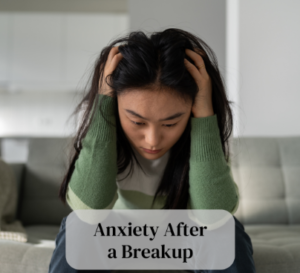
Why Breakup Anxiety Feels So Intense
Breakups don’t just hurt your feelings — they dismantle every layer of your psychological foundation. Your sense of safety, identity, future, and self-worth all fracture at once. That’s why the pain feels so all-consuming.
Here’s what’s really happening beneath the surface:
Loss of Attachment: Your Brain in Withdrawal
Humans are neurologically wired for connection. When you fall in love, your brain’s reward system floods with dopamine and oxytocin — the same chemicals involved in bonding between mother and child.
When that bond breaks, your brain enters withdrawal — not metaphorically, but literally. The sudden absence of those neurochemicals creates the same physiological response as coming off an addictive substance: cravings, restlessness, desperation, and emotional pain. You’re not “too attached.” You’re experiencing attachment withdrawal, and it’s completely normal.
Fear of Abandonment: Old Wounds Reopening
For many people, a breakup doesn’t just trigger grief — it rips open childhood wounds they didn’t even know were still bleeding.
If you experienced abandonment, neglect, or inconsistent love growing up, breakups hit differently. They confirm your deepest, most hidden fear: “I’m not enough. People always leave.”
Even if you logically know the relationship wasn’t right, your nervous system panics. The breakup becomes evidence of an old story you’ve been trying to rewrite your whole life. This is why breakup anxiety can feel so irrational and overwhelming — because it’s not just about this relationship. It’s about every time you felt left behind.
Loss of Identity: “Who Am I Without Them?”
In long-term relationships, couples don’t just share space — they merge identities. You build shared routines, dreams, inside jokes, future plans, and even a shared sense of self.
When the relationship ends, you lose more than a partner. You lose:
- The version of yourself that existed with them
- Future you imagined together
- The rituals that structured your days
- Role you played in their life
Suddenly, you’re staring at a blank space where your identity used to be. “Who am I without them? What do I even like? What’s my life now?” This identity confusion is one of the most disorienting parts of breakup anxiety — and one of the least talked about.
Loss of Emotional Safety: Freefall Without a Parachute
Your partner may have been your safe place — the person you turned to when the world felt too heavy. They were your comfort, your confidence boost, your sounding board, your emotional anchor.
Their absence feels like freefall.
The world suddenly feels more dangerous, lonelier, colder. Problems that used to feel manageable now feel overwhelming, because the person who helped you carry them is gone. You’re not just grieving the relationship — you’re grieving the sense of safety they provided.
Uncertainty About the Future: The Brain’s Worst Enemy
Breakups obliterate your plans. The trip you were saving for, the home you talked about, the life you were building — all gone.
The human brain hates uncertainty. It’s wired to seek predictability and control. When your future becomes a giant question mark, your nervous system interprets it as a threat, flooding your body with cortisol and adrenaline.
This is why you might feel constant low-level panic even weeks after the breakup — your brain is scanning for danger because it can’t predict what comes next.
Rejection Wounds Self-Esteem: “Am I Unlovable?”
Even if the breakup was mutual, even if you know it was the right choice — rejection still cuts deep.
Your brain doesn’t care about logic. On a primal level, rejection feels like danger. For our ancestors, being cast out of the tribe meant death. Today, that same circuitry activates during breakups, making rejection feel like a threat to your survival.
Rejection attacks your:
- Self-worth — “If I was enough, they would’ve stayed”
- Confidence — “Maybe I’m not as lovable as I thought”
- Trust in yourself — “I chose wrong. Can I trust my judgment again?”
The brain’s fear center (the amygdala) lights up, triggering anxiety, self-doubt, and emotional pain. This is why breakup anxiety often comes with intrusive thoughts of inadequacy — your nervous system is trying to protect you from future rejection by convincing you to hide.
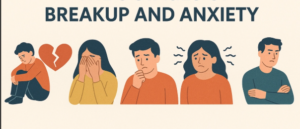
The Neurobiology of Breakup Anxiety: What’s Happening Inside Your Brain
Breakup anxiety isn’t “all in your head” — it’s in your neurobiology. Your brain and body are undergoing measurable, physical changes that explain why you feel the way you do.
Understanding the science doesn’t erase the pain, but it can help you realize: you’re not broken. Your nervous system is doing exactly what it’s designed to do.
Dopamine Withdrawal: Why You’re “Addicted” to Your Ex
When you’re in love, your brain releases dopamine — the same neurotransmitter involved in rewards, pleasure, and yes, addiction. Every text, touch, laugh, and moment of connection floods your brain with this feel-good chemical.
When the relationship ends, your dopamine levels crash. Not gradually — suddenly. And your brain responds the same way it would to withdrawal from any addictive substance.
This is why you experience:
- Physical shaking or trembling
- Waves of panic out of nowhere
- Intense, obsessive cravings to see or contact them
- A crushing sense of emptiness, like something vital is missing
- Wild mood swings — hope one minute, despair the next
You’re not weak for “not being able to let go.” Your brain chemistry is literally in withdrawal, and it takes time to rebalance.
Cortisol Surge: Your Body Stuck in Stress Mode
Breakups trigger a massive release of cortisol — your body’s primary stress hormone. When cortisol floods your system for days or weeks on end, it wreaks havoc on your physical and mental health.
High cortisol levels cause:
- Racing heart and palpitations, even when you’re sitting still
- Relentless overthinking — your mind spinning in loops, replaying every conversation
- Insomnia — lying awake at 3 AM, unable to shut your brain off
- Complete loss of appetite, or the opposite: stress eating to cope
Your body thinks you’re in constant danger, so it stays in emergency mode. This is why breakup anxiety feels so exhausting — your nervous system is running on overdrive, 24/7.
Amygdala Activation: Your Fear Center on High Alert
The amygdala is your brain’s alarm system. Its job is to detect threats and keep you safe.
After a breakup, your amygdala goes into overdrive. It interprets the loss as a survival threat, flooding you with fear signals even when there’s no real danger. This explains why you might feel:
- Irrational panic about things that didn’t bother you before
- Hypervigilance — constantly checking their social media, reading into every sign
- Catastrophic thinking: “I’ll never find love again. I’m going to be alone forever.”
Your amygdala isn’t trying to torture you. It’s trying to protect you from future rejection by keeping you on high alert. Unfortunately, this creates a feedback loop of anxiety.
Nervous System Dysregulation: Fight, Flight, Freeze, or Fawn
When your nervous system can’t process the emotional overwhelm of a breakup, it shifts into survival mode. You might notice yourself reacting in one (or more) of these ways:
- Fight: Anger, blame, lashing out, picking fights, unable to let go of resentment
- Flight: Avoiding emotions, staying busy, jumping into distractions or rebound relationships
- Freeze: Emotional numbness, dissociation, feeling like you’re moving through life in a fog
- Fawn: Over-apologizing, people-pleasing, begging them to come back, sacrificing your needs
None of these responses are “wrong” — they’re automatic survival strategies your nervous system uses when it feels unsafe. Understanding this can help you respond to yourself with compassion instead of judgment.
The goal of healing is to help your nervous system return to regulation — to feel safe again, even without them.
Attachment Styles and Breakup Anxiety: Why Some People Suffer More Than Others
Not everyone experiences breakup anxiety the same way. Some people seem to move on quickly, while others spiral for months. The difference often comes down to one thing: your attachment style.
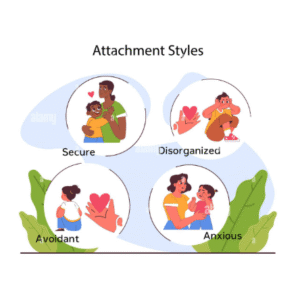
Your attachment style — formed in childhood based on how your caregivers responded to your emotional needs — shapes how you bond, trust, and handle loss in adult relationships. It’s the invisible blueprint that determines whether a breakup feels like grief or like abandonment trauma.
Here’s how each attachment style experiences breakup anxiety:
Anxious Attachment: The Endless Loop of Panic
People with anxious attachment experience breakup anxiety at its most intense. If you have this style, a breakup doesn’t just feel sad — it feels catastrophic.
You might find yourself:
- Obsessively replaying every conversation, searching for what went wrong
- Compulsively checking their social media, texts, or location — unable to stop even though it hurts
- Experiencing panic attacks when you realize they’re really gone
- Terrified of being alone, feeling like you can’t survive without them
- Clinging to hope for reconciliation, analyzing every breadcrumb for signs they might come back
- Physically unable to let go, even when you know the relationship was unhealthy
Why this happens: Anxiously attached people fear abandonment at their core. A breakup confirms their deepest wound: “I’m not enough. Everyone leaves.” The anxiety isn’t about the relationship itself — it’s about the terror of being unwanted and alone.
Avoidant Attachment: Calm on the Surface, Chaos Underneath
Avoidants often look like they’re handling the breakup perfectly. They seem unbothered, even relieved. But underneath the cool exterior, the anxiety is very real — they’ve just learned to bury it.
Avoidant patterns after a breakup:
- Emotional shutdown — going numb, detaching completely, refusing to talk about feelings
- Suppressing grief and pretending everything’s fine
- Jumping into rebound relationships or casual dating to avoid feeling the loss
- Self-isolation — withdrawing from friends, family, and vulnerability
- Convincing themselves they “don’t need anyone” or “relationships aren’t worth it”
Why this happens: Avoidants learned early that expressing emotional needs leads to disappointment or rejection. So they protect themselves by denying the pain exists. But the anxiety doesn’t disappear — it goes inward, manifesting as numbness, irritability, or a quiet, nagging emptiness they can’t name.
Fearful-Avoidant Attachment: The Push-Pull Emotional Chaos
Fearful-avoidants (also called disorganized attachment) experience the most confusing and intense emotional chaos after a breakup. They’re caught between two competing fears: the fear of abandonment and the fear of intimacy.
What this looks like:
- Desperately wanting them back one moment, then feeling relieved they’re gone the next
- Cycles of panic and withdrawal — reaching out, then pulling away
- Trauma triggers firing constantly, making everything feel unsafe
- Feeling paralyzed by conflicting emotions: longing, anger, fear, relief, all at once
- Difficulty making sense of what you actually feel
Why this happens: Fearful-avoidants often come from childhoods where caregivers were both a source of comfort and fear. Their nervous system never learned what safety feels like, so breakups reactivate deep trauma. The anxiety is overwhelming because closeness feels dangerous, but distance feels unbearable.
Secure Attachment: Grieving Without Losing Yourself
Securely attached people still feel pain after breakups — sometimes deep pain. But their anxiety doesn’t consume their identity or sense of safety.
How secure individuals cope:
- They allow themselves to feel the full range of emotions without judgment
- Process the loss in healthy ways — talking to friends, journaling, therapy
- They understand that the breakup doesn’t define their worth
- Grieve what was lost without catastrophizing the future
- They can hold space for sadness and hope at the same time
Why this is different: Secure individuals learned in childhood that they are worthy of love, even when relationships end. They don’t internalize rejection as proof of inadequacy. The anxiety exists, but it doesn’t overwhelm their sense of self.
The Good News: Attachment Styles Can Heal
Your attachment style isn’t permanent. With self-awareness, therapy, and intentional work, you can move toward earned secure attachment — learning to regulate emotions, trust yourself, and handle loss without falling apart.
Understanding your attachment style doesn’t erase breakup anxiety, but it helps you recognize: this reaction isn’t about weakness. It’s about wiring. And wiring can be rewired.
Signs You’re Experiencing Breakup Anxiety (Not Just Heartbreak)
Heartbreak and breakup anxiety are not the same thing — though they often happen together.
Heartbreak is grief. It’s the natural sadness that comes with losing someone you loved. It ebbs and flows. You have moments of peace between the waves of pain.
Breakup anxiety is your nervous system in crisis mode. It’s constant, intrusive, and overwhelming. It doesn’t give you breaks. It feels like you’re in danger even when you’re safe.
Here’s how to tell if what you’re experiencing has crossed from normal grief into breakup anxiety:
Emotional Symptoms: When Feelings Become Unmanageable
Normal grief allows space for other emotions. Anxiety takes over completely.
You might be experiencing breakup anxiety if you feel:
- Overwhelmed — like you’re drowning and can’t catch your breath emotionally
- Extreme, unshakable sadness — not just waves of crying, but a constant heaviness that won’t lift
- Hopelessness — convinced you’ll never feel okay again, that love is impossible for you
- Irrational, spiraling fears — terrified of being alone forever, convinced something is fundamentally wrong with you
- Emotional panic — sudden surges of terror that feel like you’re falling apart
If your emotions feel too big to contain, that’s anxiety, not just sadness.
Mental Symptoms: When Your Mind Won’t Stop
Grief lets you think about other things eventually. Anxiety traps you in mental loops.
You might be experiencing breakup anxiety if you:
- Can’t stop overthinking — replaying conversations, analyzing every text, searching for what you did wrong
- Experience analysis paralysis — unable to make even small decisions because your mind feels frozen
- Obsess over the past — stuck in “what if” and “if only,” unable to focus on the present
- Catastrophize the future — imagining worst-case scenarios: dying alone, never being loved, repeating this pain forever
- Can’t concentrate — reading the same sentence ten times, forgetting what people just said, unable to work or function normally
If your thoughts feel like a prison, that’s anxiety.
Behavioral Symptoms: When You Can’t Control Your Actions
Grief allows you space. Anxiety makes you desperate for control.
You might be experiencing breakup anxiety if you:
- Compulsively check their social media — multiple times a day, sometimes hourly, even though it hurts
- Re-read old messages and photos — searching for clues, comfort, or proof that it was real
- Try to engineer contact — texting “accidentally,” showing up places you know they’ll be, finding excuses to reach out
- Monitor their life obsessively — checking who they follow, where they go, who they’re with
- Isolate yourself — avoiding friends, canceling plans, unable to be around people because you feel too broken
If you can’t stop behaviors that hurt you, that’s anxiety driving compulsion.
Physical Symptoms: When Your Body Keeps the Score
This is the clearest sign that what you’re experiencing is anxiety, not just emotional pain.
You might be experiencing breakup anxiety if you have:
- Chest pain or tightness — feeling like there’s a weight on your heart, making it hard to breathe deeply
- Persistent headaches — tension headaches, migraines, pressure behind your eyes
- Nausea or digestive issues — stomach churning, loss of appetite, or stress eating
- Trembling hands — physical shaking, especially in moments of emotional overwhelm
- Insomnia — lying awake for hours, waking up at 3 AM in a panic, or sleeping too much to escape
- Drastic appetite changes — eating nothing for days, or binge eating to numb the feelings
If your body is reacting like it’s under threat, that’s your nervous system in anxiety mode.
The Bottom Line: Breakup Anxiety Is Survival Mode
When you’re experiencing breakup anxiety, your body thinks you’re in danger. Not emotional discomfort — actual, physical danger.
That’s why it feels so intense. That’s why you can’t just “get over it.” That’s why well-meaning advice like “just move on” feels impossible.
You’re not being dramatic. You’re not weak. Your nervous system is doing what it’s designed to do when it perceives a threat to your emotional survival.
The good news? Once you recognize it’s anxiety — not just sadness — you can treat it like anxiety. And anxiety, unlike grief, responds to specific coping strategies.
The Hidden Layers of Breakup Anxiety People Overlook
Most people think breakup anxiety is just about missing someone. But the truth runs much deeper.
The person you lost is only the surface. Beneath that loss are hidden emotional layers that most people don’t recognize — and these hidden layers are often what cause the most intense, lingering pain.
Understanding what you’re actually grieving can help you stop wondering why you can’t “just get over it.”
It Reopens Old Wounds You Thought Were Healed
Breakups have a way of ripping open scars you didn’t know you were still carrying.
That abandonment you felt when your parent left. The rejection you experienced as a teenager. The betrayal from a past relationship you thought you’d processed. The emotional neglect you normalized growing up.
All of it comes flooding back.
A breakup doesn’t just trigger grief about this relationship — it activates every unresolved wound related to:
- Childhood trauma and attachment injuries
- Repressed emotions you never fully felt or expressed
- Deep abandonment wounds that whisper “everyone leaves”
- Pain from past relationships you thought you’d moved on from
This is why breakup anxiety can feel disproportionate to the length or quality of the relationship. You’re not just healing from one loss — you’re confronting every loss you’ve ever tried to bury.
You’re Grieving the Dream, Not Just the Person
Here’s what people don’t talk about enough: sometimes the hardest part of a breakup isn’t losing who they were — it’s losing who you imagined they could be and the future you built in your mind.
You’re grieving:
- The life you envisioned together — the home, the trips, the milestones
- Identity you built as a couple — the “we” that replaced “I”
- The version of yourself that existed with them — the one who felt seen, loved, chosen
- Comfort and safety of companionship — knowing someone was yours and you were theirs
Often, this loss hurts more than losing the actual person. Because you’re not just mourning what was — you’re mourning what could have been. And dreams are harder to let go of than reality.
Loss of Routine Disrupts Your Sense of Stability
Humans are creatures of habit. We find comfort in predictable patterns — they make us feel safe and grounded.
Relationships create hundreds of micro-routines you don’t even realize you depend on:
- Good morning texts that started your day
- Friday night dinners at your favorite spot
- Falling asleep on the phone together
- Weekend rituals and inside jokes
- Knowing someone will be there at the end of a hard day
When a breakup shatters these routines, it creates emotional chaos. Your days feel empty and formless. You don’t know what to do with yourself. Nothing feels right anymore.
This disruption triggers anxiety because your brain has lost its predictability. The structure that held your life together is gone, and you’re left scrambling to rebuild a sense of normalcy.
Self-Blame Becomes the Cruelest Voice in Your Head
One of the most damaging — and overlooked — aspects of breakup anxiety is the internal narrative of self-blame.
Even when you logically know the relationship wasn’t right, even when the breakup was mutual, your mind starts whispering:
“I wasn’t enough.”
“If I had just tried harder, been better, loved differently…”
“I’m unlovable.”
“Always ruin everything.”
Self-blame is one of the biggest anxiety triggers. It keeps you stuck in shame, replaying every mistake, convinced you’re fundamentally flawed. It prevents you from healing because you can’t forgive yourself for something you believe you caused.
But here’s the truth: a relationship ending doesn’t mean you failed. Sometimes love isn’t enough. Timing is wrong. Sometimes two good people just aren’t right for each other.
The Terrifying Prospect of Starting Over
Even if you know the relationship needed to end, the thought of starting over can feel paralyzing.
The idea of:
- Opening your heart to someone new, risking this pain all over again
- Trusting another person after being hurt
- Going through the exhausting process of dating again
- Being vulnerable when you feel shattered
…feels impossible. Overwhelming. Terrifying.
This is why many people stay stuck — not because they want their ex back, but because the fear of starting over feels worse than the pain of staying where they are.
But here’s what fear doesn’t tell you: starting over doesn’t mean going back to zero. You’re not the same person you were before this relationship. You’ve learned. You’ve grown. And you’ll love differently — and better — because of it.

Why Moving On Feels Impossible (Psychological Reasons)
If you’ve ever felt stuck after a breakup — unable to move forward no matter how hard you try — you’re not alone. And you’re not weak.
The truth is, “moving on” isn’t a decision you make once. It’s a gradual process your brain and nervous system have to work through, often against their own wiring.
Here’s why letting go feels so impossibly hard, even when you want to move on:
Emotional Dependency: Your Brain Learned to Need Them
In a relationship, your brain becomes neurologically wired to associate your partner with safety, comfort, and emotional regulation.
When you felt anxious, they calmed you down. You felt sad, they cheered you up. When life felt overwhelming, they were your anchor.
Over time, your nervous system started depending on them to help you feel okay. Not because you’re codependent or broken — because that’s how human attachment works.
When they’re suddenly gone, your brain doesn’t know how to regulate on its own anymore. It’s like trying to function without a part of yourself. Moving on feels impossible because your nervous system is screaming, “I need them to feel safe.”
Healing means relearning how to soothe yourself — and that takes time.
Identity Attachment: You Don’t Know Who You Are Without Them
The longer the relationship, the more your identity became intertwined with theirs.
You weren’t just “you” anymore — you were:
- Someone’s partner
- Part of a “we”
- The person who did things together
When the relationship ends, you lose your sense of self. You look in the mirror and don’t recognize the person staring back. You don’t know what you like, what you want, or who you even are anymore.
Moving on feels impossible because you’re not just losing them — you’re losing yourself. And rebuilding identity from scratch is one of the hardest psychological tasks a human can face.
Neurochemical Bonding: Your Brain Is Literally Addicted
Love isn’t just an emotion — it’s a chemical cocktail of dopamine, oxytocin, serotonin, and endorphins that floods your brain every time you’re with your partner.
Your brain becomes addicted to this neurochemical high. When the relationship ends, those chemicals disappear, and your brain goes into withdrawal.
This isn’t a metaphor. It’s actual addiction withdrawal.
Just like someone quitting smoking craves nicotine, your brain craves the dopamine hit of being with them. That’s why you feel compelled to check their social media, text them, or drive by their house — your brain is desperately seeking the chemical fix it’s lost.
Moving on feels impossible because you’re fighting a biological addiction, not just an emotional attachment.
Social Routines: Your Life Revolved Around Them
Relationships create structure. Your days, weeks, and months become organized around shared routines:
- Morning coffee together
- Texting throughout the day
- Friday date nights
- Weekend plans with mutual friends
- Holiday traditions
When the relationship ends, your entire life loses its structure. You wake up and don’t know what to do with yourself. Weekends feel endless and empty. Holidays become painful reminders of what’s missing.
Moving on feels impossible because you’re not just changing your feelings — you’re rebuilding your entire daily existence from the ground up.
Sense of Belonging: You’ve Lost Your “Person”
Humans have a fundamental need to belong — to be chosen, known, and loved by someone.
Your partner wasn’t just a companion. They were your person. The one who knew your quirks, your fears, your dreams. One who chose you. The one who made you feel like you mattered.
When they’re gone, you don’t just feel lonely — you feel like you don’t belong anywhere anymore.
Moving on feels impossible because you’re grieving the loss of being someone’s priority, someone’s home, someone’s safe place.
The Truth: Healing Is Gradual, Not Instant
Our culture glorifies “moving on quickly” as if it’s a sign of strength. But fast healing isn’t real healing — it’s usually avoidance, suppression, or distraction.
Real healing is slow. Messy. Non-linear.
You’ll have good days and terrible days. Feel like you’re over it, then wake up crying. You’ll take two steps forward and one step back.
And that’s completely normal.
Your brain isn’t wired to forget someone overnight. Nervous system can’t just “turn off” attachment. Your identity can’t rebuild in a week.
Moving on takes weeks, months, sometimes longer — and that doesn’t make you weak.
It makes you human.
The goal isn’t to force yourself to feel nothing. The goal is to slowly, gently, compassionately rebuild yourself — one day, one moment, one small choice at a time.
How to Heal Breakup Anxiety: A Therapist-Backed Guide
Healing breakup anxiety takes emotional, psychological, and behavioral care. There is no instant fix, but there are clear steps that can help your mind and body recover.
Phase 1: Stabilize Your Nervous System
In the first few days after a breakup, your main goal is not to “move on.” Your goal is to feel safe enough to get through the day.
1. Allow the pain: Do not force yourself to stay strong or pretend you are fine. Cry if you need to. Write. Talk. Grieve. Suppressing emotions usually makes anxiety stronger in the long run.
2. Break the checking cycle: Avoid looking at their social media, old chats, call logs, photos, or updates. Each check can reopen the wound and restart the anxiety loop.
3. Remove emotional triggers: Put away or delete reminders that keep pulling you back into the relationship emotionally. Your nervous system needs less stimulation, not more.
4. Use grounding techniques: Simple tools like slow breathing, body scans, mindfulness, or deep-pressure techniques can help calm your body when panic rises. These methods do not erase pain, but they reduce the intensity.
Phase 2: Process the Loss
Once the initial shock settles, the next step is to understand what you are really feeling.
1. Journal the truth: Write down what hurt you, what you learned, what was missing, and what you need in future relationships. This helps separate reality from emotional distortion.
2. Challenge painful thoughts: Breakup anxiety often creates absolute thoughts like, “I’ll never love again.” Replace them with more balanced statements, such as, “This pain is real, but it will not last forever.”
3. Stop romanticizing the past: After a breakup, the brain often edits memory and highlights only the best parts. Try to remember the whole relationship, not just the version your pain is presenting.
4. Detach slowly: Letting go is not coldness. Emotional detachment is part of healing, and it usually happens in stages, not all at once.
Phase 3: Rebuild Self-Worth
Breakups often damage confidence, so healing also means rebuilding how you see yourself.
1. Reaffirm your value: Remind yourself that one relationship ending does not define your worth. You are still deserving of love, respect, and emotional safety.
2. Rebuild your routine: Small routines create structure and help reduce anxiety. Sleep, meals, movement, work, and daily habits all support emotional stability.
3. Reconnect with supportive people: Isolation often makes breakup anxiety worse. Reach out to friends, family, or safe people who can help you feel less alone.
4. Reconnect with yourself: Ask yourself what you enjoy, what matters to you, and what gives your life meaning outside the relationship. This helps rebuild identity.
5. Practice emotional independence: Learn to soothe yourself instead of relying only on one person for comfort. This is a major step toward secure attachment and long-term resilience.
Phase 4: Create Long-Term Healing
Real healing is not just about getting over one breakup. It is about becoming emotionally stronger for the future.
1. Work on attachment patterns: Understanding your attachment style can help you recognize why certain breakups hit harder and why certain relationship patterns repeat.
2. Heal trauma bonds: If the relationship was intense, unstable, or emotionally addictive, it may help to learn about trauma-driven attachment and how to break that cycle.
3. Build new dreams: A breakup ends one story, but it does not end your future. Start imagining a life that belongs to you again.
4. Reopen your heart slowly: Healing does not mean closing yourself off forever. It means learning to trust again with more awareness, more boundaries, and more self-respect.
When to Seek Professional Help
Seek professional support if breakup anxiety starts to affect your daily functioning. This includes panic attacks, persistent depression, inability to work or study, feeling worthless, or thoughts of self-harm.
Therapists can help you regulate emotions, challenge distorted thinking, and rebuild a healthier relationship with yourself.
Final Thoughts: Healing Is Not Linear, But It Is Possible
Breakup anxiety is not something to be ashamed of. It reflects how deeply you loved, how much you invested, and how vulnerable you allowed yourself to be.
Healing does not happen in a straight line. Some days will feel lighter, and others may bring the pain back all over again. That does not mean you are failing. It means you are healing.
Every setback is part of the process. Tear is a release. Every small step forward matters, even when it feels tiny.
A breakup is an ending, but it is also a beginning. It closes one chapter, but it does not erase your future.
Your story does not end here. With time, compassion, and patience, your heart can soften again — stronger, wiser, and more open than before.
FAQ
1. What is breakup anxiety?
Breakup anxiety is the intense emotional and physical distress that can happen when a romantic relationship ends. It often includes overthinking, fear, sleeplessness, chest tightness, and obsessive thoughts.
2. Is breakup anxiety normal?
Yes, breakup anxiety is a normal response to emotional loss. It happens because your brain and body are reacting to the pain of attachment, rejection, and uncertainty.
3. How long does breakup anxiety last?
It varies from person to person. For some, it lasts a few weeks; for others, it can continue for months depending on the depth of the relationship, attachment style, and support system.
4. Why does breakup anxiety feel physically painful?
Breakup anxiety can activate the body’s stress response, including cortisol release and nervous system dysregulation. That is why you may feel chest tightness, nausea, shaking, or headaches.
5. Can attachment style affect breakup anxiety?
Yes. People with anxious attachment often experience stronger breakup anxiety, while avoidant, fearful-avoidant, and secure attachment styles may respond differently to loss and separation.
6. What are the signs of breakup anxiety?
Common signs include constant overthinking, emotional panic, trouble sleeping, loss of appetite, checking an ex’s social media, and feeling unable to focus on daily life.
7. How do I stop obsessing over my ex?
Start by reducing contact, avoiding social media checking, removing reminders, and using grounding techniques. Journaling and talking to a trusted person can also help interrupt obsessive thought loops.
8. Is breakup anxiety the same as heartbreak?
No. Heartbreak is the sadness and grief of losing someone. Breakup anxiety includes that grief, but also adds fear, panic, physical stress, and constant mental tension.
9. Can therapy help with breakup anxiety?
Yes. Therapy can help you process grief, regulate emotions, rebuild self-worth, and understand attachment patterns that may be making the breakup harder to recover from.
10. When should I seek professional help for breakup anxiety?
You should seek help if anxiety is interfering with your ability to function, if panic attacks are frequent, if depression is developing, or if you have thoughts of self-harm.
Reference
American Psychological Association (2025), “Stress & Anxiety”, Available at:
https://www.apa.org/topics/anxiety
Monoprovacounselling, (2026), “How childhood emotional neglect affects adults: A deep psychological exploration”, Available at: How Childhood Emotional Neglect Affects Adults: A Deep Psychological Exploration
Verywell Mind (2026), “Why Breakups Hurt”, Available at:
https://www.verywellmind.com/why-breakups-hurt-4178373
Harvard Health (2026), “Emotional Pain & the Brain”, Available at:
https://www.health.harvard.edu/mind-and-mood/emotional-pain-is-real
Monoprovacounselling, (2026), “Why modern relationships fail: Attachment theory explained.”, Why Modern Relationships Fail: Attachment Theory Explained
NIMH (2026), “Understanding Anxiety Disorders”, Available at:
https://www.nimh.nih.gov/health/topics/anxiety-disorders
Monoprovacounselling, (2026), “Situationship red flags people don’t notice.”, Situationship Red Flags People Don’t Notice
Psychology Today (2025), “Attachment & Relationships” Available at:
https://www.psychologytoday.com/us/basics/attachment
Monoprovacounselling, (2026),”Contact Us”
This article is written for knowledge purposes, aiming to help readers understand the topic better and gain useful insights for learning and awareness.
Pingback: Why Young Adults Are Avoiding Marriage: Psychology Insights
Emotional awareness can be surprisingly difficult. Sometimes we know that something feels wrong long before we know how to put that feeling into words.