
10 Common Mental Health Challenges in Men—and How to Address Them

Introduction

Mental health challenges in men are often hidden, minimized, or misunderstood. In many cases, social expectations teach men to appear strong, silent, and self-reliant. As a result, emotional distress is more likely to be suppressed rather than openly expressed. Consequently, many men may struggle silently until their distress begins to appear through anger, withdrawal, substance use, physical complaints, or burnout.

Moreover, research consistently shows that men are less likely to seek psychological help, even though they face significant mental health risks, including higher suicide rates and untreated emotional distress. Therefore, understanding how mental health challenges can present differently in men is essential for promoting early support, prevention, and recovery. In addition, recognizing these signs can help families, professionals, and individuals respond before difficulties become more severe.

This article explores 10 common mental health challenges in men and, importantly, provides practical, psychologically grounded ways to address them. Furthermore, the information is designed to be useful for individuals, families, counselors, and mental health educators seeking to better understand and support men’s mental well-being.

Why Men’s Mental Health Often Goes Unnoticed

Men are often conditioned by social expectations to:

  • Hide vulnerability
  • Avoid emotional expression
  • View help-seeking as a weakness
  • Prioritize responsibility over self-care

As a result, emotional difficulties may remain unnoticed or unaddressed for long periods. Rather than openly discussing sadness, fear, or emotional pain, some men may express distress through other behaviors.

For example, mental health symptoms may present differently in men than in women, often appearing as irritability, aggression, risk-taking, workaholism, or emotional shutdown rather than sadness or tearfulness. Consequently, these signs can sometimes be overlooked or misunderstood, particularly when they are viewed only as behavioral or personality problems.

Furthermore, when emotional distress is repeatedly suppressed, it can become more difficult for men to recognize when they need support. Therefore, learning to recognize these patterns is an important first step toward greater awareness, earlier support, and meaningful change.

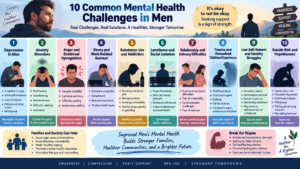
1. Depression in Men

How It Commonly Appears

Depression in men is often underdiagnosed because it may not always present as what people traditionally recognize as sadness. Instead, emotional distress can appear through changes in mood, behavior, energy, or social engagement.

Common signs include:

  • Persistent irritability or anger
  • Emotional numbness
  • Loss of interest in work or relationships
  • Fatigue and sleep disturbances
  • Withdrawal and isolation

Furthermore, men may describe their experience differently. Rather than saying they feel “sad,” they may describe feeling “empty,” “tired,” or “burnt out.”

How to Address It

To support recovery and emotional well-being:

  • Normalize emotional expression without judgment
  • Encourage routine and structure
  • Promote physical activity and sleep hygiene
  • Seek counseling or therapy early
  • Challenge beliefs that emotions equal weakness

Most importantly, recognizing depression early can make it easier to seek appropriate support rather than continuing to cope silently. 

2. Anxiety Disorders

How It Commonly Appears

Anxiety in men can manifest through both emotional and physical symptoms. For example, common signs may include:

  • Restlessness
  • Overthinking
  • Muscle tension
  • Difficulty relaxing
  • Avoidance of situations

In some cases, men may mask anxiety through overworking or controlling behavior. As a result, the underlying anxiety may remain unnoticed while the person appears highly productive or focused on maintaining control.

How to Address It

Several strategies can help manage anxiety:

  • Learn grounding and breathing techniques
  • Reduce caffeine and other stimulants
  • Practice stress-management strategies
  • Consider cognitive-behavioral therapy (CBT), which can be highly effective
  • Normalize anxiety as a human experience

Therefore, instead of viewing anxiety as a personal weakness, it can be approached as an experience that deserves understanding, appropriate coping strategies, and support. 

3. Anger and Emotional Dysregulation

Why It Happens

Many men are taught that anger is the only acceptable emotion, while sadness, fear, or vulnerability may be discouraged. As a result, emotional pain can sometimes be expressed through anger rather than communicated directly.

Signs may include:

  • Frequent irritability
  • Explosive reactions
  • Difficulty calming down
  • Relationship conflicts

However, anger is often only the visible part of a deeper emotional experience. Therefore, understanding what lies beneath the anger can be an important part of emotional regulation.

How to Address It

To manage anger more effectively:

  • Identify the underlying emotions beneath anger
  • Learn emotional labeling skills
  • Practice pause-and-response techniques
  • Consider therapy focused on emotional regulation
  • Develop healthy outlets such as exercise, journaling, or conversation

Ultimately, the goal is not to eliminate anger but to understand it and respond to it in healthier ways. 

4. Stress and Work-Related Burnout

Why Men Are Vulnerable

For many men, self-worth can become closely connected to:

  • Career success
  • Financial responsibility
  • Productivity

Consequently, constant pressure to perform can make it difficult to recognize when normal work stress is becoming chronic stress or burnout.

Chronic work stress can lead to:

  • Emotional exhaustion
  • Detachment
  • Reduced motivation
  • Physical health problems
How to Address It

To reduce the risk of burnout:

  • Set realistic work boundaries
  • Redefine productivity beyond constant output
  • Take regular breaks and use available leave
  • Develop an identity beyond work
  • Seek support before burnout becomes severe

In addition, recognizing that personal worth extends beyond professional achievement can help create a healthier relationship with work and productivity. 

5. Substance Use and Addiction

Why It’s Common

Some men may turn to substances or addictive behaviors as a way to:

  • Numb emotional pain
  • Manage stress
  • Avoid vulnerability

Over time, however, these coping strategies can create additional emotional, physical, and social difficulties. This may include alcohol, smoking, drugs, or behavioral addictions such as gaming and gambling.

How to Address It

Effective support should address both the behavior and the underlying distress. Therefore:

  • Address underlying emotional distress
  • Reduce shame around seeking help
  • Encourage non-judgmental conversations
  • Combine therapy with appropriate lifestyle changes
  • Seek specialized addiction support when needed

Importantly, reducing shame can make it easier for someone to acknowledge the problem and accept appropriate support. 

6. Loneliness and Social Isolation

How It Develops

As men age, friendships and social connections may decrease due to:

  • Work pressure
  • Family responsibilities
  • Emotional withdrawal

As a result, men may gradually become socially isolated without recognizing how much this loss of connection is affecting their mental health.

Loneliness in men is strongly linked to depression and poor physical health. Therefore, maintaining meaningful social connections is an important part of long-term emotional well-being.

How to Address It

Men can begin rebuilding connection by:

  • Rebuilding social relationships intentionally
  • Encouraging shared activities rather than relying only on “talk”
  • Maintaining friendships outside work
  • Normalizing emotional closeness among men

Furthermore, meaningful connection does not always require a deep conversation. Shared activities, regular contact, and simply spending time with trusted people can also help reduce isolation.

7. Relationship and Intimacy Difficulties

Common Challenges

Men may struggle with:

  • Emotional expression
  • Vulnerability
  • Communication
  • Fear of rejection

Consequently, unresolved emotional patterns can affect romantic relationships and make genuine intimacy more difficult. Over time, difficulties with communication or vulnerability may create misunderstandings, conflict, or emotional distance.

How to Address It

To build healthier relationships:

  • Learn emotional communication skills
  • Explore attachment patterns
  • Consider couples counseling when needed
  • Practice active listening
  • Address fears of intimacy gradually

In addition, developing emotional awareness can make it easier to communicate needs, understand a partner’s perspective, and respond rather than react during conflict. 

8. Trauma and Unresolved Childhood Experiences

Why It’s Often Overlooked

Men may minimize or dismiss past trauma, particularly experiences involving:

  • Childhood abuse
  • Emotional neglect
  • Bullying
  • Family violence

However, experiences that happened in the past can continue to influence emotional responses and coping patterns in adulthood. When trauma remains unprocessed, it can contribute to anger, avoidance, emotional shutdown, or difficulties with trust and connection.

How to Address It

Recovery may involve:

  • Trauma-informed therapy
  • Safe emotional expression
  • Understanding personal triggers
  • Gradual processing of past experiences
  • Building emotional safety

Importantly, trauma does not need to be confronted all at once. Instead, gradual and appropriately supported processing can help individuals develop greater emotional safety and control.

9. Low Self-Esteem and Identity Struggles

Common Sources

Low self-esteem and identity struggles may develop in response to:

  • Unrealistic masculine ideals
  • Comparison and performance pressure
  • Failure or job loss
  • Relationship breakdown

As a result, men may begin to measure their worth primarily through achievement, status, relationships, or productivity. Low self-esteem may then appear as defensiveness, withdrawal, or difficulty accepting criticism.

How to Address It

To develop a healthier sense of self:

  • Separate self-worth from achievement
  • Identify strengths beyond productivity
  • Practice self-compassion
  • Challenge negative self-beliefs
  • Work with a counselor if these patterns persist

Over time, recognizing personal strengths beyond external achievement can help create a more stable and balanced sense of identity. 

10. Suicide Risk and Hopelessness

Critical Reality

Men are at higher risk of suicide, and several factors may contribute to this increased vulnerability, including:

  • Untreated depression
  • Emotional isolation
  • Reluctance to seek help

Because suicidal distress can sometimes remain hidden, recognizing warning signs is particularly important.

Warning signs may include:

  • Withdrawal
  • Talking about feeling like a burden
  • Risk-taking behavior
  • Sudden calm after a period of significant distress
How to Address It

When warning signs are present:

  • Take them seriously
  • Encourage immediate professional support
  • Maintain open, non-judgmental communication
  • Seek crisis intervention when needed
  • Strengthen community and family support

Most importantly, suicide risk should never be minimized or handled alone. If someone may be in immediate danger, prioritize urgent professional or emergency support rather than relying solely on self-help strategies.

Ultimately, early recognition, compassionate communication, and timely professional intervention can be critical in protecting someone who is experiencing severe hopelessness or suicidal distress.

Breaking the Stigma Around Men’s Mental Health

Breaking the stigma around men’s mental health begins with changing how we understand emotional strength. Instead of viewing vulnerability as a weakness, it can be recognized as an important part of emotional awareness and resilience. True strength lies in:

  • Emotional awareness
  • Asking for help when needed
  • Setting healthy boundaries
  • Choosing healing over silence

Furthermore, when men feel safe expressing emotions without fear of judgment, they are more likely to recognize difficulties and seek support. In turn, this can create healthier ways of coping and strengthen relationships. Ultimately, allowing men to be emotionally human is an important step toward better mental health outcomes. 

How Families and Society Can Support Men

Creating supportive environments requires both individual and collective effort. For example, families, partners, workplaces, and communities can help by:

  • Encouraging open emotional conversations
  • Avoiding shame or criticism around vulnerability
  • Modeling healthy coping strategies
  • Promoting mental health education
  • Normalizing therapy and counseling

In addition, support should not begin only when a crisis occurs. Regular communication, emotional validation, and early encouragement can make it easier for men to speak about what they are experiencing.

Most importantly, supportive environments can reduce isolation and make help-seeking feel safer. In situations involving serious emotional distress or suicide risk, timely support can be especially important and potentially lifesaving.

Conclusion

Men experience mental health challenges just as deeply as anyone else—although these difficulties may sometimes appear in quieter or less visible ways. Depression, anxiety, anger, burnout, addiction, and loneliness are not personal failures. Instead, they can reflect human responses to stress, social expectations, difficult experiences, and unmet emotional needs.

Therefore, addressing men’s mental health requires awareness, compassion, early support, and cultural change. Furthermore, when men have access to appropriate tools, supportive relationships, and professional care when needed, they can develop healthier coping strategies and greater emotional resilience.

Ultimately, mental health care is not a weakness. Rather, it is an act of responsibility toward oneself and the people who depend on us. Breaking the silence does not make men less strong; instead, it creates space for healthier, more connected, and emotionally resilient lives.
Mental Health Challenges

Frequently Asked Questions (FAQ)

1. Why are mental health issues in men often overlooked (Mental Health Challenges)?

Men are often socialized to suppress emotions and appear strong or self-reliant. As a result, distress may show up as anger, withdrawal, substance use, or overworking rather than openly expressed sadness or anxiety—making it easier to miss.


2. What are the most common mental health challenges men face (Mental Health Challenges)?

Common challenges include depression, anxiety, anger and emotional dysregulation, work-related burnout, substance use, loneliness, relationship difficulties, unresolved trauma, low self-esteem, and increased suicide risk.


3. How does depression look different in men (Mental Health Challenges)?

Depression in men may appear as irritability, emotional numbness, fatigue, sleep problems, withdrawal, or loss of interest in work or relationships rather than visible sadness or crying.


4. Is anger a sign of poor mental health in men (Mental Health Challenges)?

Anger can be a sign of underlying emotional distress. Many men were taught to express anger instead of sadness or fear, so unresolved pain may surface as irritability or outbursts.


5. Why do many men avoid seeking mental health support (Mental Health Challenges)?

Common barriers include stigma, fear of being judged, beliefs that asking for help is a weakness, lack of emotional language, and limited awareness of mental health resources.


6. How does work stress affect men’s mental health (Mental Health Challenges)?

Men often tie self-worth to productivity and financial responsibility. Chronic work stress can lead to burnout, emotional exhaustion, irritability, physical health issues, and reduced motivation.


7. Are substance use and addiction linked to men’s mental health (Mental Health Challenges)?

Yes. Many men use substances such as alcohol or drugs to cope with stress, emotional pain, or unresolved trauma. Addressing the underlying emotional issues is essential for recovery.


8. How does loneliness impact men psychologically (Mental Health Challenges)? 

Loneliness increases the risk of depression, anxiety, substance use, and poor physical health. As men age, social connections may decrease, making isolation a significant mental health risk.


9. What role does childhood trauma play in men’s mental health (Mental Health Challenges)?

Unresolved childhood trauma—such as abuse, neglect, or emotional invalidation—can affect emotional regulation, relationships, self-esteem, and coping strategies in adulthood.


10. Why is suicide risk higher in men (Mental Health Challenges)?

Men are less likely to seek help and more likely to use lethal means. Untreated depression, emotional isolation, and social pressure contribute significantly to increased suicide risk.


11. How can men start improving their mental health (Mental Health Challenges)?

Small steps help, such as:

  • Acknowledging emotions

  • Talking to someone trusted

  • Reducing harmful coping behaviors

  • Practicing stress management

  • Seeking professional support when needed


12. Is therapy effective for men (Mental Health Challenges)?

Yes. Therapy provides a safe, confidential space to understand emotions, improve coping skills, address trauma, and build healthier relationships. Many men benefit greatly once they engage.


13. How can families and partners support men’s mental health (Mental Health Challenges)?

Supportive listening, avoiding judgment, encouraging help-seeking, validating emotions, and reducing stigma can make a significant difference.


14. Are mental health struggles a sign of weakness (Mental Health Challenges)?

No. Mental health challenges are human experiences, not personal failures. Seeking help reflects self-awareness, responsibility, and strength.


15. What is the most important message about men’s mental health (Mental Health Challenges)?

Men deserve emotional support, understanding, and care just like anyone else. Breaking silence and stigma is essential for prevention, healing, and long-term well-being.

Reference 

3 thoughts on “10 Common Mental Health Challenges in Men—and How to Address Them”

  1. Pingback: Top 7 Mental Wellness Tools Every Man Should Use

  2. Pingback: Best Books & Podcasts for Men’s Mental Health Growth

  3. Pingback: 7 Signs You Need to Talk to a Therapist — Don’t Ignore

Leave a Comment